Water Fleas Face Complex Parasite Battles As Warming Temperatures Alter Infection Success And Microbial Competition
New research shows that water temperature and the arrival order of competing microbes fundamentally shift infection outcomes in aquatic crustaceans.
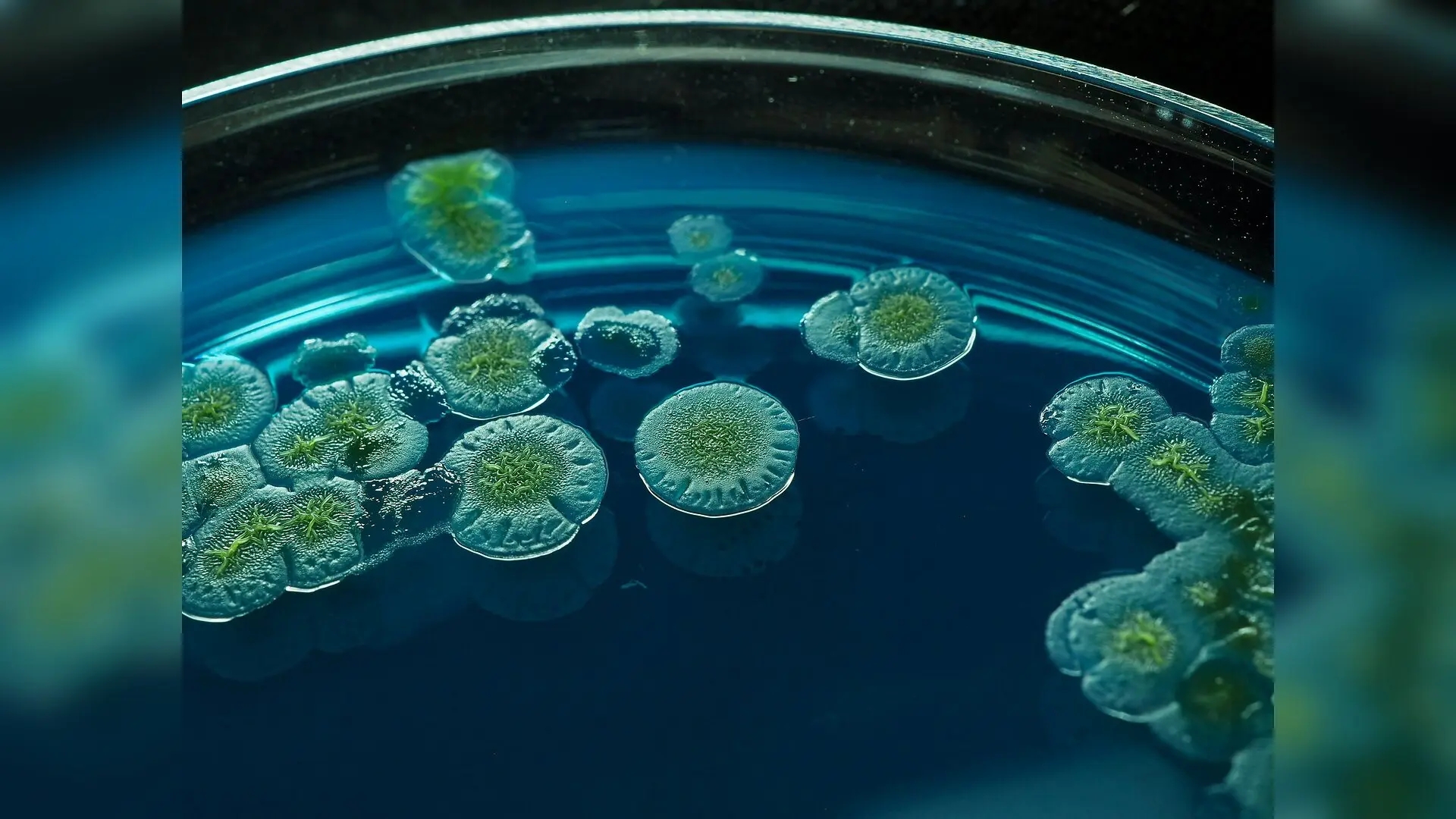
When water temperatures shift by just a few degrees, the microscopic battles inside small freshwater crustaceans can change in unexpected ways, according to new research published in the Philosophical Transactions of the Royal Society B. Researchers at Tel Aviv University exposed the common water flea Daphnia magna to two different disease-causing microbes across four distinct temperature settings to see how environmental stress alters multiple infections.
While aquatic animals face multiple parasites in the wild, scientists have spent little time examining how rising heat and co-exposure act together. Enav Bereza and colleagues tracked how temperature and the timing of exposure altered infection rates for a parasitic fungus and a microsporidian parasite.
How 4 Temperatures Altered Microbe Success
The team tested newborn crustaceans at 16, 20, 24 and 28 degrees Celsius. At each temperature, groups were exposed to the fungus Australozyma monospora, the microsporidium Hamiltosporidium tvaerminnensis, or a combination of both simultaneously and sequentially. No individual host ever harboured both parasites at the same time, showing that co-infection was extremely rare.
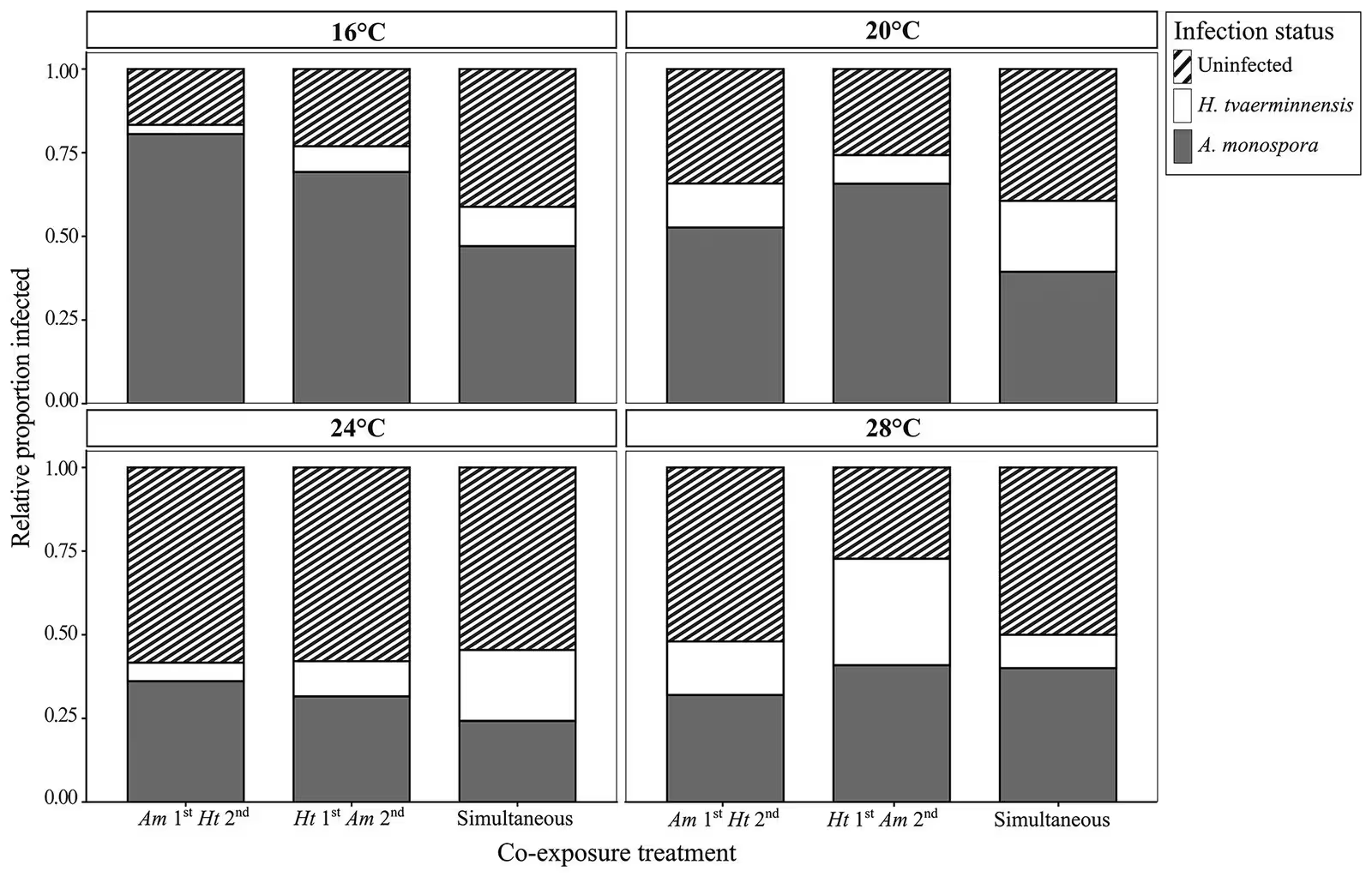
Across nearly all conditions, the fungus dominated the competition and infected between 60% and 90% of the multi-parasite hosts. When the microsporidium was exposed to the fungus, its infection success dropped significantly. Frida Ben-Ami and her team noted that this suppression happened even when higher temperatures reduced the overall presence of the fungal pathogen.
Why Order of Arrival Matters
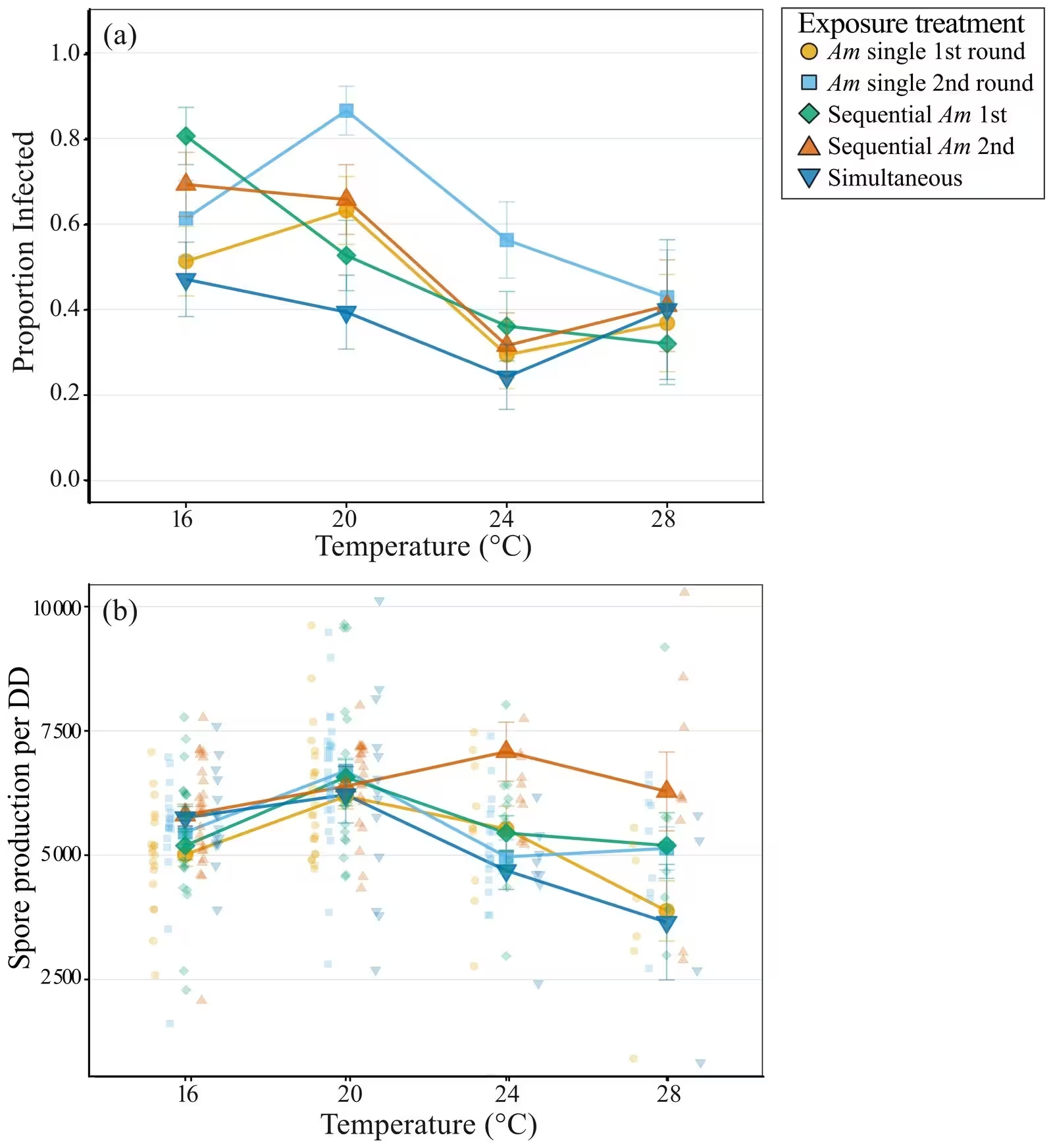
The sequence in which pathogens arrived changed infection traits in surprising ways. When the fungus arrived second after an initial exposure to the microsporidium, warmer temperatures helped the fungus develop faster despite thermal stress. This priority effect meant that early exposure to one parasite buffered the second parasite against the negative developmental costs of extreme heat.
By contrast, simultaneous exposure to both microbes lowered the overall infection success of the fungus. The researchers suggest that facing two threats at once triggers a stronger immune response in the host, acting like a high dose of a single pathogen without increasing the actual chance of infection.
What Happens When Heat Stress Meets Disease
Temperature alone strongly shaped the outcomes, with the chances of avoiding infection entirely increasing as water warmth rose up to 24 degrees Celsius. However, the microsporidian parasite showed very little virulence in the early weeks of the experiment, with nearly all infected hosts surviving until the final days.
The authors point out that using physiological age adjustments called degree days helped account for varying host development speeds across thermal settings. Even so, the findings highlight that predicting disease dynamics in a warming climate requires looking at multiple stressors at once rather than studying single parasites in isolation.
The research was published in Philosophical transactions of the Royal Society of London. Series B, Biological sciences on November 26, 2026.
This article has been fact checked for accuracy, with information verified against reputable sources. Learn more about us and our editorial process.
Last reviewed on .
Article history
- Latest version
Reference(s)
- Bereza, Enav., et al. “The combined effects of co-exposure and temperature on a planktonic crustacean.” Philosophical Transactions of the Royal Society B: Biological Sciences, vol. 381, no. 1964, November 26, 2026 The Royal Society, doi: 10.1098/rstb.2025.0294. <https://doi.org/10.1098/rstb.2025.0294>.
Cite this page:
- Posted by Kamran Akhtar