Moroccan Marine Biologists Reveal The Hidden Reproductive Cycle Of Striped Venus Clams And When They Spawn
A year-long histological survey of 360 clams in the Mediterranean reveals a strict August-to-October spawning window.
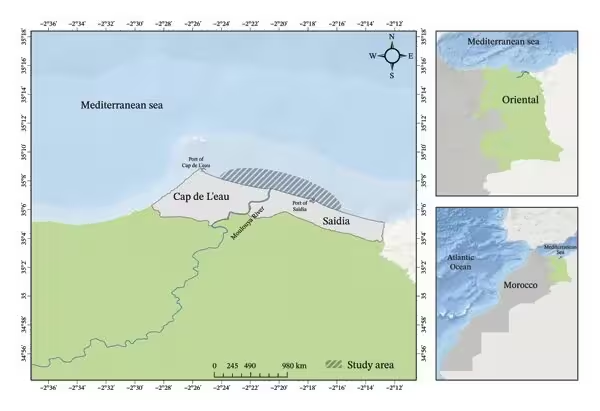
Marine biologists have uncovered the annual reproductive cycle of 360 striped Venus clams along the Cap de l’Eau-Saïdia coastline in the eastern Moroccan Mediterranean, revealing a strict seasonal spawning window. Led by researcher Amira Kharkhache from Mohammed First University, the team tracked monthly biological changes across 2024 to fill a major regional knowledge gap for this heavily harvested commercial bivalve.
Striped Venus clams, known scientifically as Chamelea gallina, are small burrowing bivalve molluscs that live in shallow sandy coastal waters and support major fisheries across Southern Europe and the Mediterranean. Tracking their reproductive cycles requires microscopic examination of gonadal tissue to identify distinct developmental phases, ranging from early cell growth to full sexual maturity and subsequent spawning. Because environmental factors like temperature and food availability heavily influence marine life, researchers often pair these microscopic evaluations with biological indices that measure soft-tissue mass relative to total body weight.
For years, fisheries managers relied on reproductive data from distant regions like the Adriatic Sea, assuming similar biological timetables across different Mediterranean sectors. However, marine scientists have increasingly recognized that local hydrodynamics, water temperatures, and coastal geography can shift spawning seasons dramatically. The new study, published in Scientifica, set out to determine whether Moroccan populations follow the same timeline as their European counterparts.
How Seasons Control Clam Reproduction
Histological analyses revealed that gametogenesis, the biological process by which animals form sex cells, begins in late autumn as water temperatures cool. Advanced tissue development takes place between February and April, setting the stage for peak ripeness. The clams reach full sexual maturity between May and July, when microscopic follicles become densely packed with mature eggs and sperm.
Spawning activity is heavily concentrated between August and October, when warm summer waters and environmental cues trigger the mass release of gametes into the water column. By November and December, most individuals appear spent, though microscopic signs of tissue regeneration already begin to emerge for the following year. Males and females showed broadly similar seasonal schedules, and the overall sex ratio remained well-balanced at roughly one male for every 1.09 females.
What Size Thresholds Mean For Protection
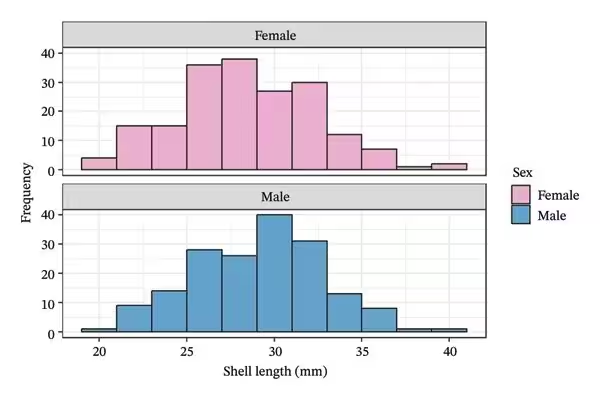
During the peak reproductive period, approximately 99 percent of sampled clams larger than 19 mm had reached or passed sexual maturity. This measurement serves as an observed size threshold within the sampled population rather than a definitive minimum size at maturity. Because artisanal dredges tend to underrepresent smaller juveniles, researchers could not calculate the exact shell length at which fifty percent of the population becomes mature.
The team also analyzed environmental variables such as sea-bottom temperature, salinity, and chlorophyll-a concentrations using computer models. Statistical models indicated that biological condition indices and gonadal development tracks closely with seasonal shifts in temperature and microscopic phytoplankton biomass. Water temperatures during the study averaged 20.60 degrees Celsius, peaking at 26.08 degrees Celsius in August, while chlorophyll concentrations reached their highest levels in February.
Why Regional Management Needs Caution
The concentrated spawning window from August to October highlights a clear biological period when seasonal fishing protections could theoretically reduce the harvesting of actively reproducing adults. However, the study authors emphasize that these management recommendations remain provisional because the data covers only a single annual cycle. Establishing permanent catch limits or seasonal closures will require multiyear monitoring that incorporates direct seabed measurements, local fishing effort, and direct recruitment surveys.
The research was published in Scientifica on November 24, 2026.
This article has been fact checked for accuracy, with information verified against reputable sources. Learn more about us and our editorial process.
Last reviewed on .
Article history
- Latest version
Reference(s)
- Kharkhache, Amira., et al. “Reproductive Cycle of Chamelea gallina and Its Associations With Environmental Variability in the Moroccan Mediterranean.” Scientifica, vol. 2026, no. 1, November 24, 2026 Wiley, doi: 10.1155/sci5/6412915. <https://doi.org/10.1155/sci5/6412915>.
Cite this page:
- Posted by Divya Iyer