Chinese Researchers Sequence First 16,578 bp Fish Genome, Revealing Deep Evolutionary Twists And Hidden Lineages
The complete mitochondrial DNA map of Tor yingjiangensis exposes unexpected evolutionary splits among rare freshwater fish.

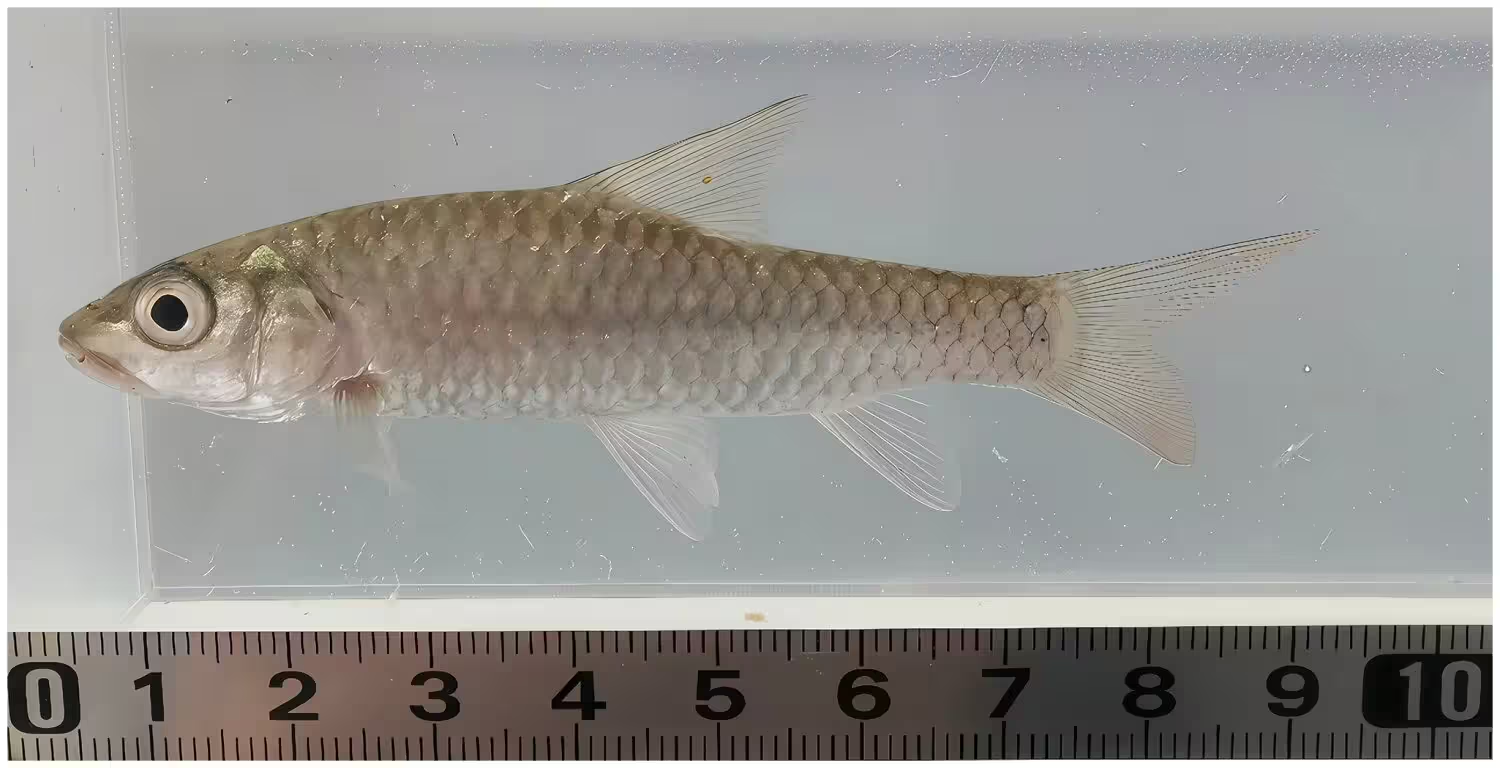
Researchers mapped the 16,578 bp complete mitochondrial genome of Tor yingjiangensis, a rare freshwater fish from the Irrawaddy basin in Yunnan, China, uncovering unexpected evolutionary links that could transform conservation strategies for endangered aquatic species.
Tor yingjiangensis is an endangered freshwater fish valued for its brilliant golden juvenile coloration, but its wild populations are shrinking rapidly due to habitat disruption and overfishing. Because genetic records were previously unavailable, the species remained classified as Data Deficient on the IUCN Red List, hindering targeted conservation efforts.
How Researchers Sequenced The Fish Genome
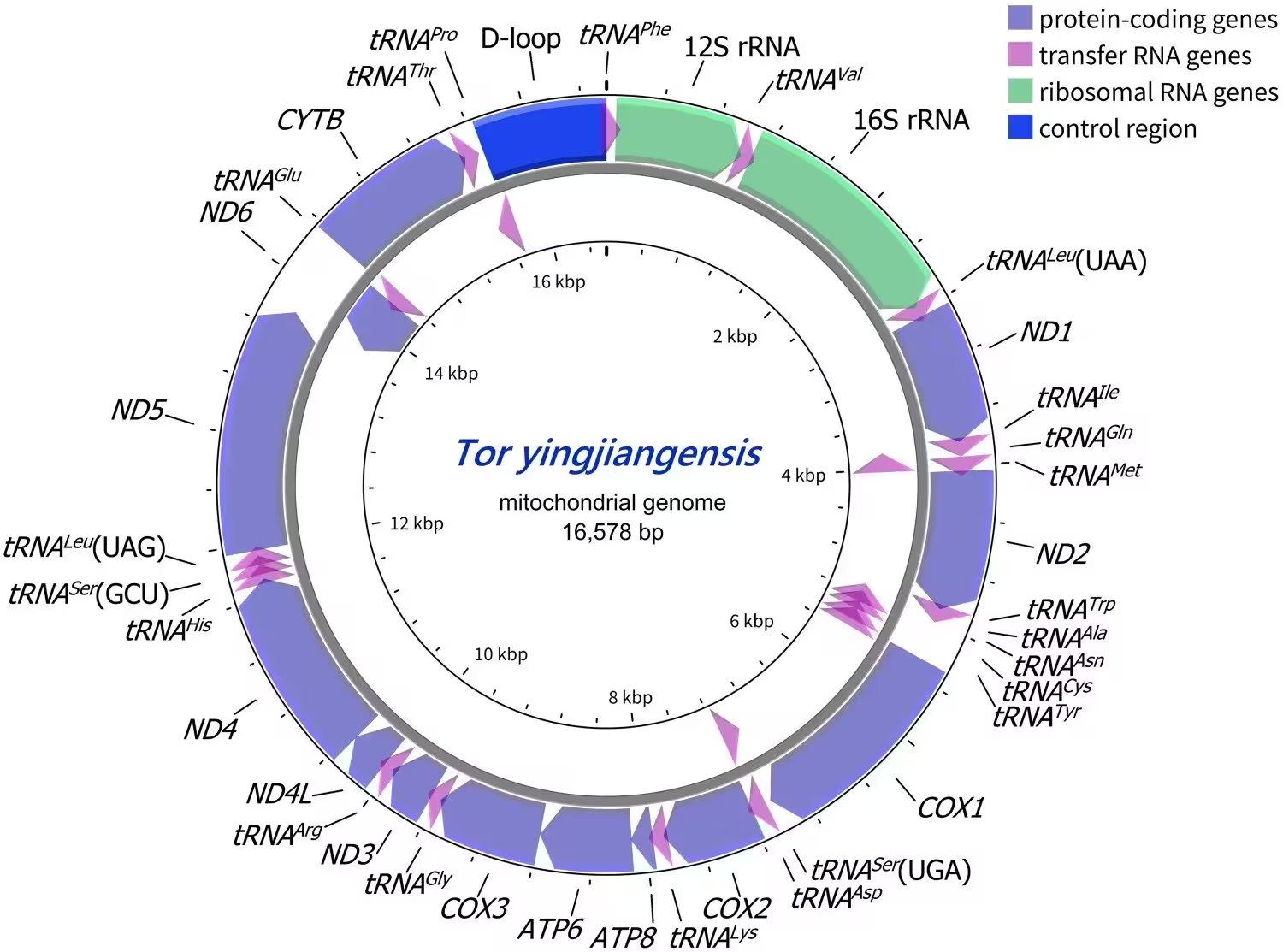
In March 2026, researchers collected three live specimens from the Daying River in Yunnan Province and preserved muscle tissue for laboratory analysis. Total genomic DNA was isolated and sequenced using a 2 × 150 bp paired-end library configuration on a high-throughput platform, producing clean reads that were assembled into mitochondrial contigs. Functional annotation published in Mitochondrial DNA Part B: Resources revealed that the newly mapped mitogenome encodes 37 distinct functional genes, including 13 protein-coding genes, 22 transfer RNAs, two ribosomal RNAs, and a non-coding control region.
The genome exhibits a total GC content of 43.11%, which matches the typical AT-biased nucleotide pattern found across the order Cypriniformes. Most protein-coding genes initiate with the standard start codon, though the COX1 gene uses a variant start codon and several genes rely on incomplete stop signals that likely require post-transcriptional modification.
What Phylogenetic Trees Reveal About Species Relationships
Lead author Li Jia Yue and colleagues reconstructed phylogenetic trees using both maximum likelihood and Bayesian inference methods based on concatenated amino acid sequences. The resulting evolutionary trees strongly support the monophyly of the genus Tor, meaning all sampled species share a single common ancestor. Within this lineage, Tor yingjiangensis emerged as a close sister taxon to a cluster containing Tor mosal mahanadicus and Tor putitora.
Previous molecular investigations relying solely on short genetic markers failed to resolve these relationships clearly due to insufficient data signals. By utilizing all 13 mitochondrial protein-coding genes simultaneously, the authors achieved robust statistical support for these evolutionary placements, demonstrating that the genus forms distinct subclades across different regional river systems.
Why Decoupled Evolution Complicates Traditional Taxonomies
Despite showing extremely close genetic affinity in their mitochondrial DNA, Tor yingjiangensis, Tor mosal mahanadicus, and Tor putitora display striking differences in their physical body shapes and scale counts. This mismatch points to decoupled genetic and morphological evolution, a phenomenon where physical traits evolve at different rates than underlying molecular sequences. Based on these genomic insights, the authors propose that these three taxa should be treated as closely related lineages rather than members of a distinct, uniform species complex.
The newly established genomic reference data provides a vital baseline for future taxonomic revisions, geographic mapping, and management programs aimed at protecting vulnerable freshwater biodiversity across Asia.
The research was published in Mitochondrial DNA. Part B, Resources on November 21, 2026.
This article has been fact checked for accuracy, with information verified against reputable sources. Learn more about us and our editorial process.
Last reviewed on .
Article history
- Latest version
Reference(s)
- Yue, Li Jia., et al. “The complete mitochondrial genome of Tor yingjiangensis (Cypriniformes: Cyprinidae: Torinae) and its phylogenetic analysis.” Mitochondrial DNA Part B, vol. 11, no. 12, November 21, 2026, pp. 1458-1461. Informa UK Limited, doi: 10.1080/23802359.2026.2765633. <https://doi.org/10.1080/23802359.2026.2765633>.
Cite this page:
- Posted by Kamran Akhtar