Palestinian COVID-19 Study Reveals Why 91 Percent Of Ventilated Patients Died
A multicenter retrospective cohort analysis of 150 critically ill patients highlights the heavy toll of multi-organ failure and resource constraints during the pandemic.
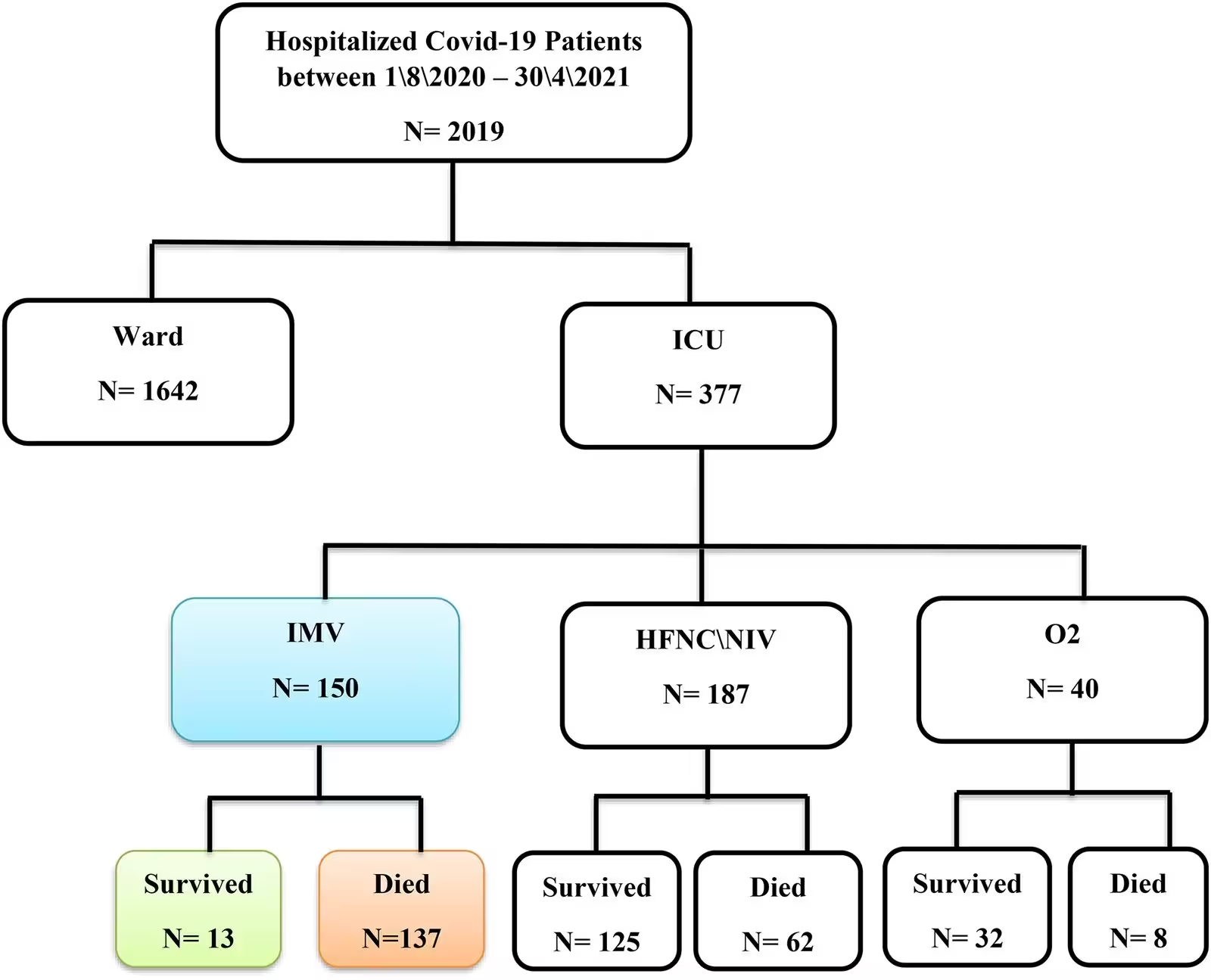
Only 13 out of 150 critically ill COVID-19 patients who required invasive mechanical ventilation survived to hospital discharge in a comprehensive multicenter study conducted across 3 prominent Palestinian hospitals. This translated to an overall mortality rate of 91.3% among mechanically ventilated patients during the second wave of the pandemic, highlighting the severe toll of critical respiratory illness in resource-limited healthcare environments.
Invasive mechanical ventilation involves using a machine connected to a tube placed down the windpipe to help patients breathe when their lungs fail. While essential for saving lives during severe respiratory infections like COVID-19, this intervention is frequently required only when patients are extremely ill and facing multi-organ stress. In this retrospective observational study published in PLoS One, lead researcher Aidah Alkaissi and colleagues from An-Najah National University examined adult patient records from August 1, 2020, to April 30, 2021, to understand the survival rates and clinical outcomes of patients undergoing mechanical ventilation.
How Age and Underlying Health Conditions Shape Survival Odds
The average age of patients in the cohort was 64.06 years, and statistical analysis showed that survivors were significantly younger, with a mean age of 53.76 years compared to 65.04 years for non-survivors. Advancing age is a well-established biological risk factor that diminishes cardiopulmonary reserve and impairs immune responses, making older adults far more vulnerable to critical illness. Furthermore, pre-existing health conditions played a major role in patient trajectories.
Coronary artery disease was significantly more common among patients who did not survive, appearing in 24.8% of non-survivors. Cardiovascular illnesses often involve underlying endothelial dysfunction and reduced myocardial reserve, which heighten vulnerability during severe systemic inflammation. Interestingly, morbid obesity was associated with higher odds of survival in univariable analysis, though the authors caution that this unexpected finding involved a small number of patients and requires careful interpretation in larger future studies.
What Renal Impairment and Lab Results Reveal About Critical Illness
Organ dysfunction beyond the lungs emerged as a critical determinant of survival in the intensive care unit. Acute kidney injury occurred in 60.7% of the total cohort and was significantly more prevalent among patients who died. Peak creatinine levels, which measure kidney function, were also significantly higher in non-survivors, pointing to the dangerous cascade of multi-organ failure during severe viral infections.
Conversely, traditional inflammatory markers such as C-reactive protein and D-dimer showed no significant differences between survivors and non-survivors in this cohort. The authors noted that this departure from some international findings might reflect differences in the timing of laboratory measurements, patient population characteristics, or the severity of illness at the time of hospital admission.
Why Ventilator Settings and Supportive Interventions Matter
The study evaluated various respiratory management strategies and ventilator settings utilized during intensive care treatment. Pressure-control ventilation was used more frequently among survivors, whereas volume-control ventilation predominated among non-survivors. However, the researchers emphasized that ventilation modes likely reflect personalized adaptations for patients with compromised lung compliance rather than a direct causal effect on survival.
Non-pharmacological procedures like tracheostomy were observed more frequently among survivors, reflecting a prolonged clinical course for patients who remained on mechanical ventilation for extended periods. Among pharmacological treatments, remdesivir use was significantly more common among survivors, though the authors stressed that treatment selection could have been influenced by physician decision-making and patient clinical status rather than acting as an independent cure.
What Limits and Future Preparedness Mean for Healthcare Systems
The high mortality rate observed in this study reflects both the extreme severity of illness at presentation and the profound challenges of managing critically ill patients in a resource-constrained setting. Because none of the patients in this cohort had access to COVID-19 vaccination during the pre-vaccination study period, the findings highlight baseline vulnerabilities in the absence of immunization.
The authors noted several limitations, including the retrospective design, the small number of survivors, and the lack of standardized severity scoring systems in historical medical records. These constraints mean the identified associations represent exploratory observations rather than definitive causal predictors. Strengthening critical care infrastructure, ensuring adequate staffing and equipment, and prioritizing early intervention remain vital lessons for future pandemic preparedness.
The research was published in PloS one on November 25, 2026.
This article has been fact checked for accuracy, with information verified against reputable sources. Learn more about us and our editorial process.
Last reviewed on .
Article history
- Latest version
Reference(s)
- Alkaissi, Aidah., et al. “Survival and clinical outcomes of critically ill COVID-19 patients requiring invasive mechanical ventilation in Palestine: A multicenter retrospective cohort study.” PLOS One, vol. 21, no. 11, November 25, 2026, pp. e0363144 Public Library of Science (PLoS), doi: 10.1371/journal.pone.0363144. <https://doi.org/10.1371/journal.pone.0363144>.
Cite this page:
- Posted by Sana Malik