Ohio State University Researchers Test Text Messages To Cut Vaping And Smoking In 292 Young Adults
A new pilot trial evaluates whether culturally targeted mobile messaging can help queer young adults reduce dual tobacco use.

Researchers at The Ohio State University launched a digital health intervention trial to help 292 young adults navigate dual use of nicotine vapes and combustible cigarettes. The study evaluates how text-delivered messaging influences smoking behaviors and health perceptions in high-risk populations.
Young adults who identify as lesbian, gay, bisexual, transgender, or queer experience disproportionately high rates of dual product use, ranging from 22 percent to 40 percent. Many individuals in these communities often underestimate the health risks associated with nicotine and tobacco while remaining reluctant to quit all nicotine entirely. Traditional public education campaigns frequently rely on single-product messaging that fails to engage users who are juggling both vapes and traditional cigarettes. To address this gap, Joanne G Patterson and colleagues designed a targeted mobile intervention that delivers multimedia text messages straight to participants’ mobile devices.
Designing Culturally Targeted Text Messages For Young Adults
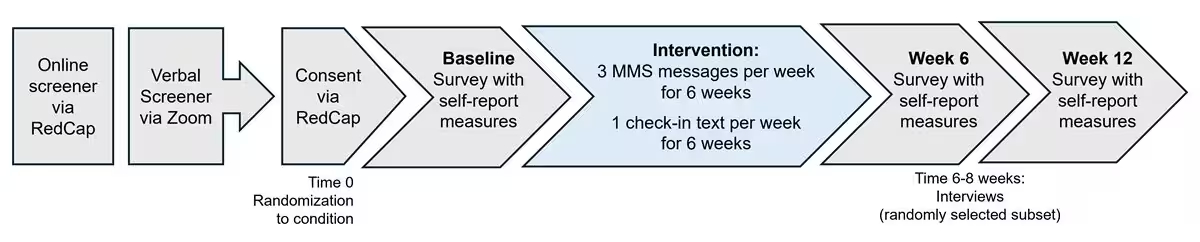
The intervention relies on mobile multimedia messaging, which sends image-integrated text directly to personal phones. The research team developed culturally targeted content through extensive formative research, ensuring the imagery felt authentic and avoided reductive stereotypes. Participants were divided into three experimental paths, receiving messages three times a week for a duration of 6 weeks. The trial protocol was published in JMIR Research Protocols in November 2026, outlining parameters for a larger phase 3 evaluation.
Comparing Standard Risk Versus Comparative Risk Messaging
The study utilizes a parallel-group randomized controlled trial design to test different message framing strategies. One experimental group receives standard risk messages describing the shared health dangers of both vapes and cigarettes. A second experimental group receives comparative risk messages that contrast the relative harms of cigarettes against vapes. A control group receives unrelated preventive messages focusing on sun safety. Researchers track participant engagement through weekly interactive text prompts that allow users to reply with short feedback or reaction emojis.
Tracking Feasibility And Preliminary Cessation Outcomes
The primary outcomes of the pilot trial focus on intervention feasibility, participant recruitment, retention rates, and protocol adherence. Out of 991 individuals who completed an online screener, research staff enrolled 292 eligible participants into the active trial arms. Follow-up surveys conducted at 6 weeks and 12 weeks assess smoking and vaping cessation, changes in risk perceptions, and behavioral intentions to quit. The authors noted that self-reported survey measures remain a limitation, and future trials could benefit from remote biochemical verification of abstinence to strengthen data accuracy.
The research was published in JMIR research protocols on November 25, 2026.
This article has been fact checked for accuracy, with information verified against reputable sources. Learn more about us and our editorial process.
Last reviewed on .
Article history
- Latest version
Reference(s)
- Patterson, Joanne G., et al. “A Digital Health Communication Intervention to Reduce Nicotine and Tobacco Use Among Young Adults (Our Health Matters): Protocol for a Pilot Randomized Controlled Trial.” JMIR Research Protocols, vol. 15, November 25, 2026, pp. e99627-e99627. JMIR Publications Inc., doi: 10.2196/99627. <https://doi.org/10.2196/99627>.
Cite this page:
- Posted by Tariq Hassan