Why Measuring Total Coral Cover Hides the Real Collapse of Reefs
A new scientific review reveals that tracking only living coral cover masks the rapid loss of structural complexity and essential marine ecosystem functions.
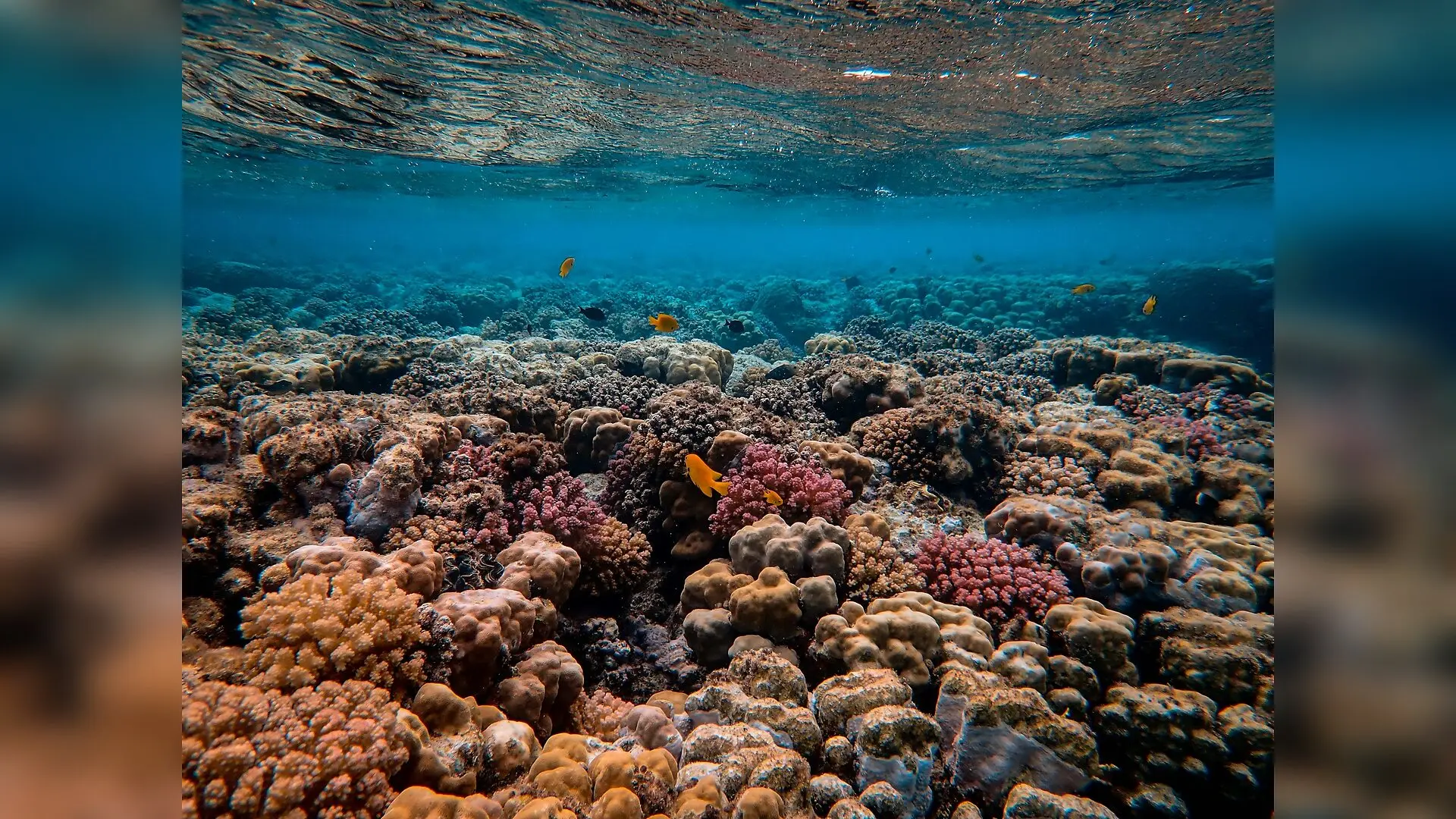
When warm ocean waters and disease sweep through a coral reef, the total percentage of living coral left behind often paints a deceptively optimistic picture of survival. A new scientific synthesis published in Global Change Biology reveals that tracking only total coral cover misses the complete erosion of essential reef functions. As climate change and human pressures disproportionately kill off complex, fast-growing coral species, reefs across the globe are losing their structural complexity and ability to produce calcium carbonate. Even when overall coral cover rebounds or appears stable on paper, the underlying ecological machinery often collapses.
Why Coral Identity Matters More Than Pure Abundance
For decades, marine scientists and conservation programs have relied on coral cover as the primary metric for measuring reef health. However, author Lorenzo Álvarez-Filip explains that a reef dominated by small, encrusting, slow-growing corals is vastly different ecologically from one dominated by branching or tabular reef-builders, even if total cover percentages look identical. Species contributions to calcification and structural complexity span multiple orders of magnitude. When dominant framework-building corals disappear, the physical architecture that shelters hundreds of species of fish and invertebrates vanishes right along with them.
Coral reefs provide vital coastal protection against powerful storm waves and sustain commercial fisheries relied upon by hundreds of millions of people. Yet, thermal bleaching events and disease outbreaks act as selective filters. They tend to destroy corals with high metabolic rates and complex shapes while leaving behind sturdier, simpler species. This non-random loss drives widespread community homogenisation, pushing once-thriving marine habitats into functionally impoverished states.
How Sequential Stressors Erode Caribbean Reefs Over Decades
The Caribbean offers a particularly clear window into this long-term functional decline, having suffered sequential disturbances over the past fifty years. In the 1980s, white-band disease wiped out more than 95% of ecologically crucial staghorn and elkhorn corals, known scientifically as Acropora species. Decades later, thermal stress and stony coral tissue loss disease struck the remaining massive and meandroid coral species that had managed to survive earlier epizootics.
Model simulations tracking Caribbean coral changes from 1980 to 2024 illustrate this stark divergence. When researchers compared overall coral cover declines against a Reef Functional Index, they found that functional output plummeted much faster than total cover. Simulations testing random species losses against targeted losses of top reef-builders showed that a small subset of key taxa drives the entire system. Without these specific foundation species, carbonate budgets plunge, leaving many modern reefs in a net-erosional state where skeletons dissolve faster than new coral can grow.
What Happens When Structural Complexity Disappears
The loss of complex coral growth forms triggers cascading effects throughout the entire marine food web. Branching and plating corals create intricate microhabitats that support diverse fish functional guilds, including refuge-dependent and specialized species. As these complex structures flatten into simple, algae-overgrown pavements, fish diversity declines sharply. Furthermore, even when dead coral skeletons remain in place temporarily, their post-mortem persistence varies widely by species. Porous, delicate frameworks erode rapidly due to biological and chemical boring, whereas denser architectures resist degradation for slightly longer periods.
Compounding the crisis, mass bleaching events now recur at intervals far shorter than the minimum recovery window required for reefs to rebuild their complex architectures. While active coral restoration projects are expanding rapidly around the world, many initiatives focus heavily on fast-growing species for quick aesthetic cover gains rather than restoring full compositional breadth and demographic size structures.
The Path Forward for Global Conservation and Management
To prevent further ecological collapse, the author argues that science and management must shift their primary focus away from simple cover percentages. Monitoring programs need to integrate community composition and functional traits routinely. Furthermore, conservation strategies must prioritize climate-smart marine protected areas that protect surviving keystone reef-builders, while restoration efforts should evaluate success against concrete functional benchmarks rather than mere survivorship.
The research was published in Global change biology on November 1, 2026.
This article has been fact checked for accuracy, with information verified against reputable sources. Learn more about us and our editorial process.
Last reviewed on .
Article history
- Latest version
Reference(s)
- Álvarez‐Filip, Lorenzo. “Global Change Is Reshaping Coral Communities and Threatening Reef Physical Functionality.” Global Change Biology, vol. 32, no. 11, October 29, 2026 Wiley, doi: 10.1111/gcb.71161. <https://doi.org/10.1111/gcb.71161>.
Cite this page:
- Posted by Kamran Akhtar