Hidden for Decades: The Secret Fortune of 15,000 Buried Coins Finally Resurfaces
Decades after vanishing underground before World War II, a long-lost hoard of rare coins has finally been unearthed. Discover the story of the discovery.
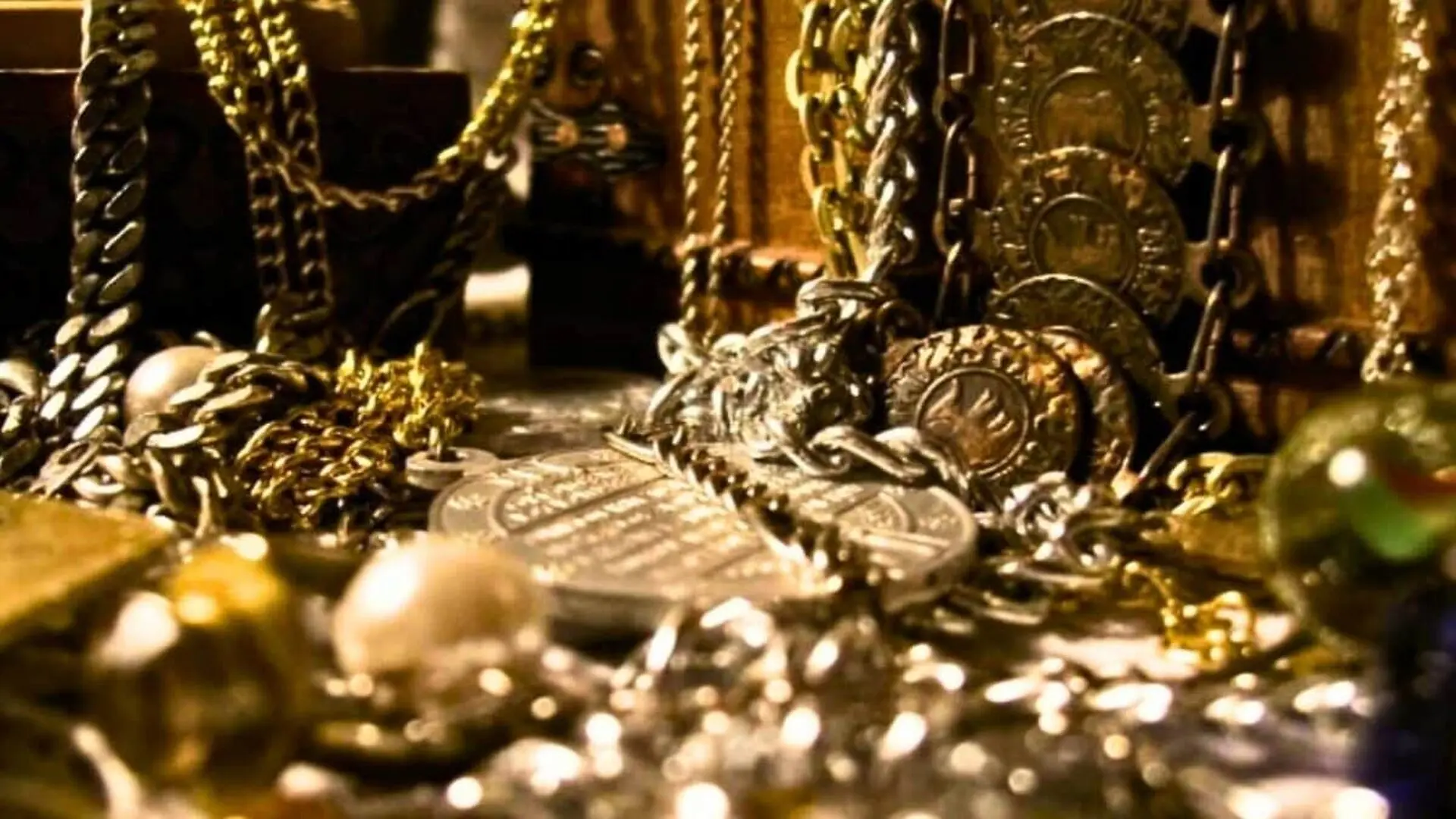
For decades, one of the world’s most significant private numismatic troves remained entirely shielded from public view. Rather than resting in secure museum vaults or circulating within elite auction houses, the vast majority of this treasure was hidden beneath the earth, a silent witness to the turmoil of the 20th century.
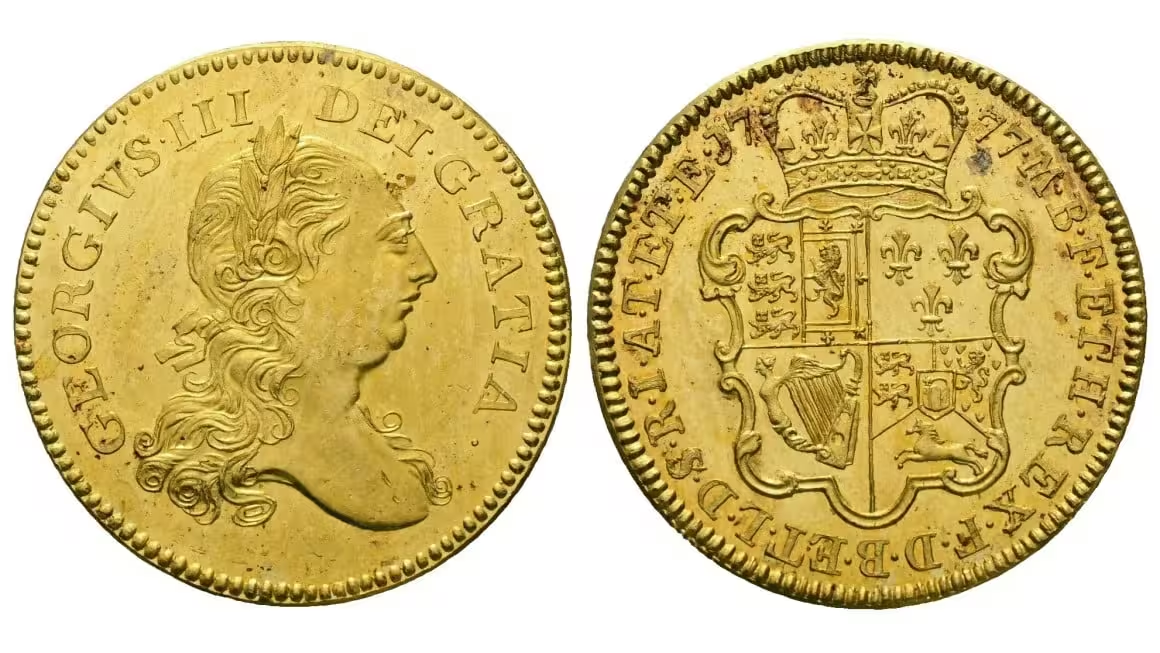
The collection, known as the Traveller Collection, was assembled by an anonymous European enthusiast in the years leading up to World War II. It comprises approximately 15,000 coins, representing over 100 different territories and centuries of global monetary history. Following a long period of dormancy, the holdings are currently being dispersed through a sequence of high-profile auctions managed by the Zurich-based firm Numismatica Ars Classica (NAC).
Industry estimates, as reported by CNN, place the projected total value of the collection at upwards of $100 million, with several individual specimens appearing on the market for the first time in over 80 years.
A Strategic Accumulation Amid Global Instability
The collector’s journey began in the early 1930s, fueled by a desire for tangible assets following the 1929 market crash, which had eroded public faith in traditional banking. Initially focused on modern gold pieces with high bullion value, the collector’s ambitions quickly evolved. He and his wife traveled extensively across Europe and the Americas, sourcing pieces based on historical significance, condition, and rarity.
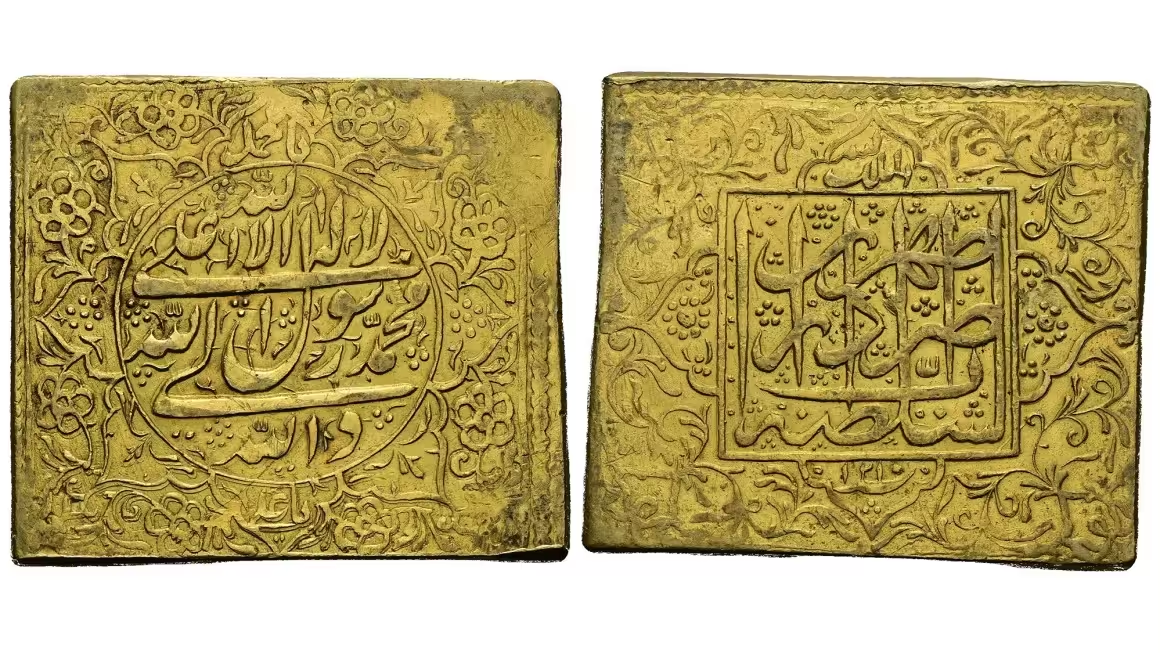
His meticulous record-keeping transformed the collection from a simple accumulation of metal into a scholarly archive. He documented every transaction, preserving the provenance of pieces that linked back to earlier, storied collections. However, as the shadow of war deepened in the late 1930s, the safety of these assets became a primary concern.
Faced with the advance of Nazi forces, the collector opted to secure his life’s work by burying it on his property. He packed the coins into containers, including cigar boxes and heavy metal cases, and interred them underground. He did not survive the war to retrieve them, suffering a fatal stroke shortly after the occupation began. For more than half a century, the coins remained entombed, their existence known only to his immediate family.
From Oblivion to Authentication
The collection was only rediscovered when the collector’s widow, fearing the location of the cache would be lost upon her death, disclosed the site to relatives. The ensuing excavation revealed a massive, scattered archive that had been stored across three continents, making the sheer scale of the holdings difficult to comprehend even for the family.
When the collection was eventually brought to NAC, the specialists—including Arturo and Giuliano Russo—were initially skeptical of the claims regarding its quality. Their hesitation, however, vanished upon inspection. The authentication process proved to be an immense undertaking, requiring 15 months of intensive study rather than the week initially anticipated. David Guest, the lead specialist for the British section, noted that the process was surreal, as he encountered pieces that had effectively been absent from the world for generations.
Record-Breaking Market Impact
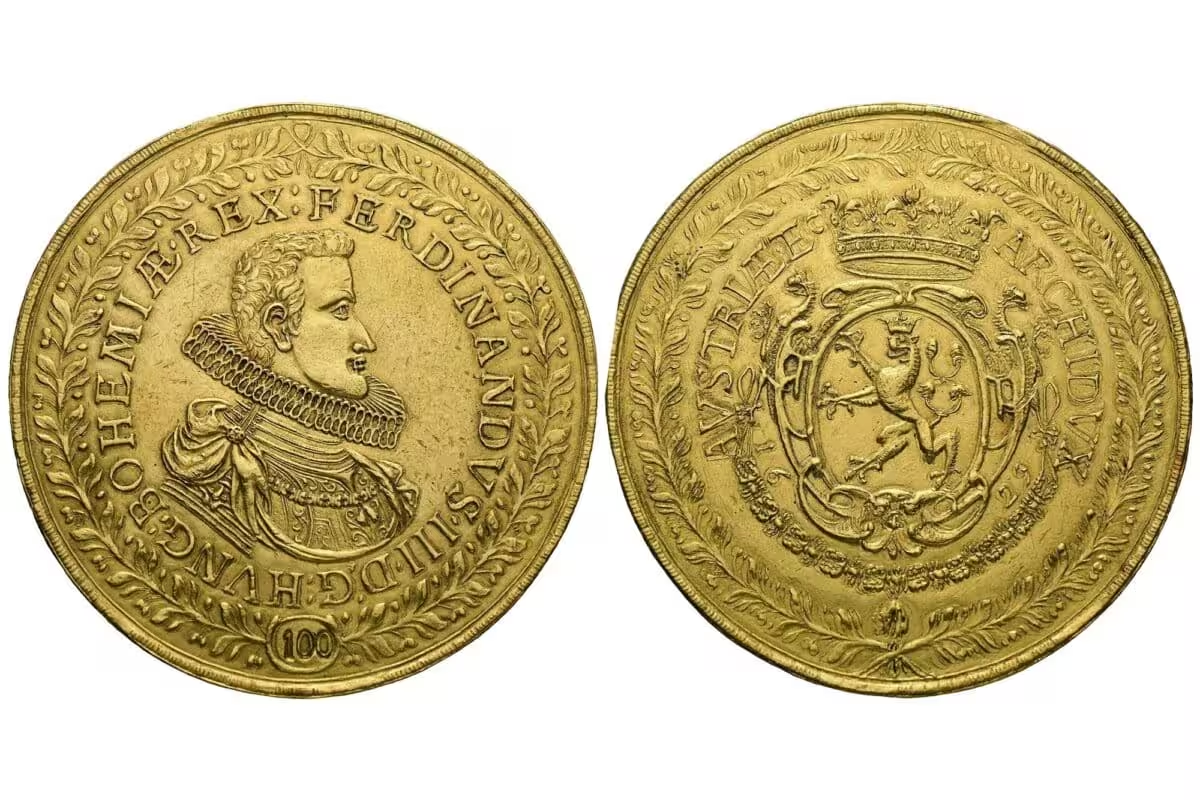
The true caliber of the collection was confirmed when items reached the auction block. A standout piece, a 100-ducat gold coin minted in Prague in 1629 for Ferdinand III, became a focal point of NAC’s Auction 162 in November 2025. Containing nearly 350 grams of fine gold, the coin fetched 1.95 million Swiss francs. Its value was derived not merely from the precious metal, but from its historical weight, impeccable provenance, and extraordinary scarcity.
The ongoing dispersal, which began in May 2025 with the sale of British coinage, is being conducted in waves to ensure each piece is meticulously cataloged and researched. By pacing these sales, NAC is effectively turning the collection into a permanent historical record, allowing each coin to reclaim its place in the numismatic narrative—a fitting conclusion for a collection that was, for so long, buried by the very history it sought to preserve.
This article has been fact checked for accuracy, with information verified against reputable sources. Learn more about us and our editorial process.
Last reviewed on .
Article history
- Latest version
Reference(s)
- “Numismatica Ars Classica NAC AG.”, April 28, 2020 Numismatica Ars Classica NAC AG <https://www.arsclassicacoins.com/>.
- Kolirin, Lianne. “$100 million coin collection, buried for decades, up for auction.”, March 27, 2025 CNN <https://edition.cnn.com/2025/03/27/style/buried-coin-collection-auction-scli-intl/index.html>.
Cite this page:
- Posted by David Anderson