Scientists Just Discovered Two Strange New Sea Spider Species In The Salish Sea
Scientists have discovered two new sea spider species in Canadian waters, the first such identification in the region in over 100 years.
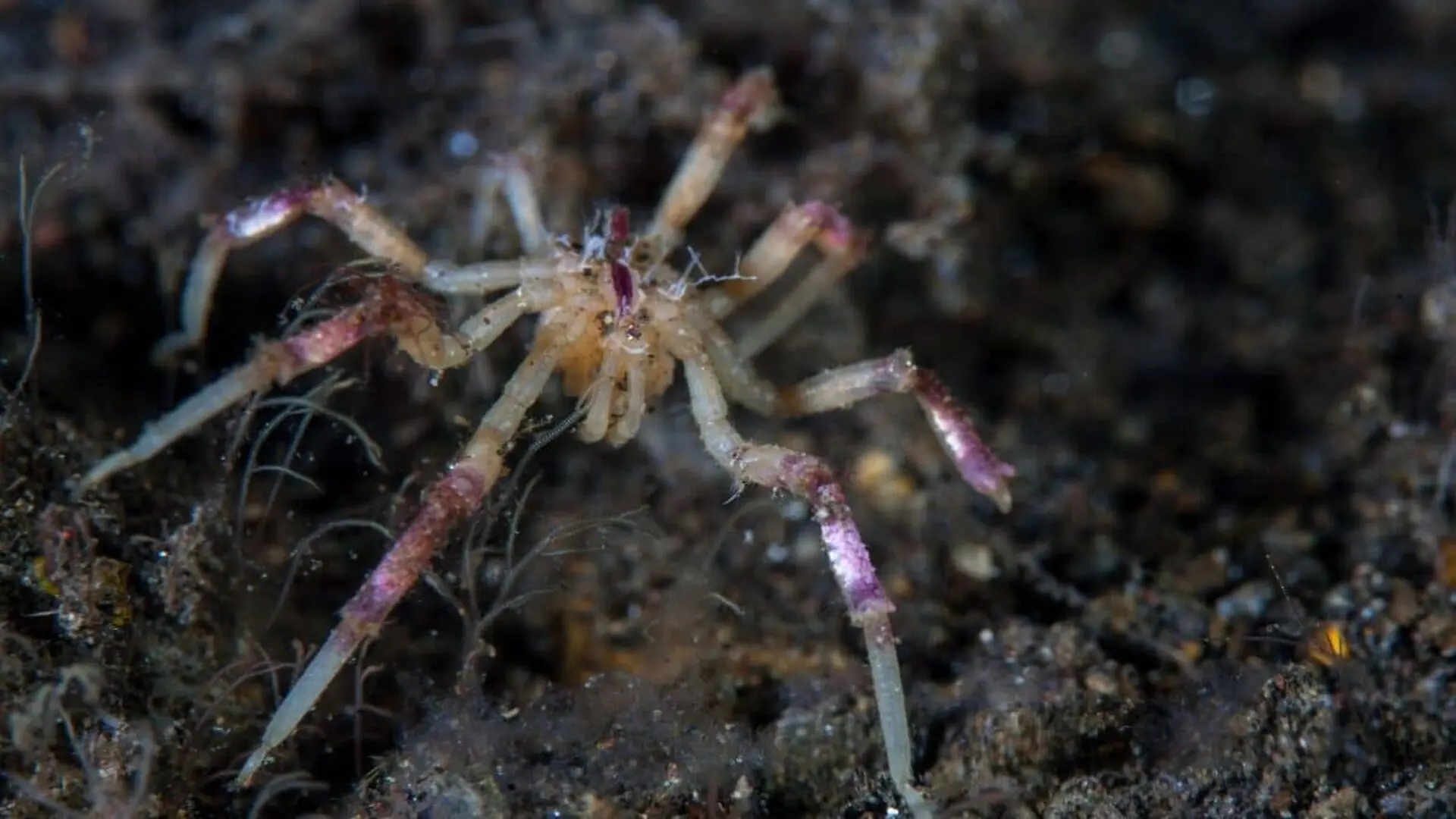
Marine researchers have identified two previously unknown species of sea spiders in the coastal waters of the Salish Sea, marking the first time such a discovery has been documented in this region in over a century. The findings, resulting from a year-long field study led by the University of British Columbia, highlight the hidden biological diversity within the shallow ecosystems surrounding Vancouver Island and Quadra Island.
The two newly described specimens, Callipallene pilosuspedes and Tanystylum kiixin, belong to the Pycnogonida class, a group of marine arthropods containing more than 1,300 recognized species worldwide. While they share a name with their terrestrial counterparts, these creatures are biologically distinct, having evolved to exist exclusively in underwater environments as slow-moving inhabitants of the seafloor.
Distinct Morphology and Behavioral Traits
Cormac Toler-Scott, the lead researcher on the project, noted to NPR that the evolutionary paths of sea spiders diverged from terrestrial arachnids long ago, leaving them entirely dependent on aquatic habitats. These organisms display remarkable physical variety, a fact underscored by the contrasting appearances of the two new finds.
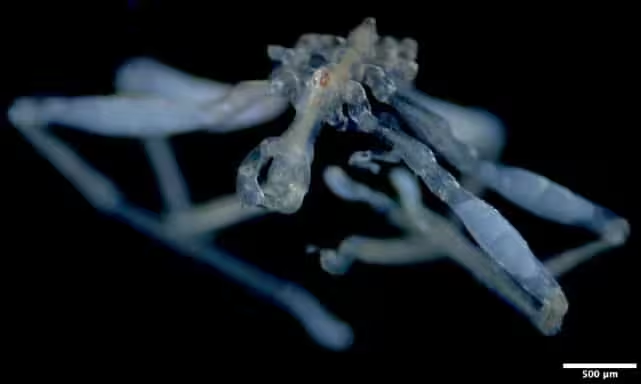
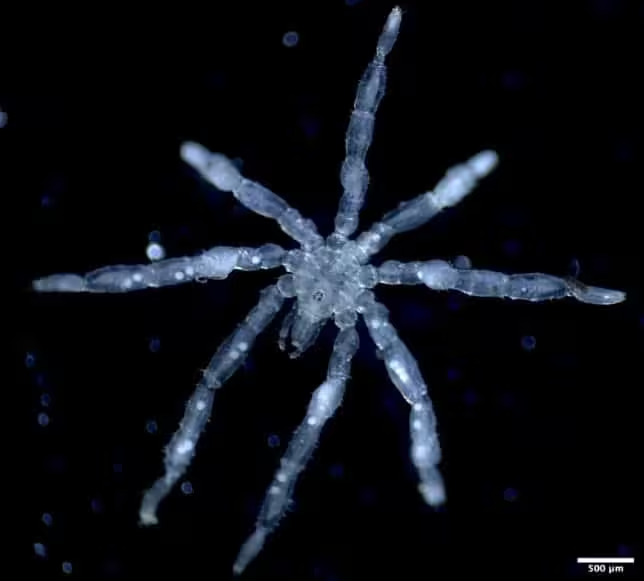
Callipallene pilosuspedes is characterized by striking red eyes, a specialized three-lipped mouth, and a curved spine structure along its limbs. It also possesses specialized appendages known as ovigers, which the creature uses to groom itself and remove algae or debris. In contrast, Tanystylum kiixin exhibits a more robust form with thicker, shorter legs. When first recovered by the team, the latter species was notably covered in environmental detritus, lacking the intricate self-cleaning mechanisms found in its cousin. The researchers named the species Kiixin in honor of the nearby ancient Indigenous village.
Specialized Feeding and Reproductive Cycles
These sea spiders are frequently found inhabiting hydroid colonies, which are colonial marine organisms that serve as both a sanctuary and a food source. Unlike terrestrial spiders that rely on silk webs to ensnare prey, these marine arthropods use specialized mouthparts to pierce hydroid tissues, effectively extracting nutrients at the cellular level.
The reproductive strategy of the species is also markedly different from that of land spiders. While females produce the eggs, the males take on the role of primary caregivers, using their ovigers to carry and protect the eggs until they reach maturity. Because they lack venom and fangs, these creatures rely heavily on camouflage to evade predators, with some individuals even mirroring the coloration of their food source.
Toler-Scott emphasized that documenting new species remains a challenging, albeit rare, endeavor in modern marine biology, often requiring significant time and resources to explore poorly understood habitats. The University of British Columbia team intends to continue their surveys, aiming to broaden our understanding of the sea spider population dynamics within the Salish Sea.
This article has been fact checked for accuracy, with information verified against reputable sources. Learn more about us and our editorial process.
Last reviewed on .
Article history
- Latest version
Reference(s)
- Duster, Chandelis. “Scientists discover two new species of sea spiders along Canadian coastline.”, September 27, 2026 NPR <https://www.npr.org/2026/09/27/nx-s1-5982026/new-sea-spider-species>.
Cite this page:
- Posted by Linda Wilson