How To See The Stunning 2026 Harvest Moon Following The Autumnal Equinox
The 2026 Harvest Moon will rise shortly after the autumn equinox, lighting up the night sky with a brilliant display visible to observers worldwide.
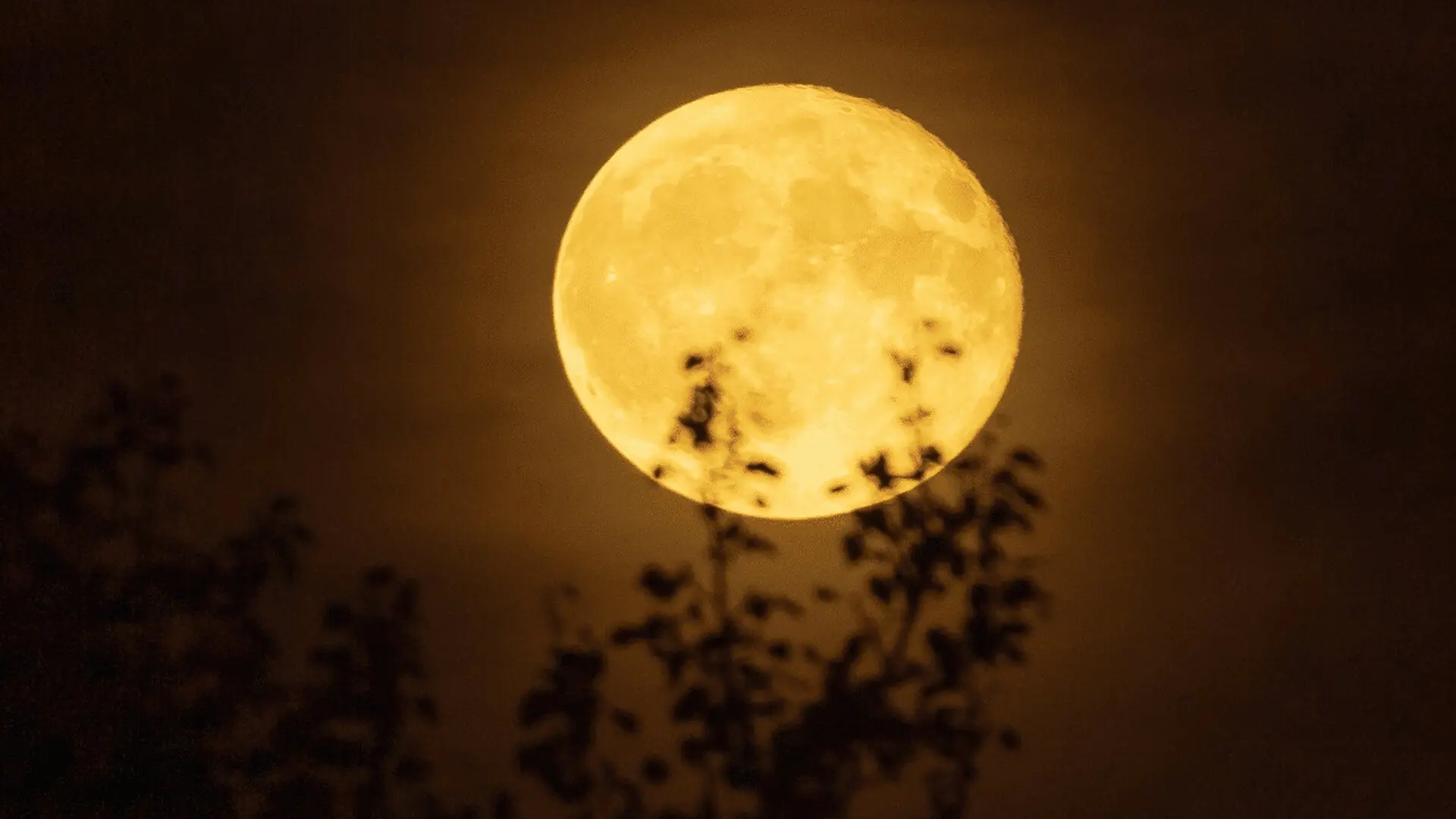
The annual Harvest Moon is set to grace the night sky on Saturday, September 26, marking one of the most culturally significant lunar events of the year. Following the official arrival of astronomical autumn in the Northern Hemisphere on September 22 at 8:05 p.m. EDT, this full moon arrives as a traditional herald of the changing seasons, according to The Old Farmer’s Almanac.
The name Harvest Moon is deeply rooted in agricultural heritage. Before the advent of modern electricity, this particular full moon provided vital, extended light in the early evening, allowing farmers to continue their work long after the sun had dipped below the horizon. The moon’s unique orbital timing during this period causes it to rise shortly after sunset for several consecutive nights, flooding the fields with the brightness necessary to complete the collection of summer crops.
A Deep History in Agricultural Cycles
While the term is synonymous with the September full moon, the name is specifically attributed to the full moon that occurs closest to the autumnal equinox. Over the centuries, other names have also been used to track the progression of the year, including the Corn Moon, the Falling Leaves Moon, and the Rutting Moon. These titles serve as a testament to how human communities have historically synced their lives, agricultural labor, and observations of local wildlife with the movements of the night sky.
Observing the Celestial Event
For those planning to view the spectacle, the moon will rise near the horizon around sunset on September 26. This is often considered the optimal time for observation, as the moon remains close to the horizon, appearing large and often bathed in warm hues of yellow, orange, or soft red. These colors are the result of Earth’s atmosphere, which scatters shorter wavelengths of light when the celestial body is low in the sky.
As the Moon ascends higher into the night, the atmospheric interference decreases, and the lunar surface will take on its characteristic brilliant, stark white appearance. No specialized equipment is required to appreciate the event; however, observers may find that choosing an open location away from dense tree lines or tall buildings provides the most unobstructed view. While binoculars can offer a closer look at the moon’s cratered topography, the event remains perfectly accessible to the naked eye.
A Timeless Connection to the Sky
The Harvest Moon is a powerful reminder of the intersection between astronomical mechanics and the rhythm of life on Earth. As we move through the transition of the autumnal equinox, when day and night reach near-equal duration, the appearance of this full moon signals the closing of the summer season. It continues to serve as a shared, global moment of connection, linking modern-day skywatchers to the same celestial cycles that guided our ancestors through their own seasonal shifts.
This article has been fact checked for accuracy, with information verified against reputable sources. Learn more about us and our editorial process.
Last reviewed on .
Article history
- Latest version
Reference(s)
- Schaaf, Fred. “What Is the Harvest Moon?.”, September 17, 2026 Almanac.com <https://www.almanac.com/what-harvest-moon>.
Cite this page:
- Posted by Linda Wilson