Hidden 400,000-Year-Old Cave Unearthed Near Haifa Reveals Ancient Tools and Bones
A sealed prehistoric cave near Haifa preserves rare pre‑human life traces, stunning archaeologists with pristine evidence from a vanished world.
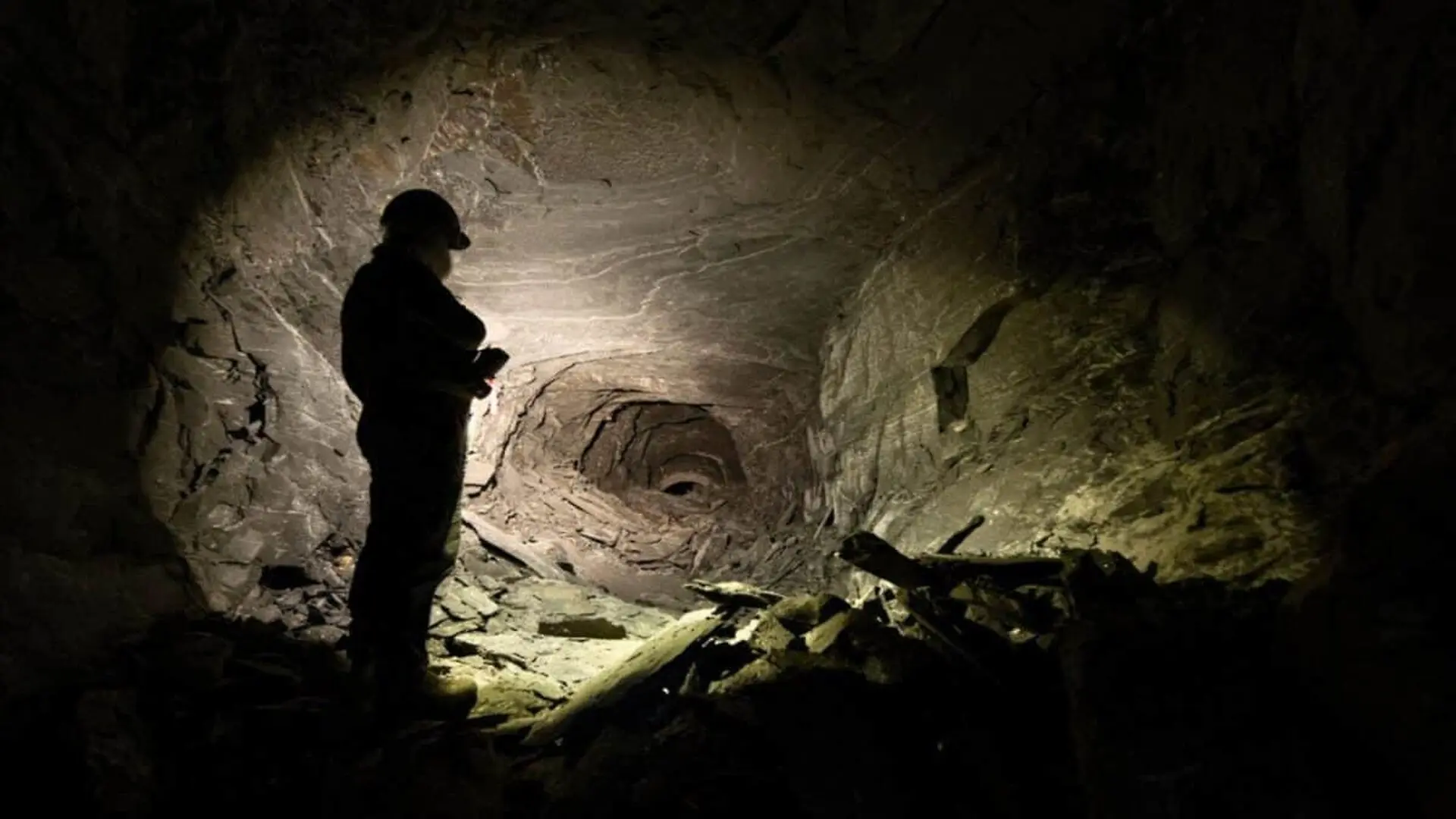
Archaeologists have uncovered a cavern on the periphery of Fureidis, a community just south of Haifa near the Zikhron Ya’akov interchange. The Israel Antiquities Authority announced that the formation dates to between 400,000 and 250,000 years ago and has remained sealed like a natural time capsule for countless generations.
The investigation is financed by the Ayalon Highways Company and overseen by Dr. Kobi Vardi and Amit Gabbay of the Israel Antiquities Authority, in partnership with Prof. Ron Shimelmitz of the Zinman Institute of Archaeology and the School of Archaeology and Maritime Cultures at the University of Haifa.
The deposit is attributed to the Acheulo‑Yabrudian culture, a Late Lower Paleolithic complex that predates the spread of Neanderthals and anatomically modern humans across the Levant.
A Millennia‑Old Sealed Chamber
Researchers liken the site to a time capsule because its isolation from external influences preserved delicate archaeological layers. Such long‑term closure is rare in the region, giving the cave a distinctive scientific value.
Prof. Shimelmitz emphasized the exceptional preservation, noting that the cavity captures a narrow slice of the Lower Paleolithic just before the rise of Neanderthals and modern humans. He highlighted how the site’s conditions have shielded it from the erosive forces that typically degrade comparable deposits.
Dr. Vardi, head of the Prehistory Branch at the Israel Antiquities Authority, pointed out the scarcity of sites with this level of integrity. He compared its significance to the famed Nahal Me’arot complex, suggesting that the new find will enable scholars to reconstruct daily activities with unprecedented clarity.
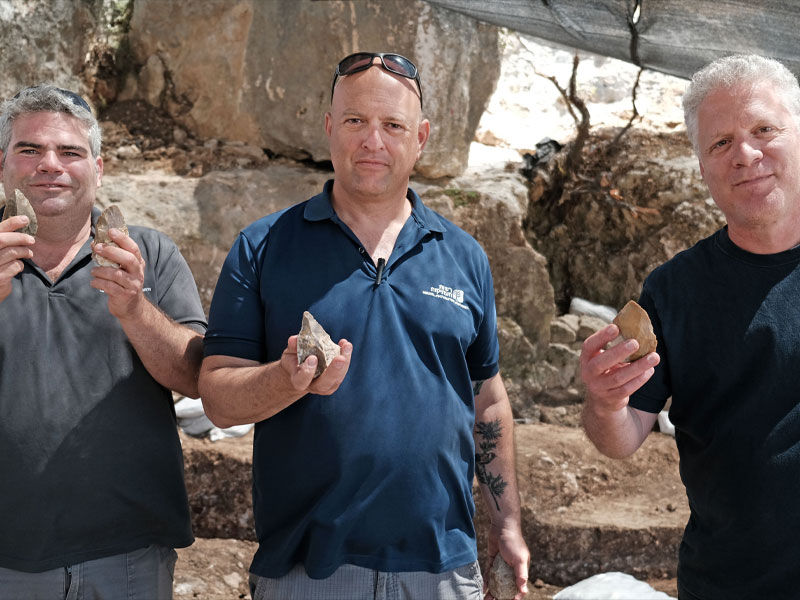
Given the paucity of intact sites from this era, every artifact recovered carries amplified importance, offering a rare glimpse into a segment of prehistory that is otherwise difficult to piece together.
Stone Implements and Fauna Reveal a Persistent Settlement
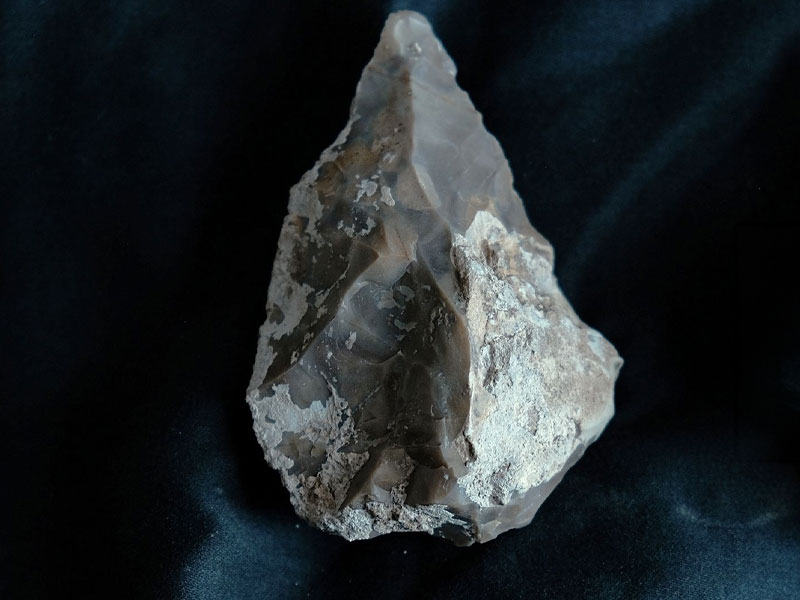
Excavators have already retrieved a suite of flint tools, including diminutive handaxes, scrapers and blades. According to The Jerusalem Post, these objects exemplify the sophisticated lithic production associated with the Acheulo‑Yabrudian tradition.
The variety of implements suggests that the occupants performed a range of tasks on site, rather than merely passing through. Handaxes served as general cutting tools, while scrapers and blades were likely used for more specialized processing activities.
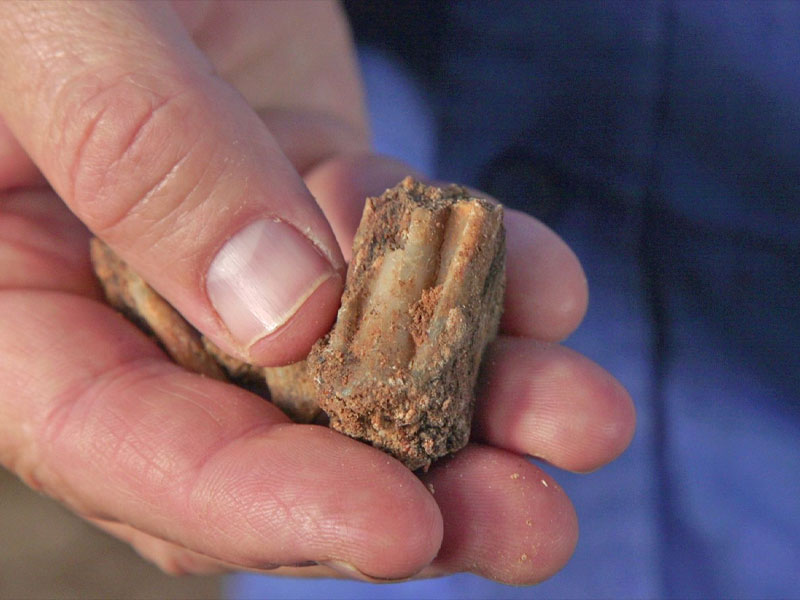
Animal remains uncovered alongside the tools include bones of fallow deer, gazelle and extinct horse species. Together, the faunal and lithic assemblages indicate that hunting and meat preparation were integral components of the cave’s use.
Evidence of water in the vicinity further enhances the site’s appeal to hunter‑gatherer groups, providing a reliable resource for repeated occupation. The convergence of tool debris, animal bones and hydrological indicators points to a location that was repeatedly revisited over an extended period.
Insights into a Pivotal Phase of Human Evolution
Prof. Shimelmitz noted that the cave captures a transitional moment at the tail end of the Lower Paleolithic, just before the dominance of Neanderthals and modern humans. He described the gradual shifts in physiology, technology and social organization observable in this layer as early precursors of later cultural complexity.
One hallmark of the period, he explained, was the emergence of larger, more stable groups that remained at a single site for longer intervals, moving away from highly mobile lifestyles.
Archaeological records from comparable caves reveal intensive fire use and sustained habitation, suggesting a growing emphasis on social cooperation and intergenerational knowledge transmission—key steps in the evolutionary trajectory of hominins.
Because sites dating precisely to this interval are scarce, the newly uncovered cavern offers a unique laboratory for examining how early humans adapted, innovated and organized themselves on the eve of major evolutionary milestones.
Road‑Work Survey Uncovers Unexpected Heritage Site
The discovery emerged from a mandatory archaeological assessment linked to a planned highway expansion. Israeli law requires a salvage excavation to precede any major construction, and the Ayalon Highways Company provided funding for this preliminary work.
What began as a routine pre‑construction check quickly evolved into a large‑scale research initiative after the significance of the find became apparent. The Israel Antiquities Authority and the University of Haifa are now coordinating an extensive program to reconstruct the lifeways, environmental adaptations and technological innovations of the cave’s occupants.
Project leaders expressed gratitude for the highway company’s cooperation, noting that the excavation will continue alongside the road works. They hope that, once research is complete, the site will be accessible to the local community, school groups and anyone interested in the deep prehistory of the region.
This article has been fact checked for accuracy, with information verified against reputable sources. Learn more about us and our editorial process.
Last reviewed on .
Article history
- Latest version
Reference(s)
- <https://www.gov.il/en/pages/300000-year-old-prehistoric-cave-uncovered-south-of-haifa-11-jun-2026>.
- SELA-EITAM, MIRIAM. “WATCH: A Paleolithic time capsule: Rare prehistoric cave discovered near highway outside of Haifa.”, June 11, 2026 The Jerusalem Post <https://www.jpost.com/archaeology/article-899059>.
Cite this page:
- Posted by Vikram Desai