Ancient Footprints Reveal New Mexico Was Once a Lush World Before Turning Into a Desert
Ancient human footprints at White Sands appear and vanish across mud layers, leaving researchers questioning if these gaps reflect history or hidden clues.
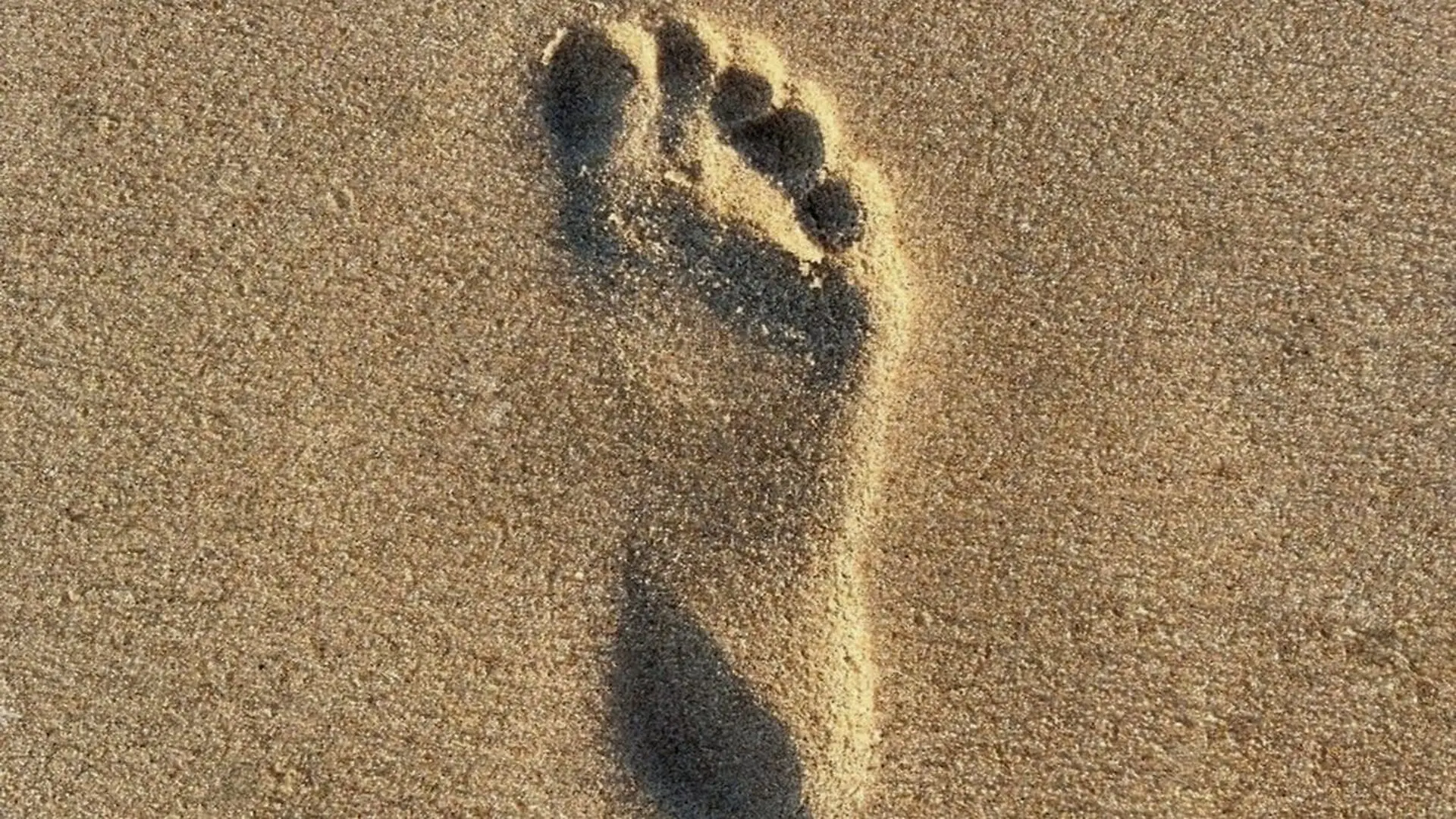
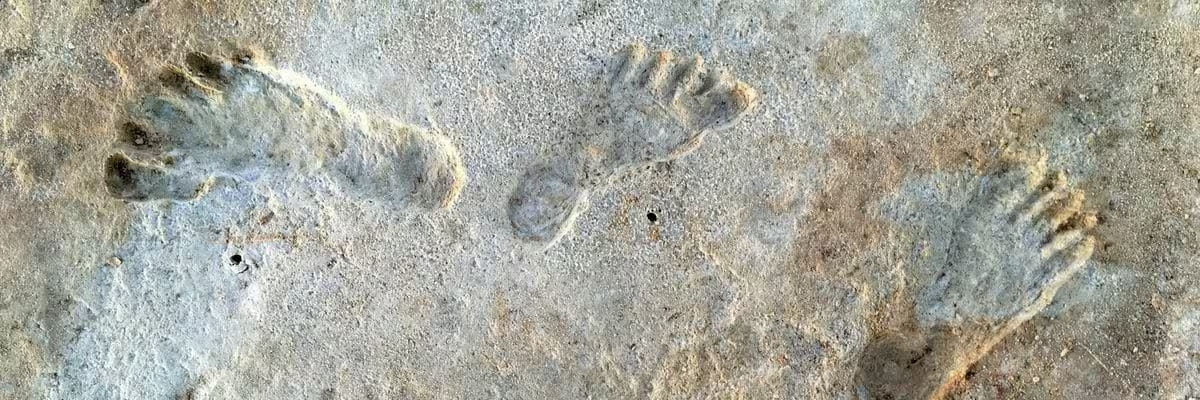
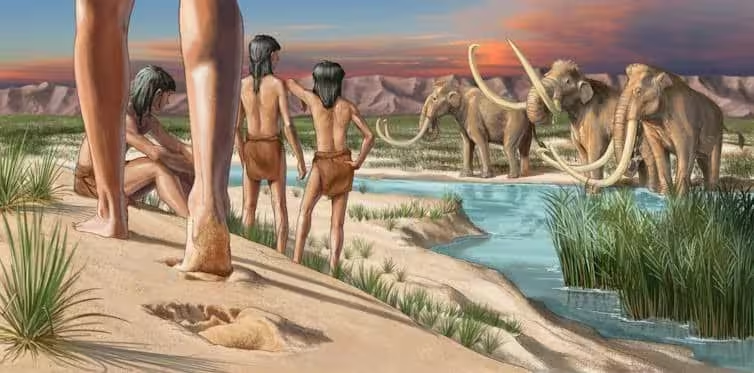
Roughly 23,000 years ago, small groups of people trekked across a muddy shoreline in what is now New Mexico. While the modern landscape of White Sands National Park is defined by vast, shifting gypsum dunes, new research reveals that these ancient travelers navigated a dramatically different environment characterized by a sprawling lake, dense conifer forests, and a climate significantly colder than today.
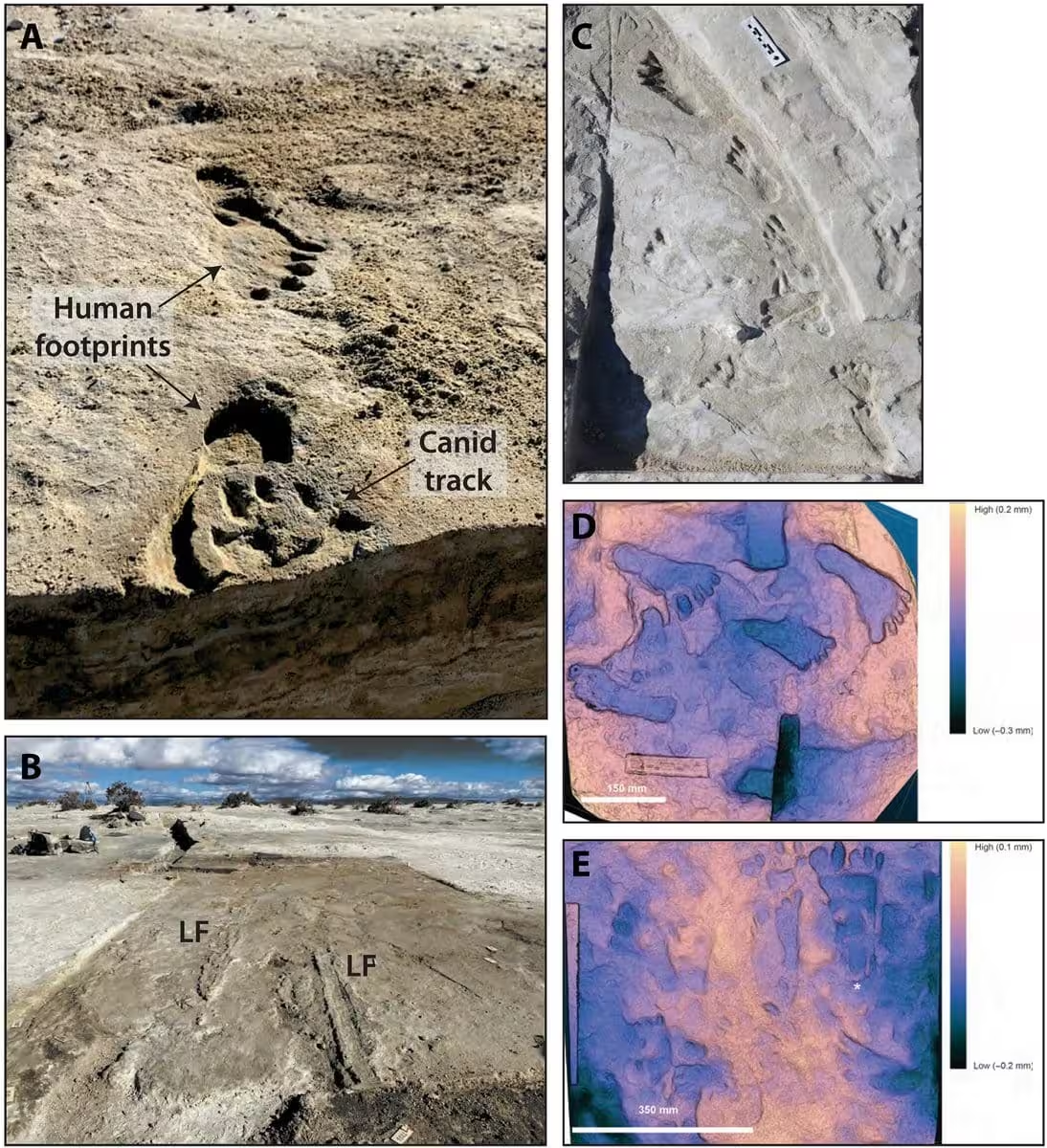
The study, published in Science Advances, offers a detailed reconstruction of the Tularosa Basin during the Last Glacial Maximum. By analyzing twenty distinct sediment layers containing human tracks and animal prints, researchers have mapped how the environment evolved alongside the people who traversed it.
Mapping a Changing Climate
During this era, Lake Otero served as a central feature of the basin, with local temperatures dropping roughly 4°C (7.2°F) lower than modern averages. As the global climate shifted, the lake underwent significant contractions, eventually forcing a transition from lush, forested surroundings to the more arid conditions dominated by oak and sagebrush. This environmental instability mirrors records captured in Greenland ice cores, suggesting that the inhabitants of White Sands were living through a period of intense global climatic fluctuation.
To establish this timeline, the research team utilized radiocarbon dating on both conifer pollen and aquatic plant seeds found within the sedimentary record. This dual approach allowed the scientists to correlate the physical footprints with the shifting water levels and vegetation patterns of the ancient basin.
Human Persistence Through Environmental Flux
Evidence indicates that human presence in the region was not a singular event but a recurring cycle of activity. Footprints found across various geological strata suggest that groups returned to the lakeshore repeatedly, even as the landscape underwent substantial transformation. According to researchers Matthew Bennett and Sally Reynolds, writing in The Conversation, these tracks provide a rare, high-resolution look at how early North American populations managed to endure periods of significant climate instability.
“This well-dated and highly resolved paleoclimate record,” the authors wrote, “provides compelling evidence that humans in North America experienced marked environmental changes during the Last Glacial Maximum.”
Deciphering the Preservation Puzzle
A central challenge for the team was explaining the irregular distribution of the fossilized prints. While some layers are densely populated with tracks, others remain nearly barren. Through the use of agent-based computer simulations, the researchers modeled how human movement around a shifting, fluctuating lake would naturally lead to varying rates of preservation.
“Our virtual world consisted of people moving around a fluctuating lake,” the team explained. “When they crossed mud, they left footprints. Those footprints gradually disappeared unless changing water levels created the right conditions for them to be buried and preserved.”
The simulations successfully generated clusters of tracks that matched the distribution found in the field, confirming that the geological record is as much a testament to environmental preservation conditions as it is to the frequency of human visitation.
This article has been fact checked for accuracy, with information verified against reputable sources. Learn more about us and our editorial process.
Last reviewed on .
Article history
- Latest version
Reference(s)
- Springer, Kathleen B.., et al. “Humans experienced abrupt environmental changes at White Sands during the Last Glacial Maximum.” Science Advances, vol. 12, no. 42, October 16, 2026 American Association for the Advancement of Science (AAAS), doi: 10.1126/sciadv.aeh0707. <https://www.science.org/doi/10.1126/sciadv.aeh0707?utm_source=chatgpt.com>.
- “Professor Matthew Bennett - Bournemouth University Staff Profile Pages.” <https://staffprofiles.bournemouth.ac.uk/display/mbennett>.
- “Dr Sally Reynolds - Bournemouth University Staff Profile Pages.” <https://staffprofiles.bournemouth.ac.uk/display/sreynolds>.
- Bennett, Matthew. “Early humans in America endured climate chaos – new research.”, October 15, 2026 The Conversation, doi: 10.64628/AB.rrkjuujdn. <https://theconversation.com/early-humans-in-america-endured-climate-chaos-new-research-293174?utm_source=chatgpt.com>.
Cite this page:
- Posted by Hassan Raza