Rare Celtic Helmet Unearthed in Poland Rewrites History of Ancient Amber Trade Routes
A 2,400-year-old bronze helmet found in Poland reveals unexpected links between Iron Age Celtic cultures and ancient Baltic populations.
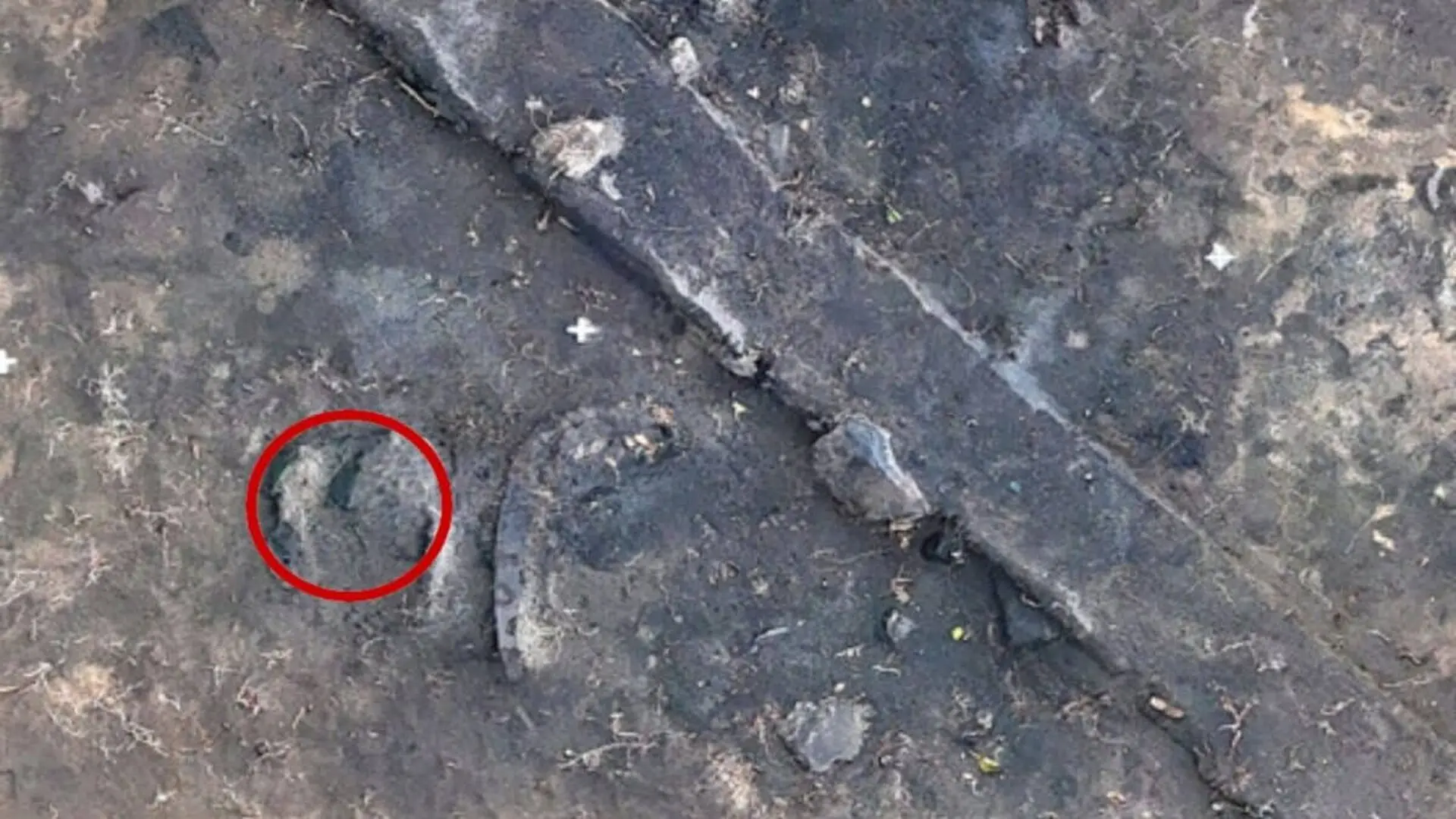
Archaeologists working at the Łysa Góra site in Poland have unearthed a rare artifact that challenges our understanding of Iron Age trade routes: a bronze helmet typical of the Celtic La Tène culture. The discovery, detailed in the journal Antiquity, was made within a fortified settlement positioned along the Orzyc River, a region previously thought to be isolated from the sophisticated influence of southern European warrior elites.
The helmet was found in a pit alongside iron tools, including a scythe and four adzes. Although the item was deliberately crushed and fragmented before being buried—a practice common in ritualistic deposits of the era—the team successfully identified it as a Berru-type helmet. Such pieces are synonymous with the high-ranking nobility of the Early La Tène period, with similar examples historically surfacing in locations as far afield as Dürrnberg, Austria.
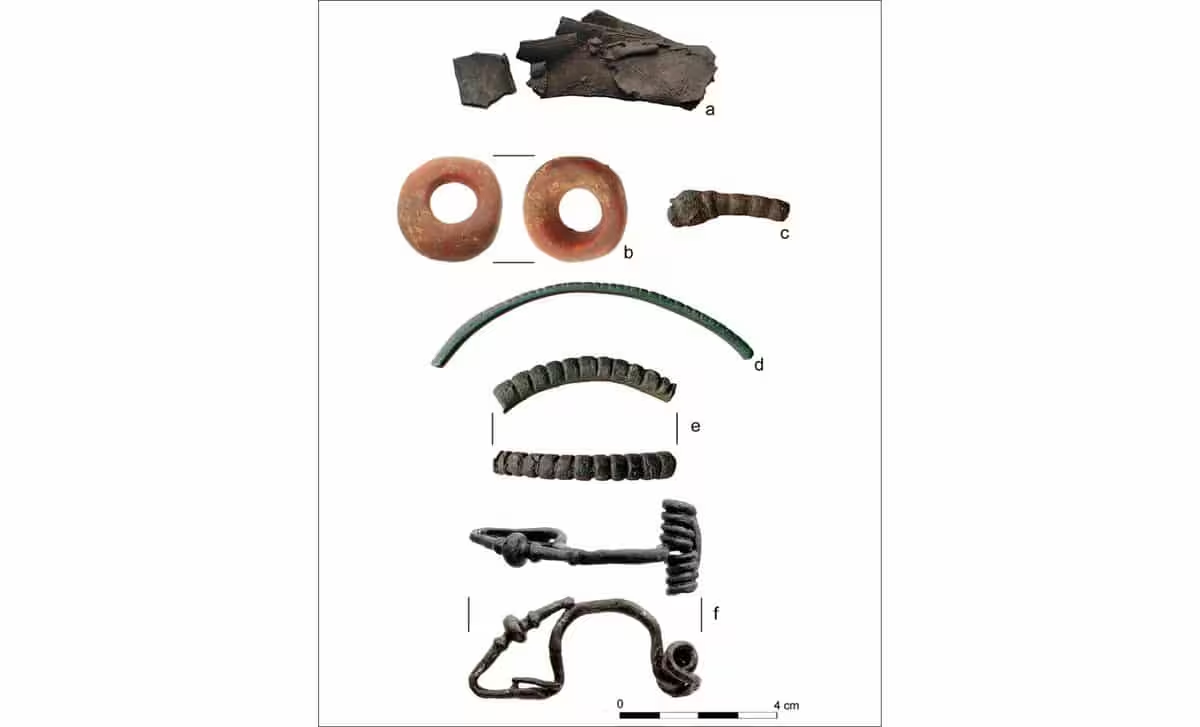
Finding this specific style of headgear so far outside the established Celtic cultural zone is unprecedented for the fourth century B.C. The lead researcher, Bartłomiej Kaczyński, suggests the object acts as a powerful signifier of long-distance interaction. While the helmet could have reached the region through indirect trade, the presence of other items, such as 31 fragmented Early La Tène brooches and ring ornaments, strengthens the theory that Celtic individuals may have physically occupied or maintained a consistent presence at the site.
Connecting Northern Amber to Southern Trade Networks
The excavations, which resumed in 2024, have transformed Łysa Góra from a site that was only partially understood into a vital hub of Iron Age commerce. Situated on a glacial sand dune, the settlement served as a strategic crossroads between the amber-rich deposits of the Kurpie region and the broader trade arteries leading toward the Sambian Peninsula and beyond the Carpathian Mountains.
Beyond the helmet, the site has yielded nearly 350 metal artifacts. Evidence of local industry is abundant, with ceramic casting crucibles and bundles of scrap metal indicating that the residents were actively recycling bronze. The recovery of amber beads and an unfinished ring further cements the site’s role as a processing and transit point for the highly prized “gold of the north.”
Fortifications and Ritual Deposits
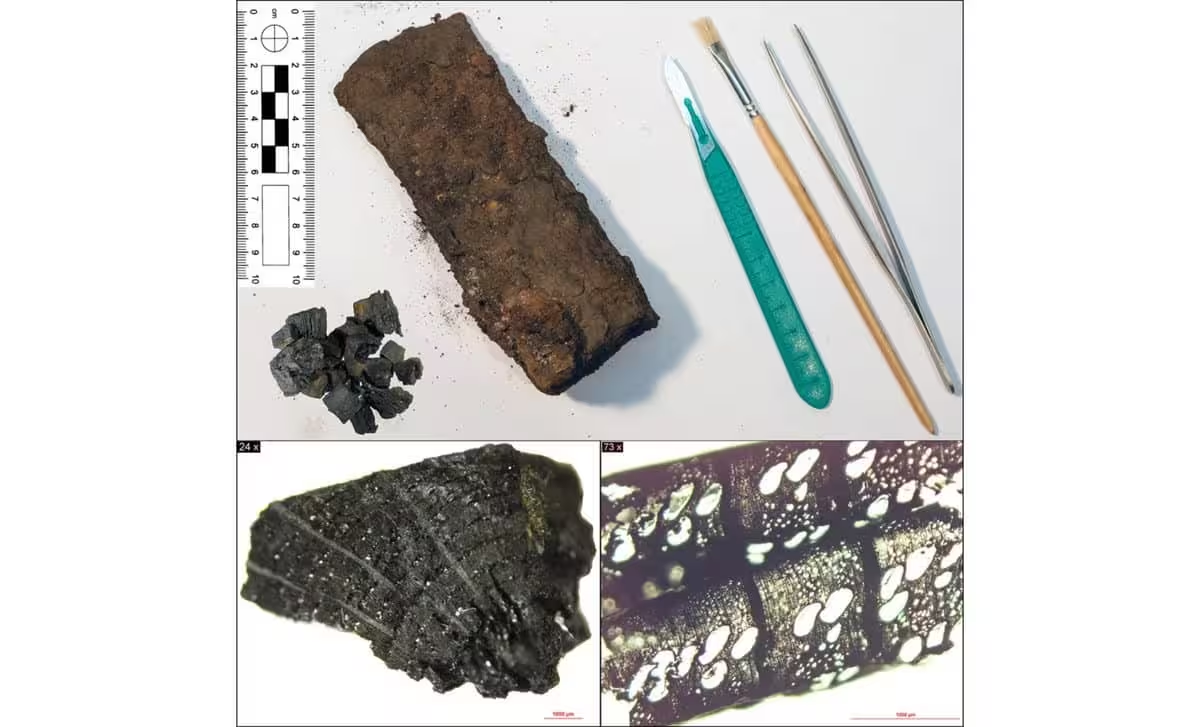
The settlement’s inhabitants took significant measures to protect their assets. Archaeology teams have documented substantial earth-and-timber ramparts, complete with ditches and palisades, shielding the inhabitants from the sixth to the fourth centuries B.C. The presence of these fortifications, combined with the discovery of ritual caches in nearby marshes—including high-status earrings and repaired spiral armlets—suggests a complex society that balanced defensive needs with spiritual and economic practices.
As the research team moves into the next phase of analysis, which includes metallurgical examinations and lead isotope studies, the focus remains on determining the precise origin of these metal goods. For now, the finds at Łysa Góra stand as a compelling reminder that the map of Iron Age Europe was far more interconnected than previously documented, with remote Baltic settlements playing a critical role in the continent’s early economic life.
This article has been fact checked for accuracy, with information verified against reputable sources. Learn more about us and our editorial process.
Last reviewed on .
Article history
- Latest version
Cite this page:
- Posted by Hassan Raza