Scientists Discover Hell Chicken Dinosaur That Used Its Jaw Like a Parrot
Scientists are investigating the diet of the Anzu wyliei, a bizarre, toothless dinosaur nicknamed the “hell chicken,” to uncover its true eating habits.

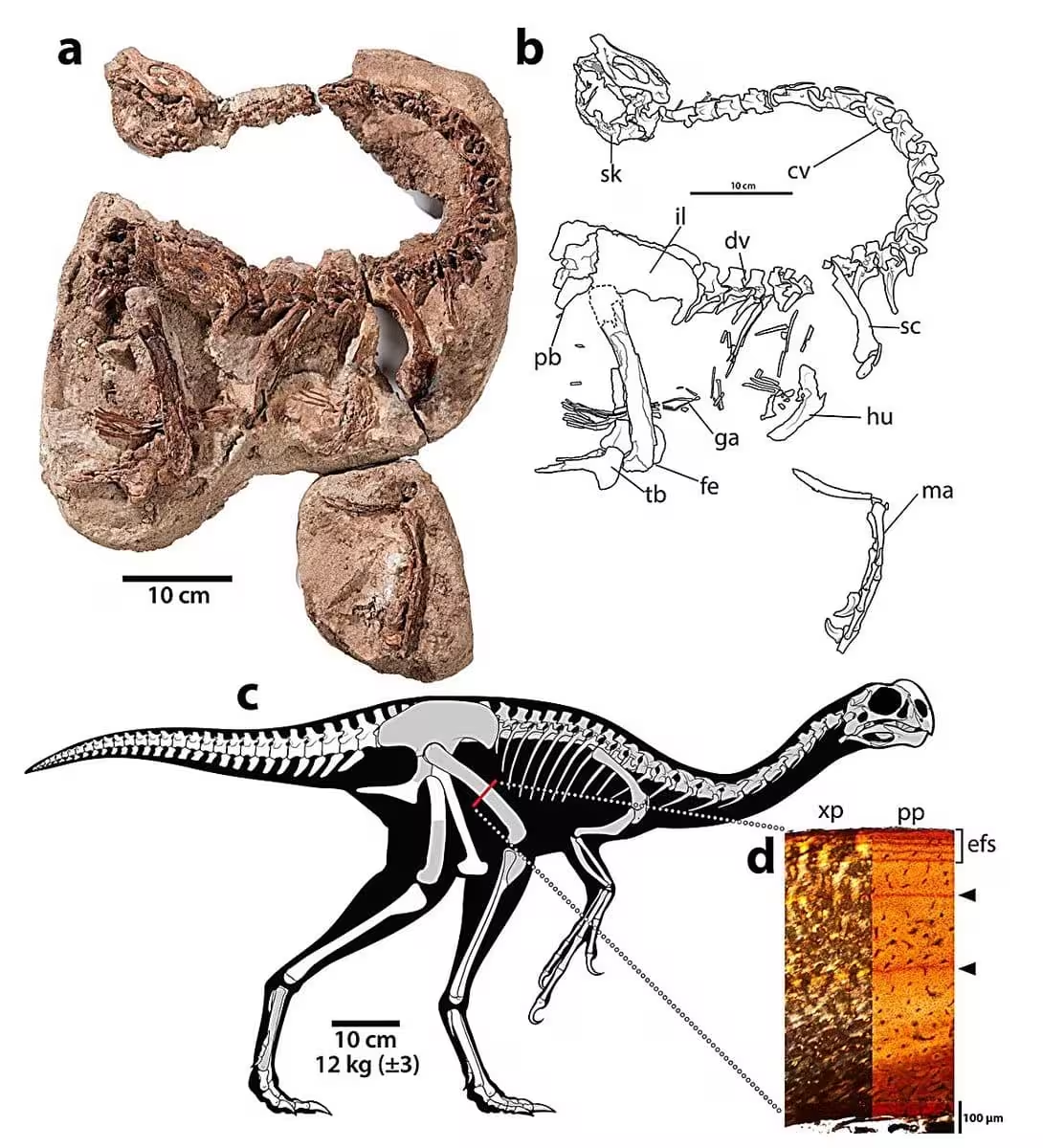
Paleontologists have identified a unique, toothless dinosaur from Montana, officially dubbed Infernogallus jamesi—a name that translates roughly to “hell chicken.” Uncovered in the Hell Creek Formation of Garfield County in 2011, this creature provides a rare, intact glimpse into a group of bird-like, feathered dinosaurs known as caenagnathids, which are typically only known from fragmented remains.
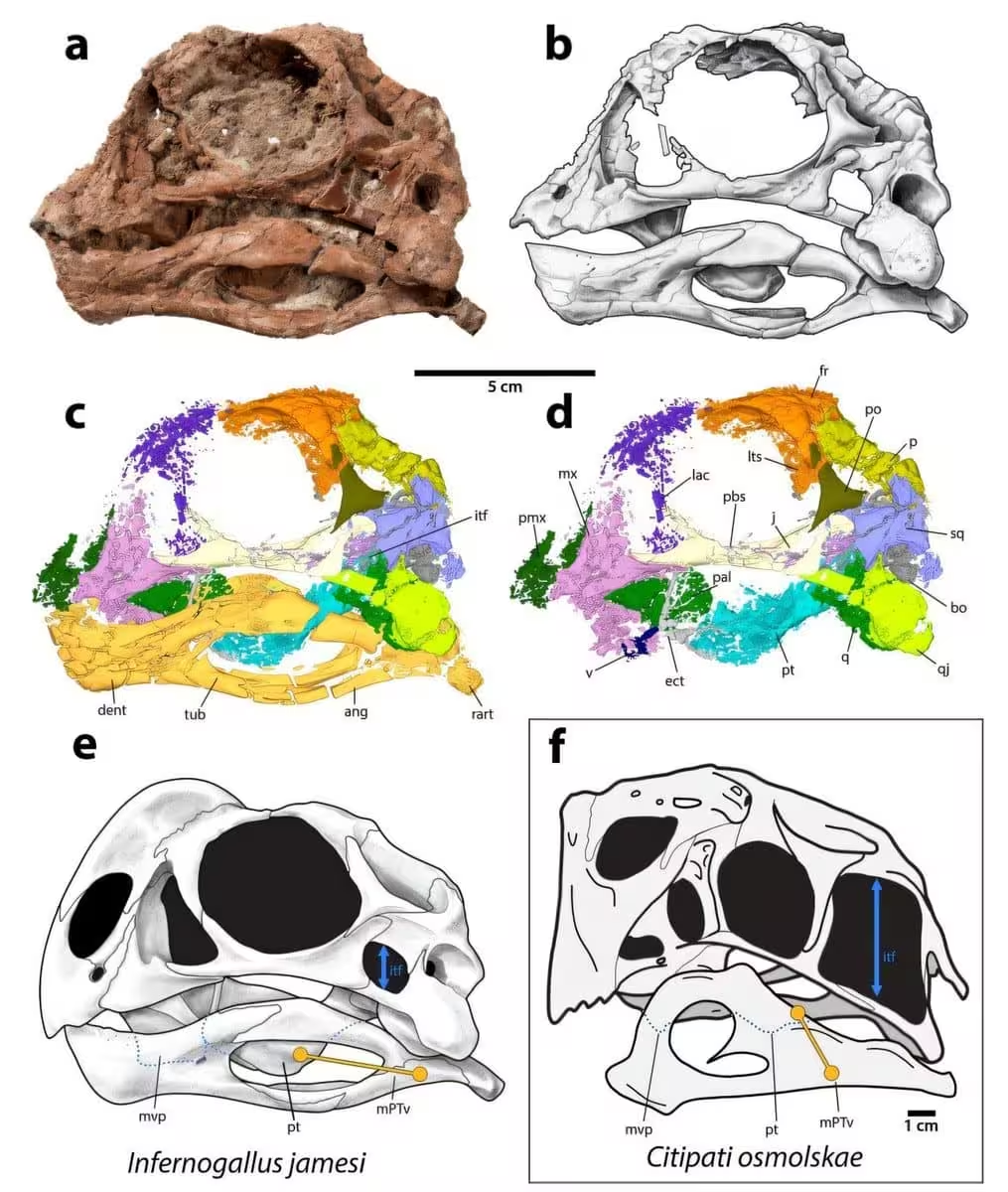
The study, published in Nature Communications, was led by Gregory F. Funston of Stony Brook University and David C. Evans of the Royal Ontario Museum. Their analysis of the remarkably well-preserved cranium reveals that this 26-pound (12-kilogram) animal possessed a specialized jaw mechanism, likely used for processing soft fruit in a manner similar to modern parrots.
Advanced Jaw Mechanics in a Mature Specimen
Microscopic examination of bone growth rings confirms that the individual was fully matured, estimated to be between six and seven years old at the time of death. By performing detailed scans of the crushed skull, the researchers reconstructed the palate muscles, identifying a specialized joint that allowed the lower jaw to slide back and forth by up to 15 millimeters (approximately 0.6 inches).
The palate and lower jaw features ridges and grooves that align during this motion. The research team notes that this configuration would have served as a biological mortar and pestle, ideal for shearing and crushing soft food items.
Dietary Habits in the Late Cretaceous
The researchers observed a complete absence of gastroliths, or stomach stones, which are frequently used by herbivorous dinosaurs to grind tougher vegetation. Given this absence, the team suggests the dinosaur’s diet likely focused on soft, fleshy fruits—drawing a parallel to the Pesquet’s parrot of New Guinea, which consumes pulp while discarding seeds.
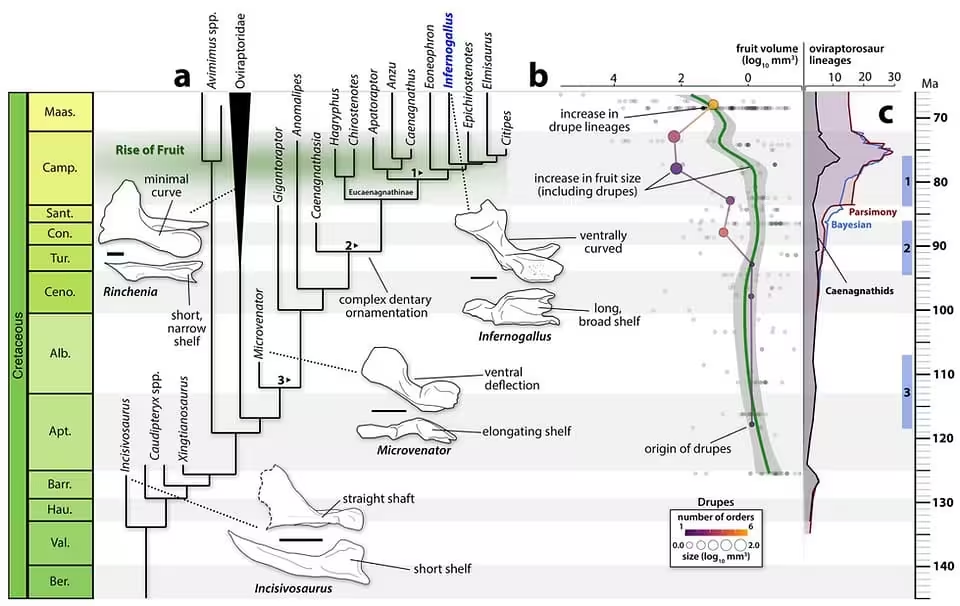
While the exact dietary composition remains speculative, the evolution of caenagnathids aligns with the expansion of fruit-bearing plants during the Late Cretaceous. Evidence suggests that the fruit available during this period was increasingly abundant and diverse, potentially supporting specialized feeders like Infernogallus.
Peer Review and Scientific Interpretation
The peer review process, published alongside the article, highlights the complexities of classifying the diet of extinct species. While some reviewers raised concerns about the lack of statistical robustness in characterizing dietary habits—noting that statistical models often categorize dinosaurs as generalist omnivores—the authors argued that qualitative analysis of cranial morphology provides a more nuanced understanding in this specific case. Ultimately, the team maintained that Infernogallus likely favored softer plant materials.
Beyond the structural debate, the naming of the species garnered praise from the scientific community. The moniker was suggested by a colleague, C. Woodruff, and was met with enthusiastic approval during the review process for its memorable nature.
Despite the insight provided by the skull, the full picture of the animal’s life remains incomplete. As no fossilized fruit or seeds were discovered in association with the skeleton, scientists continue to rely on the functional anatomy of the jaw to interpret the behavior of this unique “hell chicken.”
This article has been fact checked for accuracy, with information verified against reputable sources. Learn more about us and our editorial process.
Last reviewed on .
Article history
- Latest version
Reference(s)
- Funston, Gregory. “Fruit-eating adaptations in a Late Cretaceous oviraptorosaur (Theropoda) - Nature Communications.”, October 10, 2026 Nature, doi: 10.1038/s41467-026-78343-w. <https://www.nature.com/articles/s41467-026-78343-w>.
Cite this page:
- Posted by Hassan Raza