Scientists Are Using Earth and Dead Stars as Giant Dark Matter Detectors
Researchers are using the Sun, Earth, Jupiter, and white dwarfs to test dark matter’s electromagnetic properties, narrowing the search for the elusive particle.
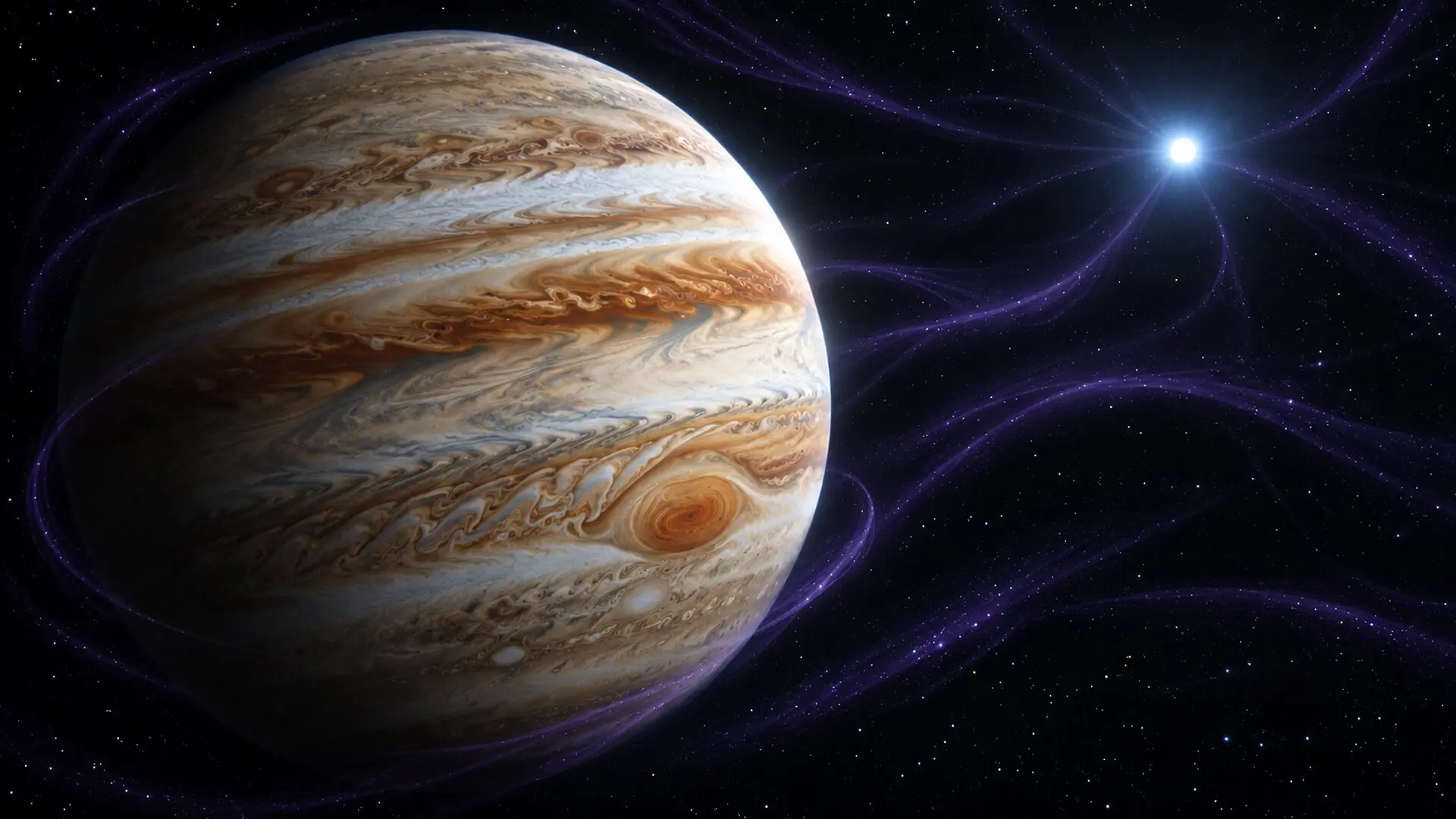
Astronomers are turning to the cosmos to solve one of physics’ most stubborn puzzles: the nature of dark matter. A new study suggests that massive celestial bodies—ranging from our own planet and the Sun to distant white dwarf stars—act as giant traps for dark matter, offering a unique laboratory to test the behavior of particles that remain invisible to ground-based detectors.
The research, published in the Journal of Cosmology and Astroparticle Physics, was conducted by Alejandro Ibarra, Merlin Reichard, and Gaurav Tomar of the Center for Quantum Spacetime at South Korea’s Sogang University. By analyzing how dark matter might accumulate and release energy within these massive objects, the team has successfully narrowed the range of possibilities for what this mysterious substance might actually be.
Capturing the elusive
While dark matter is thought to make up roughly 85 percent of all matter in the universe, it rarely interacts with the ordinary atoms that form stars, planets, and people. Experiments like LUX-ZEPLIN typically hunt for these particles by waiting for them to strike atomic nuclei deep underground. However, these detectors often struggle to catch particles that are moving slowly or possess extremely weak electromagnetic signatures.
Celestial bodies provide a natural alternative. As dark matter particles drift through space, their gravity accelerates them toward massive objects like Jupiter or white dwarfs. If a particle happens to collide with material inside the body, it can lose enough energy to become gravitationally bound. Over billions of years, these objects effectively accumulate a reservoir of dark matter in their centers.
Thermal and neutrino signals
Once trapped, these particles may eventually encounter one another and annihilate, converting their mass into heat or a spray of other particles, such as neutrinos. This provides two distinct ways to look for evidence of dark matter:
- Neutrino telescopes: For the Earth and the Sun, the researchers examined data from neutrino observatories like IceCube. Because neutrinos interact so weakly with matter, they can escape from the dense cores of these bodies, potentially carrying the signature of dark matter annihilation to detectors buried in Antarctic ice.
- Internal heating: For objects that do not generate their own fusion-powered light, such as Jupiter or the cooling embers of dead stars known as white dwarfs, researchers looked for anomalous warmth. If trapped dark matter is annihilating, it should deposit extra energy, causing these bodies to stay hotter or cool more slowly than expected.
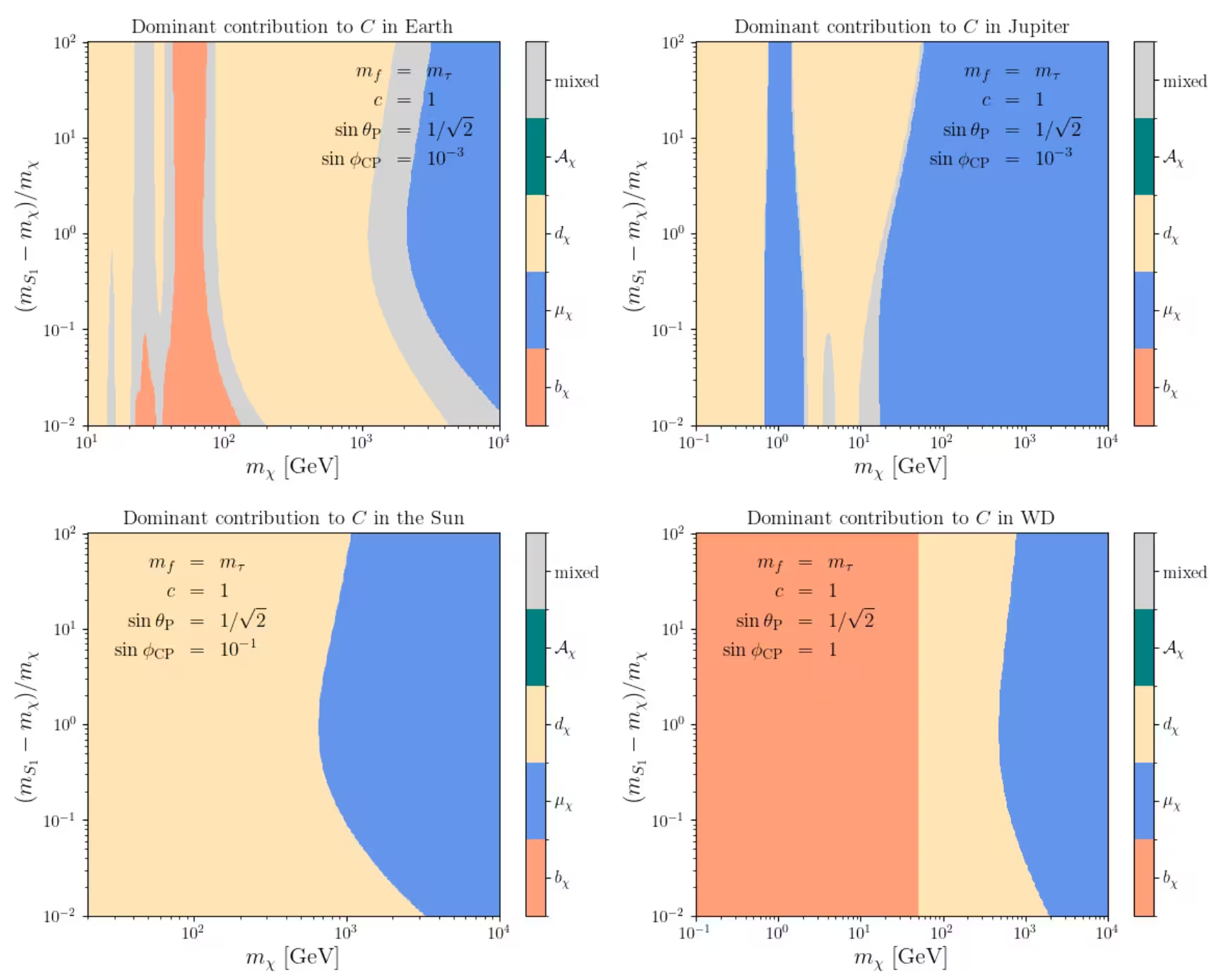
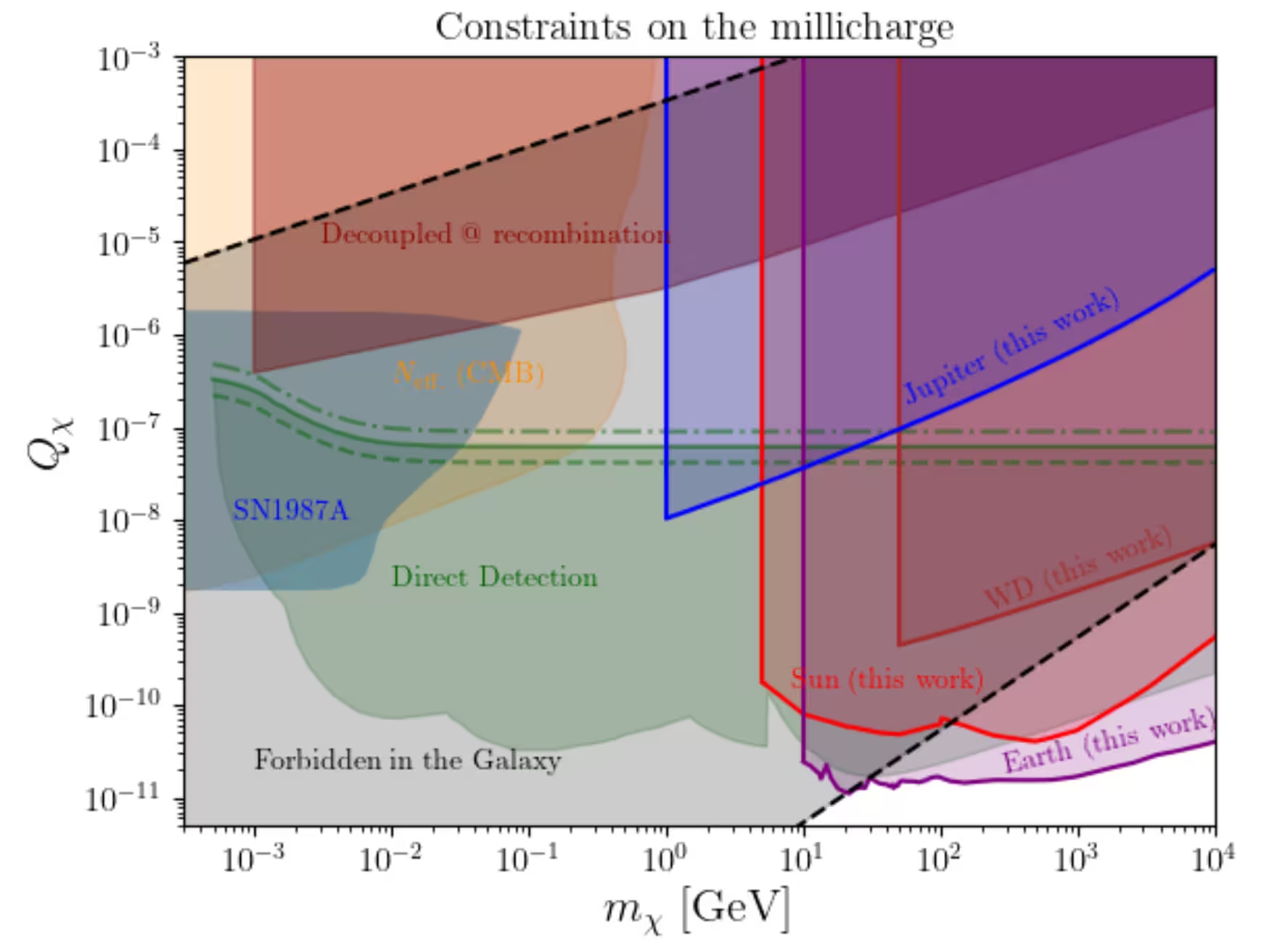
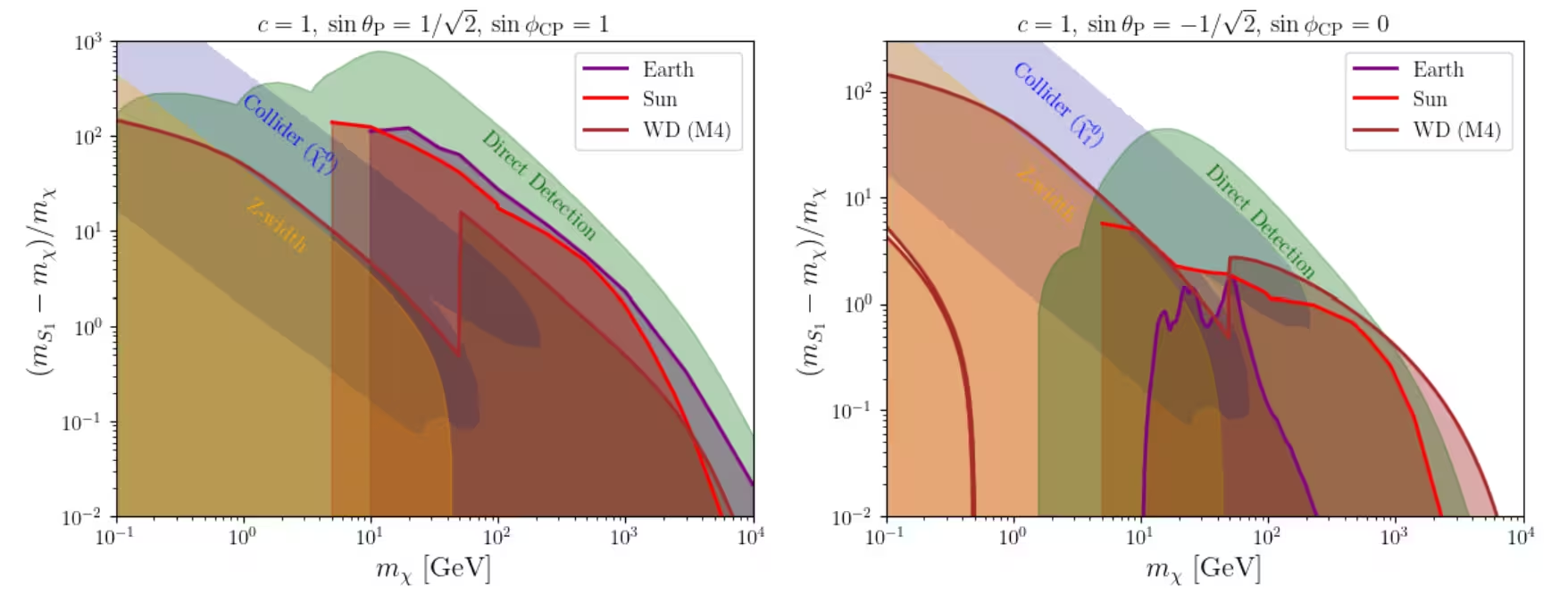
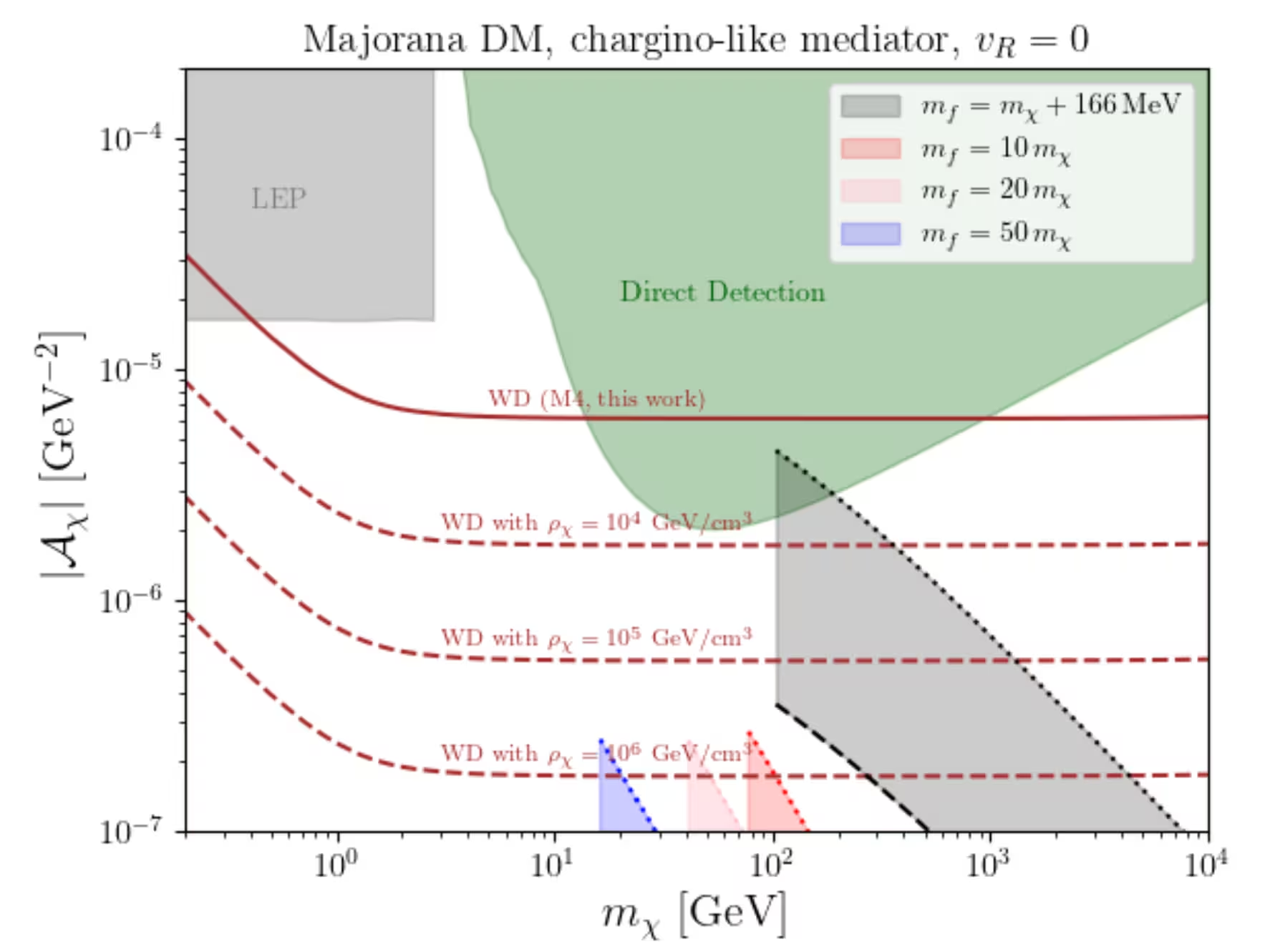
By comparing these theoretical predictions with actual observations of luminosity and neutrino flux, the team was able to rule out specific scenarios that would have generated more heat or neutrino radiation than is observed. For instance, the study placed strict constraints on particles carrying a minute electric charge, with Earth providing particularly useful data.
A cosmic complement to lab research
The study highlights how different astronomical bodies act as complementary sensors. While a laboratory sensor network might be sensitive to certain particle masses or interaction types, a white dwarf in a dense globular cluster like M4 offers a sensitivity that is impossible to replicate on Earth. Though uncertainties remain—such as the exact density of dark matter surrounding these distant star clusters—the approach provides a robust framework for testing particle physics models.
Looking forward, the researchers suggest that exoplanets could eventually serve as even more precise detectors. By studying the thermal evolution of planets that are too cool to be powered by traditional means, scientists may gain a clearer view of the dark sector. For now, the combination of Earth, the Sun, and ancient star remnants serves as a powerful map, helping researchers discard unlikely theories and focus on the candidates that might finally explain the invisible skeleton of our universe.
This article has been fact checked for accuracy, with information verified against reputable sources. Learn more about us and our editorial process.
Last reviewed on .
Article history
- Latest version
Cite this page:
- Posted by Nida Rehman