Tiny Chemical Messenger Controls How Staphylococcus Aureus Triggers Deadly Infections
Researchers discover a molecular switch that lets bacteria tune their toxin production during host invasion.
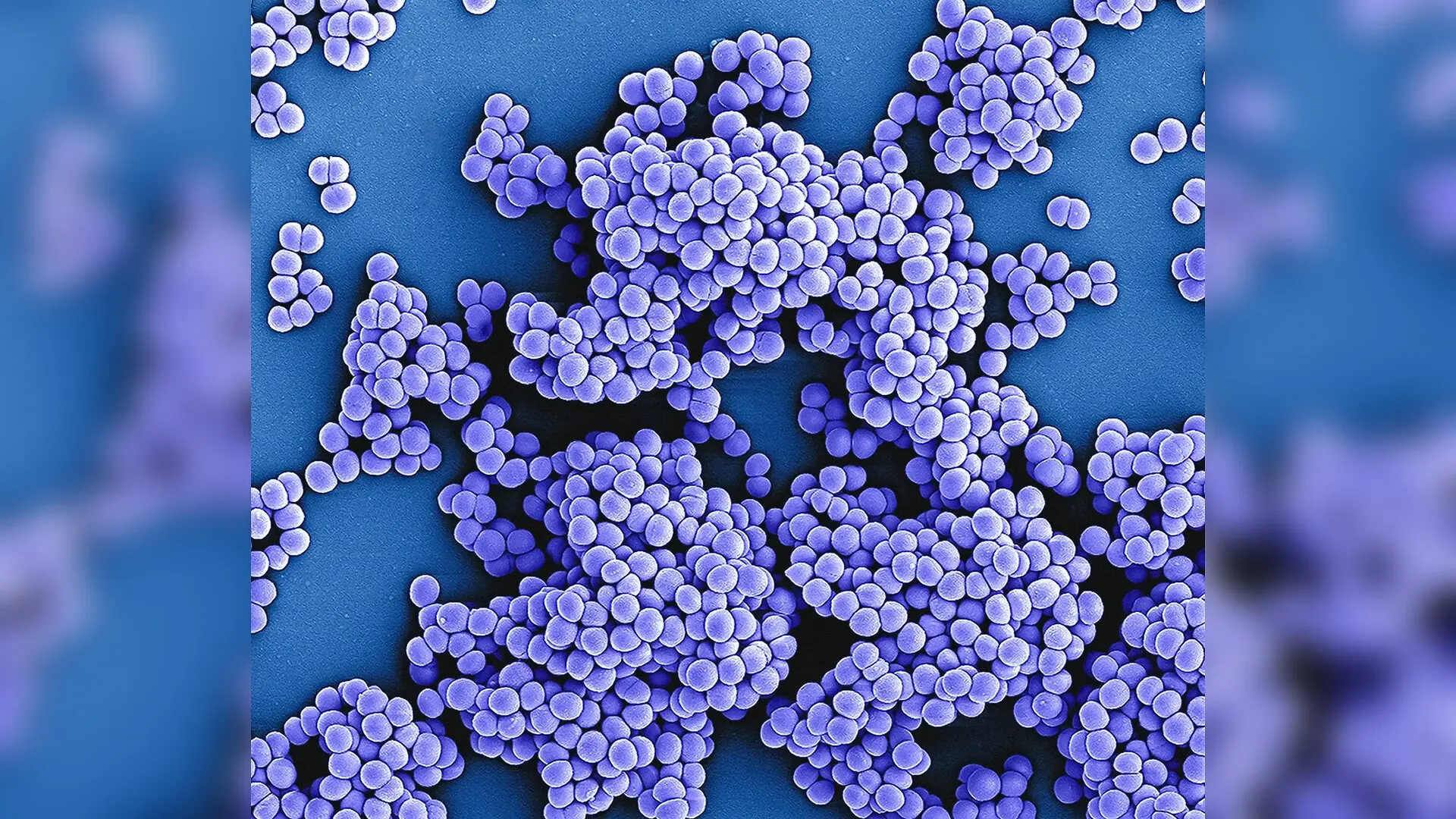
A tiny chemical messenger inside Staphylococcus aureus controls how the bacterium launches deadly infections by locking onto a major virulence regulator, according to new research.
Scientists investigating the inner workings of the pathogen found that shifts in a signaling molecule called cyclic di-AMP directly alter the bacterium’s ability to produce tissue-damaging toxins. The study, published in PLOS Pathogens, uncovers a fresh layer of control in how microbes adapt and attack human hosts.
How Does Cyclic Di-AMP Steer Bacterial Toxicity?
Cyclic di-AMP is a small nucleotide molecule found widely in Gram-positive bacteria. While researchers knew that fluctuating levels of this messenger affect cell wall stability and stress responses, how it directly influenced virulence remained largely mysterious until now.
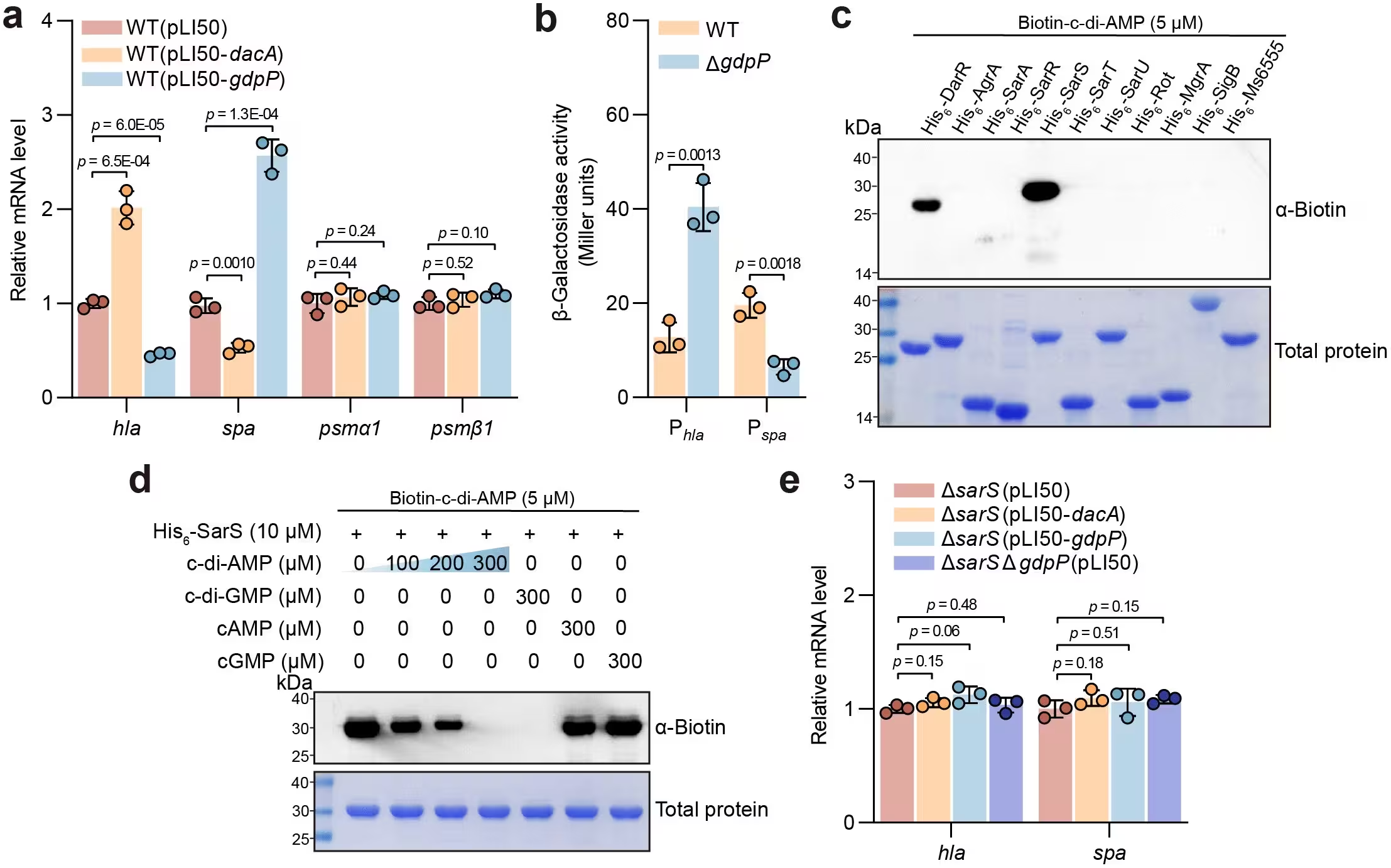
In the study, the research team manipulated the genes responsible for making and breaking down cyclic di-AMP in Staphylococcus aureus. When the scientists increased the production of the messenger by about twofold, the activity of genes encoding harmful toxins, such as alpha-toxin, surged. Conversely, suppressing the messenger lowered toxin output while boosting the expression of surface proteins that help the bacterium evade the immune system.
Which Protein Acts as the Missing Switch?
To find out how the chemical signal translates into physical changes in the bacterium, the researchers tested nine different virulence regulators to see which one could bind cyclic di-AMP. Only one protein, a transcription factor named SarS, showed a strong attachment.
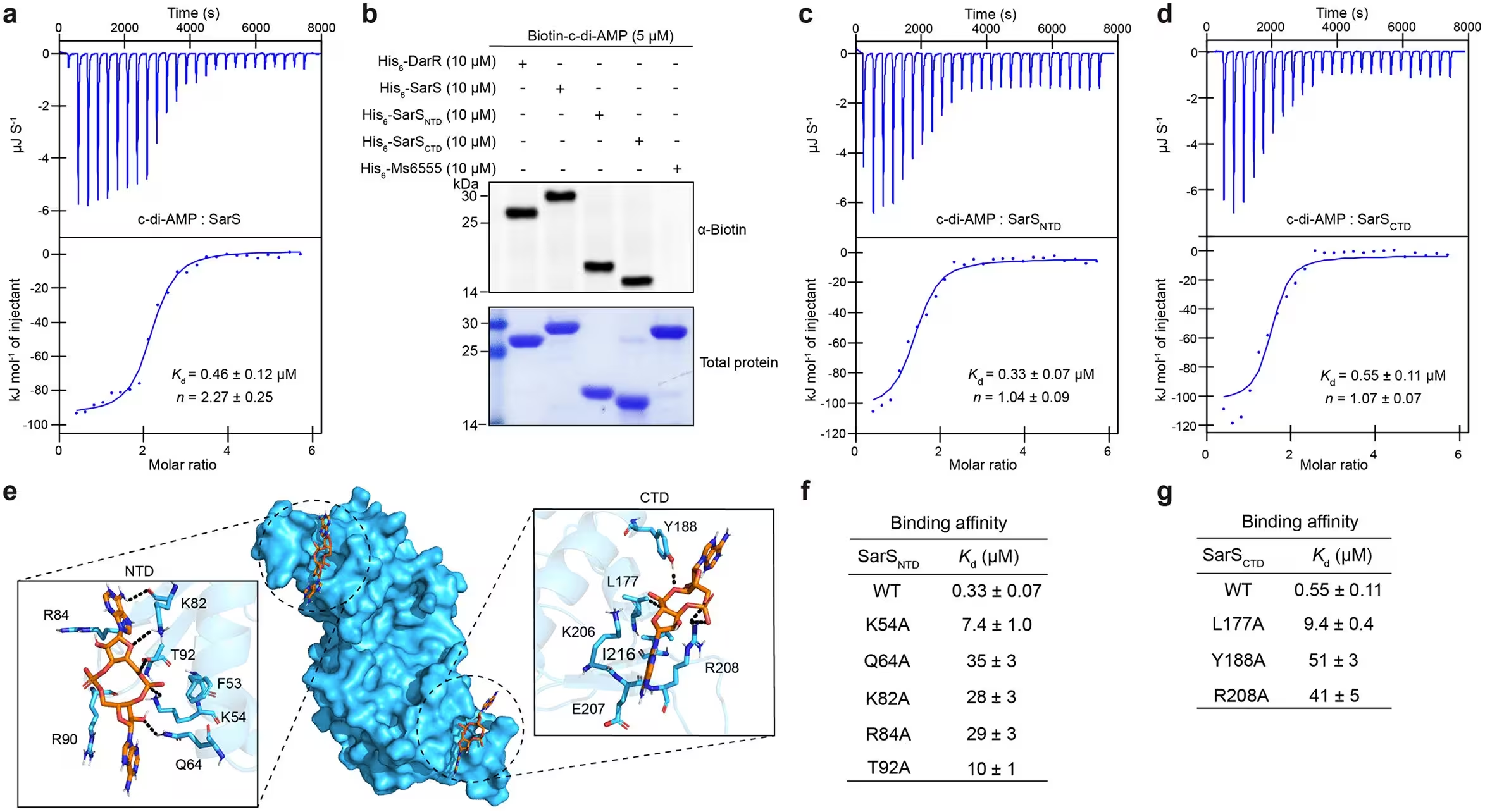
Isothermal titration calorimetry measurements revealed that two molecules of cyclic di-AMP bind to a single SarS protein with high affinity. This binding event causes the protein to release its grip on specific target DNA promoter regions inside the bacterial genome. Because SarS normally acts as a brake on certain toxin genes and an accelerator for others, disabling its DNA-binding ability unleashes a cascade of pathogenic traits.
What Happens When the Molecular Switch Breaks?
To confirm this mechanism, the researchers engineered a mutant strain of Staphylococcus aureus carrying specific amino acid changes at positions 84 and 280 in the SarS protein. This double-point mutation stopped the protein from recognizing cyclic di-AMP while leaving its DNA-binding capacity intact.
As a result, the mutant bacteria kept their grip on target promoters regardless of how much cyclic di-AMP was floating inside the cell. Mouse infection experiments showed that mice infected with this mutant strain experienced significantly lower mortality rates than those infected with wild-type bacteria, confirming that the ability to respond to cyclic di-AMP is critical for full virulence.
Where Will This Discovery Lead Next?
The findings provide a clear biochemical link between secondary messenger signaling and the complex regulatory networks that govern bacterial pathogenicity. Because many dangerous pathogens rely on cyclic di-AMP for survival, understanding these receptor proteins could point toward new therapeutic strategies aimed at blocking bacterial communication and infection pathways.
The research was published in PLOS Pathogens on November 17, 2026.
This article has been fact checked for accuracy, with information verified against reputable sources. Learn more about us and our editorial process.
Last reviewed on .
Article history
- Latest version
Reference(s)
- Wang, Haikun., et al. “c-di-AMP regulates virulence of Staphylococcus aureus via targeting the SarA-family regulator SarS.” PLOS Pathogens, vol. 22, no. 11, November 17, 2026, pp. e1014812 Public Library of Science (PLoS), doi: 10.1371/journal.ppat.1014812. <https://doi.org/10.1371/journal.ppat.1014812>.
Cite this page:
- Posted by Faisal Qureshi