Astronomers Propose a Hidden Planet Twice the Size of Earth May Be Lurking in Our Solar System
New simulations suggest a hidden planet twice the mass of Earth may lurk beyond Neptune, potentially explaining mysterious orbital patterns in the outer solar.
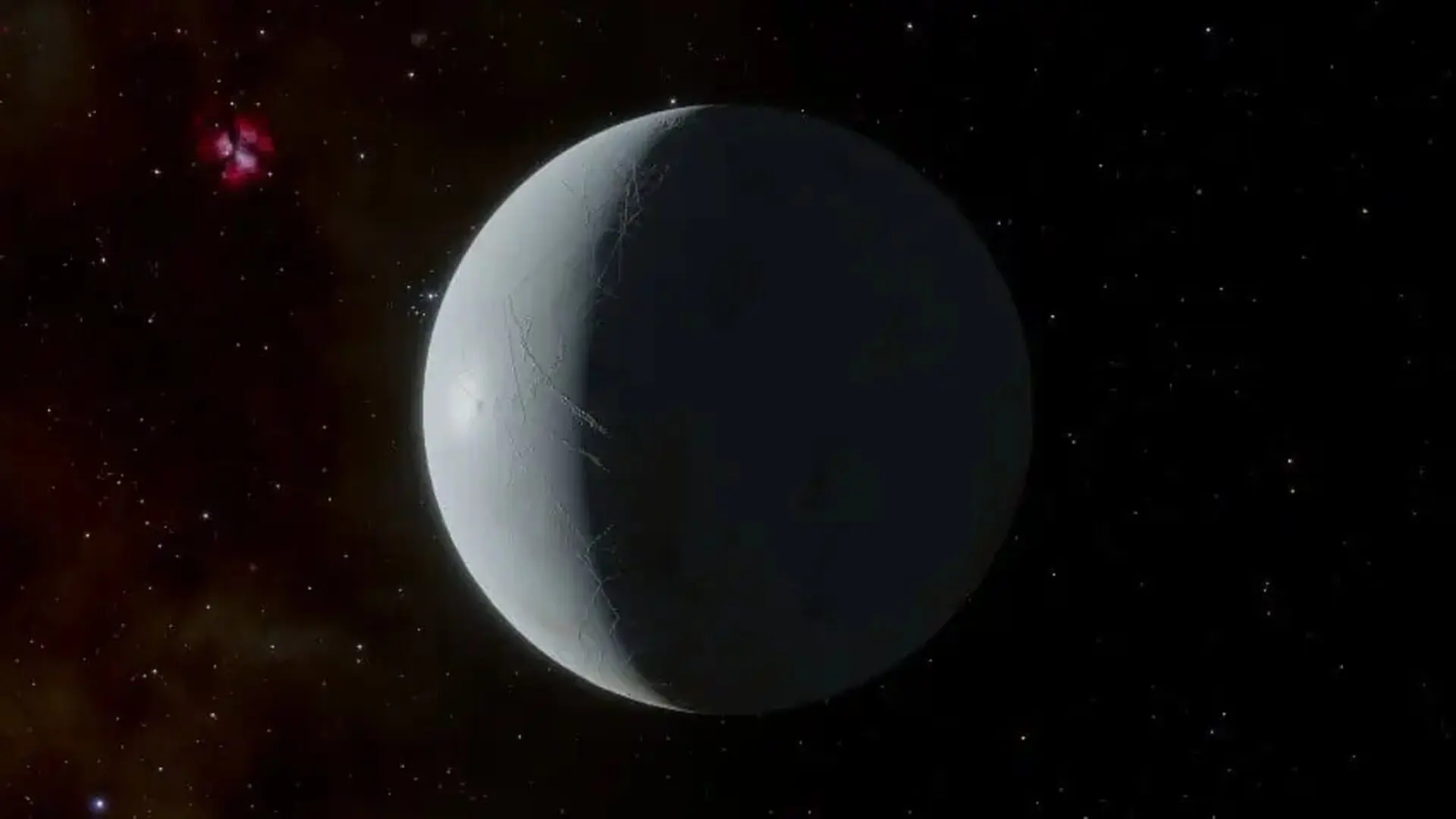
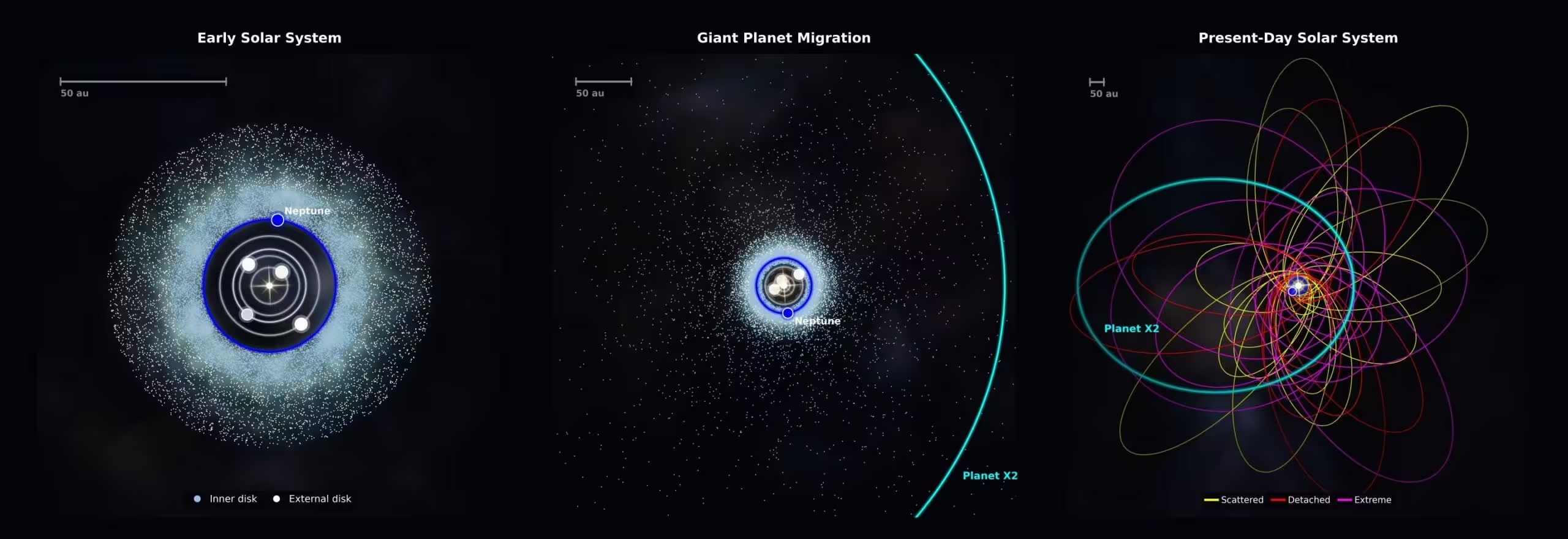
A new computer modeling study suggests that an undiscovered planet, approximately twice the mass of Earth, may be hiding in the outer reaches of our solar system. Researchers believe this hypothetical world, referred to as Planet X2, could explain the peculiar orbital paths of icy bodies found well beyond the orbit of Neptune.
The research, published in the Monthly Notices of the Royal Astronomical Society, was spearheaded by Patryk Sofia Lykawka of Kindai University, with contributions from Pedro Bernardinelli and Jonathan Horner. The team cautions that their findings are currently based on simulations and do not provide direct evidence of the planet’s existence or its physical appearance. They also emphasize that this proposed body is distinct from the larger, more massive “Planet Nine” discussed in other astronomical research.
Solving the Mystery of Distant, Tilted Orbits
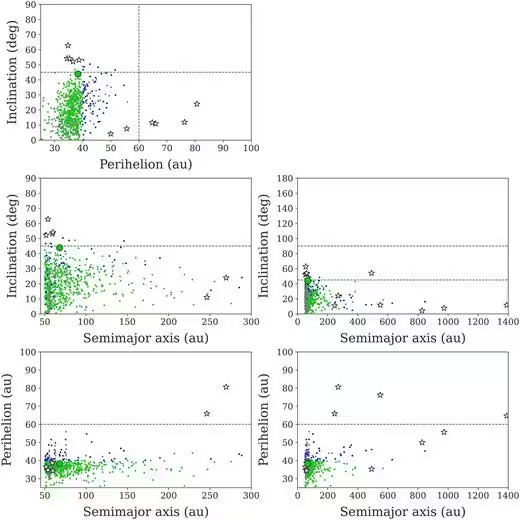
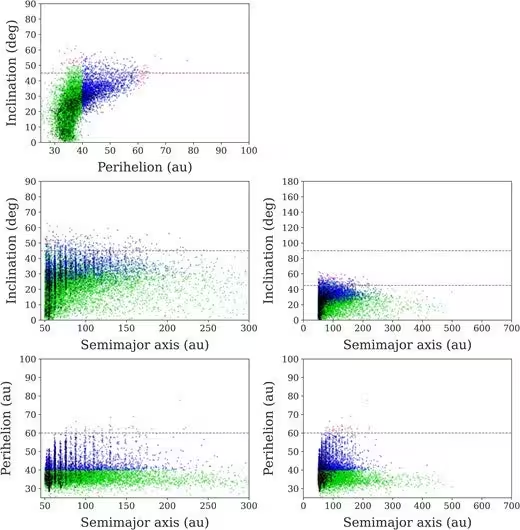
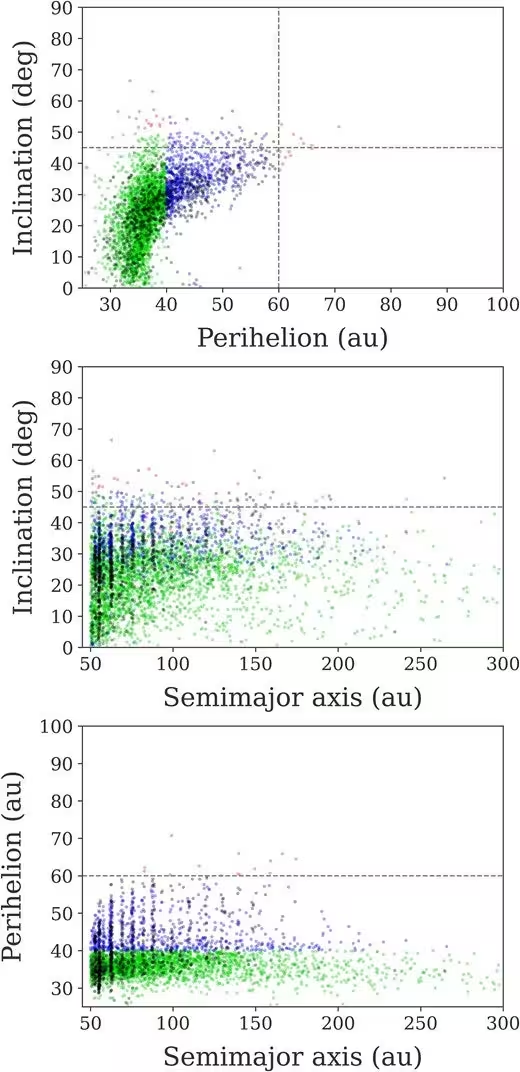
Trans-Neptunian objects (TNOs) serve as a living record of the solar system’s formative years. Astronomers are particularly intrigued by a subset of these bodies that exhibit “detached” orbits—meaning their closest point to the Sun, or perihelion, remains beyond 40 astronomical units (AU)—as well as those with extreme inclinations that tilt more than 45 degrees relative to the rest of the solar system.
The dwarf planet Sedna is a prime example of this mystery. Because its perihelion lies near 76 AU, it never gets close enough to Neptune for the giant planet’s gravity to account for its current path. While the migration of Neptune explains much of the architecture of our inner solar system, it fails to account for these far-flung, highly elliptical populations. The researchers hypothesized that a persistent, long-term gravitational influence from a hidden planet could be the missing piece of the puzzle.
Simulating 4.5 Billion Years of Cosmic History
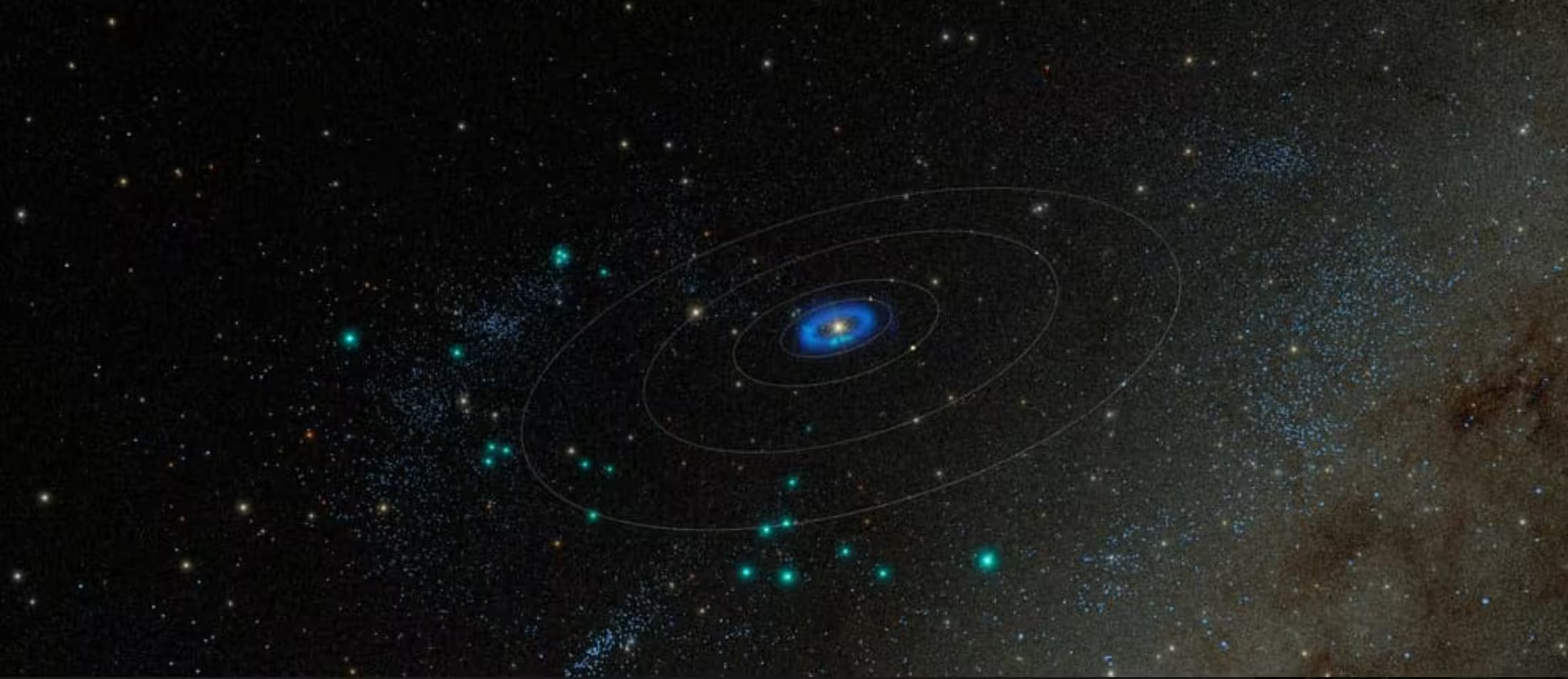
To test their theory, the team ran simulations tracking the gravitational evolution of the solar system over 4.5 billion years. Their model accounted for the known giant planets and a “grainy” disk of smaller bodies that influenced Neptune’s migration. They compared two main scenarios: one involving temporary, Earth-mass planetary embryos that were eventually ejected, and another involving a stable, long-term outer planet.
The models involving temporary embryos proved largely unsuccessful, with only 1.5% of simulations showing any meaningful influence on distant populations. In contrast, the Planet X2 model, which posited a planet remaining in orbit for billions of years, consistently provided the gravitational “nudge” required to raise the perihelia and alter the inclinations of distant TNOs over time.
The most successful configurations for Planet X2 featured a body with approximately twice the mass of Earth, situated on a semi-major axis between 350 and 500 AU, with a perihelion near 200 AU and a tilt of 1 to 15 degrees.
The Road to Discovery
While the study provides a compelling mathematical framework, bridging the gap between simulations and real-world observation remains challenging. Researchers must account for significant observational biases—such as the fact that telescopes are more likely to detect brighter, closer objects, potentially skewing our current census of the Kuiper Belt.
By using simulators to mimic the biases of the Dark Energy Survey, the team generated synthetic data to compare against actual survey discoveries. The resulting distributions showed promise, though they did not perfectly align with every observed distant population. As new surveys from facilities like the Rubin Observatory come online, astronomers will gain access to a larger pool of data. This influx of information will be vital in either confirming the presence of Planet X2 or refining our understanding of the outer solar system’s complex dynamical history.
Ultimately, the search for hidden worlds is a test of both our models and our technology. Whether or not Planet X2 is ever directly imaged, the study underscores how the subtle motions of the smallest, most distant objects can reveal the presence of giants hiding in the dark.
Resources for Further Reading
- Is There an Earth-like Planet in the Distant Kuiper Belt?(The Astronomical Journal, August 2023)
- A Search of the Full Six Years of the Dark Energy Survey for Outer Solar System Objects(The Astrophysical Journal Supplement Series, February 2022)
- The planet nine hypothesis(Physics Reports, May 2019)
- LSST: From Science Drivers to Reference Design and Anticipated Data Products(The Astrophysical Journal, March 2019)
- Evidence for a Distant Giant Planet in the Solar System(The Astronomical Journal, January 2016)
This article has been fact checked for accuracy, with information verified against reputable sources. Learn more about us and our editorial process.
Last reviewed on .
Article history
- Latest version
Reference(s)
- Lykawka, Patryk Sofia., et al. “Signatures of an Earth-class planet in the distant Solar system.” Monthly Notices of the Royal Astronomical Society, vol. 553, no. 3, November 23, 2026 Oxford University Press (OUP), doi: 10.1093/mnras/stag2033. <https://doi.org/10.1093/mnras/stag2033>.
- Lykawka, Patryk Sofia., et al. “Is There an Earth-like Planet in the Distant Kuiper Belt?.” The Astronomical Journal, vol. 166, no. 3, August 25, 2023, pp. 118 American Astronomical Society, doi: 10.3847/1538-3881/aceaf0. <https://doi.org/10.3847/1538-3881/aceaf0>.
- Bernardinelli, Pedro H.., et al. “A Search of the Full Six Years of the Dark Energy Survey for Outer Solar System Objects.” The Astrophysical Journal Supplement Series, vol. 258, no. 2, February 9, 2022, pp. 41 American Astronomical Society, doi: 10.3847/1538-4365/ac3914. <https://doi.org/10.3847/1538-4365/ac3914>.
- Batygin, Konstantin., et al. “The planet nine hypothesis.” Physics Reports, vol. 805, May 1, 2019, pp. 1-53. Elsevier BV, doi: 10.1016/j.physrep.2019.01.009. <https://doi.org/10.1016/j.physrep.2019.01.009>.
- Ivezić, Željko., et al. “LSST: From Science Drivers to Reference Design and Anticipated Data Products.” The Astrophysical Journal, vol. 873, no. 2, March 11, 2019, pp. 111 American Astronomical Society, doi: 10.3847/1538-4357/ab042c. <https://doi.org/10.3847/1538-4357/ab042c>.
- Batygin, Konstantin., et al. “EVIDENCE FOR A DISTANT GIANT PLANET IN THE SOLAR SYSTEM.” The Astronomical Journal, vol. 151, no. 2, January 20, 2016, pp. 22 American Astronomical Society, doi: 10.3847/0004-6256/151/2/22. <https://doi.org/10.3847/0004-6256/151/2/22>.
Cite this page:
- Posted by Karan Das