Researchers Synthesize 81.9 Percent Pure MAX Phase Ceramic Using Hydride Cycle Method, and Discover Hidden Structural Disorder
A novel solid-state synthesis route creates titanium aluminum carbide at moderate temperatures, offering new insights into phase purity and atomic-scale lattice vibrations.
Researchers at the A.B. Nalbandyan Institute of Chemical Physics successfully produced a specialized titanium aluminum carbide ceramic material, consisting of 81.9% Ti3AlC2, using a hydride cycle method powered by self-propagating high-temperature synthesis. The resulting ceramic composite offers a promising route for creating advanced high-temperature structural components without requiring the energy-intensive melting stages of traditional manufacturing.
MAX phases are a class of layered ternary carbides and nitrides featuring alternating metal-carbon layers and main-group element layers, which combine the high stiffness of ceramics with the electrical conductivity of metals. Because these materials resist extreme heat and oxidation, scientists investigate them for aerospace thermal protection and nuclear reactor linings. However, producing them in high purity remains notoriously difficult because secondary unwanted phases often form during high-temperature processing.
How the Hydride Cycle Method Works
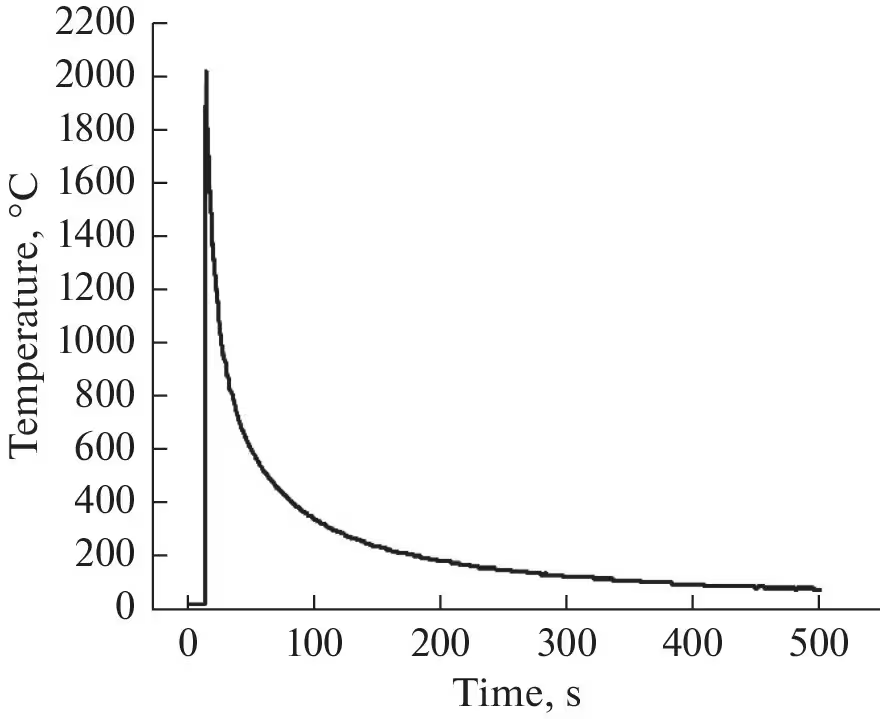
The research team led by A. Danielyan addressed traditional manufacturing hurdles by developing a multi-stage solid-state synthesis route. The process began by burning a titanium and carbon powder mixture in an argon-filled reactor, generating a self-sustaining combustion wave that reached a peak temperature of 2024 degrees Celsius. This initial reaction produced non-stoichiometric titanium carbide with a carbon content of 11.7 weight percent.
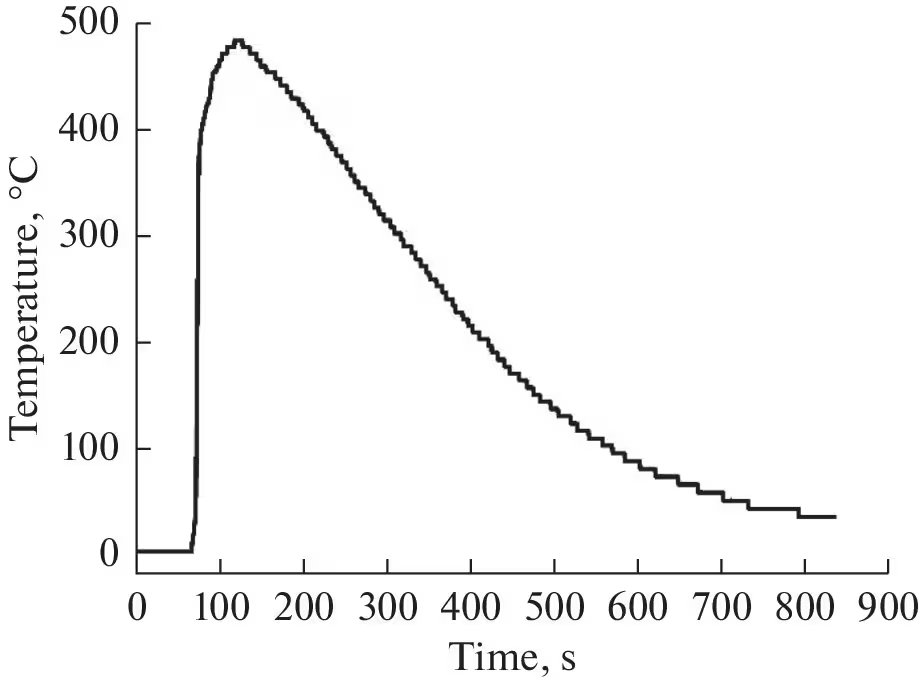
Next, the team hydrogenated this intermediate carbide powder inside a pressurized reactor at 10 atm of hydrogen gas, creating brittle titanium carbohydride through a secondary combustion reaction at 485 degrees Celsius. This carbohydride powder was then thoroughly mixed with aluminum powder, compressed into a cylindrical compact under a load of 300 kN, and subjected to vacuum dehydrogenation and sintering at 1000 degrees Celsius for 1 hour. This moderate processing temperature allowed solid-state diffusion to form the desired MAX phase structure.
Crystal Structure and Phase Purity
Powder X-ray diffraction analysis published in the International Journal of Self-Propagating High-Temperature Synthesis revealed that the final product contained 81.9 weight percent Ti3AlC2 as the predominant crystalline phase. The analysis also detected secondary titanium carbide at 16.1 weight percent and a minor aluminum-titanium intermetallic phase at 2.0 weight percent. The refined lattice parameters matched established crystallographic databases, confirming the successful creation of the characteristic hexagonal crystal structure.
The achieved phase purity compares favorably with thermal explosion methods and approaches the high yields typically reserved for costly pressure-assisted processing techniques. The presence of residual secondary carbide indicates that complete conversion remains challenging, but the overall yield demonstrates the viability of the hydride cycle approach.
Microstructure and Elemental Distribution
Scanning electron microscopy revealed a consolidated microstructure made of interconnected irregular polyhedral grains with localized platelet-like features. Energy-dispersive X-ray spectroscopy mapping showed that titanium, aluminum, and carbon were distributed fairly uniformly throughout the sample matrix. Localized compositional variations matched the secondary phases identified during X-ray diffraction, confirming that impurities remained distributed in small local pockets rather than forming large segregated zones. The calculated bulk density of the cylindrical sample reached 2.54 grams per cubic centimeter, representing about 60 percent of the theoretical maximum density.
Probing Local Vibrational Disorder
Room-temperature Raman spectroscopy provided a non-destructive probe of the atomic bonds and crystal lattice vibrations within the synthesized material. Compared to reference datasets for ideal single-phase materials, the resolved Raman modes exhibited noticeable frequency shifts and significant line broadening. These spectral alterations point to a perturbed local vibrational environment driven by carbon sub-lattice non-stoichiometry and structural disorder. The pronounced broadening of specific high-frequency modes underscores how secondary phases and atomic imperfections subtly influence local chemical bonding within the ceramic matrix.
The research was published in International Journal of Self-Propagating High-Temperature Synthesis on November 27, 2026.
This article has been fact checked for accuracy, with information verified against reputable sources. Learn more about us and our editorial process.
Last reviewed on .
Article history
- Latest version
Reference(s)
- Danielyan, A.., et al. “Structural Characterization of Ti3AlCx MAX Phase Synthesized by Self-Propagating High-Temperature Synthesis and Hydride Cycle Method.” International Journal of Self-Propagating High-Temperature Synthesis, vol. 35, no. 4, November 27, 2026, pp. 318-327. Allerton Press, doi: 10.3103/S1061386226700251. <https://doi.org/10.3103/S1061386226700251>.
Cite this page:
- Posted by Anjali Singh