Scientists Use Mystery Powder to Crack the Secret Code of Mercury’s Surface
A new blind test of Mercury-like powder reveals how BepiColombo’s X-ray and infrared data can effectively identify surface materials on the innermost planet.
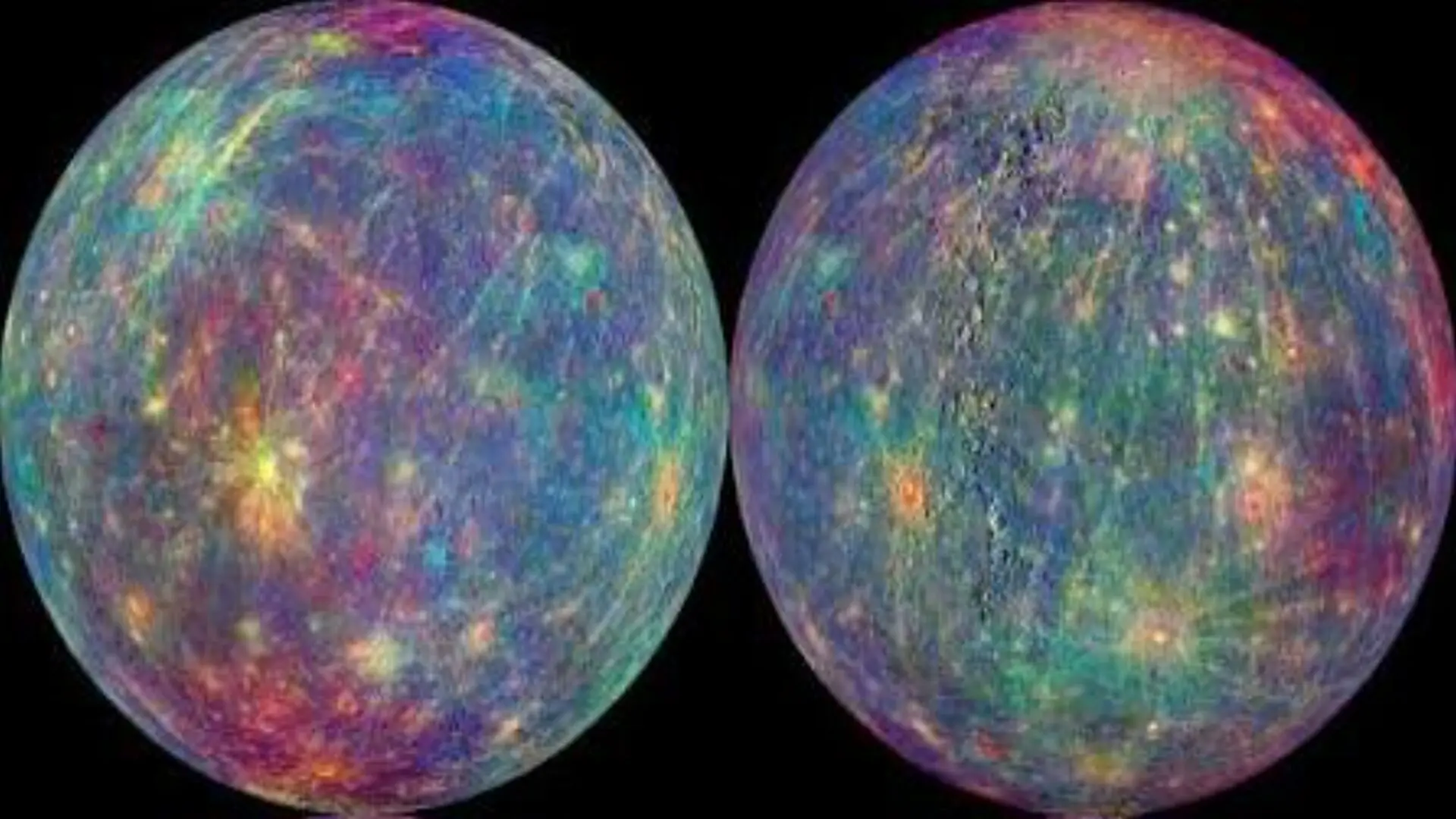
Scientists have turned to a mysterious lab-created powder to sharpen their ability to decode the surface of Mercury. By challenging multiple laboratories to analyze a mineral blend with a hidden recipe, researchers have gained vital insights into how different sensing technologies must work in tandem to accurately characterize a planetary surface. The findings, published in Planetary and Space Science, arrive just as the BepiColombo mission begins its critical science phase at the innermost planet.
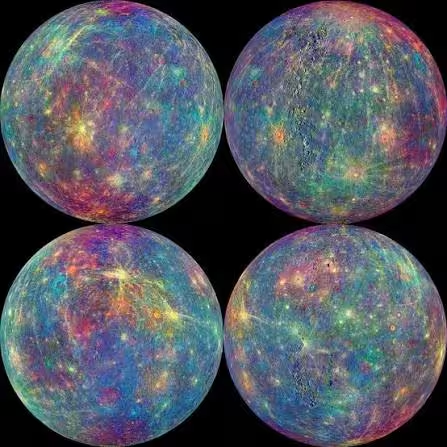
The study, led by Océane Barraud of the German Aerospace Center alongside collaborators at the Planetary Science Institute, focused on a substance dubbed Mercury Y. The test material was designed to mimic the known geochemical characteristics of Mercury, which was famously mapped by NASA’s MESSENGER mission between 2011 and 2015. However, while MESSENGER successfully identified the elements present on the planet, determining the specific minerals containing those elements remains a complex geological puzzle.
Putting Planetary Instruments to the Test
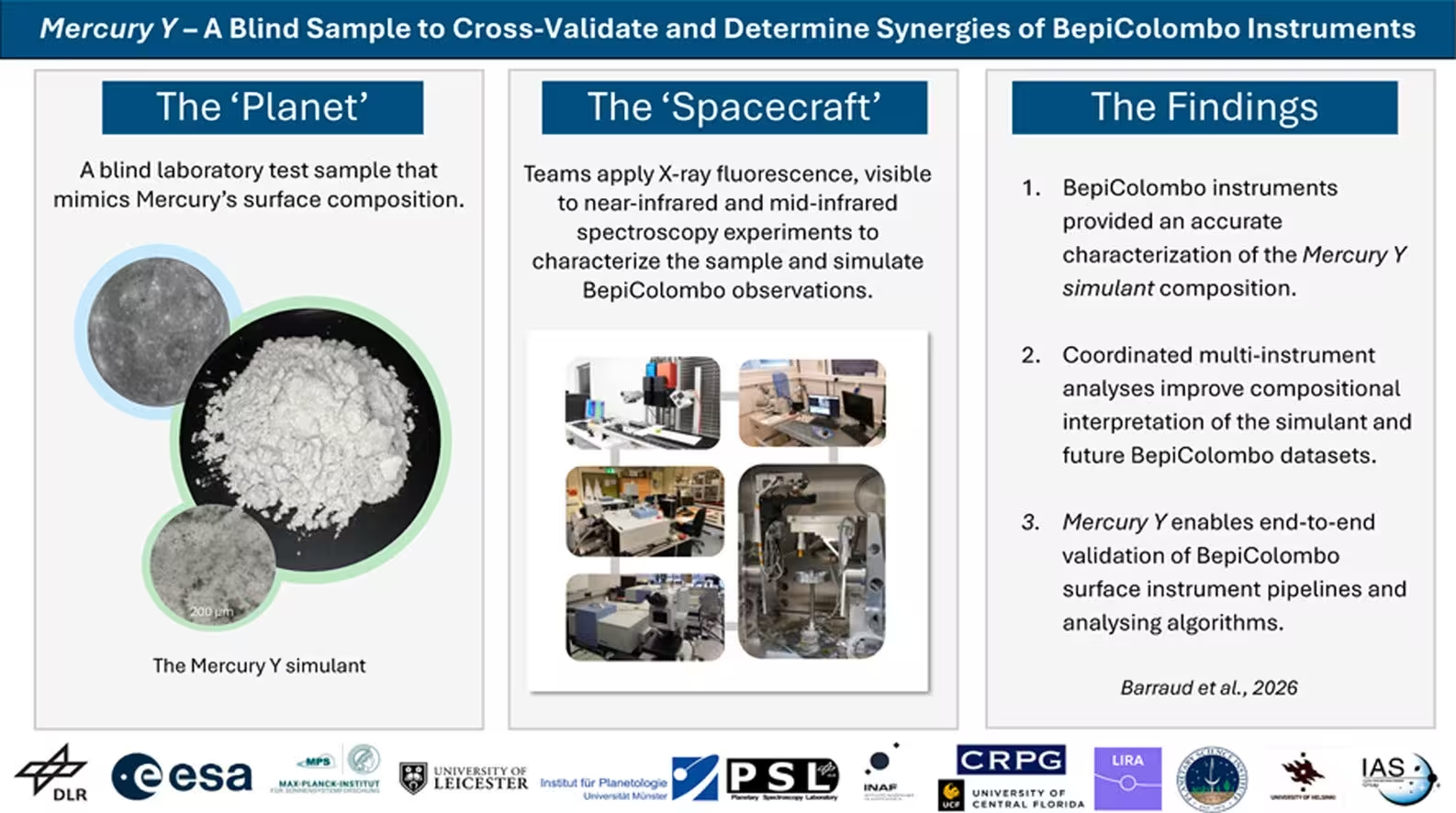
The Mercury Y mixture was composed of 44% plagioclase, 25% pyroxene, 20% volcanic glass, 10% olivine, and 1% graphite. Ten different laboratories were tasked with analyzing the material using techniques mirroring those aboard the BepiColombo spacecraft, a joint project of the European Space Agency and the Japan Aerospace Exploration Agency, which officially entered orbit around Mercury on November 21, 2026.
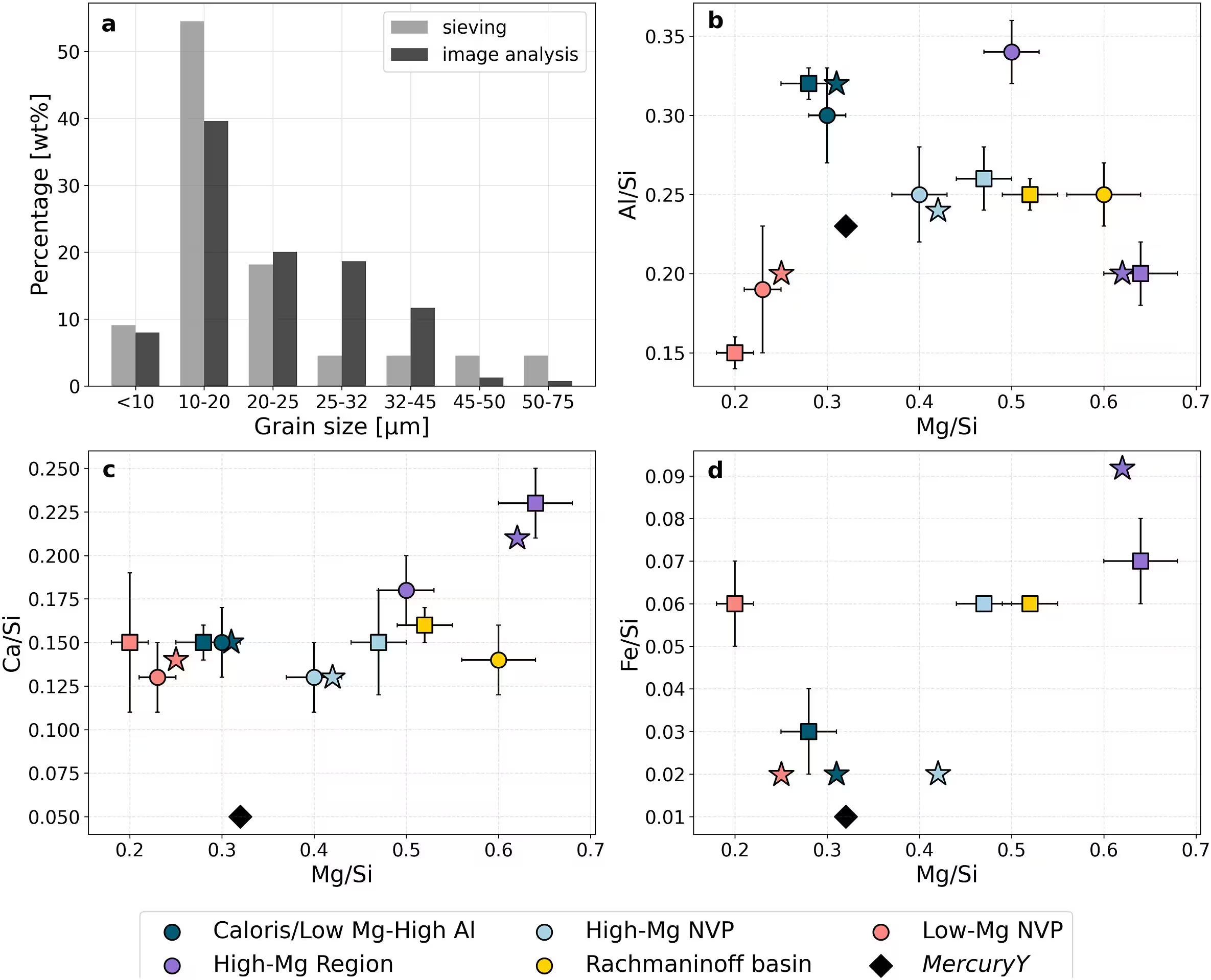
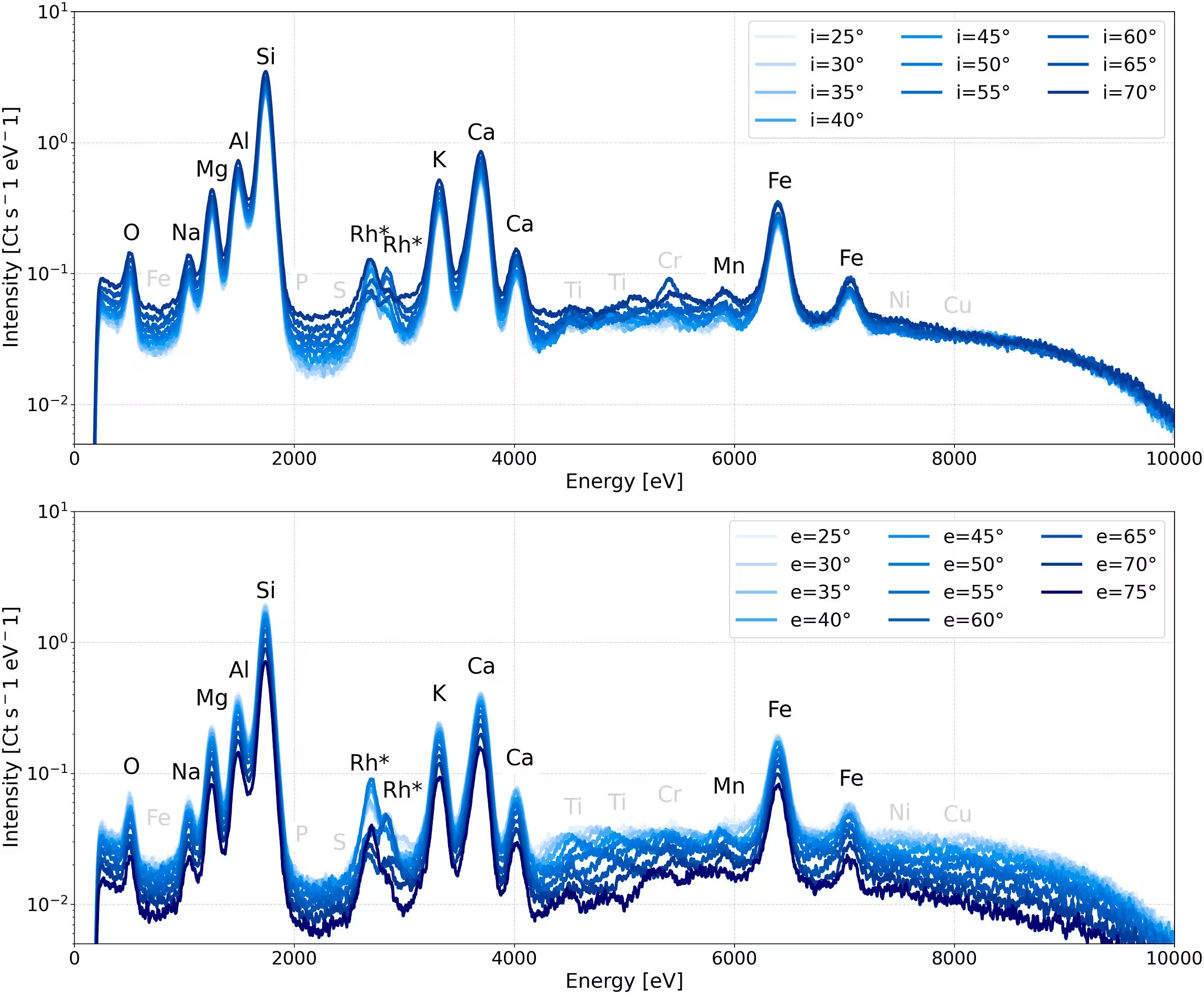
The experiment served as a “blind test” to reveal where interpretation models might falter. While elemental analysis proved reliable, mineralogical reconstruction proved far more difficult. For example, when researchers used X-ray data to estimate mineral composition, they accurately identified the presence of magnesium, aluminum, and silicon, but struggled to distinguish between crystalline structures and glass, leading to an overestimation of feldspar and a failure to identify the volcanic glass component entirely.
Integrating Data for a Complete Picture
The study underscored that no single instrument tells the whole story. Observations in visible and near-infrared light—similar to those performed by the SIMBIO-SYS suite—provided subtle clues about the sample but could not offer a definitive mineral breakdown. In contrast, thermal infrared measurements, which replicate the work of the MERTIS instrument, proved highly effective at distinguishing the four major mineral ingredients, even at extreme temperatures similar to those on Mercury’s sun-scorched surface.
Graphite, a key material in theories regarding Mercury’s dark crust, remained elusive. Because it lacks a distinctive spectral “fingerprint,” researchers had to infer its presence through secondary changes in reflectance rather than a direct detection. This highlighted that, in a real-world orbital scenario, scientists must look at the data holistically to draw accurate conclusions.
Preparing for BepiColombo’s Science Phase
While the Mercury Y benchmark is a simplified version of the planet—lacking the complex environmental weathering, sulfur, and chlorine found on the actual surface—it provides an essential framework for the upcoming BepiColombo science phase, scheduled for April 2027. By understanding the limitations of current remote sensing techniques, the team can better calibrate their interpretations of the data stream that will soon arrive from orbit.
“The composition of Mercury’s surface is key to understanding its formation and evolution,” noted Deborah Domingue. As BepiColombo begins its investigation, the lessons learned from this laboratory exercise will prove vital in ensuring that scientists do not mistake a weathered surface for a different geological makeup, allowing for a more precise reconstruction of Mercury’s history.
Further Reading
- The BepiColombo Mercury Imaging X-Ray Spectrometer: Science Goals, Instrument Performance and Operations (Space Science Reviews)
- Studying the Composition and Mineralogy of the Hermean Surface with the Mercury Radiometer and Thermal Infrared Spectrometer (MERTIS) for the BepiColombo Mission: An Update (Space Science Reviews)
- SIMBIO-SYS: Scientific Cameras and Spectrometer for the BepiColombo Mission (Space Science Reviews)
- Remote sensing evidence for an ancient carbon-bearing crust on Mercury (Nature Geoscience)
- The Major-Element Composition of Mercury’s Surface from MESSENGER X-ray Spectrometry (Science)
This article has been fact checked for accuracy, with information verified against reputable sources. Learn more about us and our editorial process.
Last reviewed on .
Article history
- Latest version
Reference(s)
- Barraud, O.., et al. “Mercury Y – A blind sample to cross-validate and determine synergies of BepiColombo instruments.” Planetary and Space Science, vol. 284, December 1, 2026, pp. 106363 Elsevier BV, doi: 10.1016/j.pss.2026.106363. <https://doi.org/10.1016/j.pss.2026.106363>.
- “The German Aerospace Center (DLR).” <https://www.dlr.de/en>.
- Shelton, Alex. “Planetary Science Institute | Discovery & Public Education in Planetary Science.”, January 22, 2024 Planetary Science Institute <https://www.psi.edu/>.
- “Homepage.” ESA <https://www.esa.int/>.
- “JAXA | Japan Aerospace Exploration Agency.” JAXA | Japan Aerospace Exploration Agency <https://global.jaxa.jp/>.
- Bunce, Emma J.., et al. “The BepiColombo Mercury Imaging X-Ray Spectrometer: Science Goals, Instrument Performance and Operations.” Space Science Reviews, vol. 216, no. 8, November 3, 2020 Springer Science and Business Media LLC, doi: 10.1007/s11214-020-00750-2. <https://doi.org/10.1007/s11214-020-00750-2>.
- Hiesinger, H.., et al. “Studying the Composition and Mineralogy of the Hermean Surface with the Mercury Radiometer and Thermal Infrared Spectrometer (MERTIS) for the BepiColombo Mission: An Update.” Space Science Reviews, vol. 216, no. 6, September 11, 2020 Springer Science and Business Media LLC, doi: 10.1007/s11214-020-00732-4. <https://doi.org/10.1007/s11214-020-00732-4>.
- Cremonese, G.., et al. “SIMBIO-SYS: Scientific Cameras and Spectrometer for the BepiColombo Mission.” Space Science Reviews, vol. 216, no. 5, June 17, 2020 Springer Science and Business Media LLC, doi: 10.1007/s11214-020-00704-8. <https://doi.org/10.1007/s11214-020-00704-8>.
- Peplowski, Patrick N.., et al. “Remote sensing evidence for an ancient carbon-bearing crust on Mercury.” Nature Geoscience, vol. 9, no. 4, March 7, 2016, pp. 273-276. Springer Science and Business Media LLC, doi: 10.1038/ngeo2669. <https://doi.org/10.1038/ngeo2669>.
- Nittler, Larry R.., et al. “The Major-Element Composition of Mercury’s Surface from MESSENGER X-ray Spectrometry.” Science, vol. 333, no. 6051, September 30, 2011, pp. 1847-1850. American Association for the Advancement of Science (AAAS), doi: 10.1126/science.1211567. <https://doi.org/10.1126/science.1211567>.
Cite this page:
- Posted by Farah Siddiqui