Interstellar Comet Reveals Its Origins in an Extremely Cold Corner of Another Solar System
The detection of nitrogen-rich ions in comet 3I/ATLAS suggests it originated in an extraordinarily cold environment far beyond our solar system.
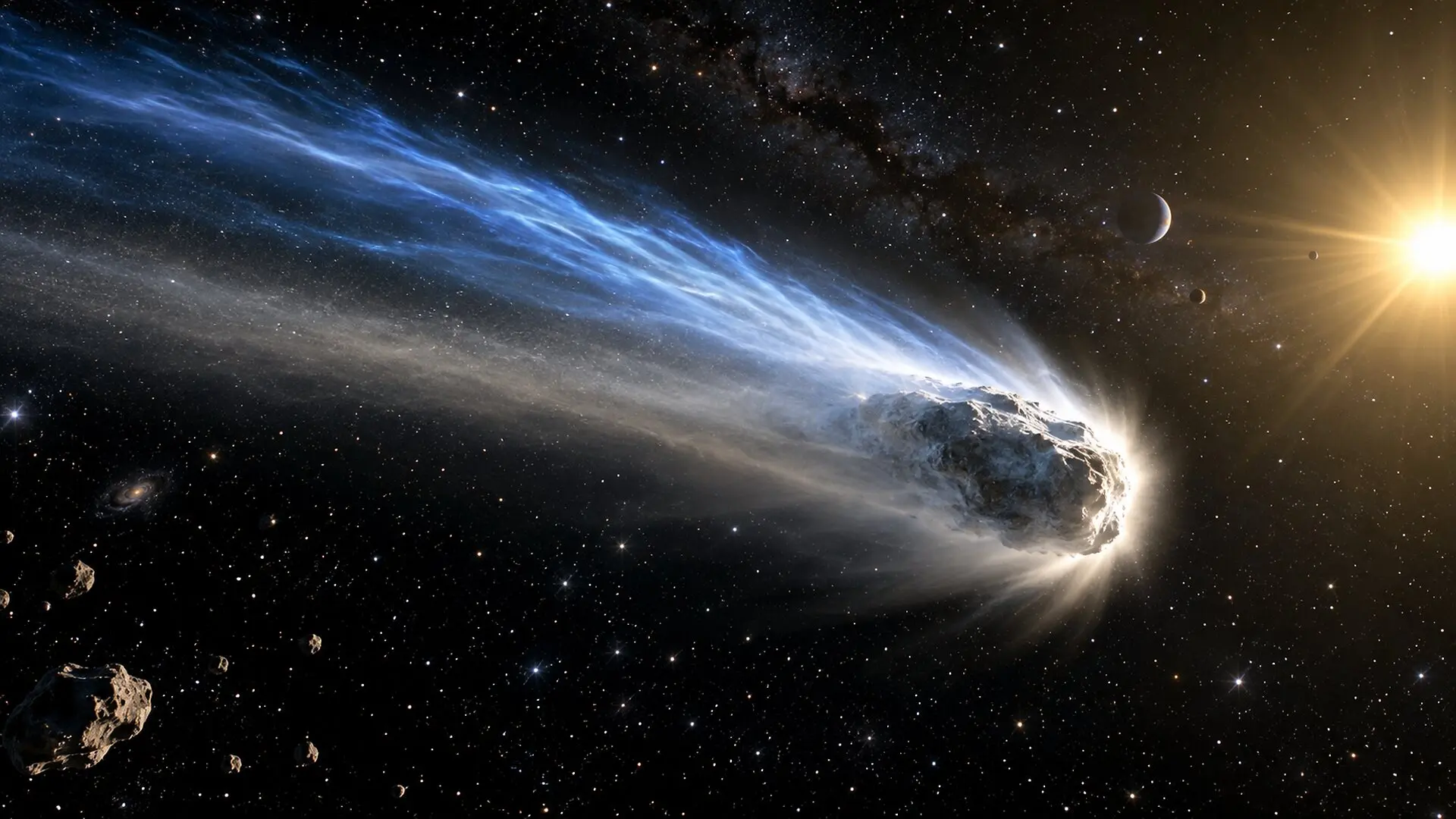
Astronomers have uncovered new evidence suggesting that the interstellar visitor 3I/ATLAS originated in a deep-freeze environment far more frigid than the typical birthplaces of comets in our own neighborhood. By analyzing the chemical composition of the object’s plasma tail, a research team identified a high concentration of molecular nitrogen, a signature that points to formation temperatures near or below 30 kelvins (approximately minus 243 degrees Celsius).
The findings, led by researchers at Northumbria University in collaboration with the University of Edinburgh, were recently published in the Monthly Notices of the Royal Astronomical Society. This discovery provides a rare, direct look at the conditions governing planetary formation in a distant, foreign solar system.

Mapping the Chemistry of an Interstellar Traveler
Discovered on July 1, 2025, 3I/ATLAS is only the third confirmed object to traverse our solar system after arriving from interstellar space. Unlike its predecessor 1I/‘Oumuamua, 3I/ATLAS displayed unmistakable cometary activity, venting gases and dust as it approached the Sun. This activity allowed scientists to study the composition of its plasma tail—a stream of charged particles trailing away from the nucleus.
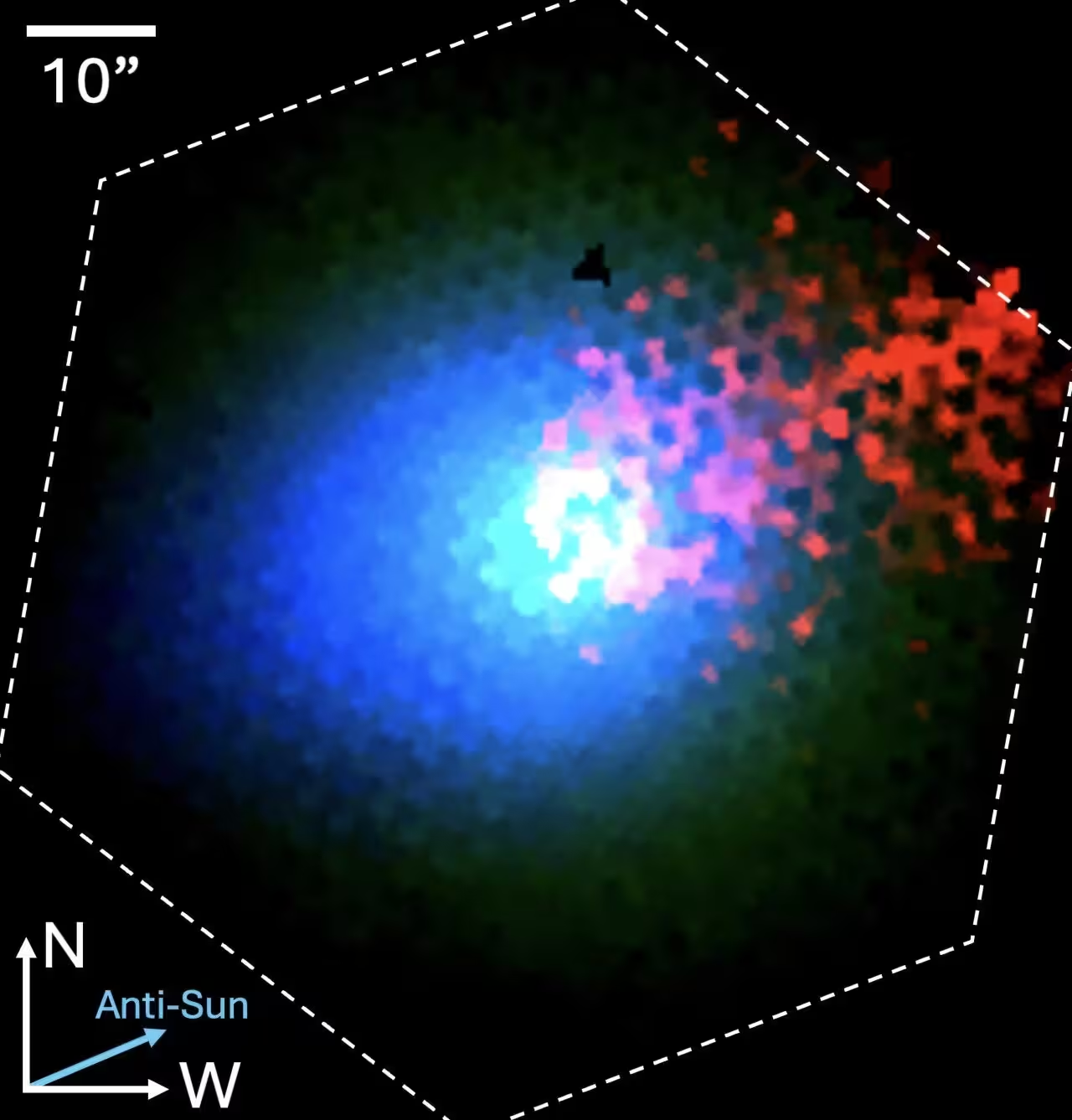
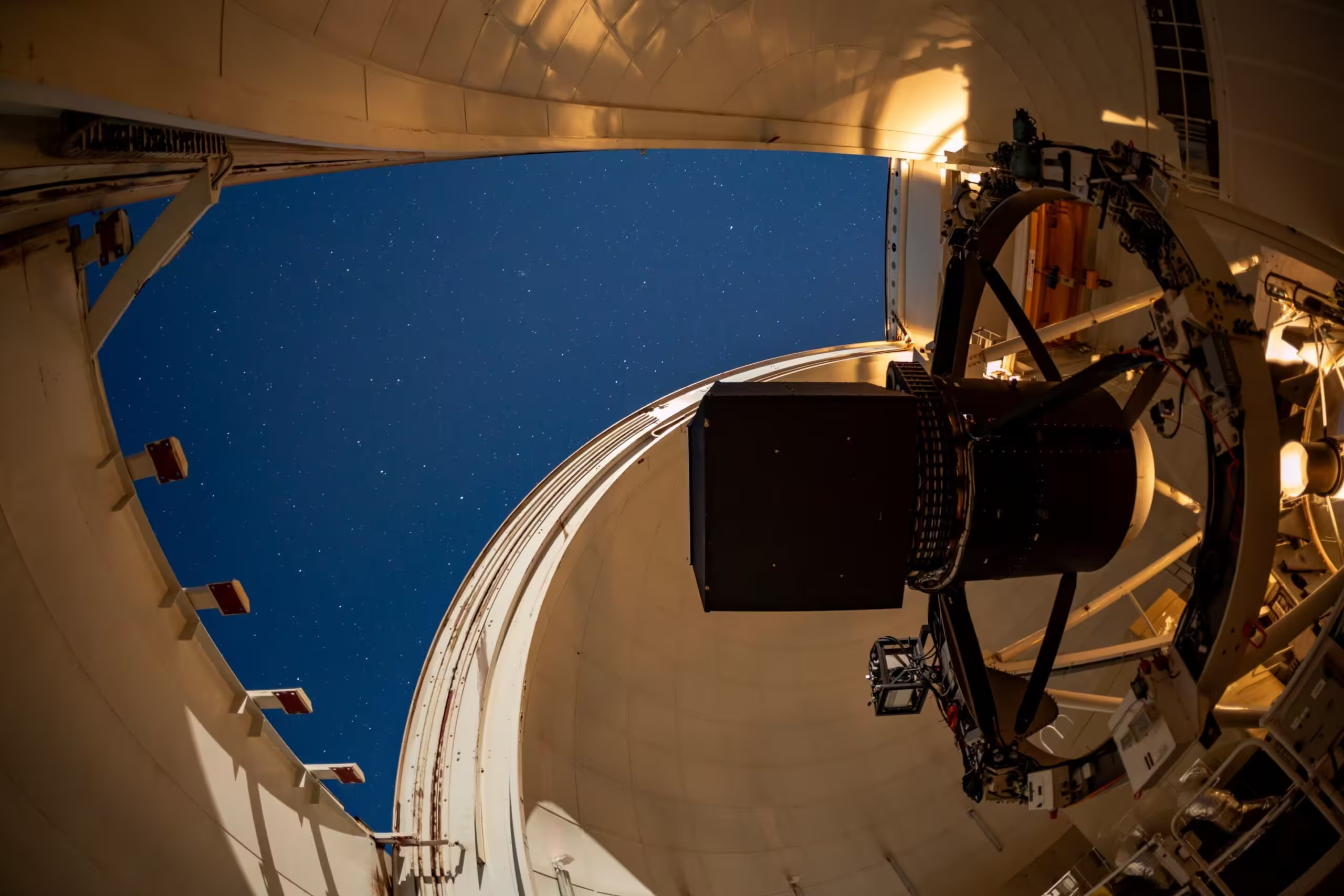
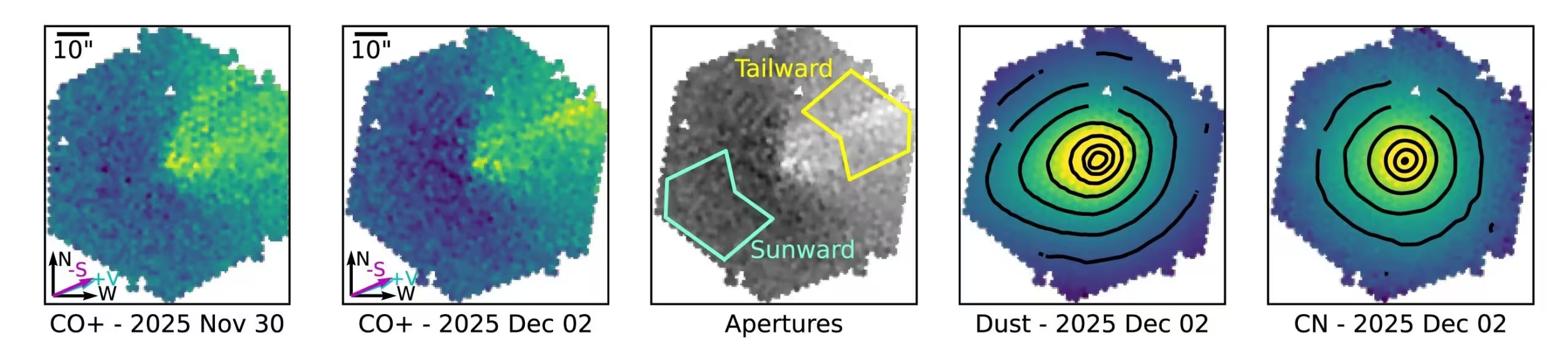
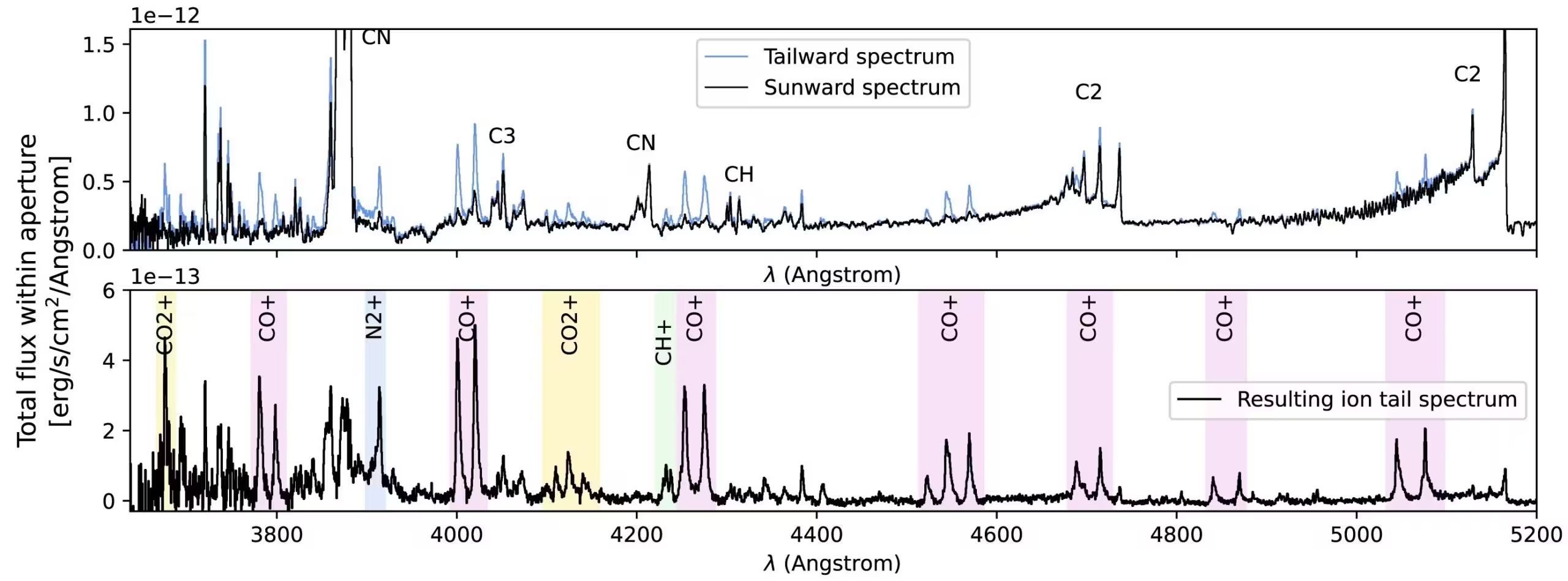
To capture this data, the team utilized the WHT Enhanced Area Velocity Explorer (WEAVE) instrument mounted on the 4.2-meter William Herschel Telescope. By employing the telescope’s Large Integral Field Unit, the researchers were able to spatially resolve the tail’s light, separating the faint ion signatures from the surrounding dust and neutral gas. This technique allowed for the simultaneous identification of five specific ion species: N2+, CO+, CO2+, H2O+, and CH+.
A Cosmic Thermometer
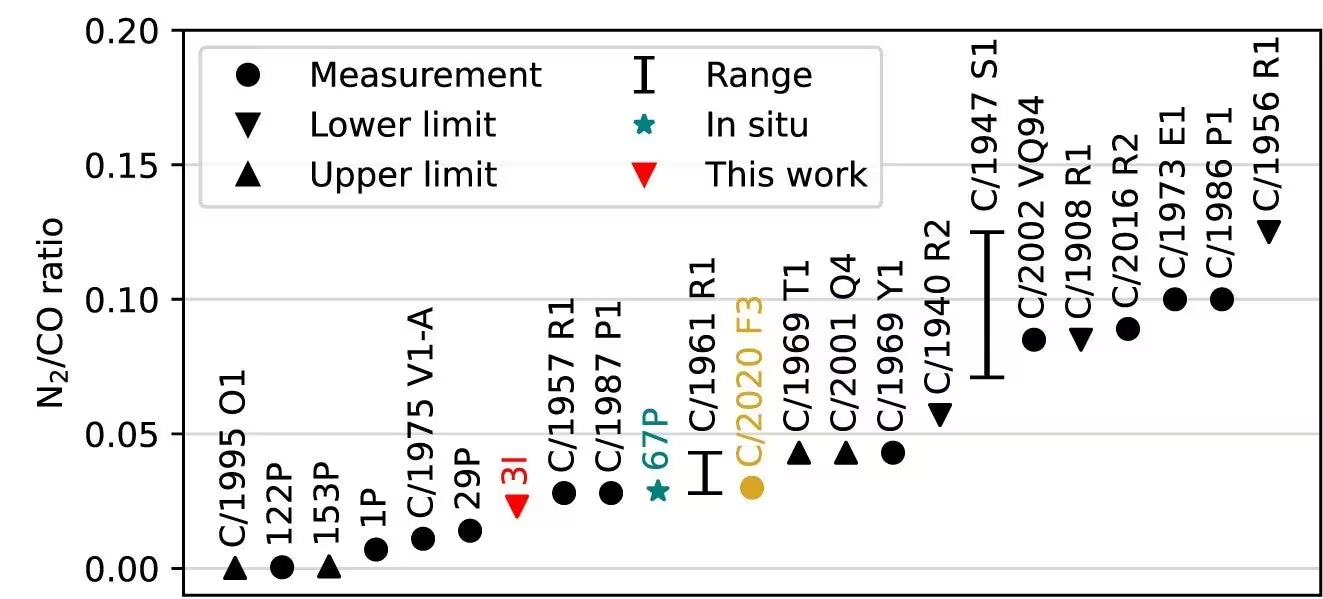
The standout finding was the presence of ionized molecular nitrogen. Because nitrogen is highly volatile, its presence—particularly in high ratios relative to carbon monoxide—serves as an effective chemical thermometer for where and how the comet’s ices originally coalesced. Lead researcher Lea Ferellec noted that the object acts as a messenger from a vastly different evolutionary environment.
“Finding that it’s so rich in nitrogen tells us it likely formed in extremely cold conditions, far from its home star,” Ferellec explained. The calculated N2+/CO+ abundance ratio of approximately 2.3% supports the theory that 3I/ATLAS formed in the remote, icy outskirts of its parent protoplanetary disk, where volatile elements were stable enough to be trapped in solid form.
Dynamics of the Plasma Tail
Beyond the comet’s origin story, the study provided insights into the behavior of plasma within cometary tails. By comparing ion abundances at varying distances from the nucleus, the team found that the ratios of N2+, CO+, CO2+, and H2O+ remained largely stable. While CH+ showed a slight, albeit statistically marginal, decline, the general stability suggests that these ion ratios provide a reliable snapshot of the parent material.
The use of WEAVE proved critical in overcoming the observational challenges posed by bright dust and weak spectral signals. According to Isaac Newton Group Director Rubén Sánchez-Janssen, the rapid deployment of these observations highlights the importance of tools designed for high-priority scientific events.
As astronomers continue to refine the study of interstellar objects, 3I/ATLAS remains a vital specimen. It serves as a physical sample of matter from another planetary system, preserved in a deep freeze for eons before being gravitationally kicked into the interstellar void and ultimately passing through our own solar neighborhood.
This article has been fact checked for accuracy, with information verified against reputable sources. Learn more about us and our editorial process.
Last reviewed on .
Article history
- Latest version
Cite this page:
- Posted by Aisha Ahmed