Mysterious Gas Detections Suggest Mars May Still Be Volcanically Active
A Martian orbiter has detected hydrogen chloride near Alba Mons, hinting at potential dormant volcanic activity hidden beneath the surface of Mars.
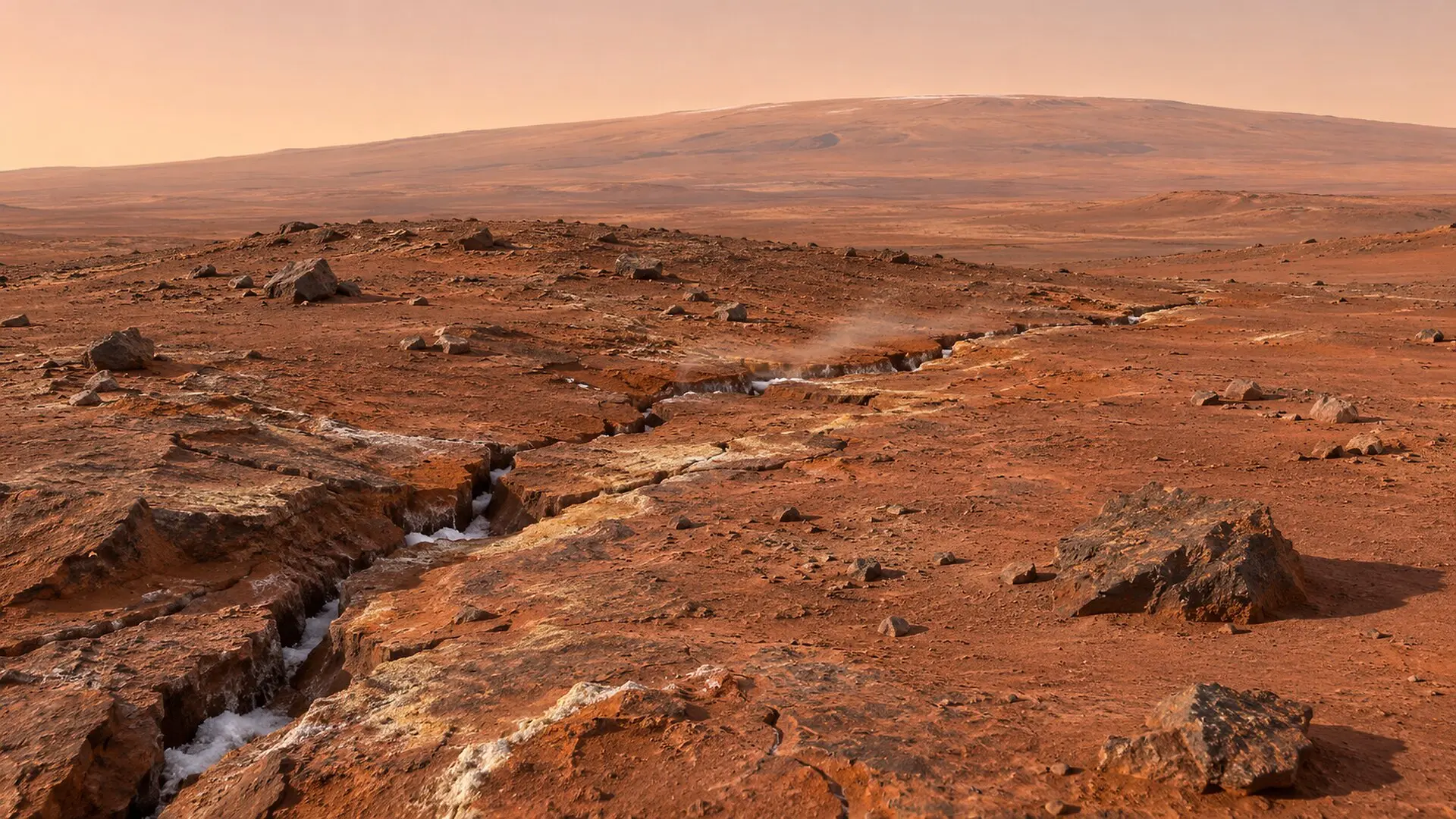
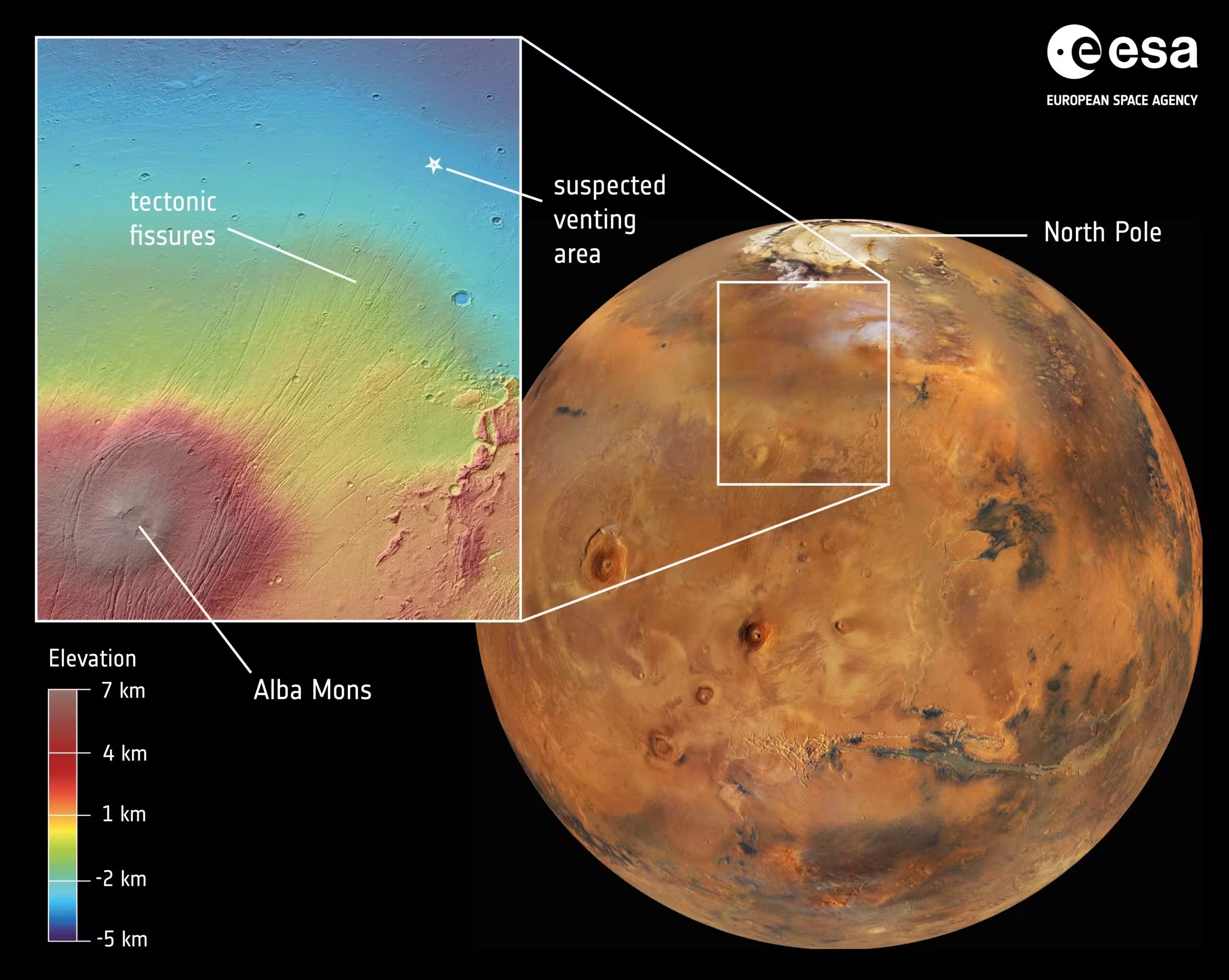
A curious gas signature detected in the thin Martian atmosphere has provided new, compelling evidence that the Red Planet may still harbor residual volcanic warmth beneath its frozen surface. Scientists analyzing data from the ExoMars Trace Gas Orbiter have identified localized concentrations of hydrogen chloride near the Alba Mons volcano, a finding that defies typical seasonal patterns and points to active geological processes happening deep underground.
The study, published in Science Advances, describes an international effort led by researchers at the Space Research Centre of the Polish Academy of Sciences. By synthesizing atmospheric monitoring with high-resolution imagery of surface fissures, the team argues that dormant magmatic activity could be responsible for releasing gases that migrate through the crust, potentially interacting with subsurface ice before reaching the atmosphere.
Anomalous Timing Suggests Hidden Sources
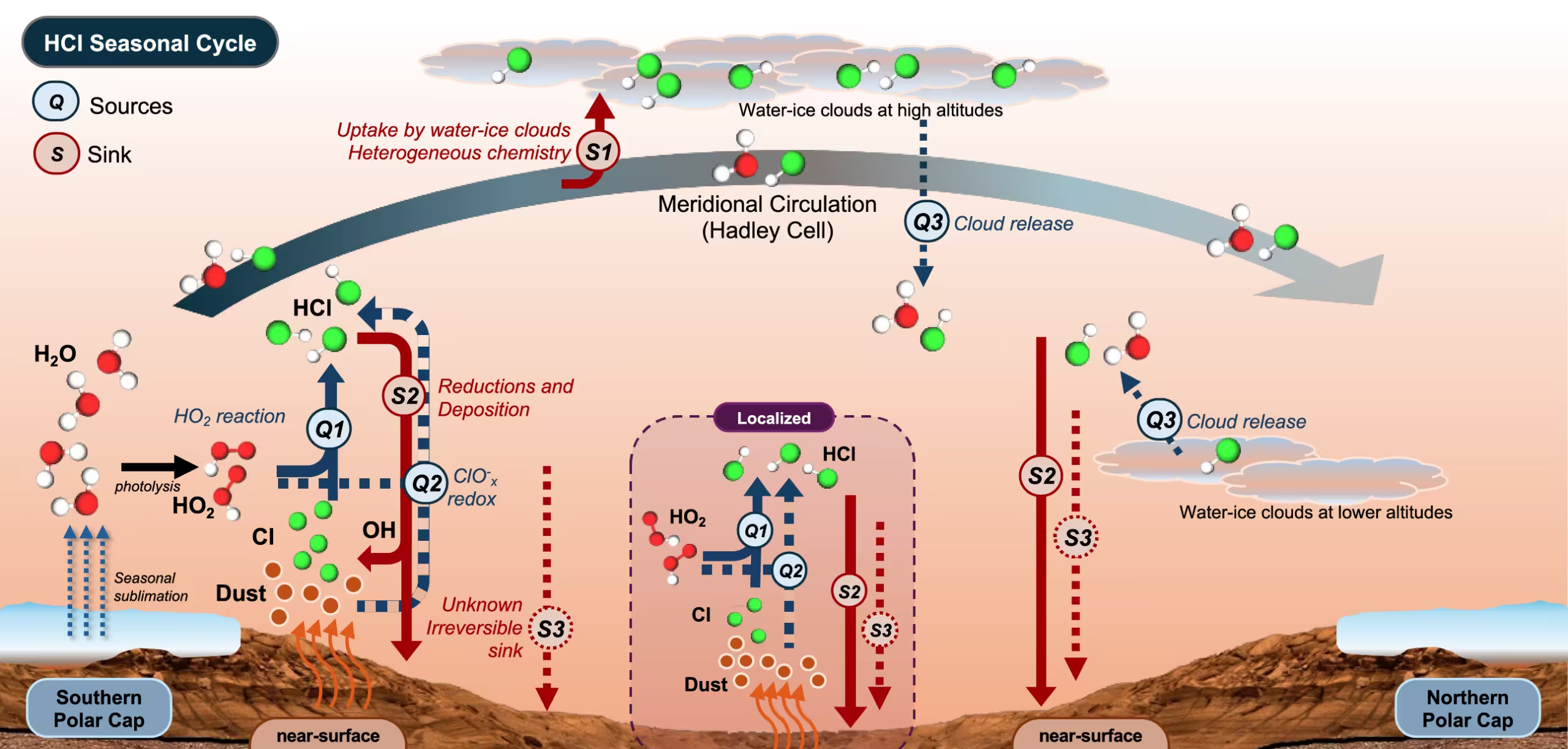
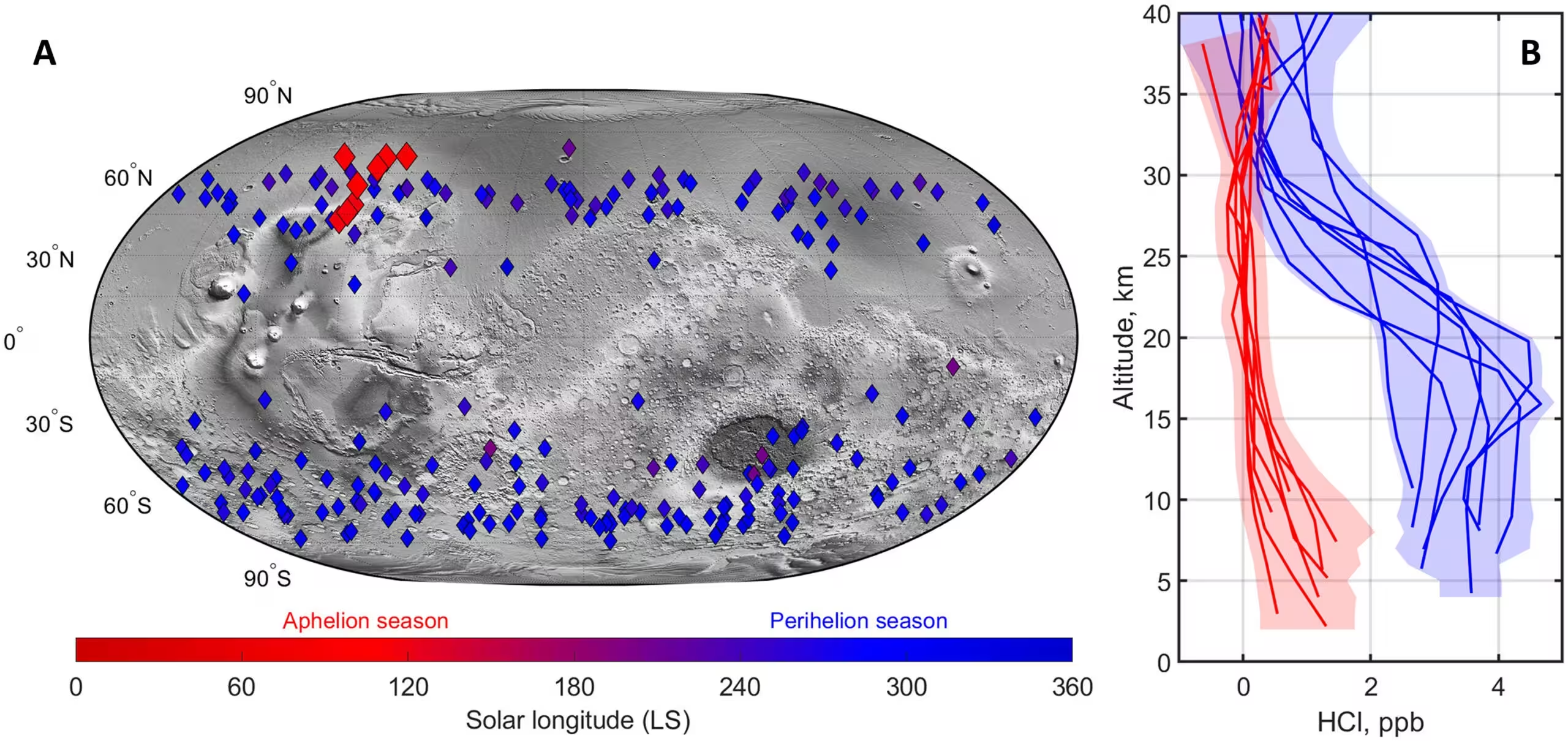
Hydrogen chloride, a molecule typically associated with volcanic vents on Earth, is not entirely new to Mars. However, its presence usually follows a predictable cycle driven by global dust storms and temperature fluctuations during the southern spring and summer. The discovery at Alba Mons is significant because it occurred during the northern summer—a period when such gas concentrations are historically expected to be negligible.
“Our findings suggest that Mars has retained enough internal heat to support volcanic activity until recently, and possibly still does,” explains co-lead author Daniel Mège. While the evidence is strong, researchers stress that they have not observed an active eruption, nor have they found direct thermal anomalies or fresh lava flows. Instead, the data implies a more subtle, long-term release of gases from within the Martian interior.
Decoding Atmospheric Traces
The research team relied on the Atmospheric Chemistry Suite aboard the ExoMars Trace Gas Orbiter, which utilizes solar occultation to measure the spectral fingerprints of gas molecules. Over the course of two Martian years, the orbiter captured 78 occultations, with eight showing clear hydrogen chloride signatures clustered in the narrow longitude range surrounding Alba Mons.
Because these detections were intermittent and confined to the lower 10 kilometers of the atmosphere, the researchers believe the gas is being removed relatively quickly, likely by interacting with ice particles. This short atmospheric lifespan prevents the gas from diffusing globally, reinforcing the idea that the source is localized to the volcanic region rather than part of a larger planetary chemical cycle.
Fractured Landscapes and Potential Pathways
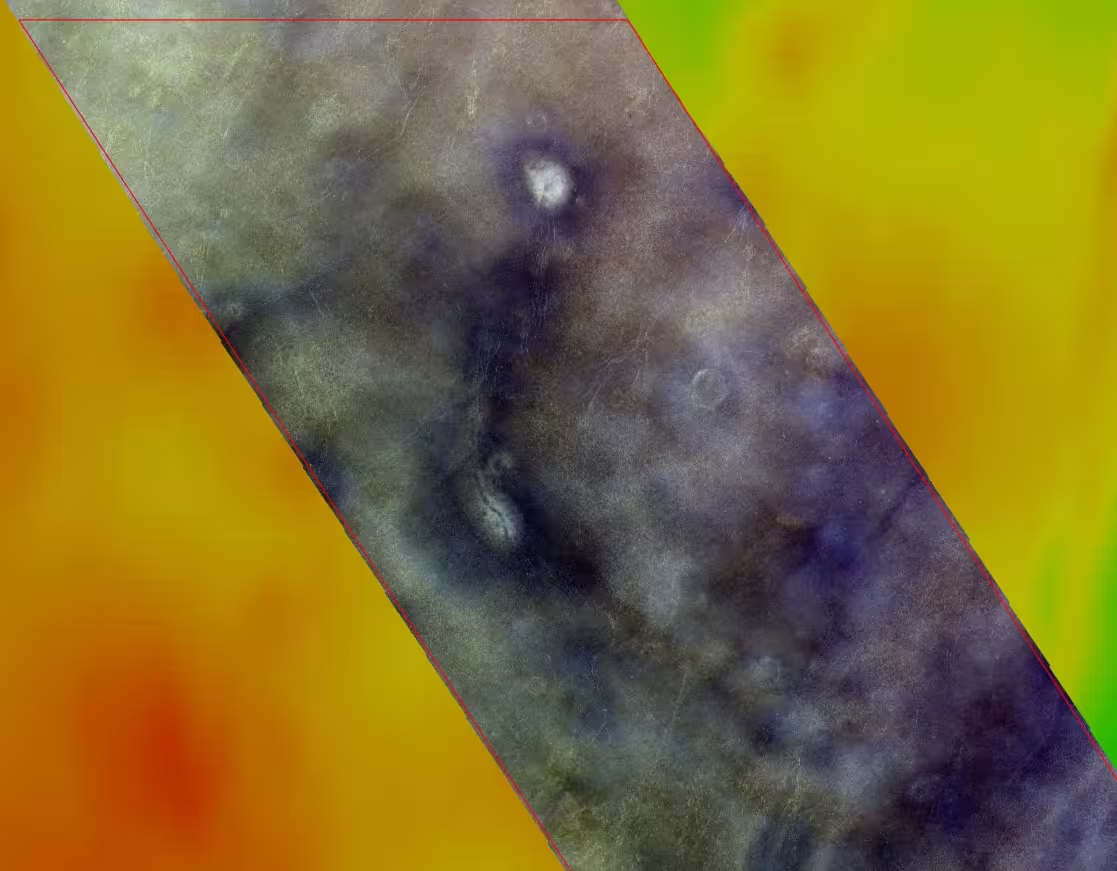
By pairing gas detection data with high-resolution imagery from the Colour and Stereo Surface Imaging System (CaSSIS) and NASA’s HiRISE camera, the team identified narrow, complex fissure systems cutting through the surface. These geological features, some only tens of centimeters wide, suggest a pathway through which gases might ascend from the deep crust.
The researchers propose that these fissures act as conduits for gas, which may be stored temporarily in subsurface ice reservoirs before being released into the atmosphere as the ground warms seasonally. While this mechanism remains an interpretation of the available data, it offers a more robust explanation for the local clustering than alternatives like the degradation of chlorine-bearing salts or mud volcanism.
Implications for Martian Habitability
While the study does not claim evidence of liquid water or signs of biological life, the confirmation of dormant volcanism would have significant implications for the planet’s history and future exploration. If internal heat is indeed driving these gas releases, it could theoretically fuel hydrothermal systems where water, rock, and heat interact—conditions that are known to support microbial life on Earth.
Future missions and continued observations will focus on determining whether these localized signals appear in other regions of recent volcanic activity, such as the Tharsis and Cerberus provinces. By refining their atmospheric models and comparing them with the cyclical data from Alba Mons, planetary scientists hope to definitively confirm whether the Red Planet is geologically quieter than we thought, or still warm and restless beneath its surface.
Further Reading
- An unusual dust storm reveals how Mars lost some of its water
- Evidence of rapid hydrogen chloride uptake on water ice in the atmosphere of Mars
- Geophysical evidence for an active mantle plume underneath Elysium Planitia on Mars
- ExoMars discovers hidden water in Mars’ Grand Canyon
- Transient HCl in the atmosphere of Mars
This article has been fact checked for accuracy, with information verified against reputable sources. Learn more about us and our editorial process.
Last reviewed on .
Article history
- Latest version
Reference(s)
- Trokhimovskiy, Alexander., et al. “Enigmatic HCl detections as a potential signature of igneous activity on Mars.” Science Advances, vol. 12, no. 45, November 6, 2026 American Association for the Advancement of Science (AAAS), doi: 10.1126/sciadv.aeb9422. <https://www.science.org/doi/10.1126/sciadv.aeb9422>.
- Bonisławski, Daniel. “Strona głowna - EN - Polska Akademia Nauk.”, December 18, 2023 Polska Akademia Nauk <https://pan.pl/en/>.
- Cermak, Alicia. “ExoMars Program - NASA Science.”, December 1, 2017 NASA <https://science.nasa.gov/mission/tgo/>.
- <https://blogs.esa.int/to-mars-and-back/2026/02/02/an-unusual-dust-storm-reveals-how-mars-lost-some-of-its-water/>.
- Luginin, Mikhail., et al. “Evidence of rapid hydrogen chloride uptake on water ice in the atmosphere of Mars.” Icarus, vol. 411, March 1, 2024, pp. 115960 Elsevier BV, doi: 10.1016/j.icarus.2024.115960. <https://www.sciencedirect.com/science/article/pii/S0019103524000186>.
- Broquet, A.. “Geophysical evidence for an active mantle plume underneath Elysium Planitia on Mars - Nature Astronomy.”, vol. 7, no. 2, pp. 160-169. Nature, doi: 10.1038/s41550-022-01836-3. <https://www.nature.com/articles/s41550-022-01836-3>.
- “ExoMars discovers hidden water in Mars’ Grand Canyon.” ESA: TBD <https://www.esa.int/Science_Exploration/Human_and_Robotic_Exploration/Exploration/ExoMars/ExoMars_discovers_hidden_water_in_Mars_Grand_Canyon>.
- <https://pubmed.ncbi.nlm.nih.gov/33568485/>.
Cite this page:
- Posted by Aisha Ahmed