Mysterious 11,500 Year Old Carvings May Be The World’s Oldest Architectural Blueprints
Researchers suggest mysterious rectangular, curved-top images could depict ancient domed buildings, though the true meaning remains a subject of debate.
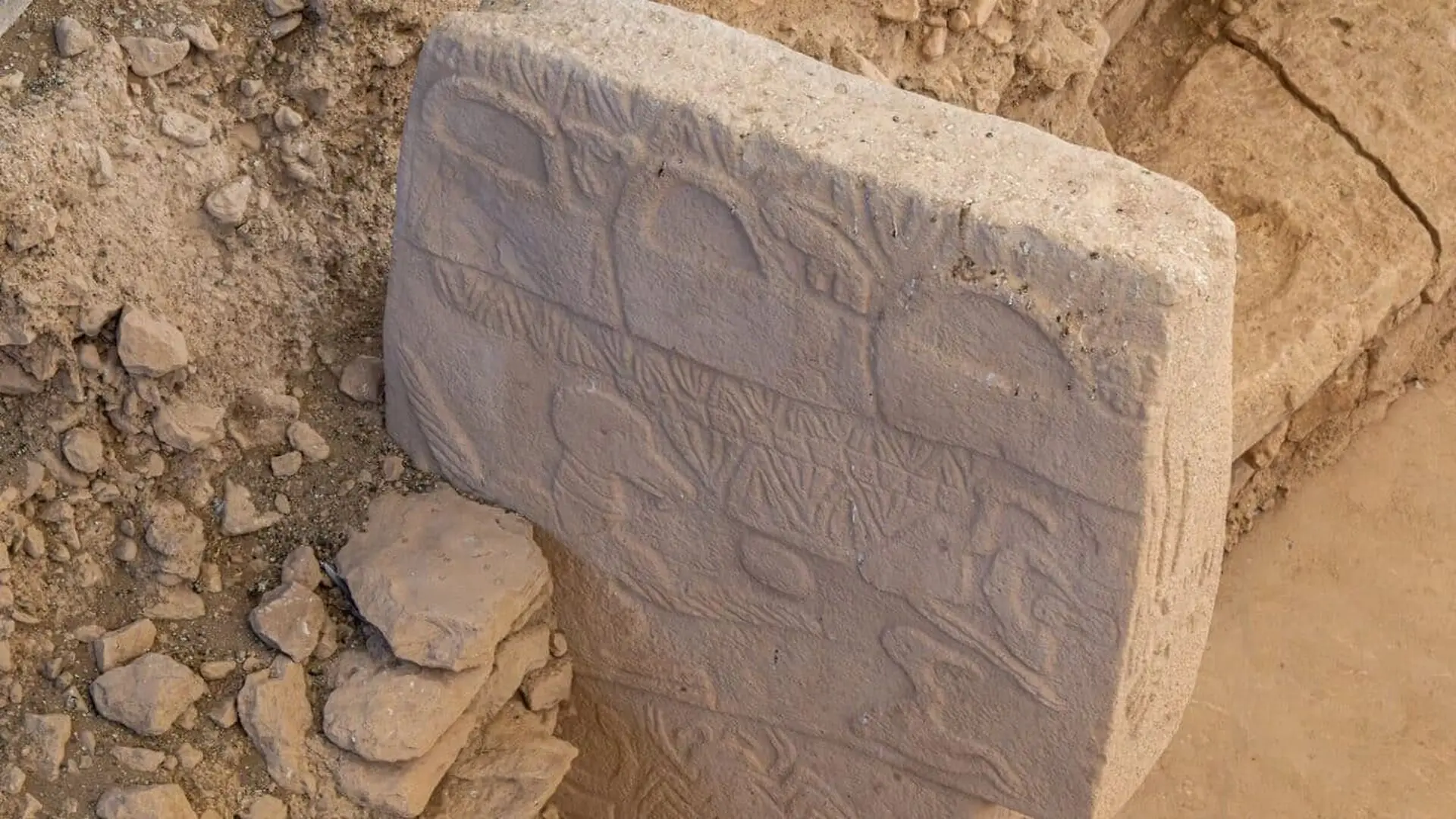
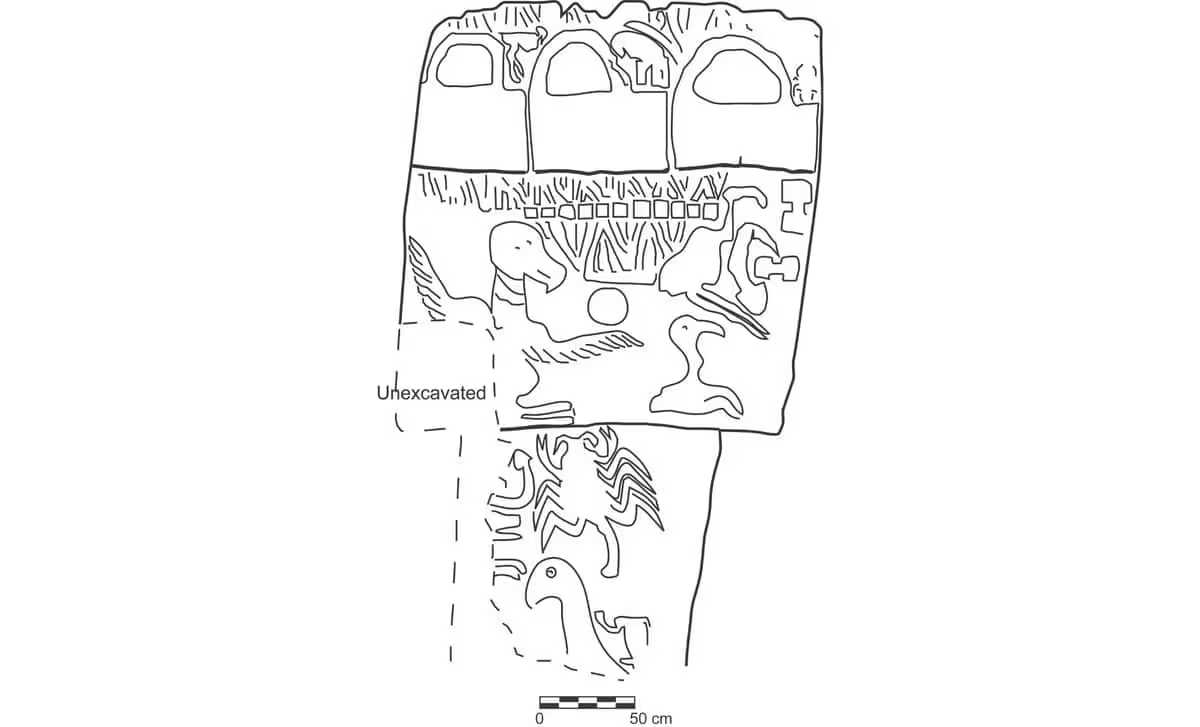
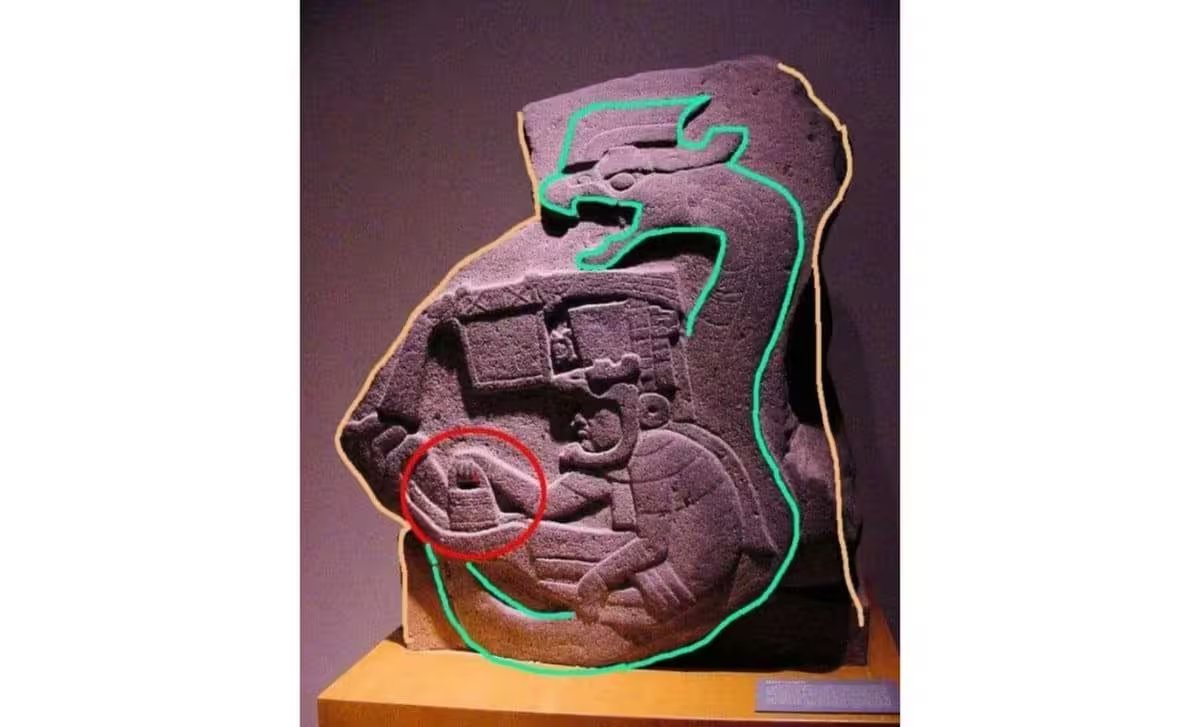
Perched near the summit of Pillar 43 at the ancient Turkish site of Göbekli Tepe, three enigmatic carvings have long perplexed archaeologists. Often referred to as the Vulture Stone, this limestone monolith features a trio of distinct shapes, each characterized by a rectangular base topped with a curved arch—a design that has earned them the informal nickname of handbags.
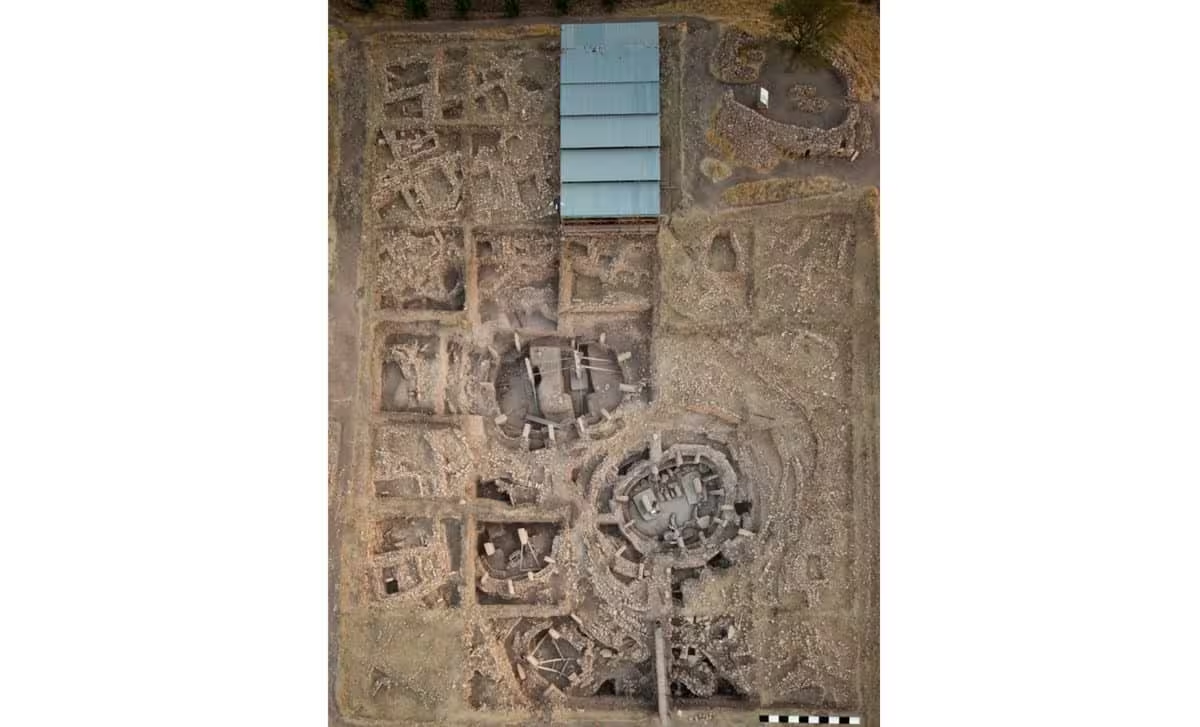
Göbekli Tepe, a UNESCO World Heritage site nestled in the Germuş mountain range, stands as a testament to the sophistication of early hunter-gatherer societies. Constructed between 9,600 and 8,200 B.C.E. during the Pre-Pottery Neolithic period, the site is defined by its iconic T-shaped megaliths adorned with intricate reliefs of wild animals and geometric motifs.
Decoding the Neolithic Blueprints
A renewed hypothesis, brought to the fore by researcher Uluurgun and highlighted by Arkeonews, suggests that these handbag-like symbols are not mere ornamentation, but rather two-dimensional architectural renderings of the site’s own structures. Under this framework, the rectangular lower section represents walls, while the curved upper portion depicts a domed roof. Further, Uluurgun posits that the surrounding animal carvings may have functioned as markers, indicating the specific placement of entryways within the structures.
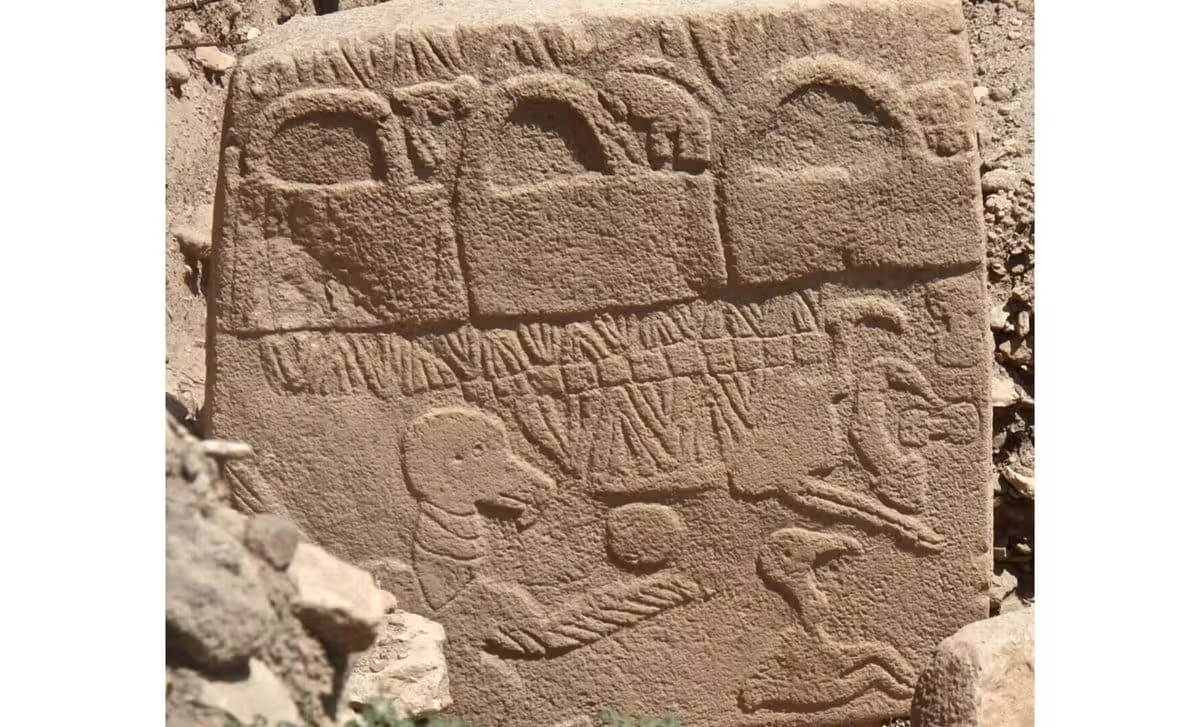
The concept of “architectural sketching” at the site is not entirely new. As early as 2011, archaeologist Edward Banning suggested in a study that such “handle-like attachments” likely represented vaulted roofs. Subsequent researchers have built upon this, suggesting the carvings reflect the structural profiles of the buildings themselves.
New Discoveries Refine Archaeological Perspectives
Recent advances in geophysical surveys have transformed our understanding of the site, revealing that Göbekli Tepe was far more complex than a mere ritual gathering point. Evidence suggests a high density of structures, with several layouts mirroring those of residential dwellings. Furthermore, a 2020 analysis by Gil Haklay and Avi Gopher confirmed that enclosures B, C, and D shared a consistent architectural geometry, reinforcing the idea that these ancient builders worked from a standardized plan.
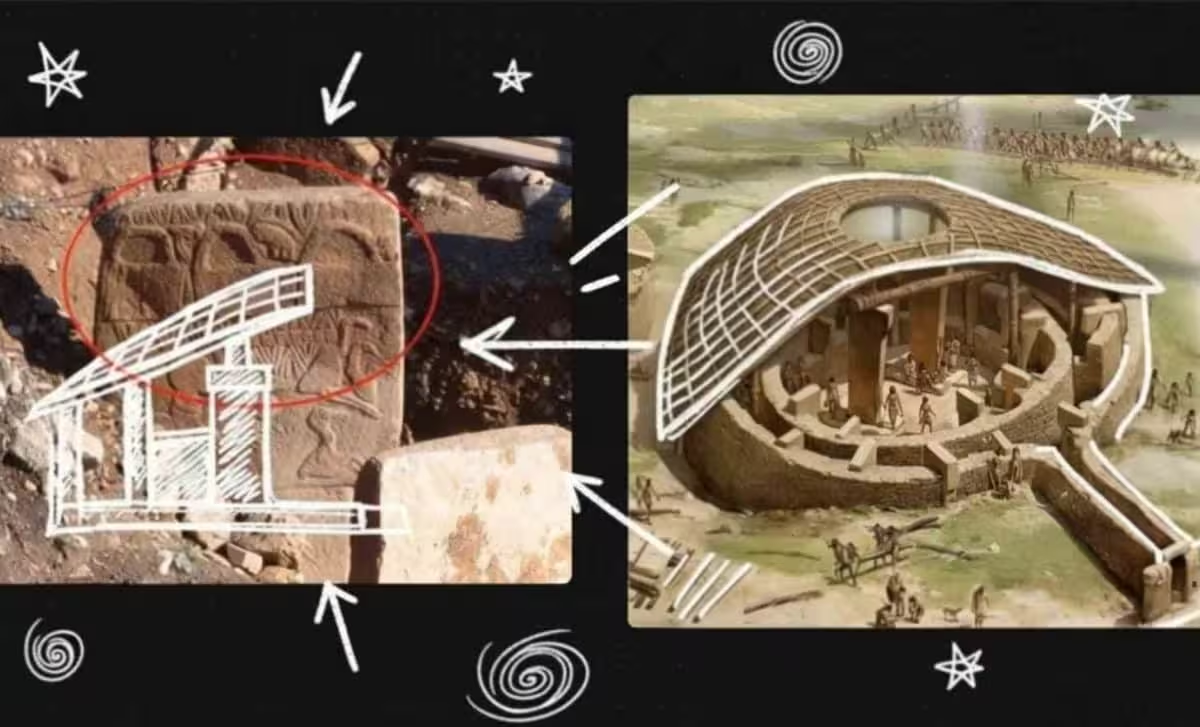
While this makes the notion of a structural “blueprint” more plausible, the theory faces critical scrutiny. Skeptics point out that if these were intended as functional construction guides, it remains unclear why they would be etched onto an existing pillar rather than a portable medium. Additionally, the lack of dimensions or standardized notation makes it difficult to categorize these images as formal technical drawings.
For now, the Vulture Stone remains a compelling, if unresolved, piece of a larger archaeological puzzle. As excavation continues at the site, researchers hope that future findings will shed light on whether these carvings were early architectural planning tools, symbolic representations, or something entirely different.
This article has been fact checked for accuracy, with information verified against reputable sources. Learn more about us and our editorial process.
Last reviewed on .
Article history
- Latest version
Reference(s)
- <https://whc.unesco.org/en/list/1572/>.
- Altuntaş, Leman. “Could Göbekli Tepe’s ‘Handbag’ Symbols Be the World’s Oldest Architectural Drawings?.”, September 6, 2026 arkeonews.net <https://arkeonews.net/could-gobekli-tepes-handbag-symbols-be-the-worlds-oldest-architectural-drawings/>.
- “Edward Banning.” <https://www.anthropology.utoronto.ca/people/directories/all-faculty/edward-banning>.
- Banning, E. B.. “So Fair a House.” Current Anthropology, vol. 52, no. 5, October 1, 2011, pp. 619-660. University of Chicago Press, doi: 10.1086/661207. <https://www.journals.uchicago.edu/doi/10.1086/661207>.
- Haklay, Gil. “Geometry and Architectural Planning at Göbekli Tepe, Turkey | Cambridge Archaeological Journal | Cambridge Core.”, vol. 30, no. 2, pp. 343-357. Cambridge Core, doi: 10.1017/S0959774319000660. <https://www.cambridge.org/core/journals/cambridge-archaeological-journal/article/geometry-and-architectural-planning-at-gobekli-tepe-turkey/2CBAF416E33AFE6496B73710A2F42FF9>.
Cite this page:
- Posted by Karan Das