New Math Reveals a Potential 56 Day Route to Mars and Europe Is Building the Engine for It
Researchers have discovered a long-lost orbital route to Mars that is so efficient, current chemical rockets lack the capability to reach it.
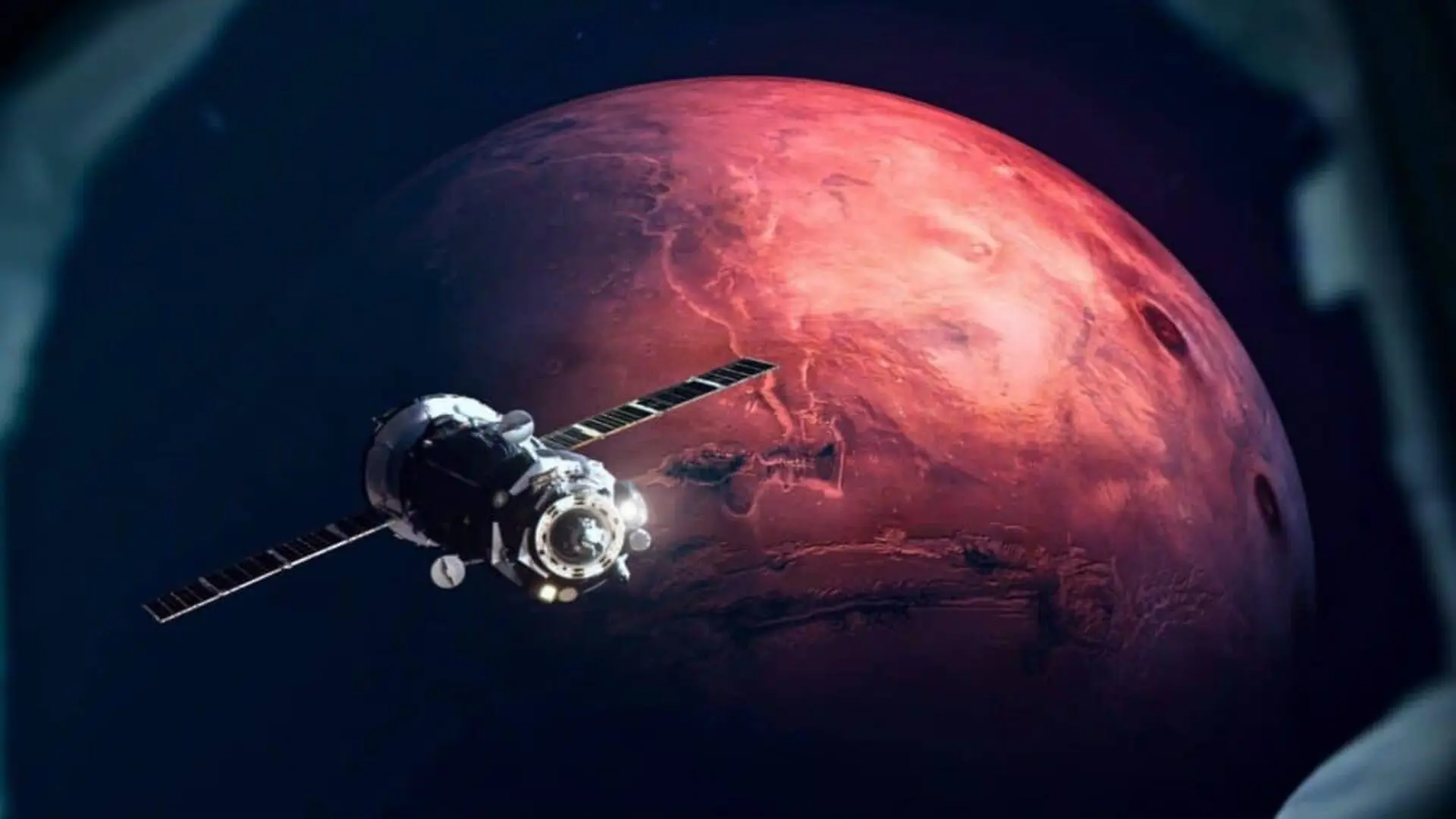
New research suggests that a long-discarded orbital path from a forgotten near-Earth asteroid could hold the key to unprecedented travel speeds between Earth and Mars. While the asteroid, identified as 2001 CA21, was reclassified following updated observations, astrophysicist Marcelo de Oliveira Souza from Brazil’s State University of Northern Fluminense found that its early, preliminary orbital data provided a unique geometric template for rapid interplanetary transit.
In a study published in the April 2026 issue of Acta Astronautica, de Oliveira Souza utilized the asteroid’s initial orbital plane as a specialized filter to isolate high-efficiency trajectories. By constraining potential Earth-to-Mars routes to remain within five degrees of this specific plane, he identified a rare alignment in 2031 that allows for exceptionally fast round-trip missions.
Rapid Transit Windows for 2031
By applying a Lambert solver—a standard astrodynamics tool used to calculate paths between bodies—to NASA’s JPL Horizons ephemeris data, the research revealed two distinct mission profiles for the 2031 opposition. Both itineraries are scheduled for departure from Earth on April 20, 2031.
- The Extreme Trajectory: This high-velocity profile cuts the journey to Mars to just 33 days, followed by a 30-day surface stay and a 90-day return, resulting in a total mission duration of 153 days.
- The Feasible Trajectory: This more balanced approach requires 56 days to reach Mars, includes a 35-day surface mission, and allows for a 135-day return leg, totaling 226 days.
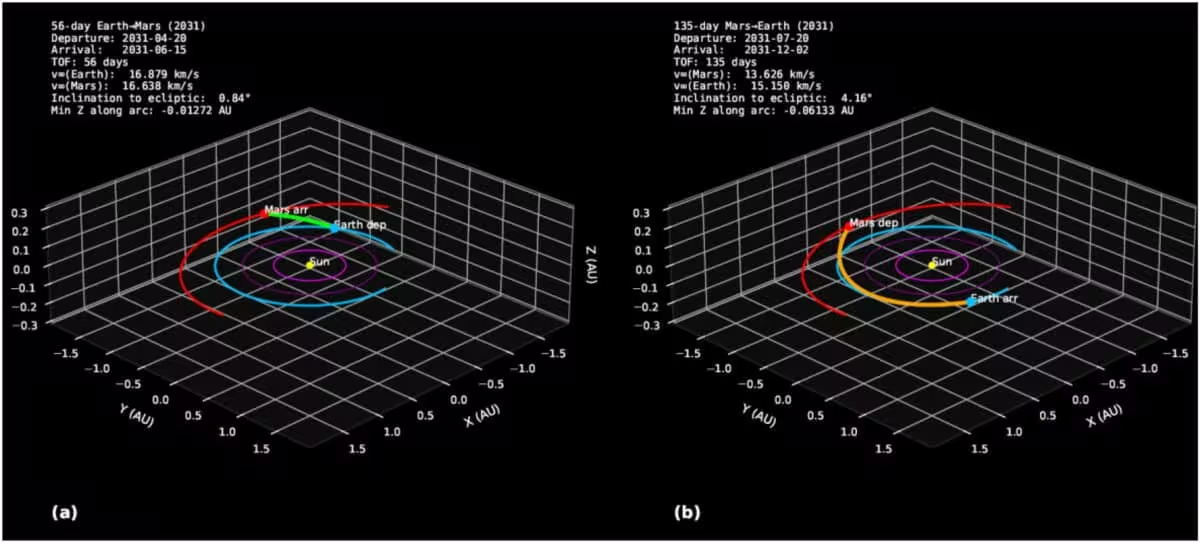
Monte Carlo simulations verified these results across various potential perturbations, confirming that these trajectories remain stable even with minor variations in velocity.
The Limits of Chemical Propulsion
Despite the mathematical elegance of these routes, the physical demands are extreme. Interplanetary travel efficiency is measured by hyperbolic excess velocity, and the energy requirements for these rapid windows dwarf those of conventional space missions. For comparison, the New Horizons mission to Pluto—one of the fastest spacecraft launched from Earth—required a launch energy of roughly 157 km²/s². The 56-day Mars trajectory demands nearly double that energy, while the 33-day option requires five times the energy output of New Horizons.
Furthermore, the arrival speeds at both Mars and Earth for these trajectories would exceed the current tolerance limits of existing thermal protection systems. The study concludes that traditional chemical rockets lack the necessary thrust-to-weight performance to make such rapid human transit viable.

Nuclear Thermal Propulsion as the Solution
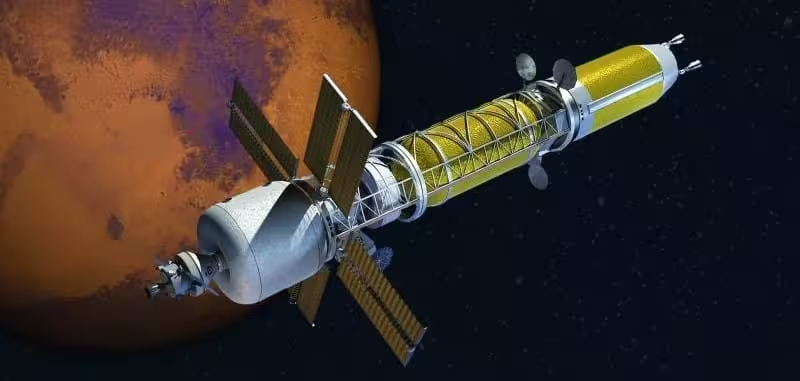
The solution may lie in nuclear thermal propulsion (NTP), which utilizes a nuclear reactor to heat propellant to extreme temperatures, yielding significantly higher exhaust velocities than chemical combustion. European agencies are already exploring this frontier. In 2023, the French Atomic Energy Commission (CEA) initiated feasibility studies for the European Space Agency, including the Alumni project, which aims to develop an NTP engine specifically tailored for reducing transit times and mitigating radiation exposure for crewed missions.
While the study does not provide a complete mission design, it successfully demonstrates that using historical orbital data from near-Earth objects can act as a celestial map for future flight paths. By anchoring transit planning to these geometric baselines, mission planners may uncover optimized corridors that standard energy-based models fail to detect.
This article has been fact checked for accuracy, with information verified against reputable sources. Learn more about us and our editorial process.
Last reviewed on .
Article history
- Latest version
Cite this page:
- Posted by Karan Das