NASA’s IRIS Captures Early Warning Signs Hours Before Massive X9 Solar Flare
Scientists spot unusual solar atmospheric patterns hours before an X9-class flare, suggesting early warning signs for space‑weather forecasts.
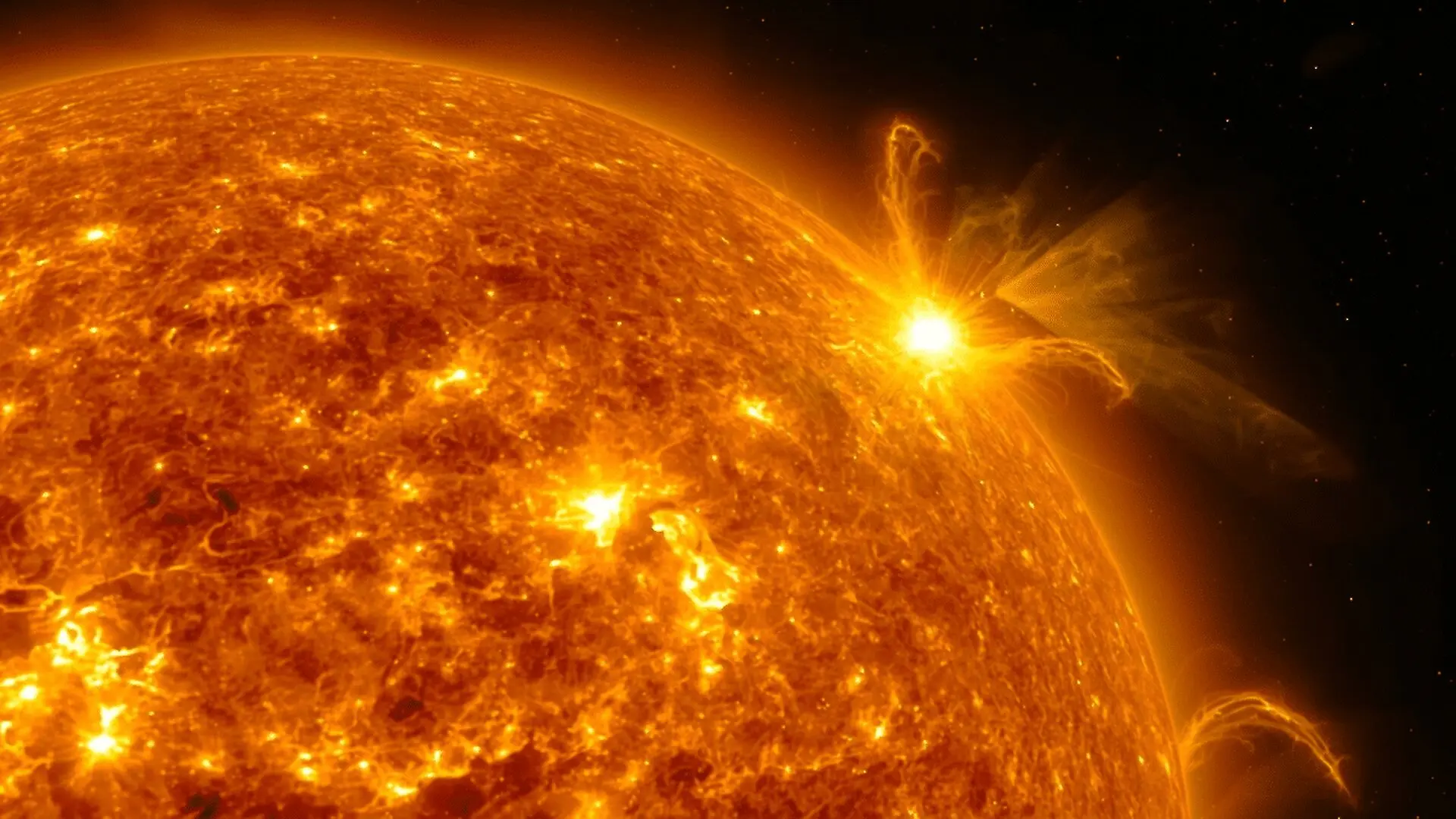
On 3 October 2024 an X9‑class solar flare erupted, giving researchers a rare look at the Sun’s atmosphere in the hours that precede an extreme eruption. NASA’s Interface Region Imaging Spectrograph (IRIS) recorded a nearly continuous data stream, allowing scientists to track subtle changes in plasma properties before the flare reached its peak.
Continuous IRIS Monitoring Captured the Build‑Up
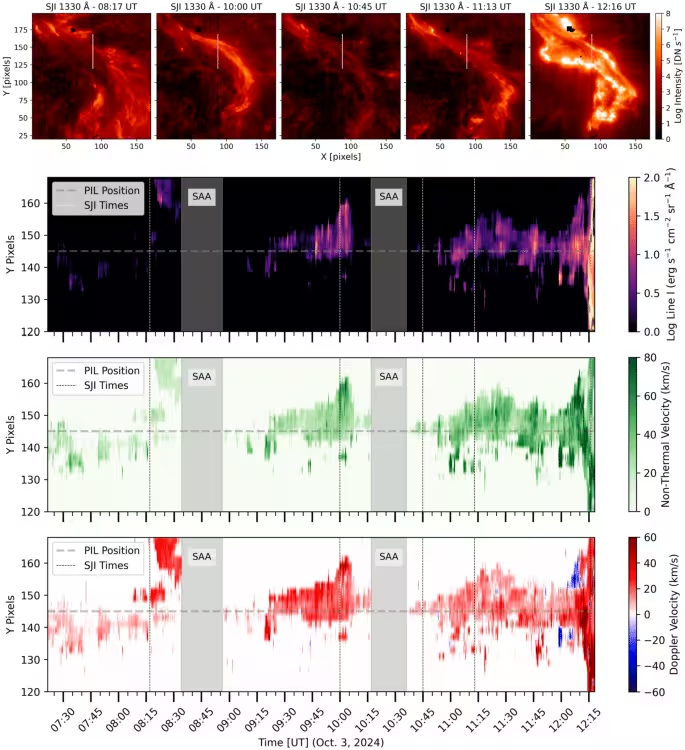
A fortunate alignment kept IRIS pointed at an active region that had already produced several smaller flares, creating an uninterrupted view of the area’s evolution. The study, published in Solar Physics, reports that brightness, motion and turbulence in the plasma changed together over several hours, indicating a coordinated increase in magnetic stress rather than random noise. Because most flare datasets start only after an eruption begins, this pre‑flare coverage is unusually detailed.
The active region had shown signs of instability in the days leading up to the event, prompting scientists to maintain intensive observation. Continuous imaging revealed slight shifts that may mark the early stages of magnetic reconnection deep beneath the solar surface, providing a benchmark for future investigations.
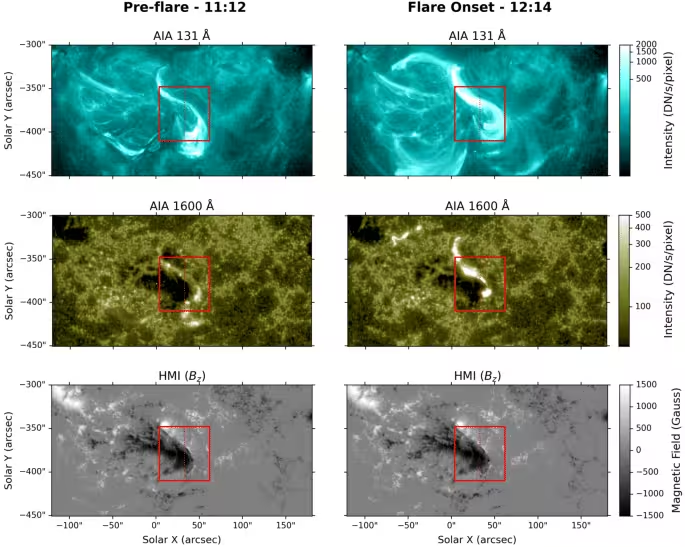
The red frame corresponds to the SJI FOV and the dotted line to the fixed location of the spectrograph’s slit.
Credit: Solar Physics
Synchronized Plasma Brightening and Oscillatory Patterns
Rising brightness and alternating plasma motions became noticeable roughly three hours before the flare, suggesting a re‑organization of the solar atmosphere. Simultaneously, turbulence increased, pointing to growing magnetic instability. The researchers identified two dominant oscillation periods—one lasting seven to ten minutes and another spanning eighteen to twenty‑one minutes—that were most pronounced where opposite magnetic fields met, a classic site of energy accumulation.
Credit: Solar Physics
Graduate researcher Louis Seyfritz, who led the analysis at the New Jersey Institute of Technology, described the findings as unexpected. “I was not expecting what I found,” Seyfritz told Space.com. He added that the presence of organized oscillations hints at a preparatory atmospheric state, although the underlying physics remain under debate.
Rapid Turbulence Spike Signals Imminent Instability
In the final 15 to 20 minutes before the flare, turbulence surged and plasma flows turned chaotic, suggesting that the magnetic system crossed a stability threshold. The oscillation patterns persisted but grew irregular, overlapping with abrupt changes in brightness and motion. Seyfritz explained his selection of this event: “I chose that event because I was expecting the flare to be big enough to see those signs,” noting that only a few flares reach such extreme power, making comprehensive observations especially valuable for refining magnetic‑activity models.
Potential Early Warning Signals for Space Weather
The study raises the prospect that major solar flares could be preceded by measurable atmospheric signatures—rising intensity, heightened turbulence, and synchronized oscillations—that might serve as early warnings. Researchers caution that this conclusion is based on a single event, and broader validation is required before any predictive system can be proposed. Nevertheless, Seyfritz emphasized the practical implications: “If we see those oscillations happening before the flare, it can be a strong indicator that a flare is going to happen.” The next phase involves applying the same analytical approach to a larger collection of solar eruptions to determine whether these patterns are consistent precursors or unique to this particular flare.
This article has been fact checked for accuracy, with information verified against reputable sources. Learn more about us and our editorial process.
Last reviewed on .
Article history
- Latest version
Reference(s)
- Seyfritz, Louis. “Investigating Pre-Flare Signatures in Spectroscopic Observations of an X9-Class Solar Flare - Solar Physics.”, vol. 301, no. 5, pp. 77 SpringerLink, doi: 10.1007/s11207-026-02674-6. <https://go.redirectingat.com/?id=92X1588396&xcust=space_dz_6235713004725417061&xs=1&url=https%3A%2F%2Flink.springer.com%2Farticle%2F10.1007%2Fs11207-026-02674-6&sref=https%3A%2F%2Fwww.space.com>.
- Kuthunur, Sharmila. “Scientists find strange changes on sun hours before a powerful X9 solar flare: 'I was not expecting what I found'.”, June 15, 2026 Space <https://www.space.com/astronomy/sun/scientists-find-strange-changes-on-sun-hours-before-a-powerful-x9-solar-flare-i-was-not-expecting-what-i-found>.
Cite this page:
- Posted by Karan Das