Thales Unveils Revolutionary Hybrid Fleet Tech to Transform Underwater Submarine Detection
Thales is revolutionizing underwater surveillance with three new technologies, including autonomous vessels and advanced sonar to track hidden threats.
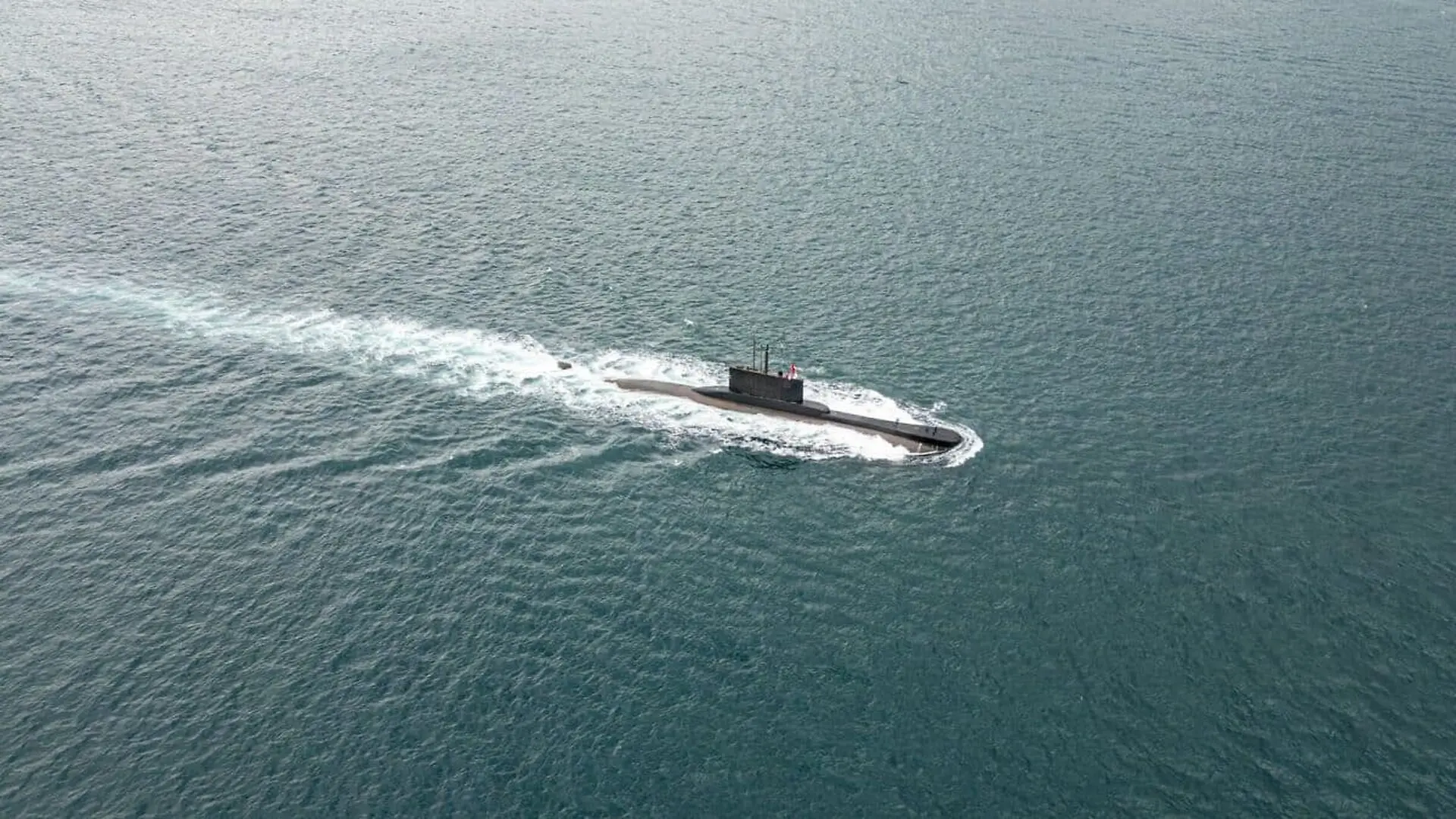
At the Euronaval 2026 defense exhibition, Thales revealed a suite of three advanced technologies aimed at transforming how navies conduct anti-submarine warfare. By shifting from a model centered on individual capital ships to a collaborative, multi-asset architecture, the French defense contractor seeks to provide maritime forces with more flexible and safer options for detecting underwater threats.
The core of this strategy, branded as the Hybrid Fleet concept, emphasizes the integration of mission-management software with versatile sonar hardware. This approach allows naval commanders to distribute surveillance tasks across a mix of crewed warships, autonomous surface vessels, and various underwater sensors, significantly expanding the detection perimeter beyond the immediate vicinity of traditional warships.
Coordinating the Distributed Fleet
The linchpin of this interconnected ecosystem is M-Cube, a mission-management system designed to harmonize operations across complex, multi-domain environments. As detailed in a November 3 official announcement, the software provides a unified operational picture, allowing commanders to plan and execute missions that simultaneously utilize helicopters, autonomous drones, and traditional naval vessels.
By migrating M-Cube from its origins in mine warfare to the more demanding sphere of anti-submarine operations, Thales aims to overcome the physical limitations of acoustic detection. Because underwater sonar performance is highly sensitive to variables like thermal layers, ambient noise, and water depth, the ability to coordinate sensors spread across a wide geographic area is a significant tactical advantage. According to reports from InDefence, the effectiveness of this system will ultimately be defined by the quality of the communications links and the specific capabilities of the platforms integrated into the network.
What we cannot see underwater is a threat. Thales unveils hybrid ASW with M-Cube, Light Dipping Sonar, CAPTAS-4. https://t.co/R9hcc33MPo#Thales#ASW#NavalDefence#Euronaval2026pic.twitter.com/I0Wv9J7BRr
— Thales Group (@thalesgroup) November 5, 2026
Expanding Sonar Reach with Modular Hardware
To support this distributed network, Thales has introduced two sonar innovations that move away from permanent, hull-mounted configurations. The first is the Lightweight Dipping Sonar (LDS), a compact and modular system intended for smaller vessels and autonomous platforms. By allowing sensors to be lowered to optimal depths regardless of the host vessel’s draft, the LDS increases the versatility of lighter, unmanned craft in long-duration surveillance missions.
Complementing this is the CAPTAS-4 Mission Module. This development adapts the proven, high-performance CAPTAS-4 variable-depth sonar into a transportable format. By packaging the system as a mission module, Thales enables navies to convert non-specialized support vessels into effective anti-submarine assets on an as-needed basis. While this modularity offers significant operational flexibility, it still requires that host platforms possess the necessary deck space, power, and command system integration to support the equipment.
These hardware additions, alongside the BlueSentry towed sonar for uncrewed platforms, represent a concerted effort by Thales to push the boundaries of underwater surveillance. By combining these sensors with the M-Cube management architecture, the company is positioning its new technology as a scalable, NATO-interoperable standard for the modern, hybrid naval fleet.
This article has been fact checked for accuracy, with information verified against reputable sources. Learn more about us and our editorial process.
Last reviewed on .
Article history
- Latest version
Reference(s)
- “Thales Advances Its Hybrid Fleet Vision Anti Submarine Warfare Three Key.” <https://www.thalesgroup.com/en/news-centre/press-releases/thales-advances-its-hybrid-fleet-vision-anti-submarine-warfare-three-key>.
- Team, IN. “Thales expands distributed anti-submarine warfare systems.”, November 4, 2026 IN Defence <https://indefencemag.com/thales-expands-distributed-anti-submarine-warfare-systems/>.
- “https://thls.co/QBTR5104a65.” <https://t.co/R9hcc33MPo>.
- “https://twitter.com/thalesgroup/status/2118371508376531289/photo/1.” <https://t.co/I0Wv9J7BRr>.
Cite this page:
- Posted by Zara Tariq