A Manhattan Couple Used This Ancient Roman Emperor’s Floating Palace Floor As A Coffee Table
A chance comment during a book signing has finally solved the decades-long mystery behind a missing mosaic, revealing its unexpected journey to recovery.
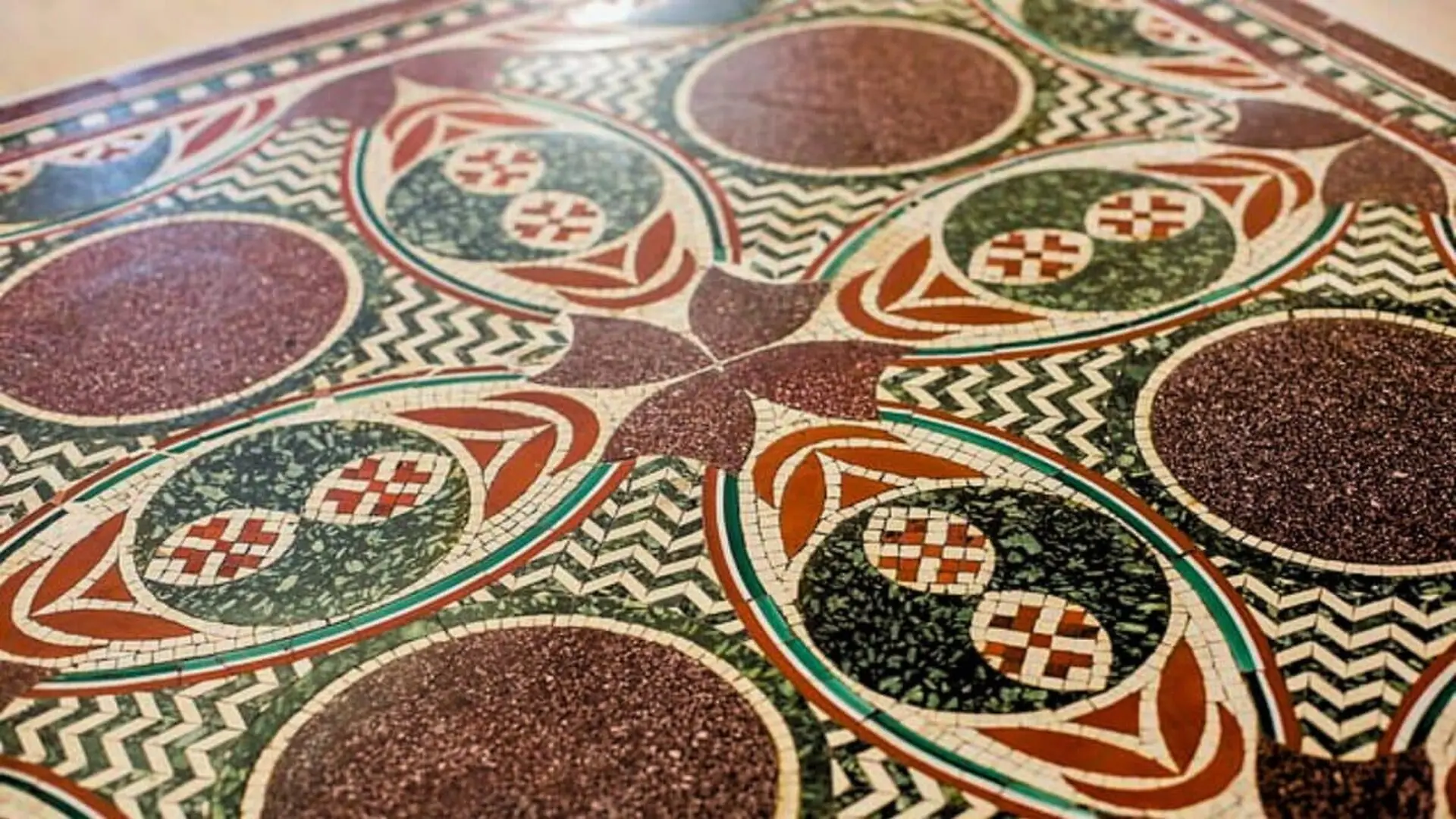
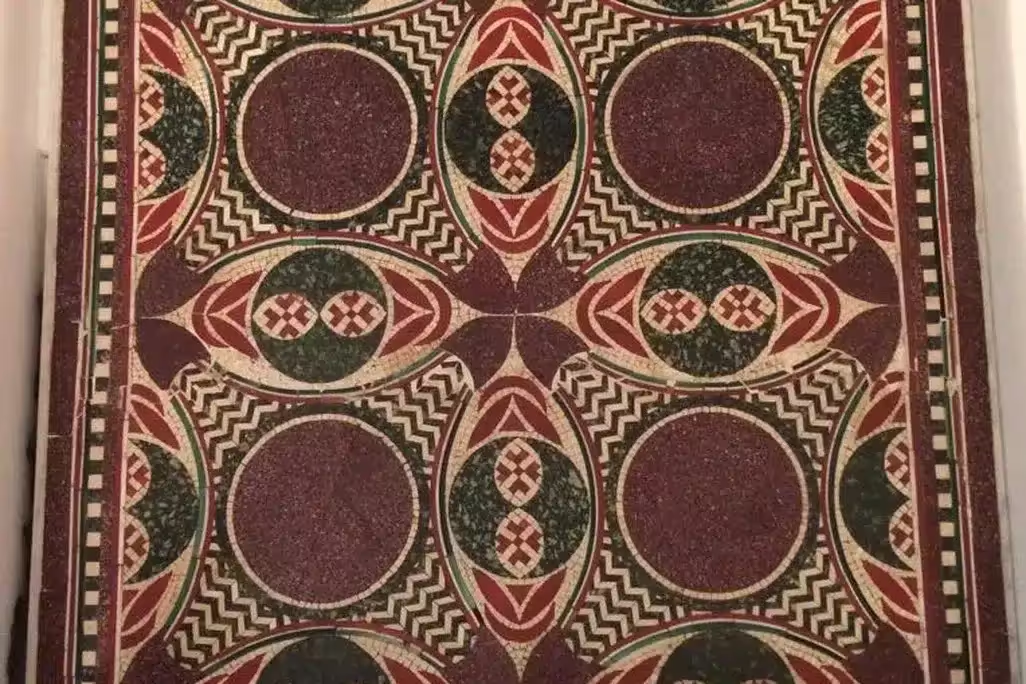
In a twist of fate that reads like a high-stakes thriller, a piece of imperial Roman history sat in plain sight for nearly half a century within a Manhattan apartment. The artifact, an intricate marble mosaic that once decorated the floor of a floating palace commissioned by the emperor Caligula, had been repurposed as a common coffee table on Park Avenue.
The discovery occurred in 2013 during a book launch at a luxury boutique on Fifth Avenue. Dario Del Bufalo, an Italian scholar specializing in antique porphyry, was hosting a signing for his latest work. Among the attendees was Helen Fioratti, a local antiques dealer. As she chatted with a companion, the casual mention of her mosaic sparked an immediate, disbelieving reaction from Del Bufalo. The scholar had documented the artifact as a lost treasure, stolen from the records of antiquity, and here it was, reportedly gracing a living room floor just blocks away.
Lost and Found: The Odyssey of an Imperial Relic
Fioratti and her husband, Nereo, had acquired the piece in the 1960s from an Italian aristocratic family, firmly believing the transaction was legitimate. For over 45 years, the mosaic served as a cherished centerpiece in their home. The origin of the investigation that eventually reclaimed the item remains a point of contention; while some reports suggest Del Bufalo alerted authorities following the book signing, Fioratti suggested that Italian police may have identified the piece from photographs featured in a design magazine years prior.
The history of the mosaic begins nearly 2,000 years ago on the waters of Lake Nemi, Italy. Emperor Caligula, known for his volatile reign between AD 37 and 41, commissioned two massive, stationary vessels to serve as luxurious retreats. Measuring upwards of 230 feet, these ships were marvels of engineering, featuring advanced plumbing and opulent floors fashioned from green and white marble and rare porphyry.
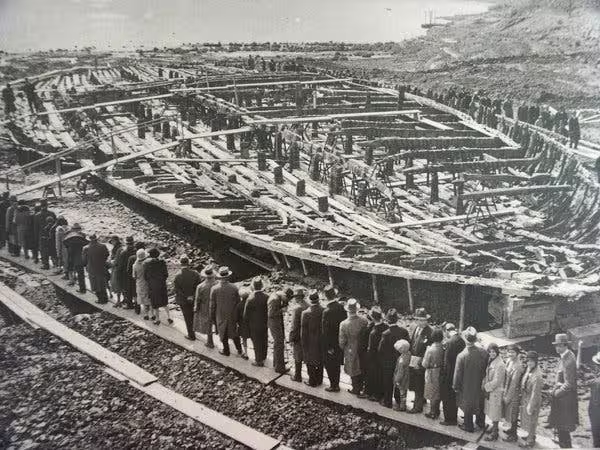
Following the emperor’s assassination, the ships were scuttled, resting in the lake’s depths until ambitious recovery efforts began in the late 19th century. In the 1930s, Benito Mussolini ordered the partial drainage of Lake Nemi to fully recover the hulls, housing the recovered treasures in a dedicated lakeside museum. However, the site was devastated by a fire in 1944 during the chaos of World War II. Whether the Manhattan mosaic was looted before the fire or vanished through other illicit channels remains an open question, as the piece bore no signs of heat damage.
Repatriation and Restoration
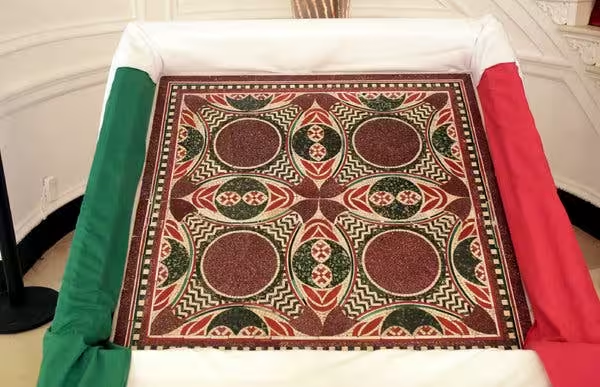
The Manhattan District Attorney’s office intervened in 2017, seizing the mosaic as stolen cultural property. While no charges were brought against the Fiorattis, the artifact was returned to Italy. Upon its arrival, conservators worked to strip away decades of modern wear, including residual stains from household items, before placing the mosaic back on display at the Museum of the Roman Ships in Nemi in 2021.
The emotional weight of the event was not lost on Del Bufalo. Despite his role in its return, he expressed sympathy for the unintended victim of the recovery process. In a gesture of goodwill, he crafted a high-quality replica of the ancient masterpiece, offering it to Fioratti to replace the void left in her home, noting that the gesture helped soothe his own conscience after witnessing the artifact’s long, strange journey from the ancient world to a modern parlor.
This article has been fact checked for accuracy, with information verified against reputable sources. Learn more about us and our editorial process.
Last reviewed on .
Article history
- Latest version
Cite this page:
- Posted by Zara Tariq