Tesla Just Unveiled a Car That Uses SpaceX Thrusters to Fly and Stick to Ceilings
Tesla’s next-generation Roadster defied physics in a recent livestream, showcasing capabilities that go far beyond the limits of ordinary driving.
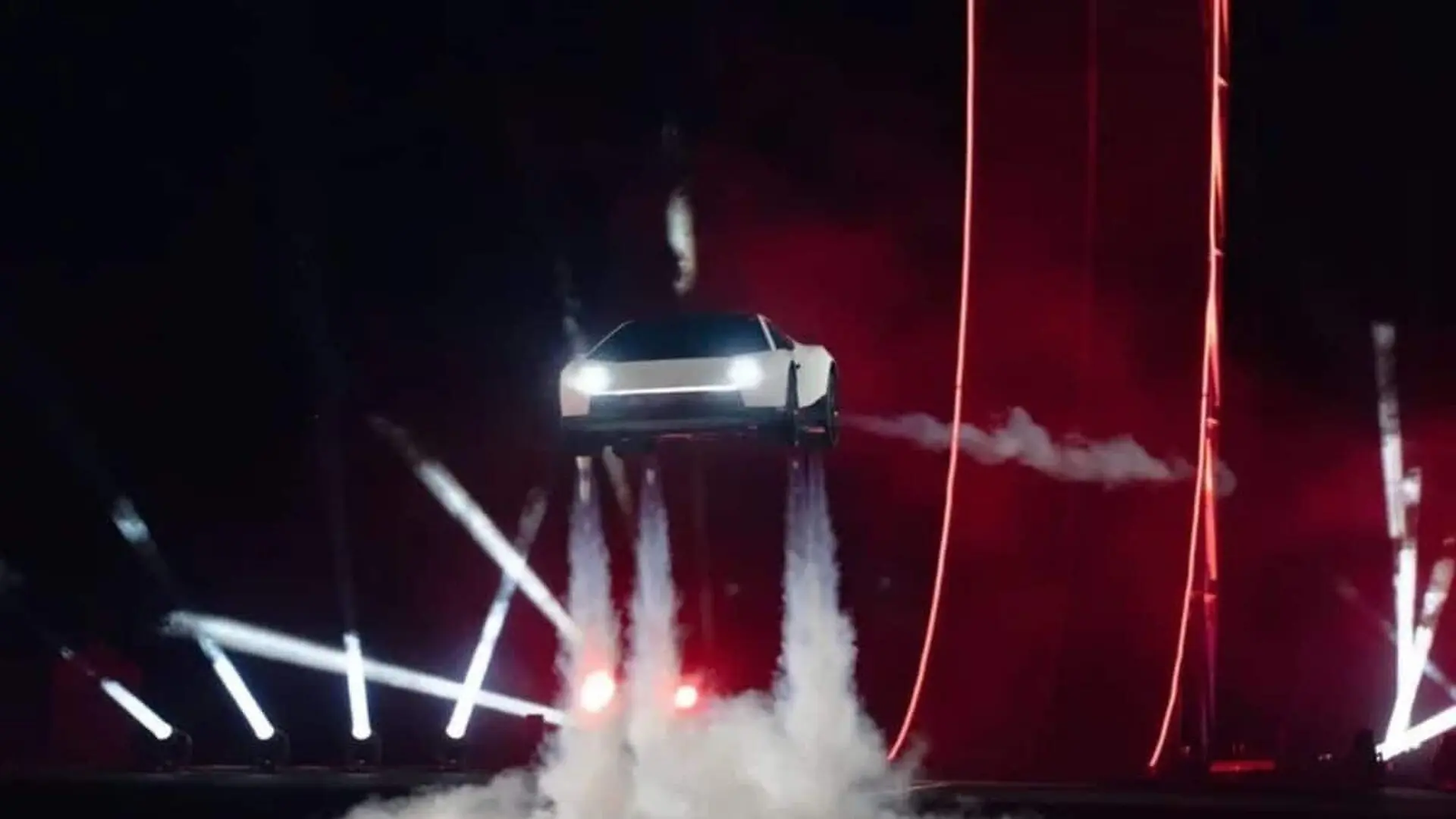
Tesla has officially showcased the long-awaited next-generation Roadster, pulling off a demonstration at the company’s SpaceX rocket-testing facility in McGregor, Texas, that blurred the lines between automotive engineering and aerospace technology. During the event, an unmanned vehicle equipped with cold-gas thrusters successfully launched itself into the air, performed a controlled midair barrel roll, and landed with precision.
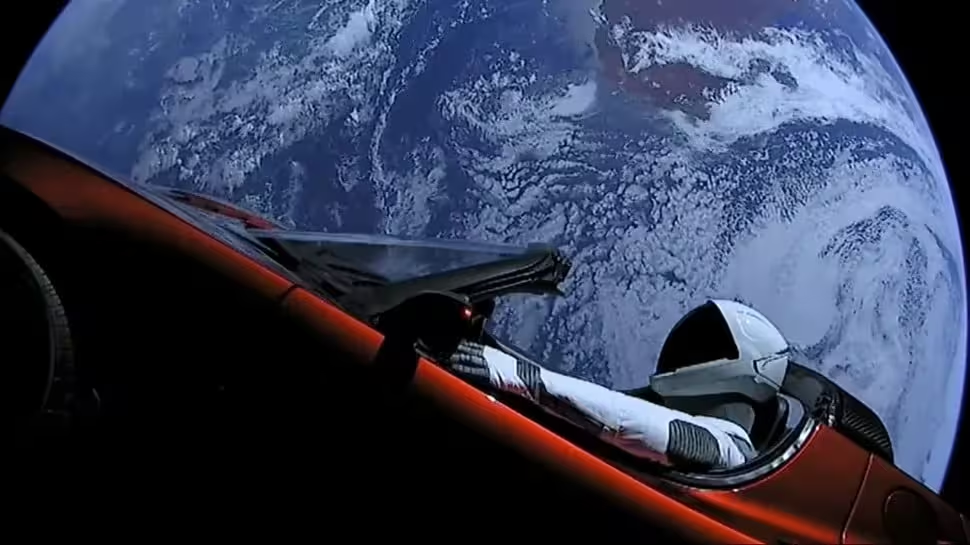
Elon Musk, who leads both Tesla and SpaceX, described the vehicle as a significant departure from standard performance cars, noting that it pushes the limits of traditional vehicular capabilities. This public display finally provides a tangible glimpse into the “rocket-shaped twist” Musk first teased in 2018, years after the vehicle’s initial 2017 announcement.
Defying Gravity Through Engineering
The demonstration highlighted two primary applications for the car’s unconventional hardware. First, engineers showcased a fan-based suction system integrated into the chassis, allowing the vehicle to navigate extreme angles—including driving up a vertical wall and remaining attached to an overhead surface. Beyond the theatrics, Musk explained that this suction technology is intended to provide superior downforce, helping the car maintain traction during high-speed maneuvers.
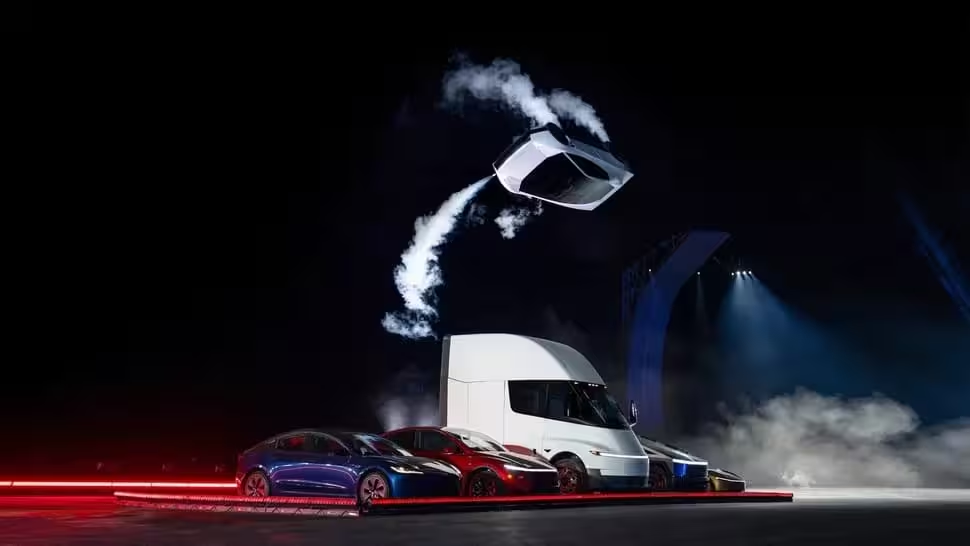
The vehicle’s secondary feature—a series of SpaceX-derived cold-gas thrusters—was on full display when the car launched over a line of vehicles, including a Tesla Semi cab. The maneuvers were executed without a human driver, relying instead on automated flight controls and the onboard thruster array.
Propulsion and Hardware Specs
According to Lars Moravy, Tesla’s Vice President of Engineering, the vehicle utilizes a system of 10 thrusters powered by 600 liters of compressed air, totaling approximately 250 kilograms (550 pounds) of additional hardware. These thrusters are fed by carbon fiber overwrapped pressure vessels, which have been strategically placed throughout the car’s chassis to maximize space efficiency.
“So it can basically fly like a rocket, and it could do rolls. It could do, like, crazy gymnastics — whatever you want, really,” said Musk regarding the car’s aerial agility.
Referencing a long-standing critique by Peter Thiel regarding the lack of promised “flying cars” in the modern era, Musk noted that the development represents a literal answer to those expectations, even if the application remains highly specialized.
SpaceX option package for new Tesla Roadster will include ~10 small rocket thrusters arranged seamlessly around car. These rocket engines dramatically improve acceleration, top speed, braking & cornering. Maybe they will even allow a Tesla to fly …
— Elon Musk (@elonmusk) June 9, 2018
Production and Availability
While the performance metrics are clear, the path to the consumer remains complex. Tesla currently targets a 2028 production start, but regulatory hurdles likely mean the “flying” version will remain a restricted, invitation-only vehicle rather than a mass-market product. For the general public, the company has structured the Roadster into three tiers:
- Performance: Designed for standard road use with active aerodynamics and suction technology.
- Thrust: A race-oriented model that incorporates the acceleration-boosting thrusters.
- Rocket: The advanced, invitation-only variant capable of the aerial maneuvers demonstrated in Texas.
Reservations are currently open for the Performance and Thrust variants, requiring deposits of $50,000 and $250,000, respectively. Official pricing for the final production models has yet to be finalized.
This article has been fact checked for accuracy, with information verified against reputable sources. Learn more about us and our editorial process.
Last reviewed on .
Article history
- Latest version
Cite this page:
- Posted by Zara Tariq