Ancient Ingredients Are Leaking Out of Earth’s Core and Into Volcanic Rocks
Mysterious signatures in volcanic rocks have long baffled experts, but a new study suggests the source may be hidden deeper within the Earth than suspected.
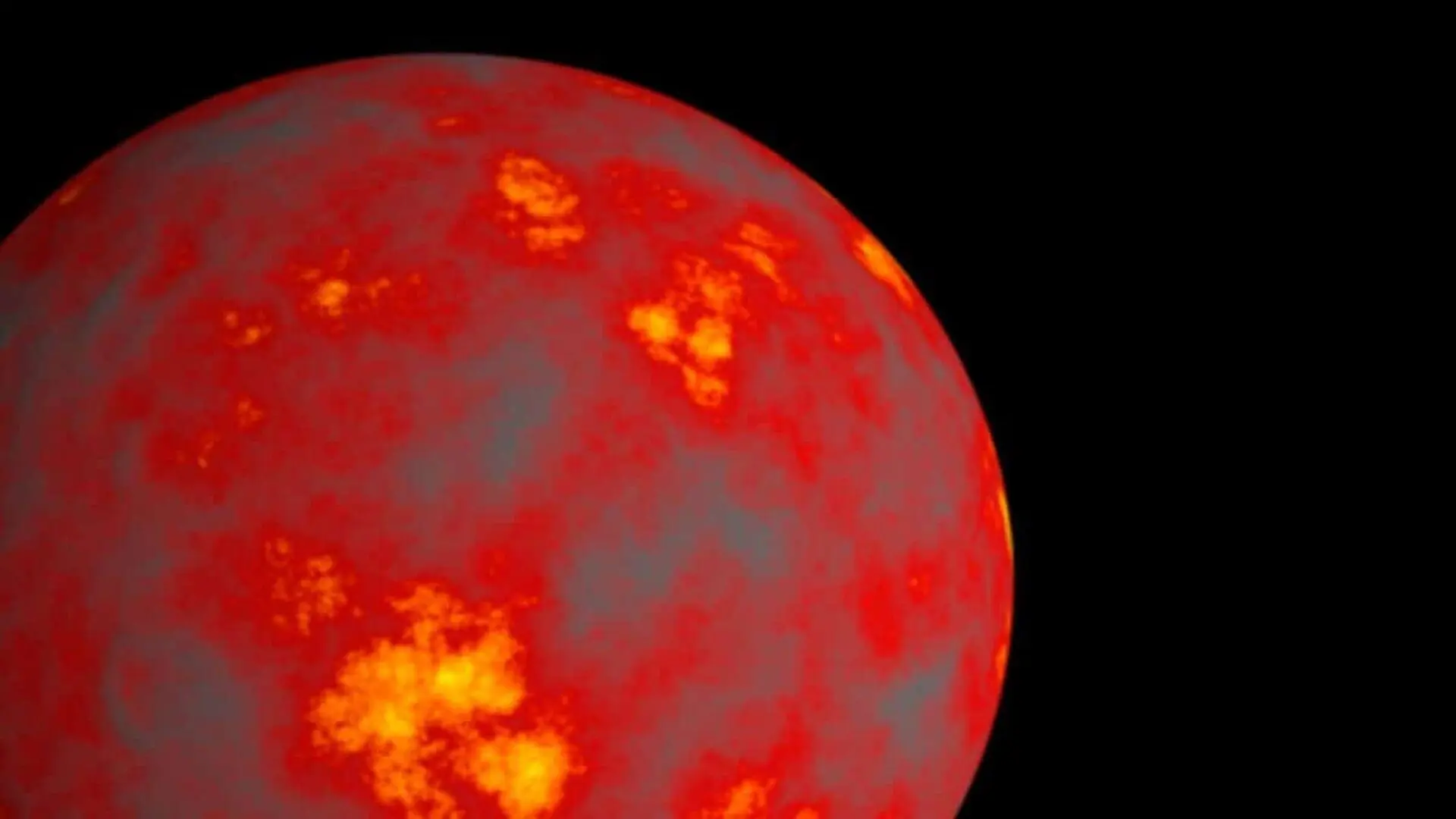
Deep beneath the Earth’s surface, a persistent geological secret has remained locked away since the planet’s violent infancy 4.5 billion years ago. New research indicates that the metallic core, once thought to be a hermetically sealed reservoir of primordial material, may actually be leaking ancient elements into the layers above. Scientists have identified evidence that hydrogen, along with helium and tungsten, is slowly migrating from the core into the mantle, potentially reshaping our understanding of the planet’s internal evolution.
When the Earth was still a chaotic, molten sphere, heavy metals descended toward the center, trapping primordial gas and dust from the nascent solar nebula. For decades, geologists have debated whether the unique chemical signals found in deep-mantle rocks were remnants of this early period or the result of more recent interactions. A research team from the University of Science and Technology of China has now applied advanced machine-learning-assisted quantum simulations to settle this question, focusing specifically on the behavior of hydrogen isotopes over billions of years.
Deciphering the Hydrogen Signal
The findings, published in Science Advances, challenge the long-held assumption that the mantle’s chemical composition is simply a relic of the cooling magma ocean that once covered the planet. By analyzing the deuterium-to-hydrogen (D/H) ratio—a diagnostic tool for tracing hydrogen origins—researchers discovered that the crystallization of the early magma ocean would have resulted in a relatively uniform distribution of isotopes throughout the mantle, regardless of how much water was present during the planet’s formation.
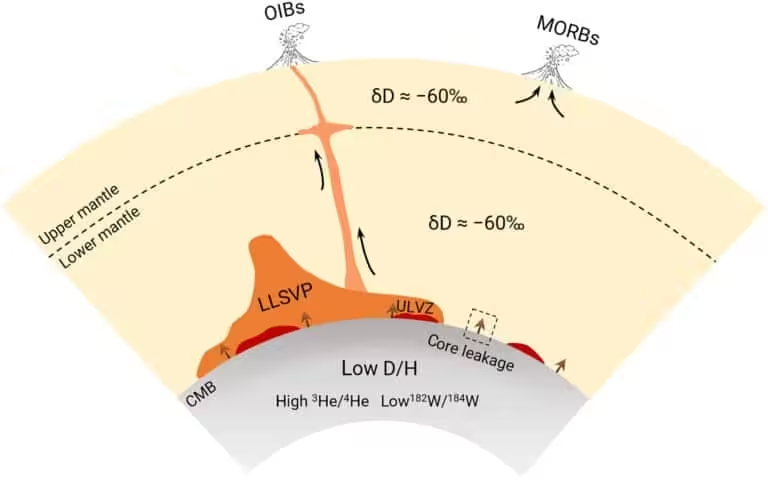
This uniformity, however, does not match the data retrieved from volcanic regions such as Iceland and Baffin Island in the Canadian Arctic. These locations feature ocean island basalts, which are fed by plumes of material rising from the deepest reaches of the mantle, near the core-mantle boundary. These rocks exhibit an abundance of lighter hydrogen that deviates from the expected primordial signature. This discrepancy suggests that something has been actively altering the mantle’s composition over time, pointing toward a steady injection of material from the core.
Evidence of Core-Mantle Leakage
The study highlights that the core is not merely a static weight but an active participant in the Earth’s geochemical cycles. By incorporating hydrogen into mineral structures deep underground—not as liquid oceans, but as bound elements within rocks—the planet’s core continues to influence the surface chemistry we observe today.
This hypothesis is bolstered by the presence of other elements. Helium-3, a primordial isotope that predates the Sun, has been detected in volcanic plumes alongside helium-4, which is produced by radioactive decay within the planet. Furthermore, the distribution of tungsten isotopes provides additional evidence of transport between the core and the mantle, as most of Earth’s tungsten was expected to be sequestered in the core during the initial separation of planetary layers.
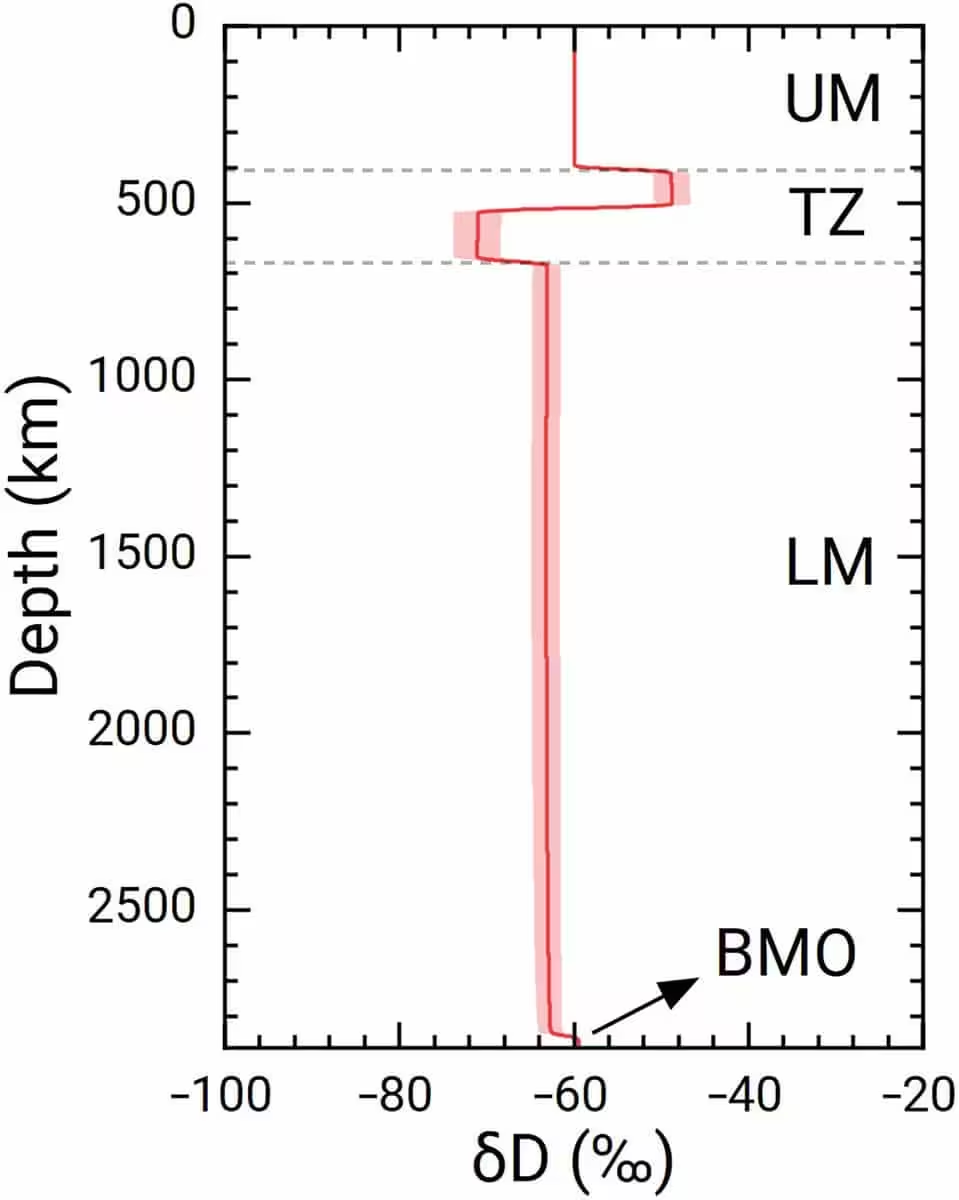
“Collectively, these results indicate that magma ocean crystallization yields a primitive mantle with an essentially homogeneous hydrogen isotope composition, despite large variations in pressure, temperature, and model assumptions,” the researchers noted. Their conclusion suggests that the deep mantle reservoirs geologists study today are not simple, isolated time capsules, but dynamic zones that have been subtly influenced by the core’s chemical contributions throughout Earth’s history.
These findings force a reassessment of the isolation of Earth’s internal layers. Rather than a dormant core, the evidence suggests a subtle, long-term leakage that continues to connect the deepest, most ancient parts of the planet to the volcanic processes occurring at the surface today.
This article has been fact checked for accuracy, with information verified against reputable sources. Learn more about us and our editorial process.
Last reviewed on .
Article history
- Latest version
Reference(s)
- Zhang, Yu., et al. “Hydrogen isotopes reveal water leakage from the core.” Science Advances, vol. 12, no. 41, October 9, 2026 American Association for the Advancement of Science (AAAS), doi: 10.1126/sciadv.aei4756. <https://www.science.org/doi/10.1126/sciadv.aei4756?referrer=https%3A%2F%2Fwww.sciencealert.com%2F>.
Cite this page:
- Posted by Zara Tariq