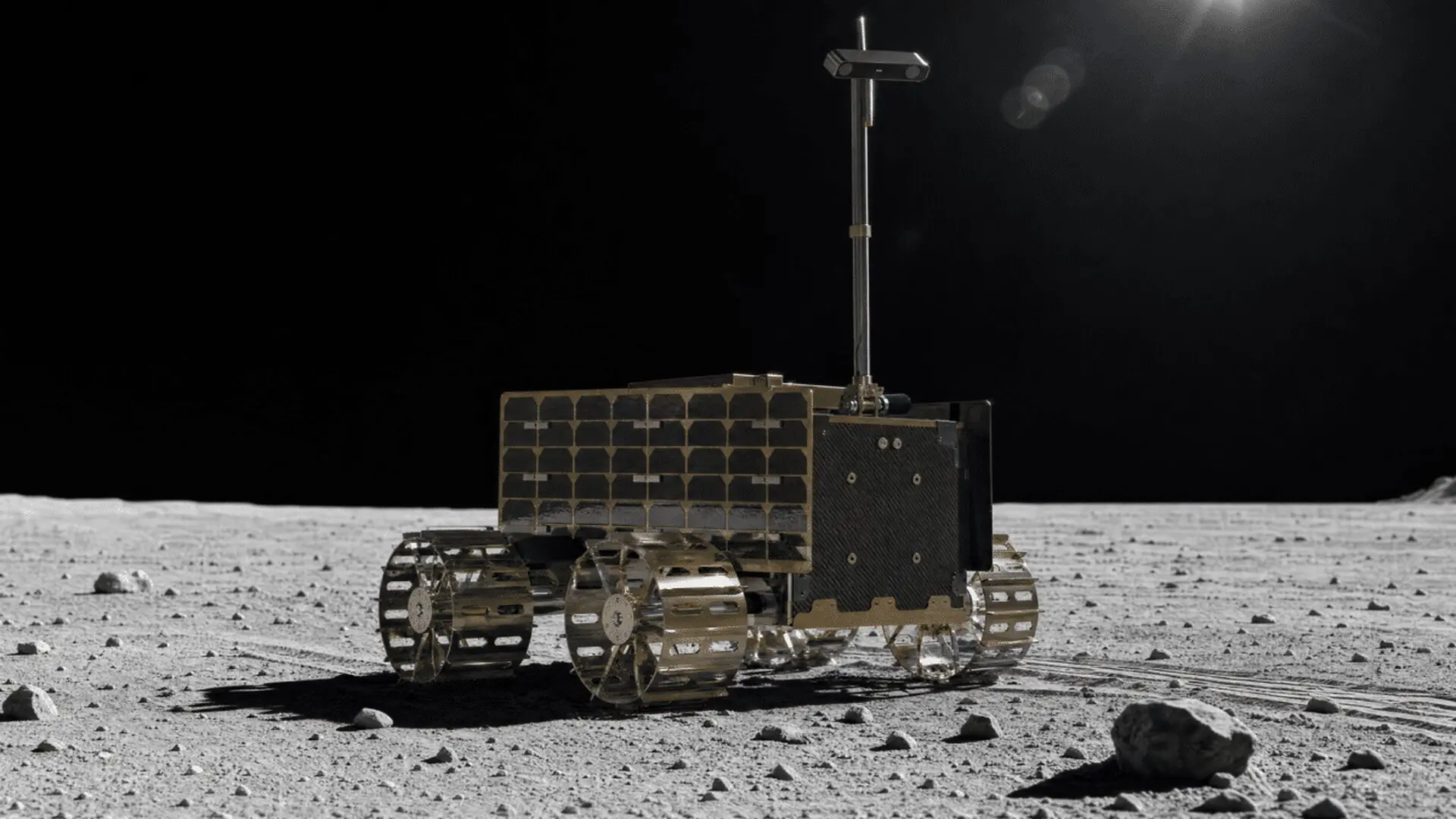
Europe is set to achieve a historic milestone in space exploration with the upcoming deployment of the MAGPIE lunar rover. Tasked with navigating the Moon’s rugged south pole, the mission marks the first time a European-led rover will traverse the lunar surface. The European Space Agency (ESA) has solidified this ambition by awarding a €65 million contract to ispace-EUROPE, covering the end-to-end development, testing, and operational execution of the 2029 mission.
The name MAGPIE, which stands for Mission for Advanced Geophysics and Polar Ice Exploration, underscores its primary objective: to map the distribution and accessibility of water ice. While previous missions have confirmed the presence of frozen water in the Moon’s permanently shadowed craters, researchers still face significant knowledge gaps regarding the concentration and depth of these deposits. By moving across the terrain rather than remaining stationary, the rover aims to provide the most detailed geological survey of the polar environment to date.
Advanced Technology for a Harsh Environment
To survive the extreme cold and complex terrain of the lunar south pole, the rover will be equipped with a sophisticated suite of scientific instruments. These include a drill for subsurface sampling, a volatile analyser, ground-penetrating radar, and a neutron detector. These tools will work in tandem to examine the lunar regolith, helping scientists understand how these volatile materials have remained trapped in darkness for billions of years.
Yesterday @esa and @ispace_EUROPE celebrated a key milestone for MAGPIE, set to become Europe’s first rover on the Moon Launching in 2029, the rover will investigate lunar resources which could support a sustained human presence on the Moon
.https://t.co/qmKEEArn7s
While the mission is frequently associated with the concept of water ice as a potential resource for future life support—including oxygen production and hydrogen fuel—project leads emphasize that this is primarily a scientific endeavor. The goal is to build a foundational understanding of the lunar landscape before any practical resource extraction could be considered viable.
Luxembourg’s Expanding Influence in Orbit
The mission serves as a crowning achievement for Luxembourg’s strategic investment in the space sector. As noted by RTL Today, the nation has evolved from a satellite communications hub into a core leader of European lunar exploration. Through the ESA, the country has cultivated a robust ecosystem of space-focused companies, growing from just 16 firms in 2012 to approximately 80 today.
The project is a collaborative European effort, featuring instruments developed by partners in Germany, the United Kingdom, Norway, and the Czech Republic. Furthermore, the logistical support for the mission relies on international cooperation between the ESA and the Japan Aerospace Exploration Agency (JAXA).
Operating for a mission window of approximately ten Earth days, MAGPIE will not only contribute critical data to the global scientific community but will also provide Europe with the essential operational experience required to manage robotic fleets on extraterrestrial surfaces. This capability remains a rare and highly valued asset in the modern space race, positioning Europe as a key player in the next generation of lunar discovery.
Siddiqui, Farah. “Europe Is Sending Its First Rover To The Moon To Hunt For Hidden Ice Reserves.” BioScience. BioScience ISSN 2521-5760, 07 September 2026. <https://www.bioscience.com.pk/en/subject/physics/europes-first-moon-rover-is-coming-and-it-will-hunt-for-hidden-lunar-ice>.
Siddiqui, F. (2026, September 07). “Europe Is Sending Its First Rover To The Moon To Hunt For Hidden Ice Reserves.” BioScience. ISSN 2521-5760. Retrieved September 07, 2026 from https://www.bioscience.com.pk/en/subject/physics/europes-first-moon-rover-is-coming-and-it-will-hunt-for-hidden-lunar-ice
Siddiqui, Farah. “Europe Is Sending Its First Rover To The Moon To Hunt For Hidden Ice Reserves.” BioScience. ISSN 2521-5760. https://www.bioscience.com.pk/en/subject/physics/europes-first-moon-rover-is-coming-and-it-will-hunt-for-hidden-lunar-ice (accessed September 07, 2026).