New AI Framework Detects Indoor Fire Hazards in Real Time
A lightweight deep learning model combined with a new four-class dataset successfully identifies indoor fires and smoke while reducing false alarms.
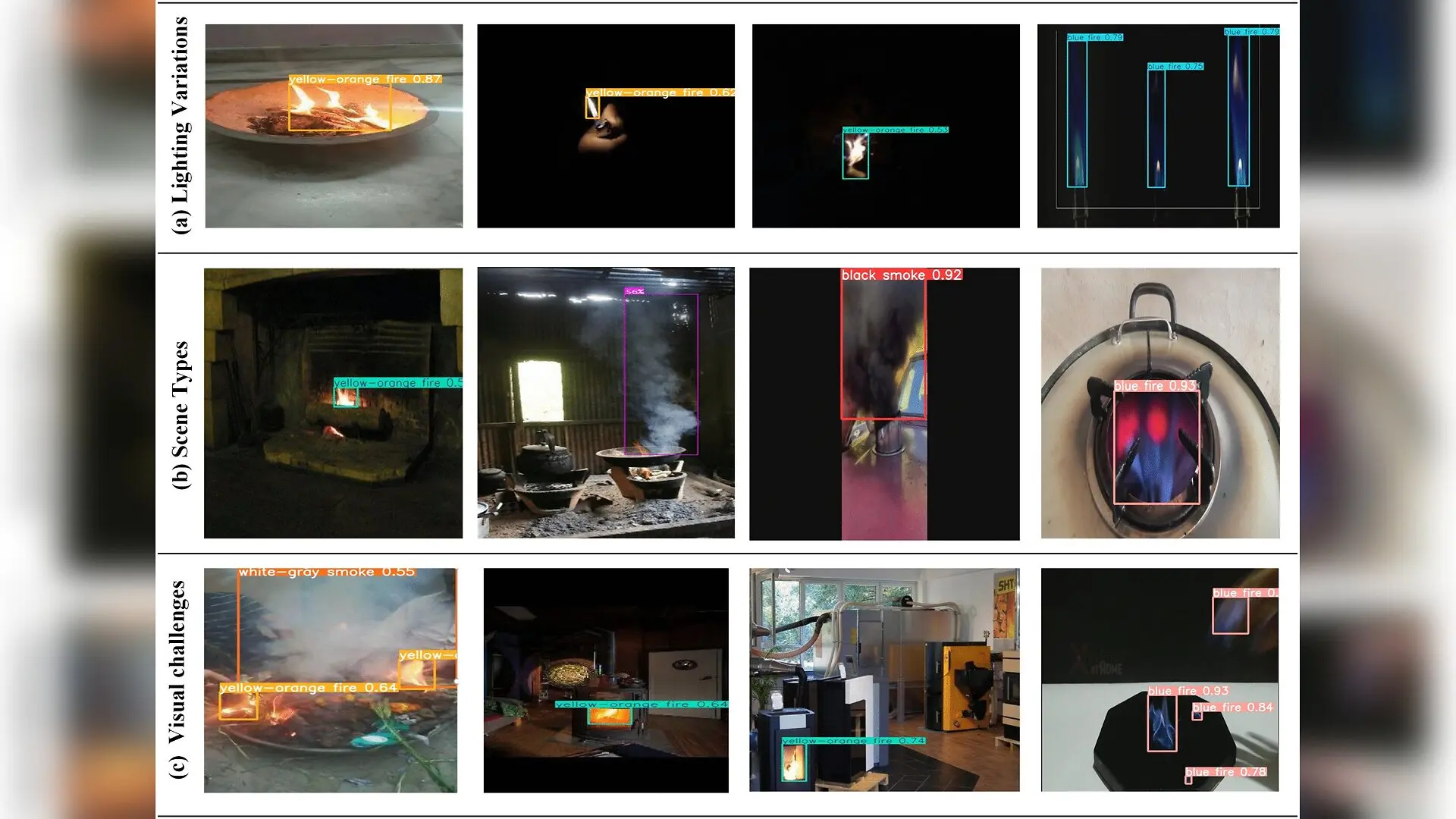
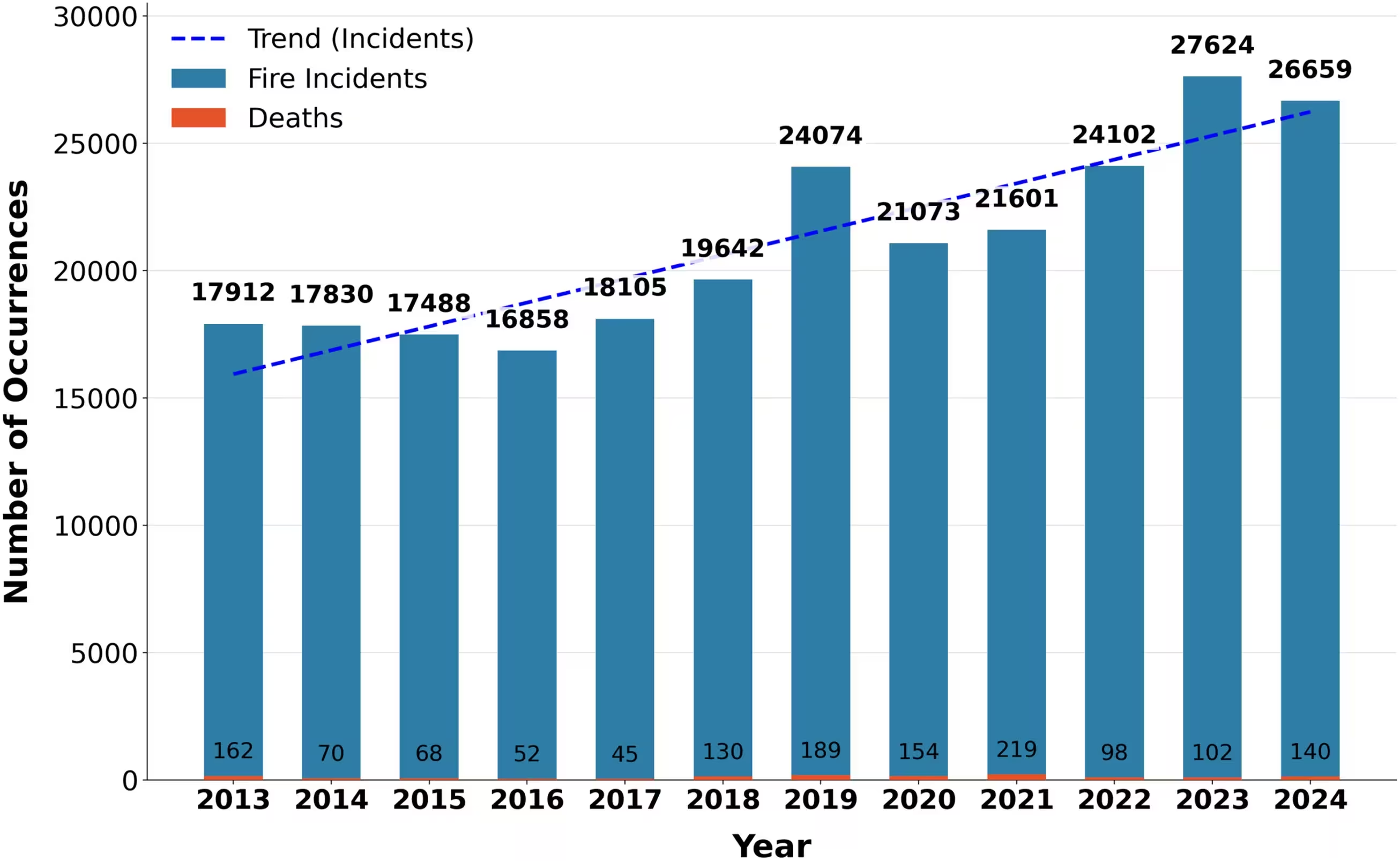
Indoor fires can spread rapidly and become life-threatening within 30 seconds, presenting a severe challenge for building safety managers. Traditional sensor-based fire alarms often fail in complex indoor environments because of high false-positive rates and delayed responses. To tackle this safety hazard, computer scientists have designed a new artificial intelligence framework that improves early fire and smoke recognition in enclosed spaces.
The research was published in PLOS One on November 20, 2026, detailing an advanced deep learning architecture called FireNet-D5. Deep learning refers to a type of machine learning where artificial neural networks inspired by the human brain analyze large volumes of visual data to recognize complex patterns. In this case, the investigators set out to overcome the limitations of standard object detectors that usually struggle with multi-class indoor fire hazards and complex environmental lighting.
Building a Four-Class Indoor Fire Dataset
To train their detection system, the authors created a brand-new benchmark collection called the ISFire-4 dataset. Existing computer vision datasets mostly focus on outdoor forest fires or binary categories that simply label an image as either fire or smoke. However, combustion behavior indoors varies greatly depending on the burning material and the oxygen supply.
The ISFire-4 dataset contains 7,370 high-resolution RGB images with 11,010 manually annotated instances. The research team divided indoor combustion into four distinct appearance-based classes: yellow-orange flames, high-temperature blue flames, thick black smoke, and white-gray smoke. Each category represents specific combustion conditions, such as standard organic material burning or restricted oxygen supply producing toxic gases.
Upgrading the Neural Network Architecture
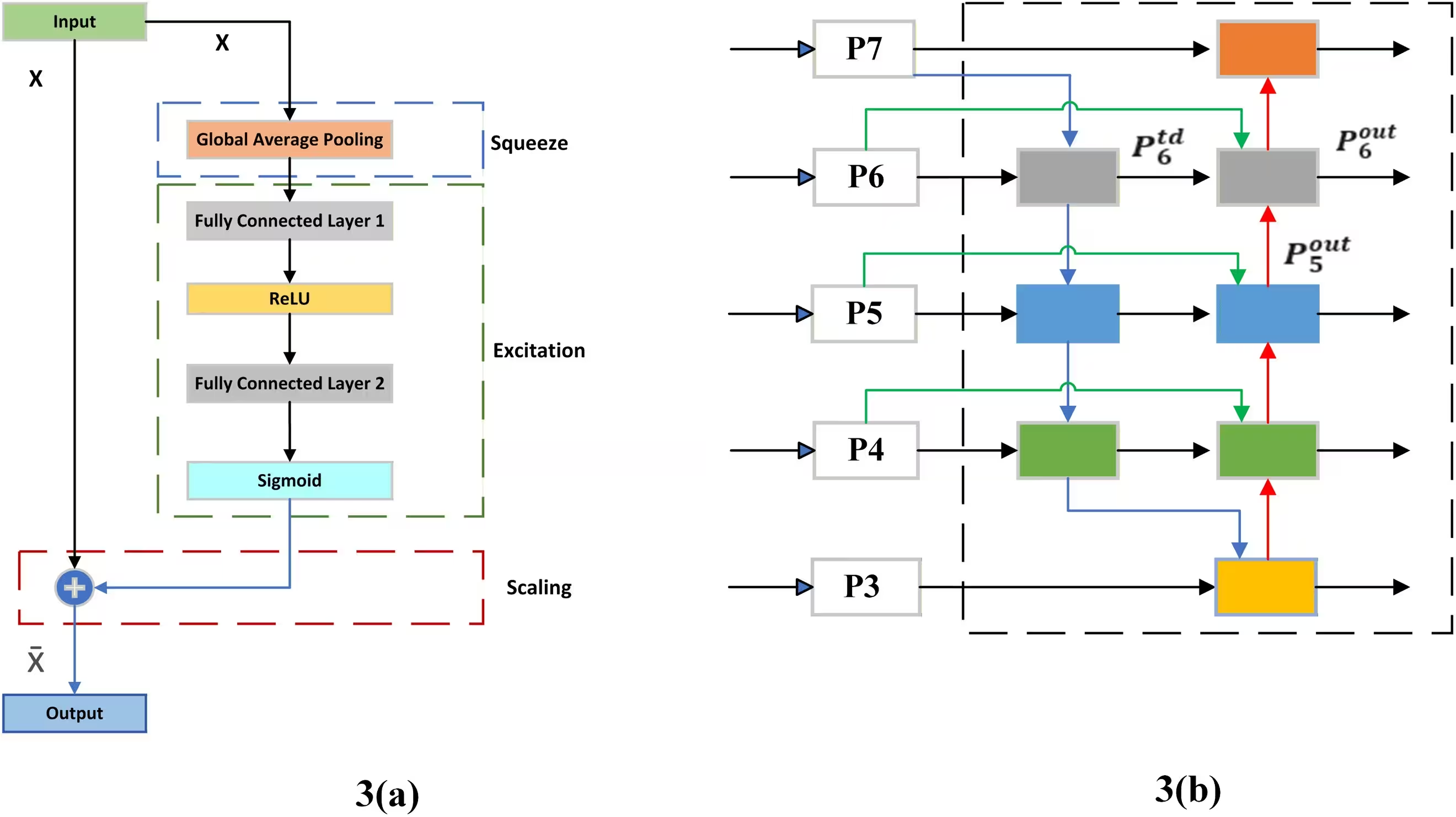
The FireNet-D5 model is built upon the YOLOv5s object detection framework, which is widely valued for edge computing and real-time video analysis. The authors introduced two major structural modifications to refine how the network processes visual features. First, they integrated a Squeeze-and-Excitation (SE) attention module into the backbone of the network. This attention mechanism acts like a digital filter that recalibrates channel-wise feature responses, amplifying feature channels that are most responsive to color and intensity cues while suppressing background clutter.
Second, the investigators replaced the standard feature pyramid network with a Bi-directional Feature Pyramid Network (BiFPN) in the network neck. This bidirectional structure allows information to flow both top-down and bottom-up using learnable weights, enabling the model to integrate multi-scale features efficiently. These modifications allowed FireNet-D5 to maintain high accuracy when detecting small objects, such as a localized gas-stove flame, alongside room-filling smoke plumes.
Hyperparameter Tuning and Model Performance
To maximize detection performance without altering the core architecture, the authors applied a genetic algorithm for automated hyperparameter optimization. A genetic algorithm simulates natural selection to search through thousands of possible training configurations, including learning rates and data augmentation settings, to find the optimal combination. The evolutionary search ran for 10 generations, and the model configuration from generation 7 achieved a peak fitness score.
Experimental evaluations on a held-out test set showed that FireNet-D5 achieved an overall mean average precision at an Intersection over Union threshold of 0.5, abbreviated as [email protected], of 83.3%. The system operated at 196 frames per second with only 8.8 million parameters, making it lightweight enough to run smoothly on standard hardware. The authors also incorporated Grad-CAM, a post-hoc explainability technique that generates heatmaps to visualize which parts of an image guided the model’s predictions, ensuring transparency for safety-critical applications.
Limitations and Future Considerations
Despite its high accuracy, the study notes several current limitations. The yellow-orange fire class achieved a lower [email protected] score of 73.0% due to visual similarities with warm indoor lighting. Furthermore, the ISFire-4 dataset displays geographic and device bias because the local images were captured primarily in residential settings in Bangladesh using two specific camera devices. The authors note that heavy visual occlusion and multi-class co-occurrence also reduced detection precision in cluttered scenes. Future research will focus on expanding the dataset diversity, exploring advanced real-time explainability methods, and deploying the software on mobile robotic platforms or IoT-enabled firefighting drones for automated indoor emergency response.
The research was published in PLOS One on November 20, 2026.
This article has been fact checked for accuracy, with information verified against reputable sources. Learn more about us and our editorial process.
Last reviewed on .
Article history
- Latest version
Reference(s)
- Sozol, Md. Shafak Shahriar., et al. “FireNet-D5: A genetic algorithm-optimized architecture with BiFPN and SE attention for multi-class indoor fire and smoke detection.” PLOS One, vol. 21, no. 11, November 20, 2026, pp. e0362869 Public Library of Science (PLoS), doi: 10.1371/journal.pone.0362869. <https://doi.org/10.1371/journal.pone.0362869>.
Cite this page:
- Posted by Joseph Jackson