Gen Z Technology Adoption Driven by Practical Value and Trust
A large-scale survey across Nepal reveals that young adults evaluate next-generation innovations based on tangible benefits and ethical governance rather than simple convenience.

A new large-scale survey reveals that Generation Z in Nepal evaluates next-generation technologies primarily through the lens of concrete personal benefits and ethical governance rather than simple ease of use. Published in PLOS One, the study published in PLOS One investigates what drives young adults to embrace Society 6.0, an emerging global paradigm that seeks to balance advanced artificial intelligence and automation with ecological sustainability, human well-being, and ethical governance.
How Nepal Compares in the Evolution Toward Next-Generation Societies
Human society has evolved over millennia through several distinct phases. Early human history began with Society 1.0 or hunting and gathering, which later transitioned into Society 2.0 driven by agriculture and sedentary lifestyles. This was followed by Society 3.0 during the industrial revolution, and Society 4.0 focused on the information age. More recently, Society 5.0 was introduced in Japan to integrate cyberspace with physical space using artificial intelligence and robotics to solve social challenges. However, critics note that Society 5.0 often deepens social inequalities through digital divides and high resource consumption. This has paved the way for Society 6.0, a human-centric model that evaluates technological progress based on planetary health and inclusive well-being rather than economic growth alone.
As one of the fastest urbanizing nations in South Asia with an annual urban growth rate of 6 percent, Nepal provides an ideal setting to study this transition. The country has launched ambitious initiatives such as the Digital Nepal Framework and a national artificial intelligence policy aimed at boosting technological readiness. To understand how young people view these shifts, researchers examined the behavioral intentions of Generation Z, a demographic cohort born between 1997 and 2012 that constitutes 32 percent of Nepal’s total population.
What Drives Young Adults to Embrace Transformative Technologies
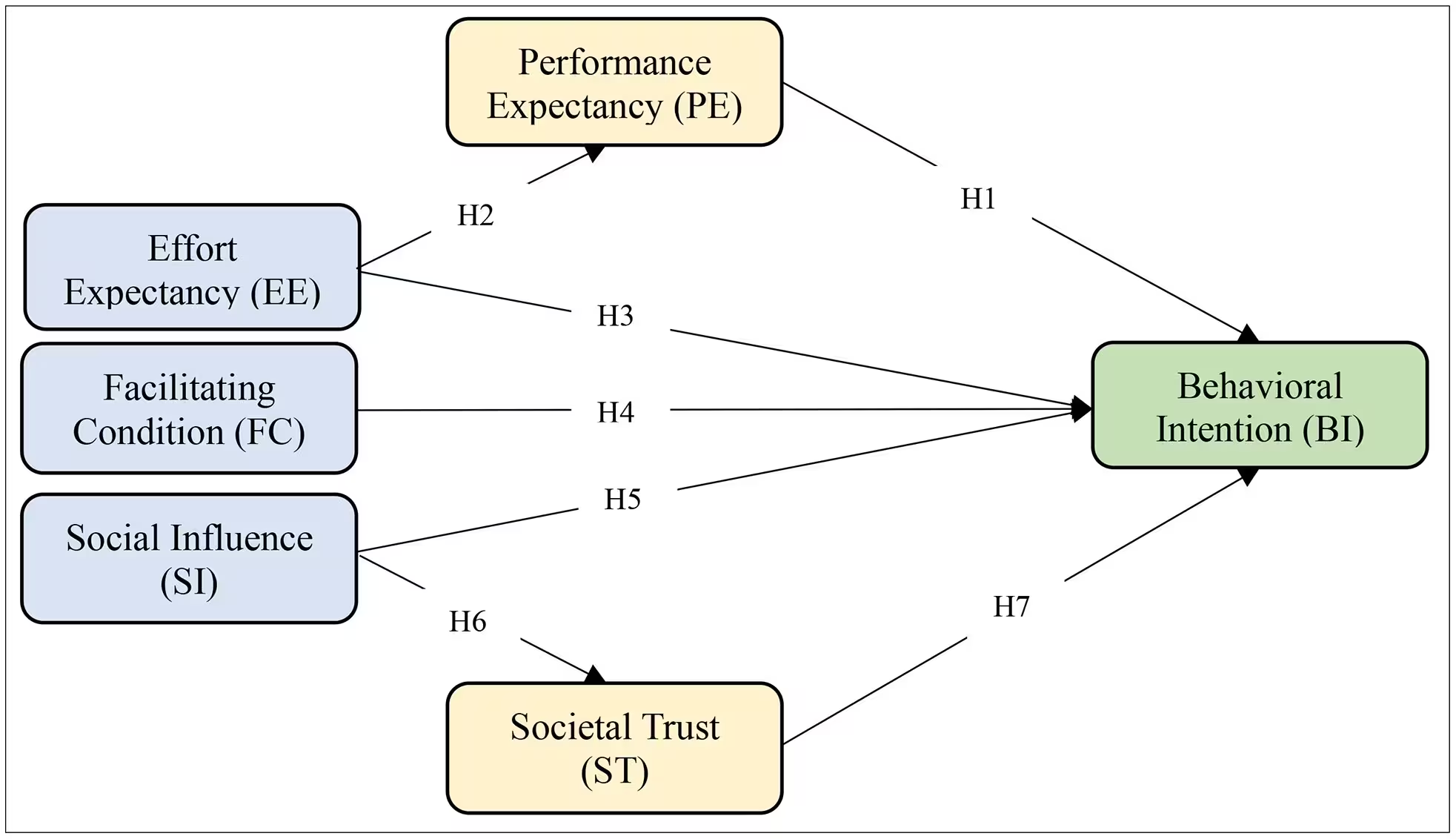
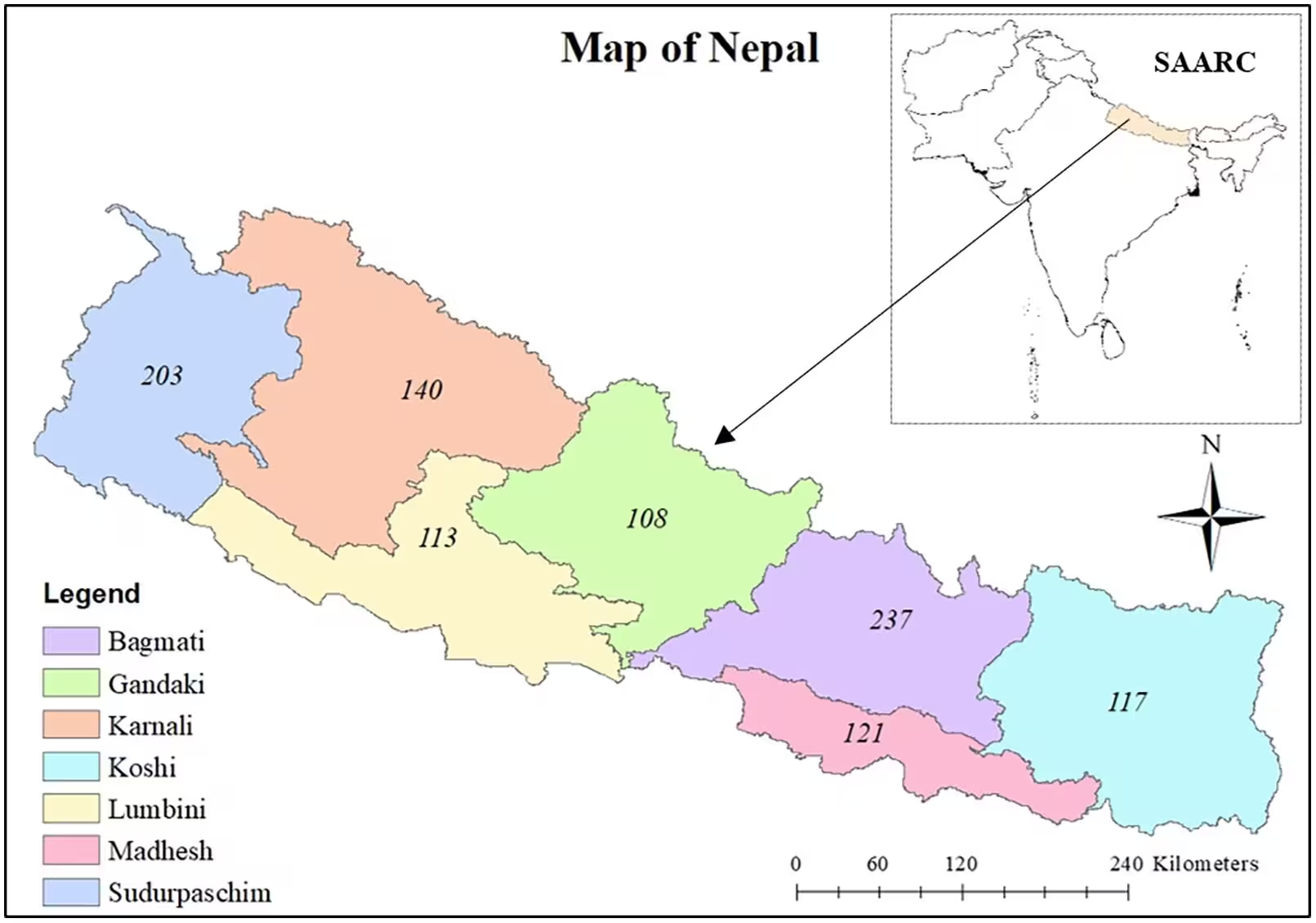
The researchers surveyed 1,039 respondents aged 18 to 28 across all seven provinces of Nepal between January and February 2026. Using a hybrid analytical approach combining Partial Least Squares Structural Equation Modeling and Artificial Neural Networks, the team tested an extended version of the Unified Theory of Acceptance and Use of Technology. The analysis revealed that performance expectancy, or the belief that advanced technologies will improve study and work effectiveness, is the single strongest predictor of behavioral intention, accounting for 100 percent normalized importance in neural network evaluations.
Interestingly, effort expectancy, or how easy a technology is to use, did not exert a direct significant effect on adoption intentions. The authors explain that because Generation Z individuals are digital natives who have grown up surrounded by intuitive interfaces, usability is treated as a baseline expectation rather than a motivating factor. Instead, ease of use indirectly influences willingness to adopt by enhancing perceived performance gains. Furthermore, facilitating conditions such as robust technical infrastructure and institutional support played a significant role in shaping adoption willingness.
Why Trust and Social Circles Matter More Than Simple Convenience
Beyond traditional technological acceptance factors, the study uncovered that societal trust and social influence are vital components in developing nations. Social influence from peers, family members, and educational institutions strongly shaped both adoption intentions and trust formation. When trusted community leaders and media endorse sustainable technologies, young adults feel more confident in engaging with them.
Societal trust emerged as the second most powerful predictor of adoption intentions. In regions where data privacy, algorithmic transparency, and ethical governance remain pressing concerns, young users require strong assurances that artificial intelligence systems are fair and accountable. The findings suggest that without explicit protections for privacy and cultural preservation, even highly efficient innovations will face hesitation from digitally engaged youth.
Study Limitations and What Researchers Suggest Next
The authors acknowledge several limitations in their work, including a geographic sampling concentration in urban areas and university settings, which left remote mountain and Himalayan districts underrepresented. Because the survey captured data at a single point in time, it cannot determine how attitudes might shift over the coming years. Future research should include longitudinal tracking, rural comparisons across diverse topographical regions, and cross-cultural studies to better understand how ethical governance and sustainability shape technology adoption globally.
The research was published in PLOS One on November 20, 2026.
This article has been fact checked for accuracy, with information verified against reputable sources. Learn more about us and our editorial process.
Last reviewed on .
Article history
- Latest version
Reference(s)
- Siddique, Majibur Rahman., et al. “Behavioral intention of gen Z towards society 6.0 in Nepal: An extension of UTAUT using PLS-SEM and ANN.” PLOS One, vol. 21, no. 11, November 20, 2026, pp. e0362300 Public Library of Science (PLoS), doi: 10.1371/journal.pone.0362300. <https://doi.org/10.1371/journal.pone.0362300>.
Cite this page:
- Posted by Zubair Ali