New Algorithm Scrubs Face Identity From Edge Data Without Slowing Down Devices
Adversarial training successfully separates gender recognition from personal identity markers right on user smartphones before transmission to remote servers.

Smartphones and wearable gadgets are constantly processing facial data in real time, but sending these images directly to cloud servers creates major privacy vulnerabilities. A new computational strategy successfully strips away facial identity markers right on the user device while still allowing edge servers to accurately recognize gender from the remaining data. Researchers designed an adversarial machine learning framework that performs feature-level decoupling, meaning it separates the specific data needed for a primary task from sensitive personal traits without adding heavy encryption burdens.
How Feature Decoupling Protects Personal Identity
Traditional privacy methods often rely on heavy cryptographic encryption or scrambling, which demands massive computational power that ordinary mobile batteries and edge processors struggle to handle. To bypass this bottleneck, the authors turned to adversarial training, a technique where different parts of a neural network compete against each other to achieve conflicting goals. Specifically, the system uses a gradient reversal layer, which multiplies the error signal passing through it by a negative number. This forces the initial feature extraction stage to actively suppress identity cues while preserving gender-related information.
The entire architecture is split across two distinct locations to keep sensitive data local. The initial privacy-concealment feature extraction module runs directly on the user device or a nearby trusted terminal, effectively acting as a digital filter. Once the identity-sensitive features are scrubbed away, only the sanitized gender feature vectors travel across the network to remote edge servers, where subsequent classification modules complete the analysis.
Testing the Strategy on Unconstrained Facial Datasets
To evaluate how well the system holds up under messy real-world conditions, the team tested their approach using the LFW face recognition dataset, an unconstrained benchmark containing more than 13,000 face images of famous people captured with diverse lighting, poses, and facial expressions. The study, published in PLOS One, examined 24 different individuals with identity tags from 0 to 23, dedicating 80 percent of the pictures to training and 20 percent to testing.
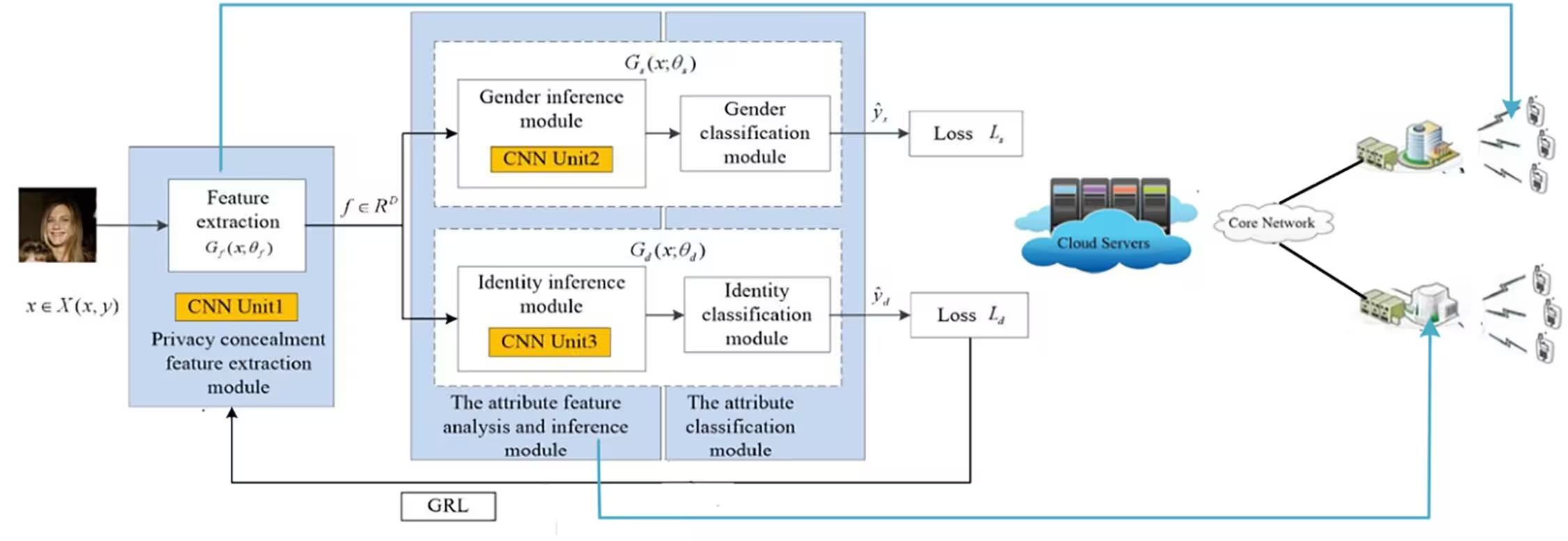
The researchers implemented two distinct training strategies to optimize the network parameters, namely local fine-tuning and global fine-tuning. In the local fine-tuning approach, specific modules are frozen during iterative updates to carefully balance accuracy and privacy. In the global fine-tuning approach, all relevant modules adjust simultaneously to streamline the training timeline.
Comparing Local Versus Global Fine-Tuning Performance
Both training strategies successfully achieved high gender recognition rates while driving identity recognition down to minimal levels. For gender classification, both methods maintained an impressive accuracy rate of approximately 90 percent. Meanwhile, identity recognition accuracy dropped sharply from high initial levels down to 3.19 percent for local fine-tuning and 5.10 percent for global fine-tuning, successfully satisfying the goal of keeping identity identification below 10 percent.
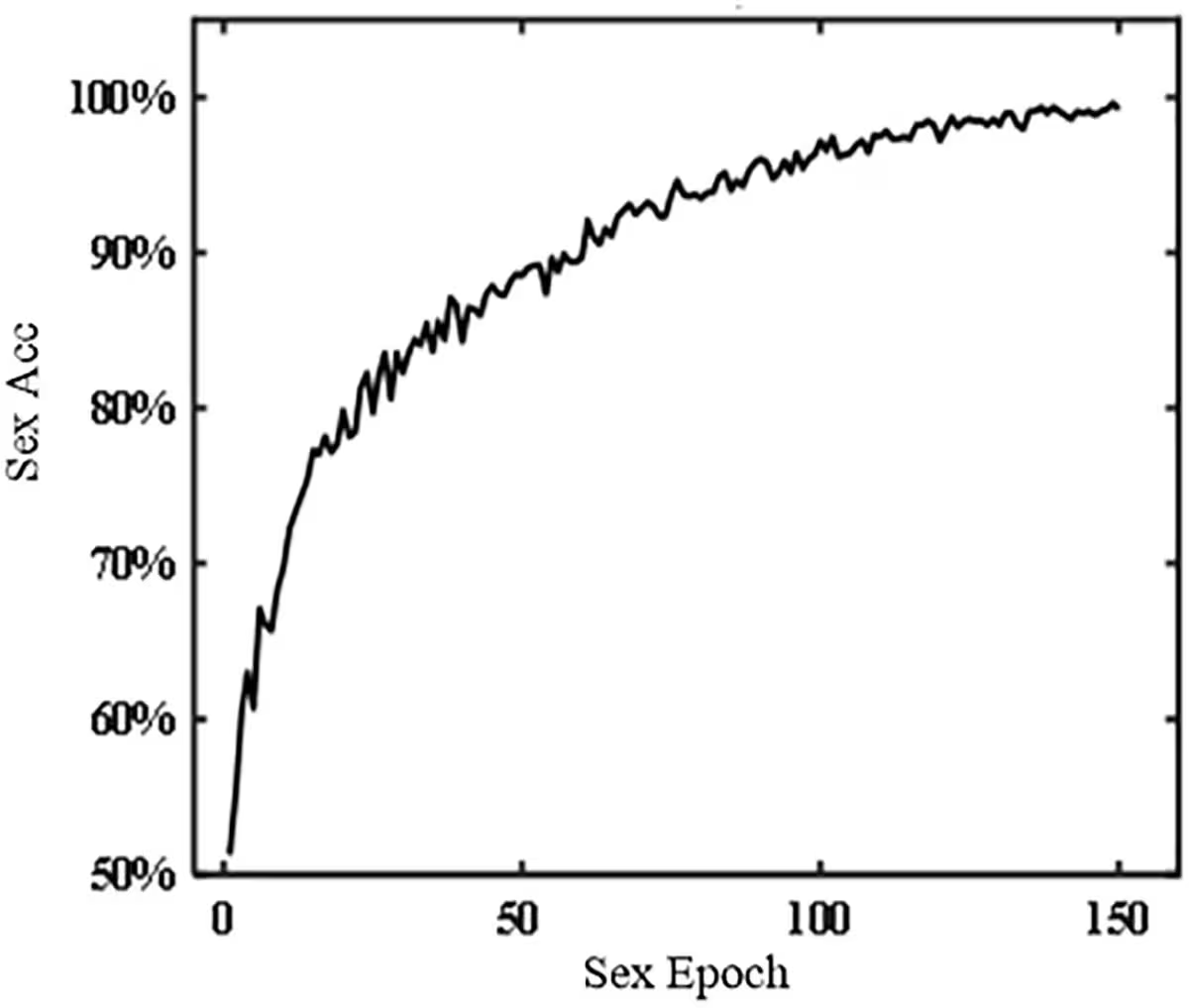
Each method offers distinct operational trade-offs for edge computing deployments. Local fine-tuning achieved slightly superior privacy protection by reducing identity accuracy closer to random guessing levels. On the other hand, global fine-tuning proved significantly more concise, requiring fewer training iterations and converging much faster than its counterpart.
Evaluating Computational Efficiency on Edge Devices
Theoretical complexity analysis reveals that the user-side module requires only 21.78 million multiply-accumulate operations, amounting to roughly 43.56 million floating-point operations with just 456 parameters. The remote edge server module handles the remaining 32.37 million multiply-accumulate operations and roughly 5.41 million parameters. Because the heavy lifting of cryptographic transformations is entirely eliminated during online inference, the system imposes virtually no extra computational or storage overhead on resource-constrained user devices.
While the current study demonstrates strong results on standard benchmark imagery, the authors note that future work will focus on microarchitecture optimization tailored specifically for edge computing hardware. They also plan to conduct empirical end-side performance measurements, including real-world inference latency and frames-per-second tracking, to further validate the framework in live deployment environments.
The research was published in PLOS One on November 20, 2026.
This article has been fact checked for accuracy, with information verified against reputable sources. Learn more about us and our editorial process.
Last reviewed on .
Article history
- Latest version
Reference(s)
- Yao, Yanxin., et al. “Hiding in plain sight: Adversarial identity concealment for facial gender recognition in edge computing.” PLOS One, vol. 21, no. 11, November 20, 2026, pp. e0362254 Public Library of Science (PLoS), doi: 10.1371/journal.pone.0362254. <https://doi.org/10.1371/journal.pone.0362254>.
Cite this page:
- Posted by Joseph Jackson