New Motor Control Strategy Smooths Bumpy Car Rides While Harvesting Energy
Advanced mathematical modeling helps electric vehicle suspensions balance passenger comfort with power regeneration.

Engineers have developed an advanced control strategy for vehicle suspension systems driven by linear electric motors that successfully smooths out bumpy rides while capturing waste electrical energy. The new approach relies on smart mathematical tools to keep passenger bouncing to a minimum without letting suspension parts stretch beyond safe physical limits, even when cars encounter deep potholes and rough terrain.
Modern vehicles need suspension systems that can solve a difficult balancing act. Drivers and passengers want a smooth, comfortable ride that absorbs sharp jolts from the road, but the vehicle also needs firm tire contact for safe handling and steering control. Active suspension systems use motors to push and pull against wheel movements, but traditional controllers often struggle when unexpected road hazards appear or vehicle weights change due to heavy cargo.
How Smart Math Keeps Cars Stable on Rough Roads
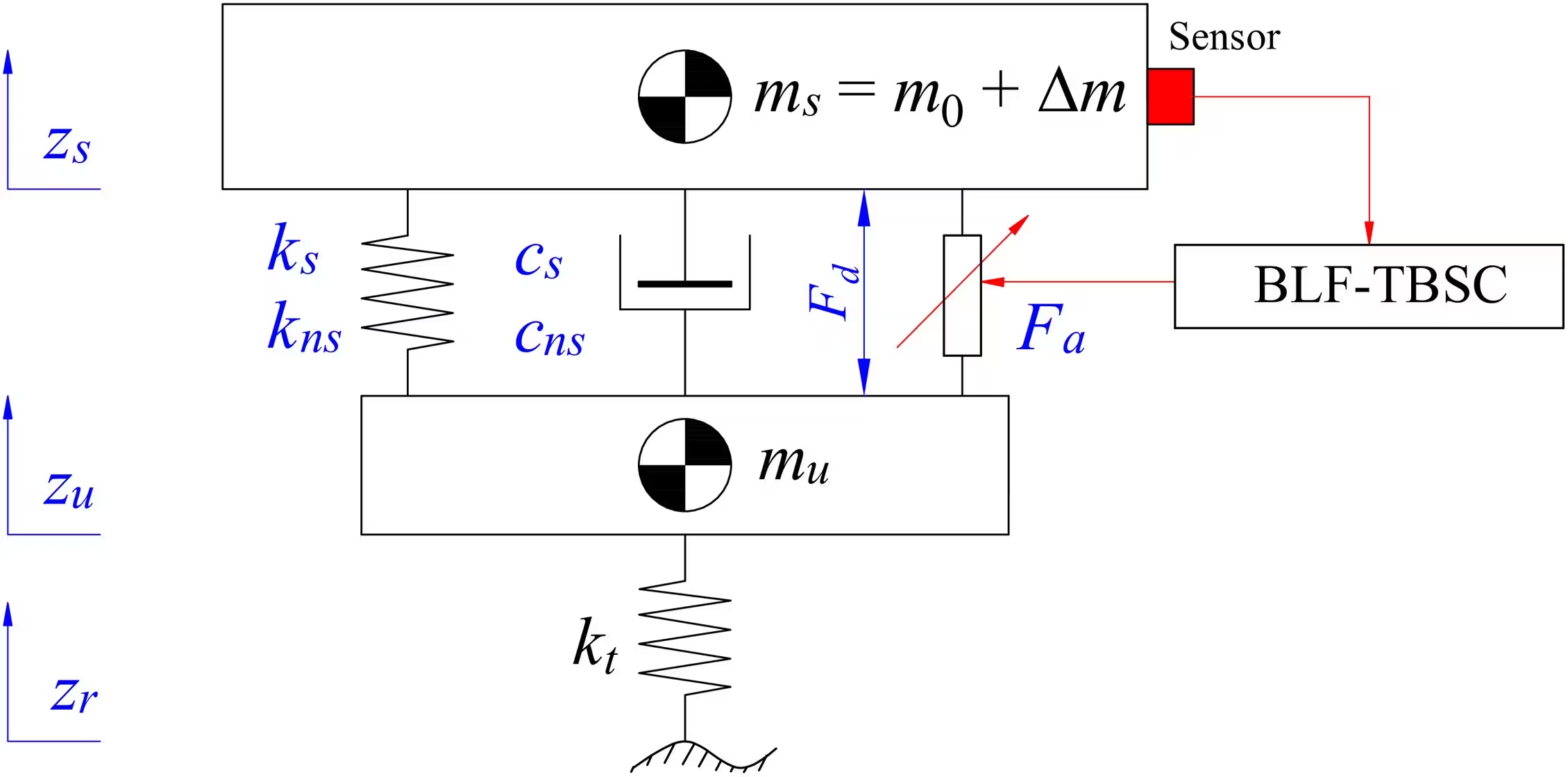
To tackle these challenges, researchers designed a multi-layered control system for an electromagnetic suspension setup powered by a permanent magnet synchronous linear motor. Details of the new methodology are published in PLOS One. The system combines three distinct mathematical techniques to keep vehicle movements tightly controlled.
First, the team incorporated a specialized constraint formula known in mathematics as a barrier Lyapunov function. This acts as an invisible mathematical fence around the vehicle body, ensuring that displacement errors never cross a predefined safety boundary. Second, they utilized an extended state observer, which acts as a real-time digital detective that instantly estimates unexpected bumps, friction, and shifting vehicle loads as they happen. Third, a terminal backstepping control structure speeds up the rate at which the suspension recovers from sudden disturbances.
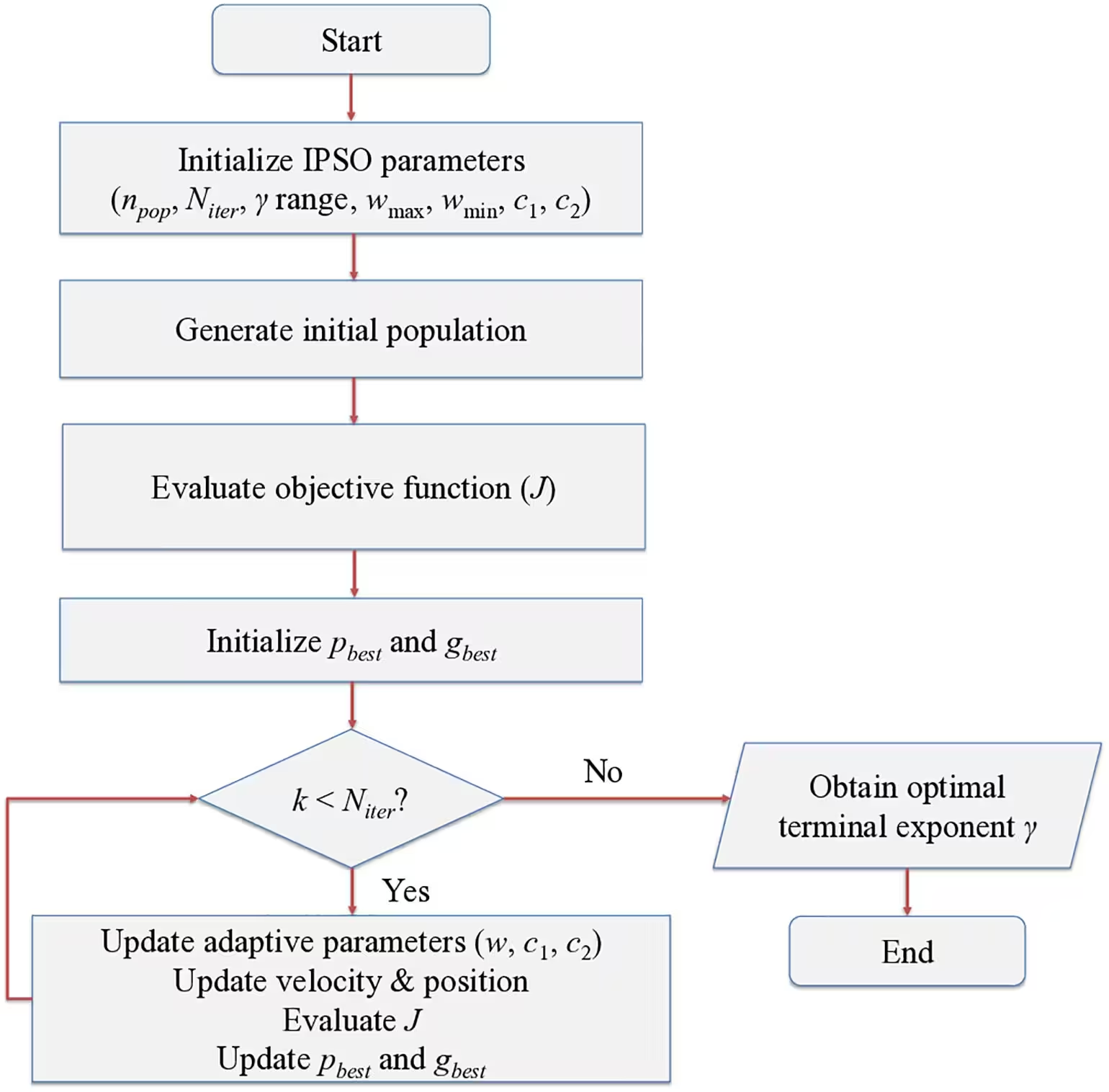
To eliminate the guesswork of manual tuning, the authors applied an improved particle swarm optimization algorithm. This computer search method automatically adjusts the controller parameters by balancing two competing goals, namely maximizing passenger comfort and minimizing electrical energy consumption.
Simulations Reveal Major Improvements in Ride Quality
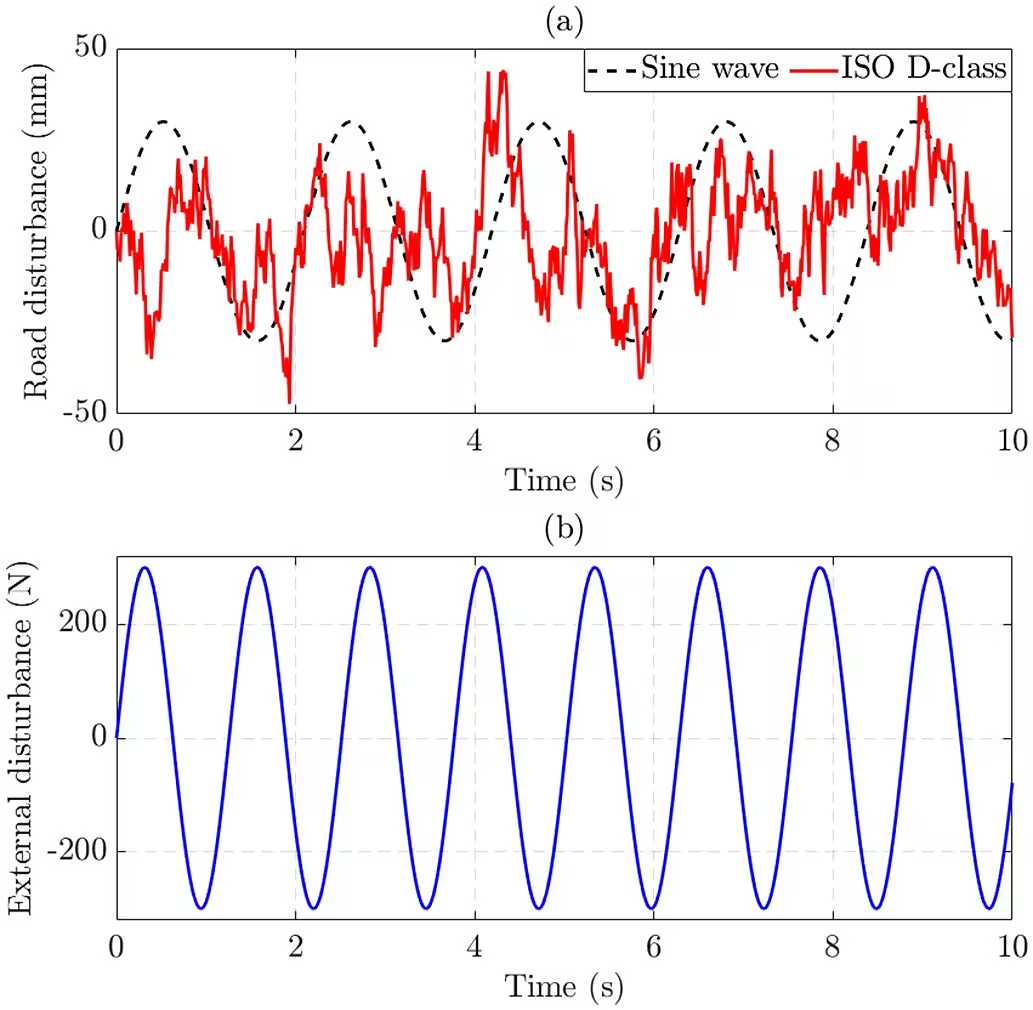
The research team tested their control strategy using computer simulations under two different road conditions. In the first scenario, the vehicle encountered a gentle sinusoidal wave pattern. Under these ideal conditions, the new controller drastically reduced vehicle body acceleration and velocity compared to standard proportional-integral-derivative controllers and traditional linear quadratic regulators.
When subjected to a much harsher ISO D-class road profile paired with an external disturbance and a ten percent increase in vehicle mass, the controller maintained its stability advantage. The simulated root-mean-square body acceleration dropped to 0.455 meters per second squared, outperforming older control methods. At the same time, the system preserved adequate tire-to-road contact, avoiding the dangerous loss of traction that plagued several alternative controllers.
Energy Regeneration Versus Maximum Comfort
The study also evaluated how much electricity the linear motor could recover during operation. Under moderate road excitations, the motor successfully captured more than 50 joules of electrical energy while maintaining exceptional ride comfort.
However, under severe road disturbances, the controller deliberately prioritized passenger comfort and vehicle stability over energy recovery. Generating strong counter-forces to counteract deep potholes requires substantial electrical power, causing energy consumption to rise while the net regenerated energy decreased. The authors note that this trade-off is intentional, as safety and stability must take precedence over electricity generation when driving on very rough surfaces.
Despite these promising simulation findings, the study has certain limitations. The authors tested the controller using a simplified quarter-car model, which leaves out complex vehicle dynamics such as side-to-side roll and front-to-back pitch. Furthermore, the model did not account for practical engineering constraints such as magnetic saturation, thermal heating, or sensor noise.
The research team plans to address these gaps in future studies by expanding the control framework to full-car vehicle models and validating the approach on physical hardware test benches.
The research was published in PLOS One on November 20, 2026.
This article has been fact checked for accuracy, with information verified against reputable sources. Learn more about us and our editorial process.
Last reviewed on .
Article history
- Latest version
Cite this page:
- Posted by Rabia Shah