Outdoor Temperatures Are Linked to Subtle Shifts in Women’s Reproductive Hormones
A study of over 1,200 women trying to conceive reveals that seasonal heat and cold correlate with hormonal fluctuations across the menstrual cycle.

Weather extremes may quietly interfere with a woman’s reproductive biology, as new research reveals that both hot and cold outdoor temperatures are linked to shifts in key reproductive hormone levels across the menstrual cycle. The prospective study followed over 1,200 women attempting pregnancy and tracked how seasonal temperature fluctuations correspond with hormonal fluctuations that govern ovulation and cycle length.
How Seasonal Temperatures Shift Reproductive Hormones
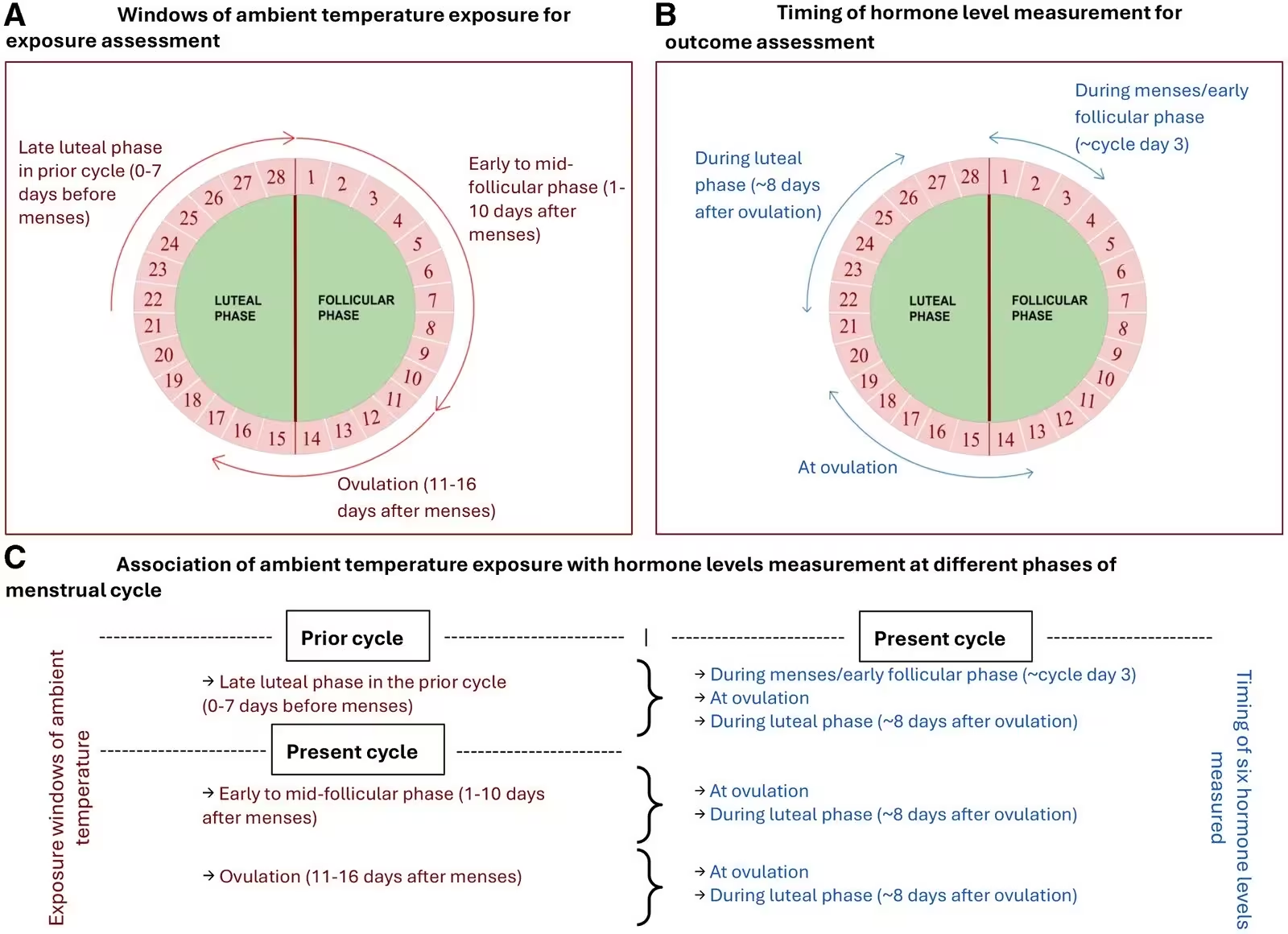
To understand how environmental heat and cold influence female fertility, researchers analyzed data from the Effects of Aspirin in Gestation and Reproduction, or EAGeR, trial, which took place between 2007 and 2011. The prospective time-to-pregnancy study enrolled 1,228 women aged 18 to 40 across four clinical study sites in Buffalo, New York, Scranton, Pennsylvania, Denver, Colorado, and Salt Lake City, Utah. Participants were tracked for up to six menstrual cycles while trying to conceive. Daily outdoor temperatures were gathered from local weather monitoring stations near each study site and averaged across specific windows of susceptibility linked to the menstrual cycle, including the late luteal phase in the prior cycle, the early to mid-follicular phase, and ovulation.
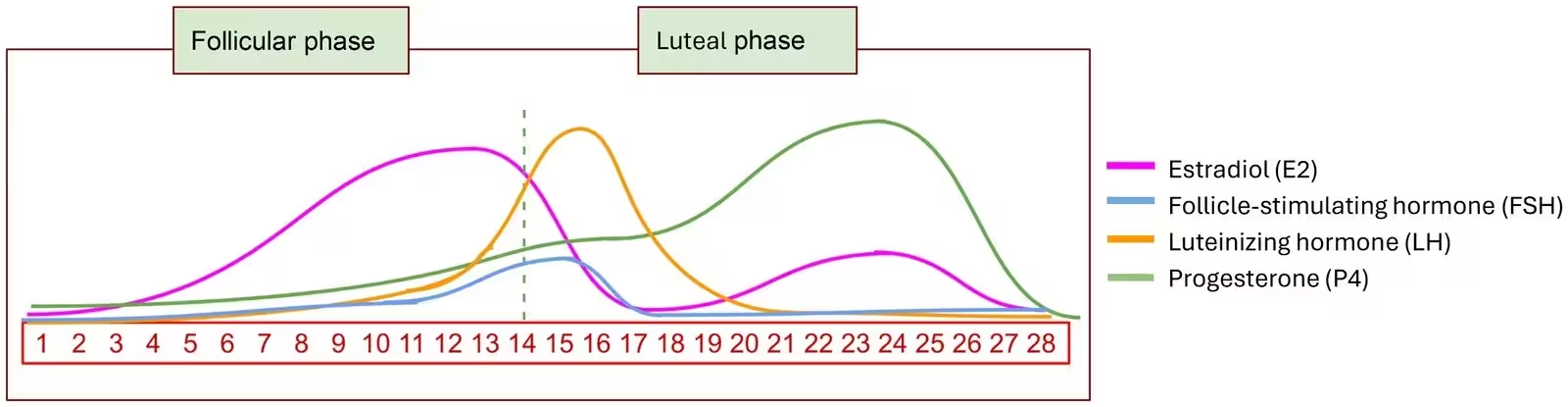
During these distinct biological windows, researchers measured urinary concentrations of four major reproductive hormones: estrone-3-glucuronide, which is a metabolite of estradiol, follicle-stimulating hormone, luteinizing hormone, and pregnanediol glucuronide, which is a metabolite of progesterone. To account for potential missing data, the team incorporated inverse probability weighting into their generalized linear models, while adjusting for key confounders such as participant age, study site, fine particulate matter air pollution, and season. The detailed findings were published in Environmental Epidemiology.
What Happens During Cold and Warm Weather Windows
The analysis uncovered distinct hormonal variations depending on whether women experienced colder winter months or warmer summer heat. During the cold season, women who were exposed to a 1 degree Celsius higher ambient temperature in the late luteal phase of the prior cycle experienced a 3.13% higher level of follicle-stimulating hormone and a 3.48% higher level of luteinizing hormone at ovulation. Conversely, exposure to colder ambient temperatures was generally associated with lower levels of those same two pituitary hormones at ovulation and during the luteal phase.
When looking at high heat thresholds, defined as temperatures reaching or exceeding 25 degrees Celsius, exposure during the ovulation window was linked to a 21.1% decrease in pregnanediol glucuronide at ovulation. Furthermore, warmer temperatures were associated with a higher risk of anovulatory cycles, meaning cycles where ovulation failed to occur. Colder temperatures, meanwhile, tended to align with shorter follicular phase lengths and a lower risk of extreme cycle lengths.
Limitations and What the Findings Mean for Family Planning
While the study provides a unique look at environmental stressors and human reproduction, the authors noted several limitations. The study population consisted predominantly of non-Hispanic White women of moderate to high socioeconomic status, which may limit how broadly these results apply to other populations. Additionally, relying on outdoor weather stations as a proxy for individual exposure could introduce some non-differential misclassification, since personal behaviors and indoor climate control were not tracked.
The researchers emphasize that as climate change drives more extreme temperatures globally, understanding how ambient weather affects human reproductive health becomes increasingly critical. Even modest hormonal shifts across these delicate biological windows could have subtle implications for menstrual cycle regulation and overall ovulatory function among women actively planning a pregnancy.
The research was published in Environmental epidemiology (Philadelphia, Pa.) on November 18, 2026.
This article has been fact checked for accuracy, with information verified against reputable sources. Learn more about us and our editorial process.
Last reviewed on .
Article history
- Latest version
Reference(s)
- Rabeya, Kaniz., et al. “Investigating the relationship between ambient temperature and reproductive hormones among women attempting pregnancy.” Environmental Epidemiology, vol. 10, no. 6, December 1, 2026, pp. e545 Ovid Technologies (Wolters Kluwer Health), doi: 10.1097/EE9.0000000000000545. <https://doi.org/10.1097/EE9.0000000000000545>.
Cite this page:
- Posted by Tariq Hassan