Why Canadian Doctors Rarely Prescribe HIV Prevention to Women
A new survey reveals that 81 percent of women’s health specialists have never prescribed pre-exposure prophylaxis, highlighting a major gender gap in clinical care.
Women in Canada face a stark prevention gap where they represent over a quarter of the national HIV burden but account for just 2 percent of pre-exposure prophylaxis prescriptions. A cross-sectional survey of 114 licensed Canadian healthcare providers, published in PLOS One, reveals that while clinicians report high general knowledge about HIV, substantial gaps in familiarity with biomedical prevention and pervasive gender biases continue to limit routine access for female patients.
How Well Do Canadian Clinicians Know HIV Prevention Strategies?
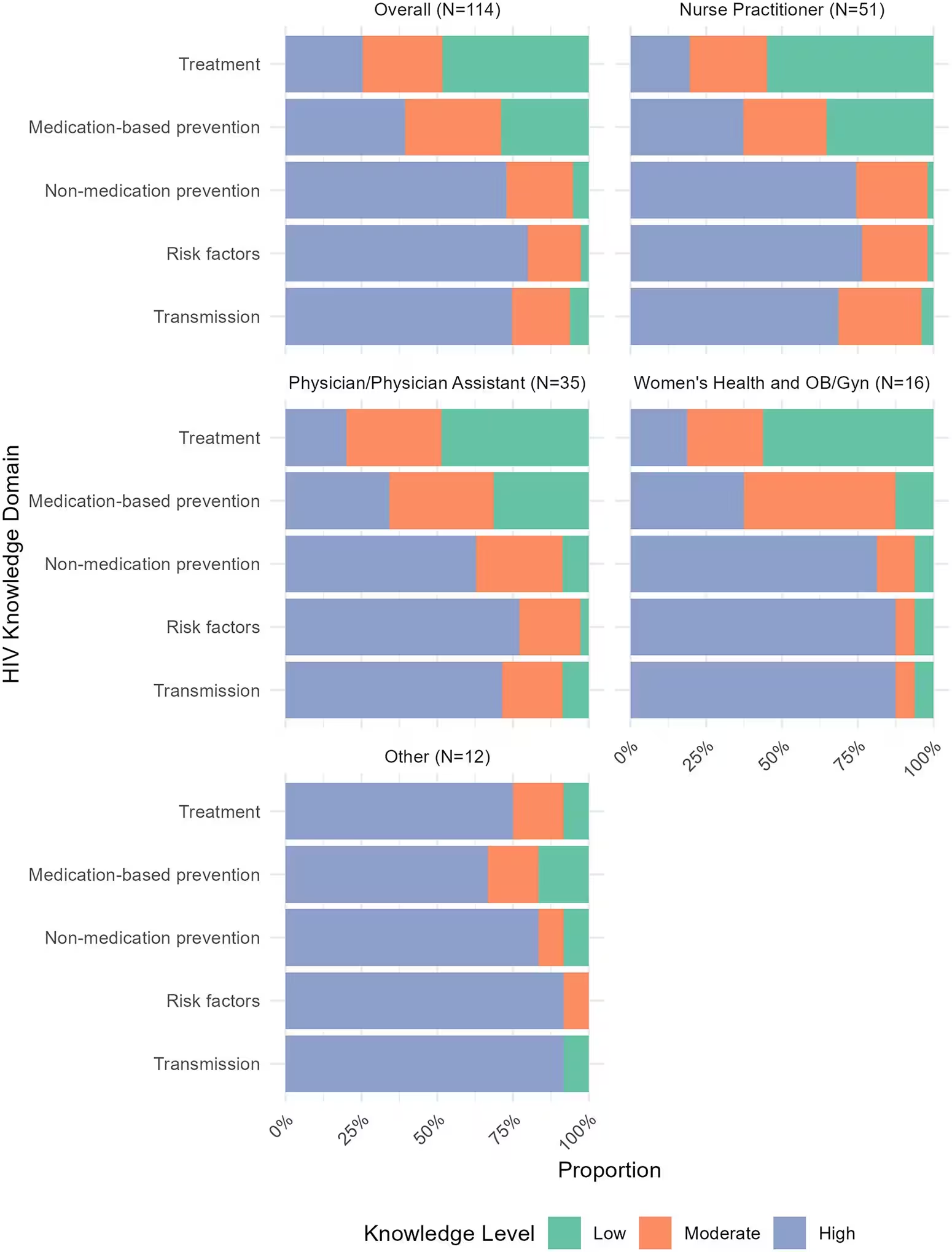
The study, conducted between June 2023 and October 2024, evaluated the clinical knowledge, willingness to prescribe, and practices of 51 nurse practitioners, 35 physicians and physician assistants, 16 obstetrics and gynecology providers, and 12 other clinicians. Although 79 percent of respondents felt confident about HIV risk factors and 74 percent understood transmission dynamics, familiarity with medication-based prevention was much lower, with only 39 percent reporting high clinical knowledge in that domain.
Furthermore, familiarity with emerging options like PEP-in-pocket (PIP), which involves giving patients an advance take-home course of post-exposure prophylaxis for rapid self-initiation following an unexpected exposure, was severely limited. Overall, 56 percent of participants reported being entirely unfamiliar with PIP, and that figure climbed to 88 percent among obstetrics and gynecology specialists.
Why Are Women Experiencing Such Pronounced Prescribing Disparities?
The findings point to a heavy male-centered bias in clinical encounters. Proactive engagement, defined as actively offering or initiating prophylaxis counselling rather than waiting for a patient to ask, was reported by only 26 percent of clinicians for pre-exposure prophylaxis and 25 percent for post-exposure prophylaxis. The vast majority operated on a conditional basis, prescribing only when explicitly requested.
More than two-thirds of providers admitted they initiate HIV prevention conversations less frequently with women than with men. This hesitation correlates with real-world prescribing habits, as 81 percent of obstetrics and gynecology providers and 54 percent of the total cohort had never prescribed pre-exposure prophylaxis in their clinical careers. Clinicians noted that female patients ask about prevention far less often, averaging 8 inquiries a year compared to 41 inquiries from male patients, partly due to persistent stigma and traditional risk algorithms that historically linked preventative medication almost exclusively to gay, bisexual, and other men who have sex with men.
Which Healthcare Providers Are Leading the Way Forward?
Significant differences emerged across professional roles regarding where care is delivered and how proactive clinicians are. Nurse practitioners demonstrated significantly higher rates of proactive pre-exposure prophylaxis initiation and reported zero avoidance behaviors for emergency post-exposure medication. Most of these nurse practitioners worked in community health centers or publicly funded primary care settings, which respondents overwhelmingly identified as ideal environments for decentralized HIV prevention.
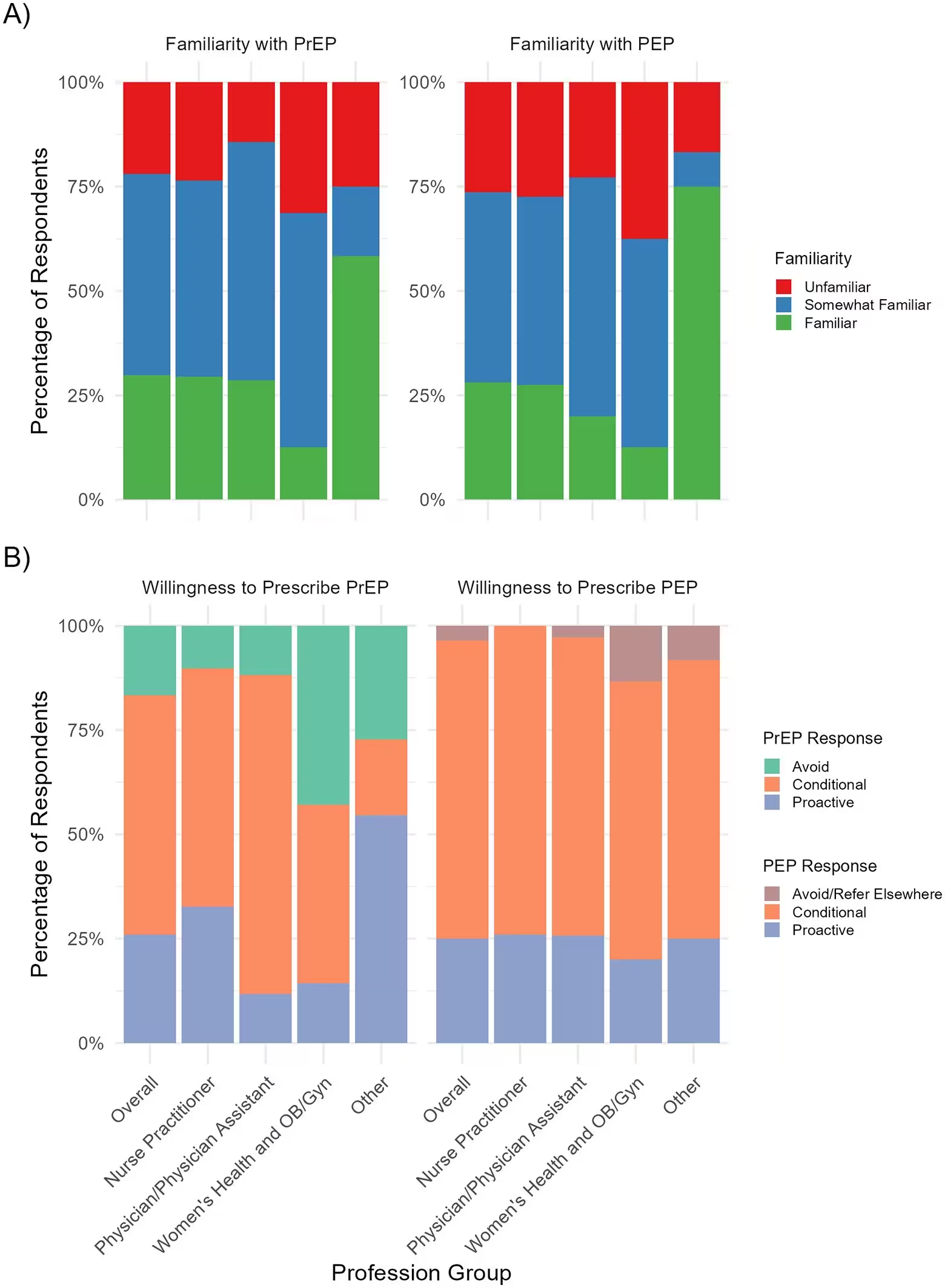
Conversely, obstetrics and gynecology specialists, who frequently serve as a primary point of contact for women’s health, reported the highest levels of unfamiliarity and prescribing avoidance. Many of these specialists practice in academic hospital centers, which tend to rely on referral-based workflows rather than point-of-care initiation, introducing delays that can threaten the crucial 72-hour window required for effective emergency prophylaxis.
What Limitations Affect the Generalizability of These Findings?
The study authors acknowledged several methodological limitations, including a modest final sample size of 114 participants that restricted robust statistical comparisons between different medical specialties. Recruitment through professional networks and online databases may also have introduced selection bias, potentially overlooking rural or under-resourced practitioners where knowledge gaps could be even wider.
Because the survey relied on self-reported data, recall bias and social desirability may have influenced responses. Additionally, because the work was completed just prior to the rollout of updated national guidelines designed to remove restrictive eligibility barriers, the findings establish a critical baseline for measuring future improvements in gender-inclusive clinical care.
The research was published in PLOS One on November 20, 2026.
This article has been fact checked for accuracy, with information verified against reputable sources. Learn more about us and our editorial process.
Last reviewed on .
Article history
- Latest version
Reference(s)
- Mendlowitz, Andrew B.., et al. “Provider knowledge and prescribing practices of HIV PrEP, PEP and PEP-in-pocket among women in Canada: A cross-sectional study of healthcare providers.” PLOS One, vol. 21, no. 11, November 20, 2026, pp. e0360515 Public Library of Science (PLoS), doi: 10.1371/journal.pone.0360515. <https://doi.org/10.1371/journal.pone.0360515>.
Cite this page:
- Posted by Tariq Hassan