Millions of Tweets Reveal How Cancer Patients and Doctors Collaborated Online
A decade-long analysis of social media shows how patient advocates helped shape discussions around precision oncology and rare genetic biomarkers.
When cancer patients and doctors began connecting on social media more than a decade ago, they formed unexpected digital alliances that helped reshape how rare tumors are understood and treated. A comprehensive digital ethnography examining over eight million posts spanning from 2011 through 2022 reveals how online networks allowed patients to collaborate directly with oncologists in navigating complex precision therapies.
How Patient Advocates and Oncologists Built a Digital Community Around Rare Cancers
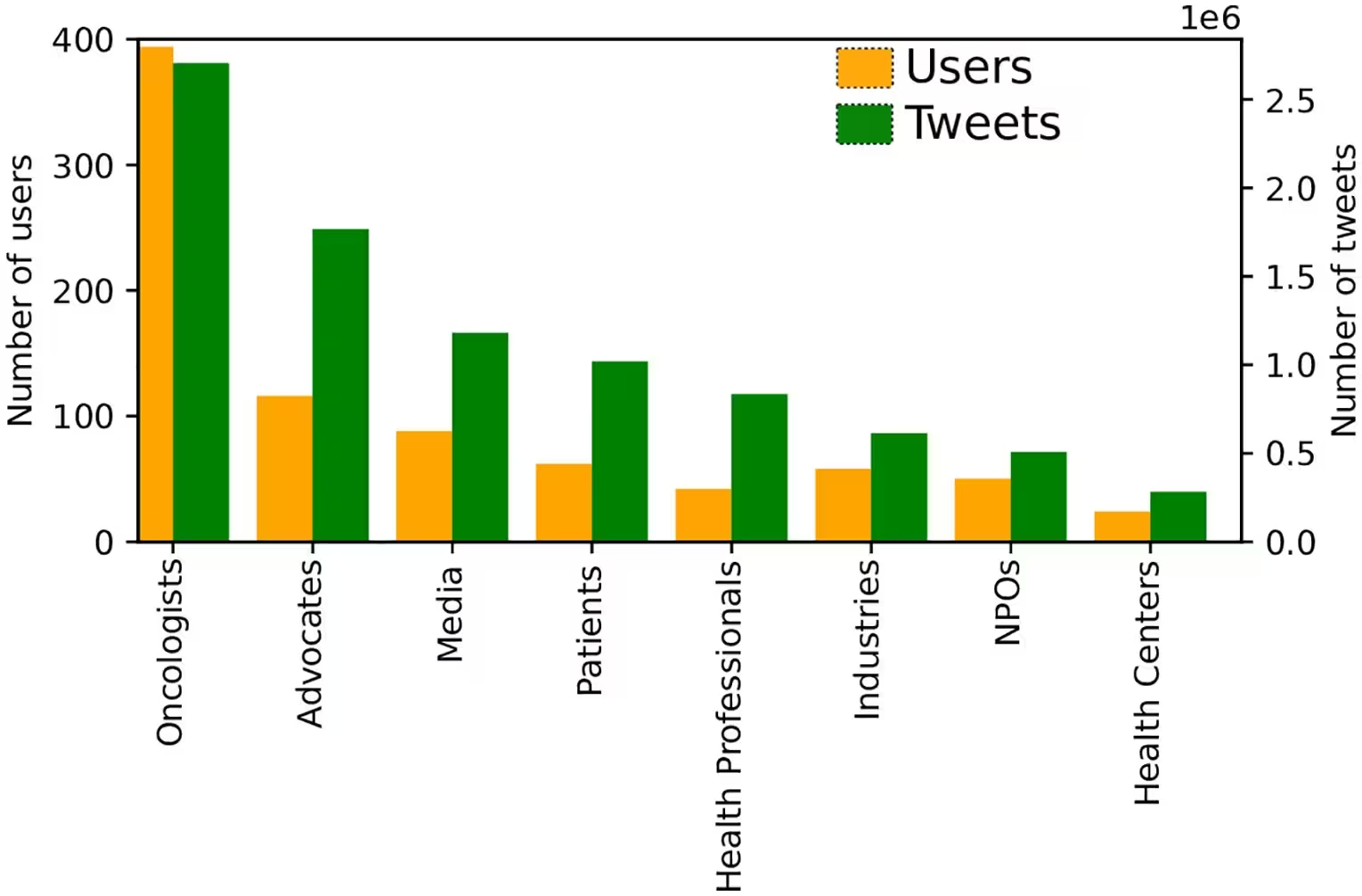
The study, published in PLOS One, analyzed data from more than 8,500,000 tweets and retweets posted by 834 highly active users within breast cancer, lung cancer, and other major social media cancer communities. Researchers developed a unique classification system to categorize users into eight distinct roles, including patients, advocates, oncologists, other healthcare professionals, health centers, media organizations, non-profit groups, and pharmaceutical industries.
The analysis showed that patient advocates were remarkably active, tweeting twice as frequently as oncologists. While doctors primarily used the platform to share scientific updates and clinical findings from major medical gatherings such as the American Society of Clinical Oncology meetings, advocates engaged in a wider variety of discussions. They shared emotional support, raised public awareness, debated health policies, and scrutinized clinical trial regulations.
Tracing the Rise of Biomarker-Driven Targeted Therapies Online
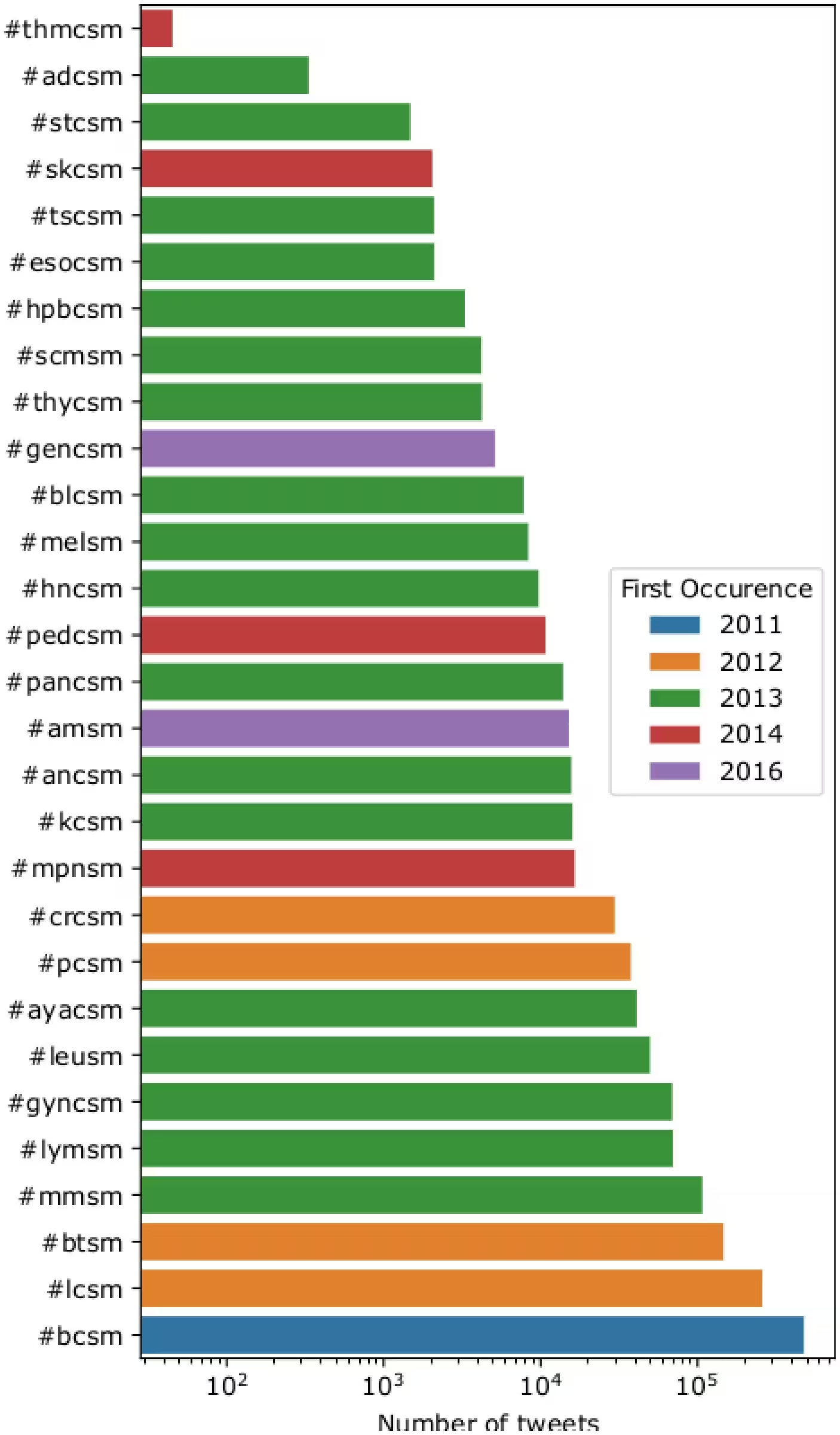
The research team focused closely on discussions surrounding precision oncology, which classifies tumors by specific genetic mutations rather than just their organ of origin. Biomarkers such as HER2, EGFR, and ROS1 drove significant spikes in online conversations, with activity surging during major annual oncology conferences and following regulatory decisions by the United States Food and Drug Administration.
Using a detailed case study of prominent lung cancer advocate Janet Freeman-Daily and her interactions with medical professionals like Dr. Howard West, the authors mapped how digital networking preceded the formal creation of specialized advocacy groups like The ROS1ders. These online exchanges frequently served as a vital resource where patients could evaluate treatment options, question standard chemotherapy protocols when targeted alternatives existed, and learn how to access clinical trials for rare genetic subtypes.
Understanding the Limitations of Social Media Health Research
The authors noted several important limitations to their work. The dataset concentrated strictly on the most active core of the community, representing fewer than three percent of total users while capturing over eighty percent of the posts, meaning casual users or passive patients were largely underrepresented.
Additionally, the qualitative investigation centered heavily on prominent figures and a predominantly Anglo-American context centered around English-language discussions, Food and Drug Administration approvals, and United States healthcare systems. The researchers also cautioned that the platform’s evolution from Twitter into X, alongside growing privacy and moderation concerns, has since displaced many of these online medical communities toward alternative digital platforms.
The research was published in PLOS One on November 20, 2026.
This article has been fact checked for accuracy, with information verified against reputable sources. Learn more about us and our editorial process.
Last reviewed on .
Article history
- Latest version
Reference(s)
- Luneau, Aymeric., et al. “Tweeting with precision: A multiscale longitudinal digital ethnography of online cancer communities.” PLOS One, vol. 21, no. 11, November 20, 2026, pp. e0362866 Public Library of Science (PLoS), doi: 10.1371/journal.pone.0362866. <https://doi.org/10.1371/journal.pone.0362866>.
Cite this page:
- Posted by Susan White