Severe Dry-Season Pollution Triggers Massive Metabolic Shift in Tropical River Microbiomes
Metagenomic analysis reveals how dropping oxygen and organic surges restructure microbial survival and detoxification genes in a major urban water source.
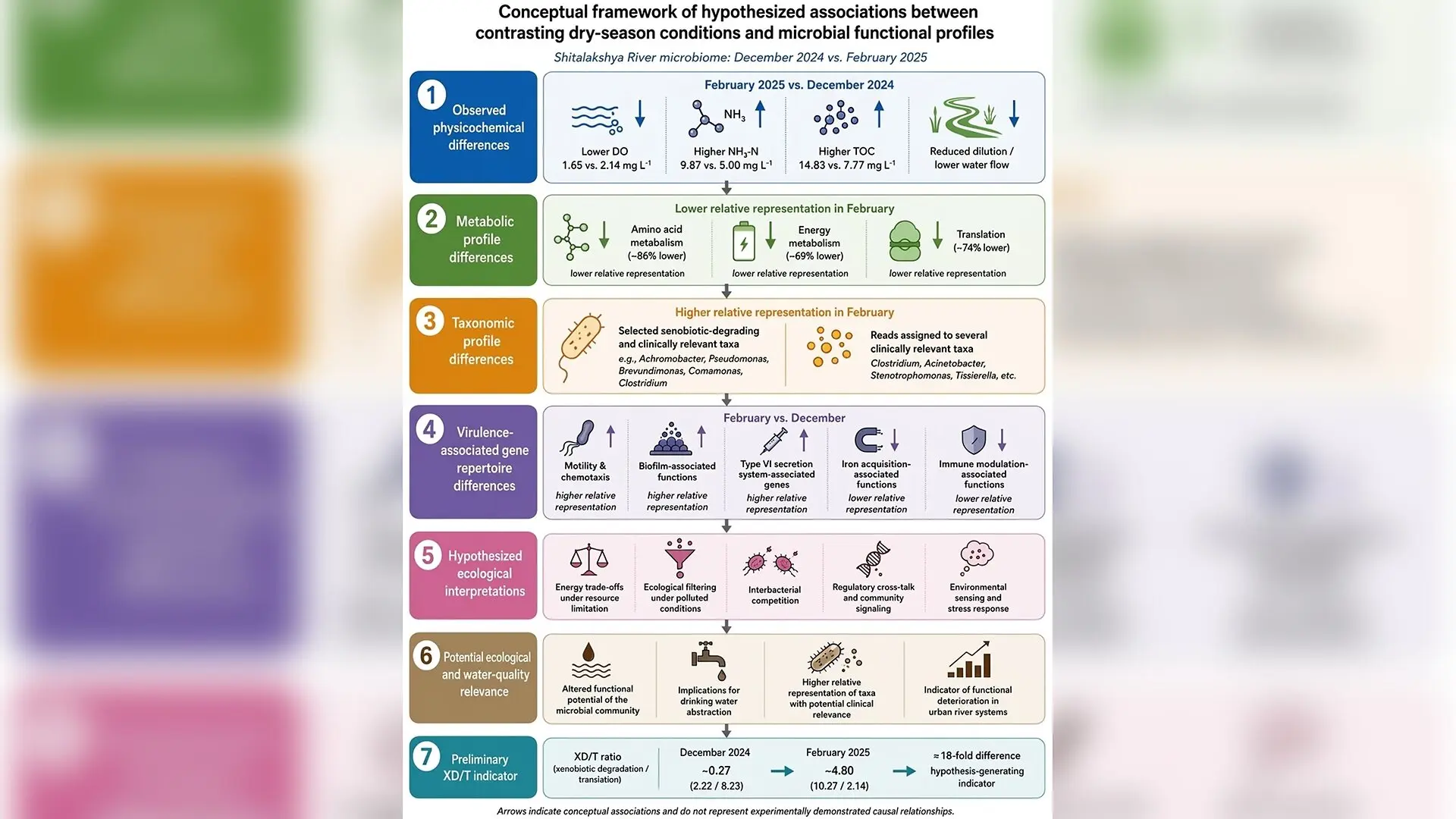
Surface waters in a heavily polluted tropical river undergo a dramatic microscopic transformation during the dry season, shifting their microbial profile away from normal growth and toward heavy-duty detoxification and survival traits. As dry-season flow drops and industrial and domestic waste concentrates in Bangladesh, oxygen levels plummet and organic pollutants surge, prompting a massive restructuring of the river’s bacterial communities.
How Oxygen Depletion and Chemical Surges Force Microbial Adaptation
To investigate how urban pollution shapes aquatic ecosystems, researchers analyzed water samples collected from the Shitalakshya River in Narayanganj, Bangladesh, serving as the primary raw water source for the nation’s largest drinking water treatment plant. They compared early dry-season conditions from December 2024 with peak dry-season conditions in February 2025. Between these two points, dissolved oxygen collapsed to near-hypoxic levels, total organic carbon nearly doubled, and ammoniacal nitrogen almost doubled from 5 to 9.87 milligrams per liter.
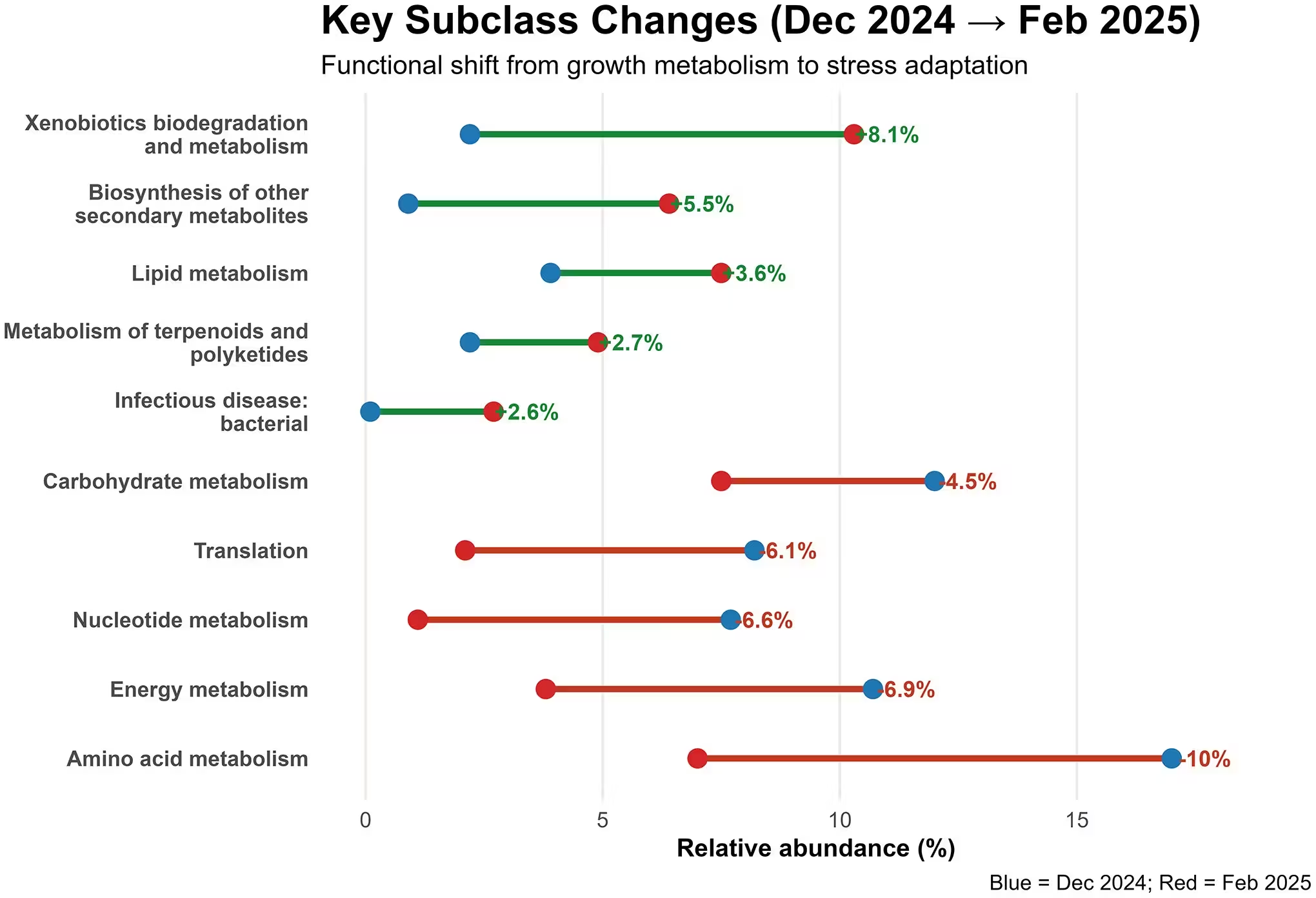
Using shotgun metagenomics, which sequences all the genetic material present in a sample, the team tracked how microbial functional potential changed in response to this extreme stress. The findings were published in PLOS One by Muhammad Ehteshamul Haque and colleagues, revealing that core metabolic functions like amino acid and energy metabolism sharply contracted, while genes linked to breaking down toxic chemicals and building protective biofilms expanded significantly.
The Hidden Trade-Off Between Chemical Breakdown and Stress Survival
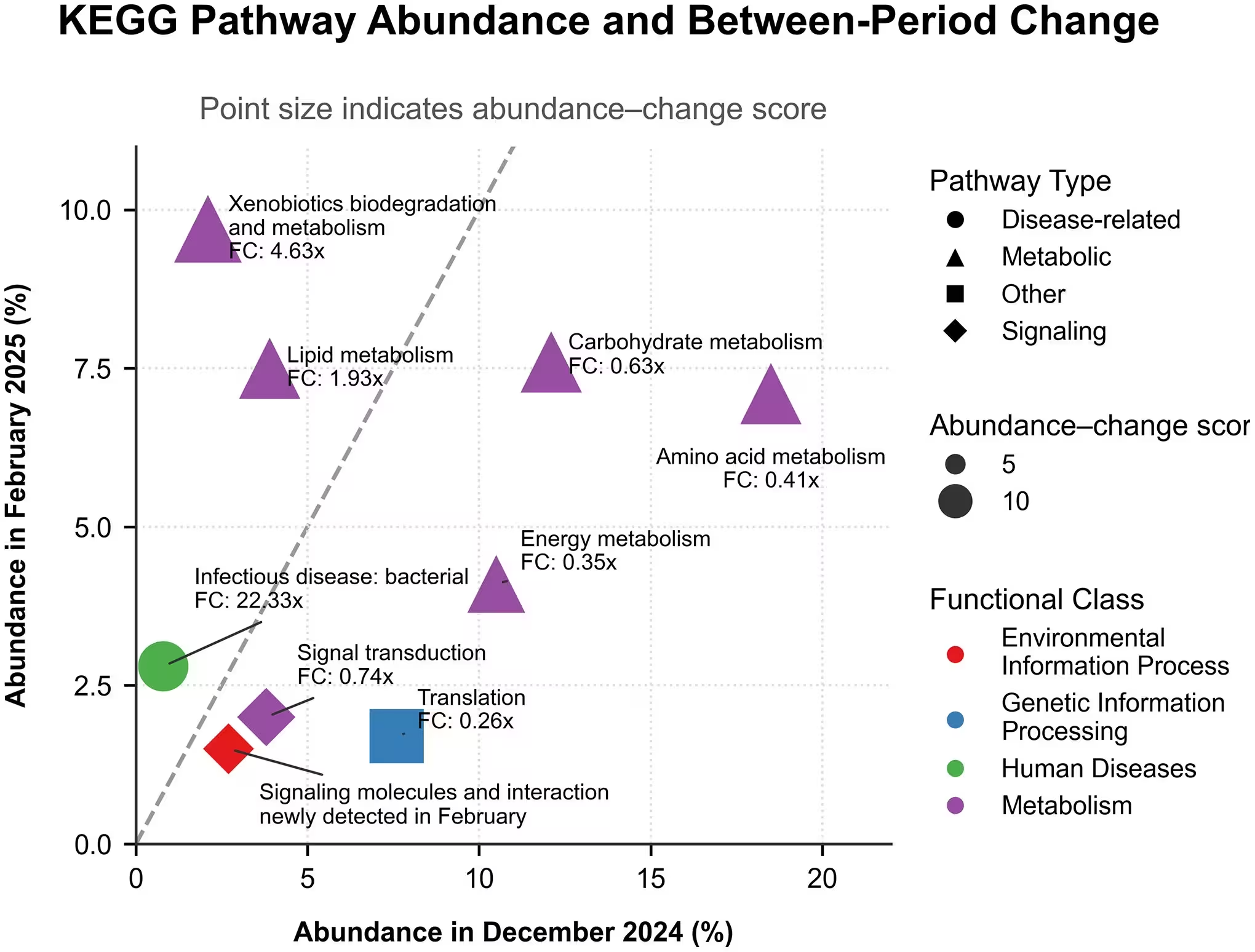
When the researchers mapped the genetic data using Kyoto Encyclopedia of Genes and Genomes (KEGG) pathways, they noticed a sweeping redistribution of metabolic capability. Pathways dedicated to basic cellular growth and translation dropped by half or more. Conversely, genes responsible for xenobiotic biodegradation, meaning the breakdown of synthetic chemicals and pollutants, showed a 4.6-fold higher relative abundance during the peak dry season in February.
This functional shift resembles a severe starvation response seen in laboratory bacteria. When nutrients are scarce and toxins are high, microbes shut down expensive anabolic machinery to conserve energy. At the same time, the data pointed to an increased presence of taxa capable of processing complex organic compounds, including species of Pseudomonas, Achromobacter, and Brevundimonas.
What Happens to Virulence and Public Health Safety
A striking finding of the analysis was the co-enrichment of virulence-associated genetic determinants alongside stress-tolerance pathways. Cataloging the sequences against the Virulence Factor Database (VFDB) revealed that genes governing flagellar motility and biofilm formation nearly doubled in relative representation during February. The authors observed that many environmental generalists possess dual capabilities, using the same genetic networks to survive toxic pollutants and to establish surface attachments or outcompete neighboring bacteria.
At the same time, traditional iron-acquisition systems and immune-evasion factors declined, suggesting that relaxed selection for host-associated traits and higher iron availability in organic-rich, low-oxygen waters altered the microbial toolkit. While the detection of genes associated with opportunistic pathogens such as Pseudomonas aeruginosa and Stenotrophomonas maltophilia highlights potential public health concerns for water treatment facilities, the authors emphasized that these DNA-based findings represent genetic potential rather than confirmed live pathogens or active disease risks.
Next Steps in Monitoring Urban River Ecosystems
Because this study relied on two targeted sampling points with composited DNA samples, the authors caution that the results reflect compositional shifts rather than absolute population explosions or definitive seasonal trends. They proposed a preliminary xenobiotic degradation-to-translation ratio as a potential indicator of ecological stress, though it requires validation across broader geographic and temporal datasets. Future research using metatranscriptomics and independent biological replicates will be essential to determine whether these stress-adapted microbes are actively expressing their metabolic and competitive traits in municipal water sources.
The research was published in PLOS One on November 20, 2026.
This article has been fact checked for accuracy, with information verified against reputable sources. Learn more about us and our editorial process.
Last reviewed on .
Article history
- Latest version
Reference(s)
- Haque, Muhammad Ehteshamul., et al. “Metabolic retraction and virulence gene repertoire expansion in a tropical urban river microbiome under dry-season stress.” PLOS One, vol. 21, no. 11, November 20, 2026, pp. e0352290 Public Library of Science (PLoS), doi: 10.1371/journal.pone.0352290. <https://doi.org/10.1371/journal.pone.0352290>.
Cite this page:
- Posted by Faisal Qureshi