Engineered Antibody Neutralizes Evolving COVID Variants Through Hidden Structural Shifts
X-ray crystallography reveals how laboratory-matured VYD222 accommodates viral mutations while retaining potency against dominant sublineages.
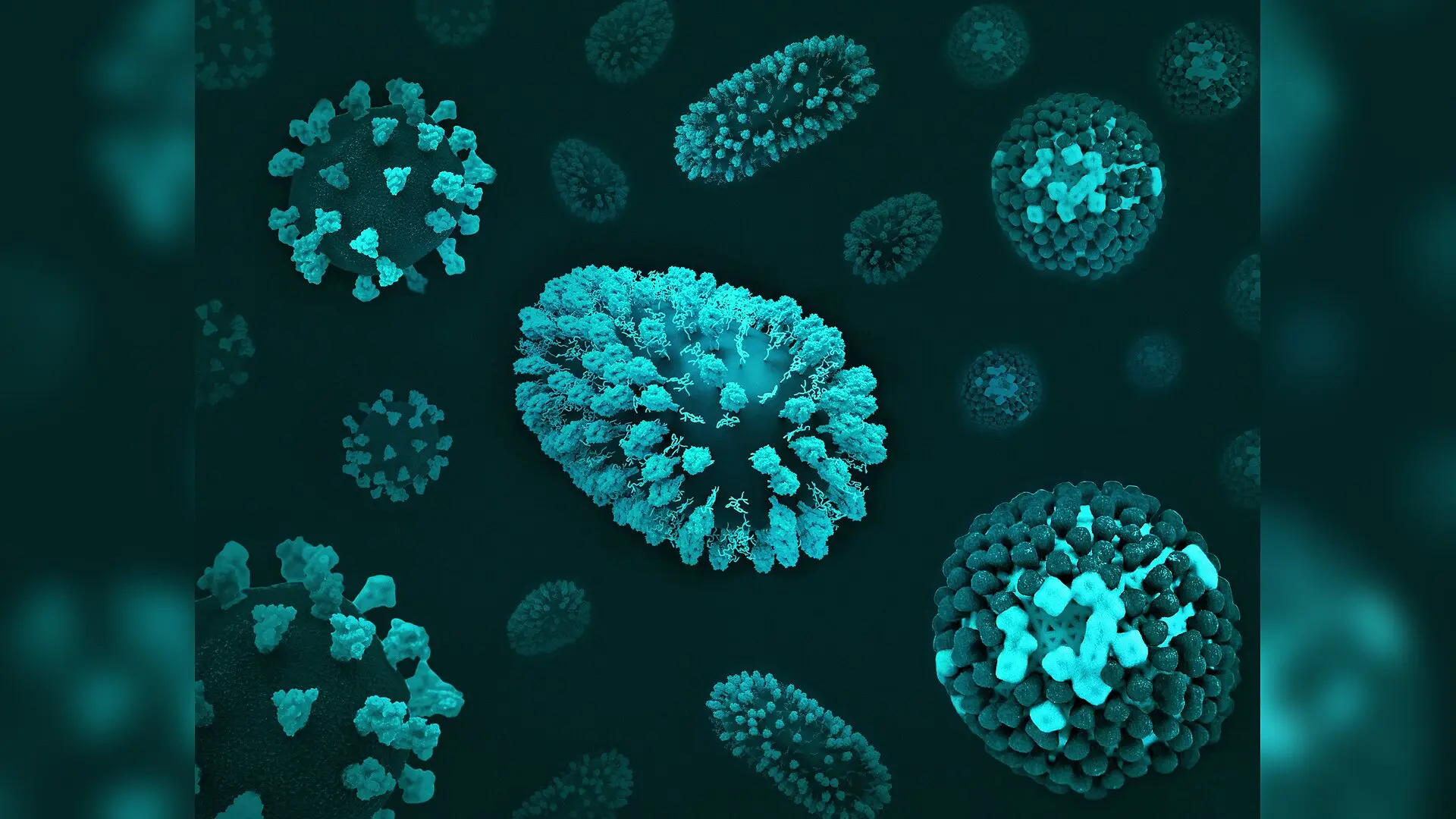
A heavily re-engineered human antibody called pemivibart neutralizes emerging coronavirus variants by locking onto a conserved vulnerability on the viral spike protein. The therapeutic molecule, known commercially as VYD222, was granted emergency use authorization in the United States in March 2024 to prevent symptomatic COVID-19 in vulnerable patients who cannot mount an adequate response to vaccination. While early antibodies lost potency as the virus mutated, this modified antibody retains strong activity against recent dominant strains.
How Re-Engineering Restored Neutralizing Power
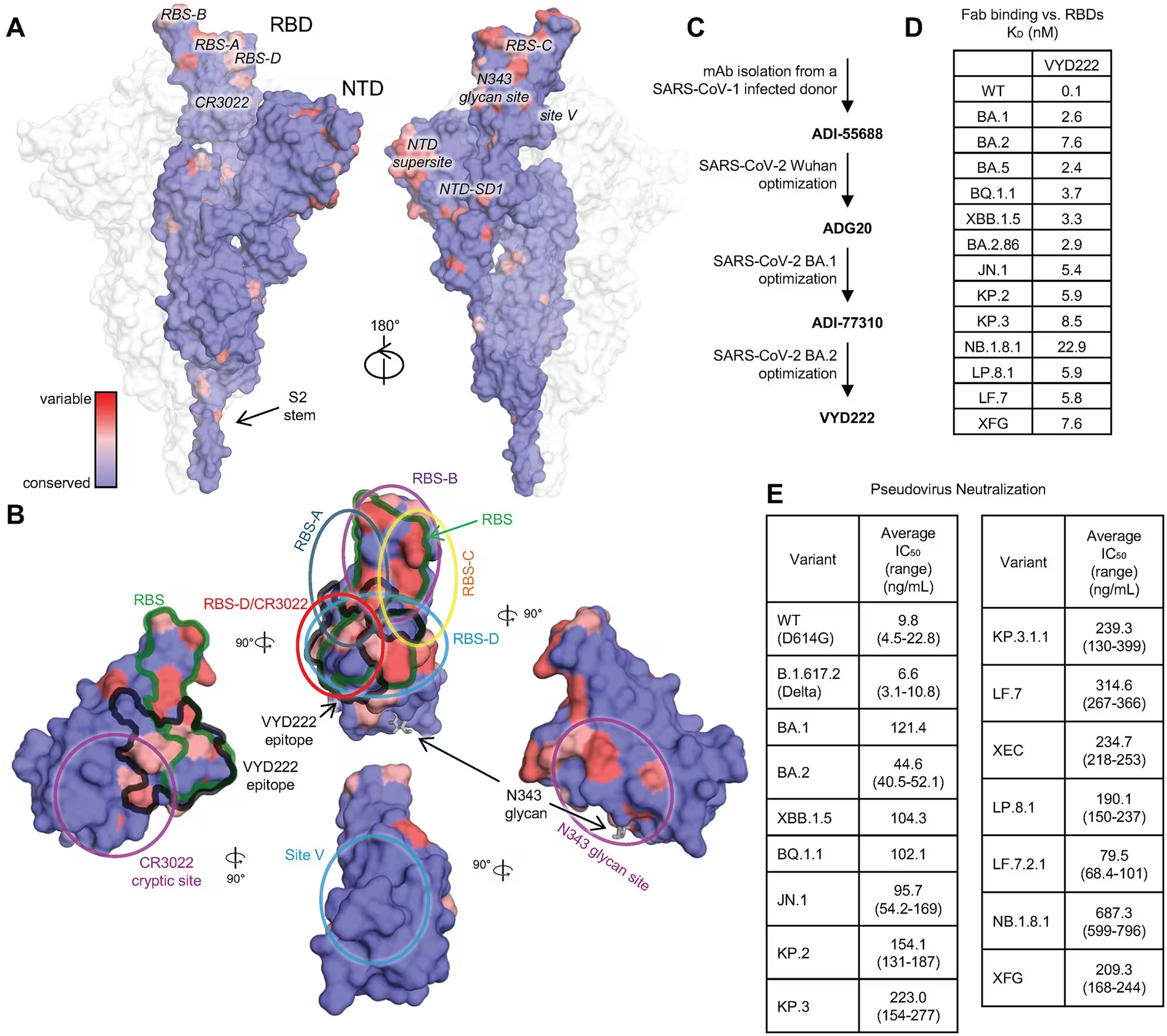
Researchers began with an antibody called ADI-55688, which was originally isolated from a patient who recovered from the first SARS outbreak in the early 2000s. Through sequential rounds of laboratory evolution, scientists affinity-matured the molecule against Omicron BA.1 to create an intermediate antibody, and then against BA.2 to produce ADI-80222. Adding modifications to the constant region of the antibody extended its half-life in the bloodstream, resulting in the final therapeutic drug VYD222. As detailed in a study published in PLOS Pathogens, the team used x-ray crystallography to map the atomic structures of these re-engineered antibodies bound to viral spike proteins.
The structural analysis revealed that most of the mutations introduced during the re-engineering process were not direct contact points with the virus. Instead, these secondary changes acted behind the scenes by stabilizing loops, altering flexibility, and adjusting atomic distances. For example, a mutation designated as VH Y33E restored a crucial chemical bond with a mutated viral residue called H505 found in the BA.5 variant. Other non-contact mutations relieved internal crowding in the antibody structure, allowing it to accommodate bulky viral changes such as N501Y.
Mapping the Binding Site and Viral Escape Constraints
The antibody targets a region on the viral receptor-binding domain known as the RBS-D or CR3022 site, which sits slightly away from the primary receptor attachment ridge. This positioning allows the molecule to directly block the virus from engaging human cell receptors. Deep mutational scanning experiments demonstrated that viral escape from VYD222 is heavily constrained. While certain single mutations in the viral sequence can reduce antibody binding, many of those same mutations severely impair the virus’s ability to infect host cells, creating an evolutionary tradeoff.
The clinical relevance of these findings is supported by data from the Phase 3 CANOPY clinical trial, where VYD222 demonstrated an 84.1 percent relative risk reduction through six months when dominant circulating variants included JN.1, KP.3, and KP.3.1.1. In vitro neutralization assays showed average inhibitory concentrations ranging from 96 to 239 nanograms per milliliter against these modern sublineages. Although laboratory screening identified potential escape pathways, the structural compatibility requirements of the viral spike protein suggest that broad evasion remains difficult for the pathogen without sacrificing infectivity.
The research was published in PLOS Pathogens on November 20, 2026.
This article has been fact checked for accuracy, with information verified against reputable sources. Learn more about us and our editorial process.
Last reviewed on .
Article history
- Latest version
Reference(s)
- Yuan, Meng., et al. “Structural and functional analysis of VYD222: A broadly neutralizing antibody against SARS-CoV-2 variants.” PLOS Pathogens, vol. 22, no. 11, November 20, 2026, pp. e1014613 Public Library of Science (PLoS), doi: 10.1371/journal.ppat.1014613. <https://doi.org/10.1371/journal.ppat.1014613>.
Cite this page:
- Posted by Elizabeth Taylor