Combining Nicotine Use and Mental Health Disorders Nearly Quadruples Infant Death Risk
A massive population study reveals how overlapping nicotine exposure, depression, and anxiety dramatically amplify severe maternal and newborn health complications.

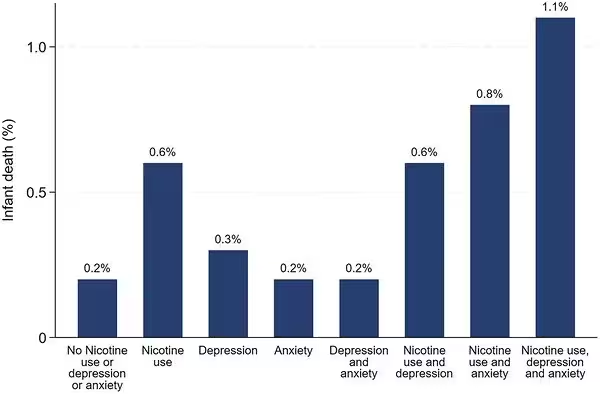
Pregnant individuals who experience nicotine use alongside depression and anxiety face a nearly fourfold increased risk of infant death compared to those dealing with none of these conditions. While previous research has examined substance use and mental health separately during pregnancy, medical professionals have known relatively little about how these overlapping stressors compound health threats for mothers and newborns.
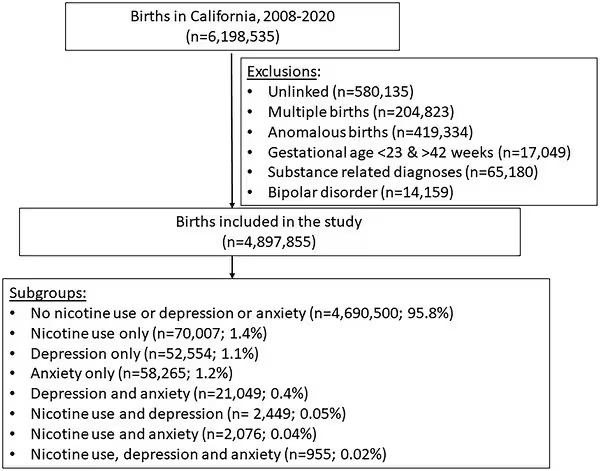
To uncover these combined health impacts, a large population-based study examined health records across California, looking at nearly 4.9 million singleton births. The findings were published in Pregnancy, analyzing birth and fetal death certificates linked with hospital discharge records from 2008 to 2020. Researchers categorized birthing individuals into eight distinct groups based on whether they used nicotine, suffered from depression, experienced anxiety, or lived with multiple combinations of these conditions.
Out of the millions of pregnancy records analyzed, nicotine use alone appeared in 1.4 percent of cases, depression alone in 1.1 percent, anxiety alone in 1.2 percent, and combined depression and anxiety in 1.2 percent. The data revealed that pregnant patients dealing with both nicotine use and mood disorders experienced significantly worse perinatal outcomes than individuals facing just one exposure. Specifically, the combination of nicotine use, depression, and anxiety pushed the adjusted risk ratio for infant death to 3.96, representing a dramatic elevation in mortality risk.
Which Specific Newborn Complications Surge When Nicotine Meets Mood Disorders?
Infants born to mothers with co-occurring nicotine use, depression, and anxiety faced multiple severe neonatal complications shortly after birth. Beyond the heightened mortality risk, researchers documented a statistically significant rise in respiratory distress syndrome, which is a breathing disorder caused by immature lungs, showing an adjusted risk ratio of 2.03. Newborns in this multi-exposure group also exhibited a significantly elevated risk of neonatal hypoglycemia, which involves dangerously low blood sugar levels, with an adjusted risk ratio of 1.67.
Furthermore, neonatal intensive care unit admissions and babies born small for gestational age were notably more common across groups involving nicotine use. Mothers facing these concurrent challenges also experienced higher rates of severe maternal morbidity, a term encompassing unexpected and dangerous outcomes of labor and delivery that result in significant short- or long-term consequences to a woman’s health.
Why Do Nicotine and Mental Health Troubles Compound Risk for Mothers and Babies?
The biological reasons behind these compounding negative health outcomes likely stem from multiple overlapping pathways that disrupt normal maternal and fetal physiology. Nicotine exposure is well-known to impair placental vascularization, meaning it restricts blood flow and reduces oxygen and nutrient availability to the fetus. Meanwhile, untreated maternal depression and anxiety increase systemic stress hormones such as cortisol, which can further damage placental function and negatively affect fetal development.
Another contributing factor is oxidative stress, a chemical imbalance within the body that damages cells and tissues. Researchers note that individuals struggling with anxiety or depression sometimes turn to nicotine products to self-medicate and cope with underlying stress. Unfortunately, this behavior deepens nicotine dependence while worsening the underlying mental health strain.
What Does This Mean for Prenatal Care and Future Treatments?
The study authors emphasize that these findings highlight an urgent need for integrated, dual-target prenatal care that addresses mental health and substance use simultaneously. Routine screening for depression and anxiety during pregnancy remains uncommon in many clinical settings, yet identifying these mood disorders early is vital. Because cessation programs that ignore underlying anxiety and depression often suffer from high relapse rates, medical providers must offer comprehensive support.
Looking toward potential therapeutic strategies, investigators suggest that safe, cost-effective interventions like vitamin C supplementation deserve further clinical trial exploration. Previous animal research indicates that vitamin C can mitigate some adverse placental effects caused by nicotine exposure, offering a potential avenue to protect high-risk pregnancies while broader mental health and substance reduction strategies are put into practice.
The research was published in Pregnancy (Hoboken, N.J.) on November 18, 2026.
This article has been fact checked for accuracy, with information verified against reputable sources. Learn more about us and our editorial process.
Last reviewed on .
Article history
- Latest version
Reference(s)
- Mize, Emily J.., et al. “Impact of co‐occurring maternal nicotine use, depression, and anxiety on perinatal outcomes.” Pregnancy, vol. 2, no. 6, November 18, 2026 Wiley, doi: 10.1002/pmf2.70505. <https://doi.org/10.1002/pmf2.70505>.
Cite this page:
- Posted by Sana Malik