Crowded Tissues Force Mutant Waves to Accelerate in Surprising Ways
New mathematical models reveal that separate birth and death rates change how advantageous traits spread through packed cell lattices.
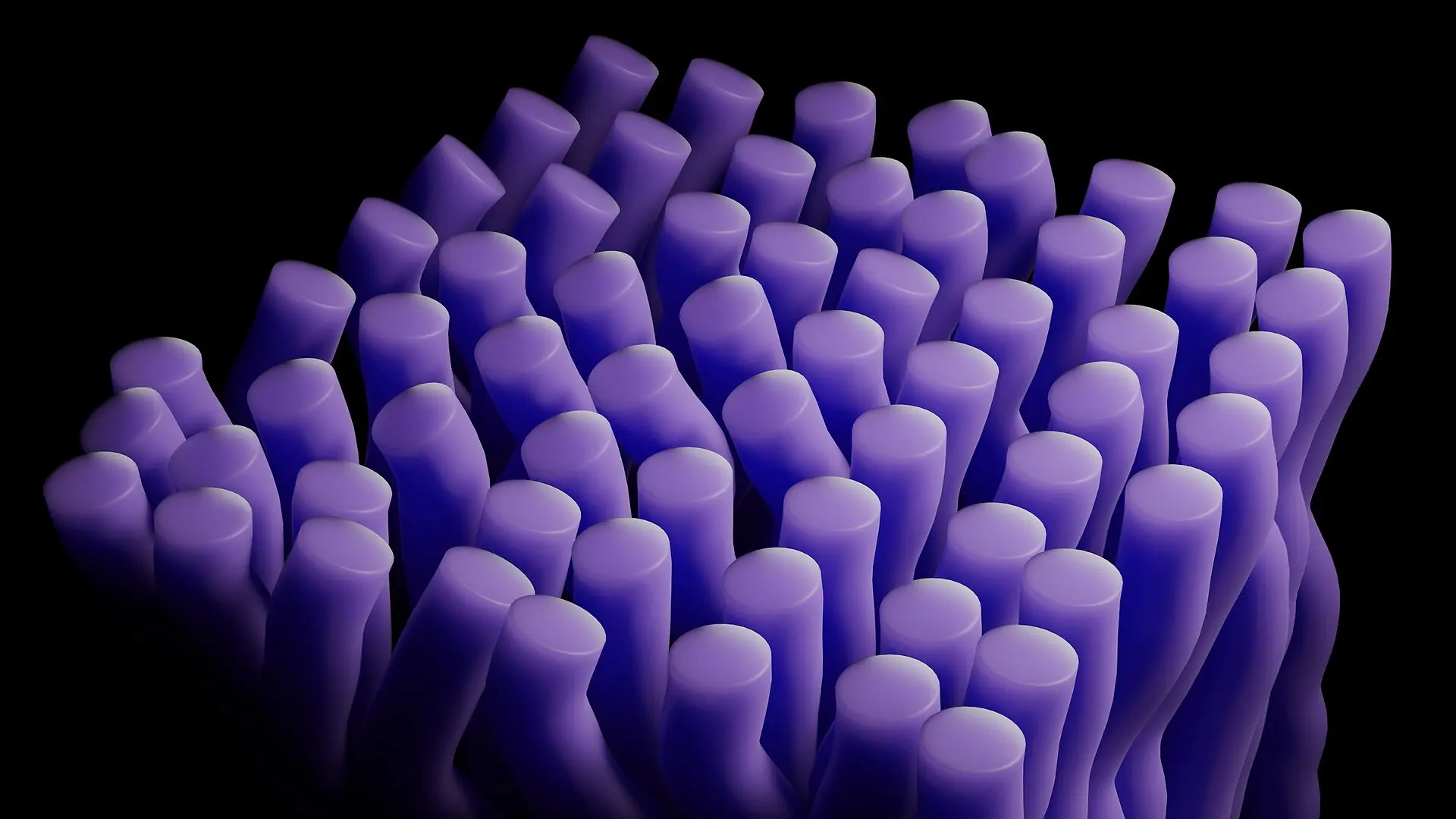
Mutant cell populations spreading through crowded biological tissues move quite differently than traditional mathematical models predict, according to a recent theoretical study. When living units are packed together tightly so that empty space is prohibited, the standard equations used to describe evolutionary waves break down in unexpected ways.
Understanding how advantageous traits spread across space and time remains a central challenge in evolutionary biology, ecology, and cancer research. While well-mixed models ignore physical geography entirely, standard spatial approaches such as reaction-diffusion equations assume that individuals move and reproduce independently in open spaces. However, in densely packed environments like epithelial tissues, cells experience strict homeostatic space-filling constraints that prevent empty voids from forming. A team of researchers set out to map how these crowded conditions alter evolutionary wave speeds and invasion dynamics.
Connecting Discrete Lattice Models to Continuous Space Equations
To bridge the gap between microscopic cell behavior and macroscopic tissue spread, the authors analyzed spatial Moran processes, which are stochastic models where individuals on a graph replace their neighbors through birth-death or death-birth update rules. As published in Royal Society open science on November 18, 2026, the investigation derived new partial differential equations that capture the large-scale spatial limits of these discrete systems. Unlike classical Fisher-Kolmogorov-Petrovsky-Piskunov equations, which bundle birth and death rates into a single growth parameter, the new framework separates fitness into two independent components, namely fecundity or birth rate, and viability or death rate.
This separation proves essential for biological scenarios where treatments act through distinct physiological routes. For instance, bacteriostatic drugs suppress cell proliferation, whereas bactericidal drugs increase mortality. Although both mechanisms can yield the exact same net fitness difference, the mathematical models reveal that they generate vastly different spatial wave profiles.
Why Death-Driven Selection Accelerates Mutant Waves
The analysis demonstrates that the net selection coefficient alone fails to determine how fast an advantageous mutant wave propagates across a structured population. Instead, the specific update mechanism dictates the speed and shape of the invasion front. The death-birth process consistently generates faster-moving selective waves than birth-death dynamics or classical reaction-diffusion models, even when all scenarios share an identical net selection strength.
Furthermore, the study uncovered a striking behavioral split depending on which fitness component drives the adaptation. When selection acts through increased birth rates, the birth-death model produces decelerating waves while death-birth maintains a stable velocity. Conversely, when selection operates through decreased death rates, the death-birth wavefront accelerates strongly over time. This frequency-dependent acceleration stems from the constant-population constraint, which couples local replacement events to the global average mutant frequency across the entire tissue lattice.
Mapping Heterogeneous Tissues and Isothermal Media
Real biological tissues are rarely uniform, prompting the researchers to extend their continuum framework to heterogeneous environments. By varying local motility and directional migration biases across space, they mapped how environmental irregularities distort invasion fronts and alter effective diffusivity. Within this extended framework, they identified a special class of media termed isothermal media, representing the continuous counterpart of discrete isothermal graphs where incoming migration totals balance perfectly across every location.
These findings provide a powerful new analytical toolkit for investigating somatic evolution in crowded settings such as solid tumors and microbial biofilms. By explicitly incorporating tissue architecture and the separate contributions of birth and death selection, scientists can now model disease progression and drug resistance with much greater physiological accuracy.
The research was published in Royal Society open science on November 18, 2026.
This article has been fact checked for accuracy, with information verified against reputable sources. Learn more about us and our editorial process.
Last reviewed on .
Article history
- Latest version
Reference(s)
- Gorgi, Melika., et al. “Spatio-temporal Moran dynamics in continuous media.” Royal Society Open Science, vol. 13, no. 11, November 18, 2026 The Royal Society, doi: 10.1098/rsos.261364. <https://doi.org/10.1098/rsos.261364>.
Cite this page:
- Posted by Hassan Raza