Scientists Discover Two New Species of Tiny Eyeless Crustaceans in Japanese Caves
New millimeter-sized, eyeless species discovered in Japan’s underground environments are shedding light on the hidden biodiversity of groundwater systems.
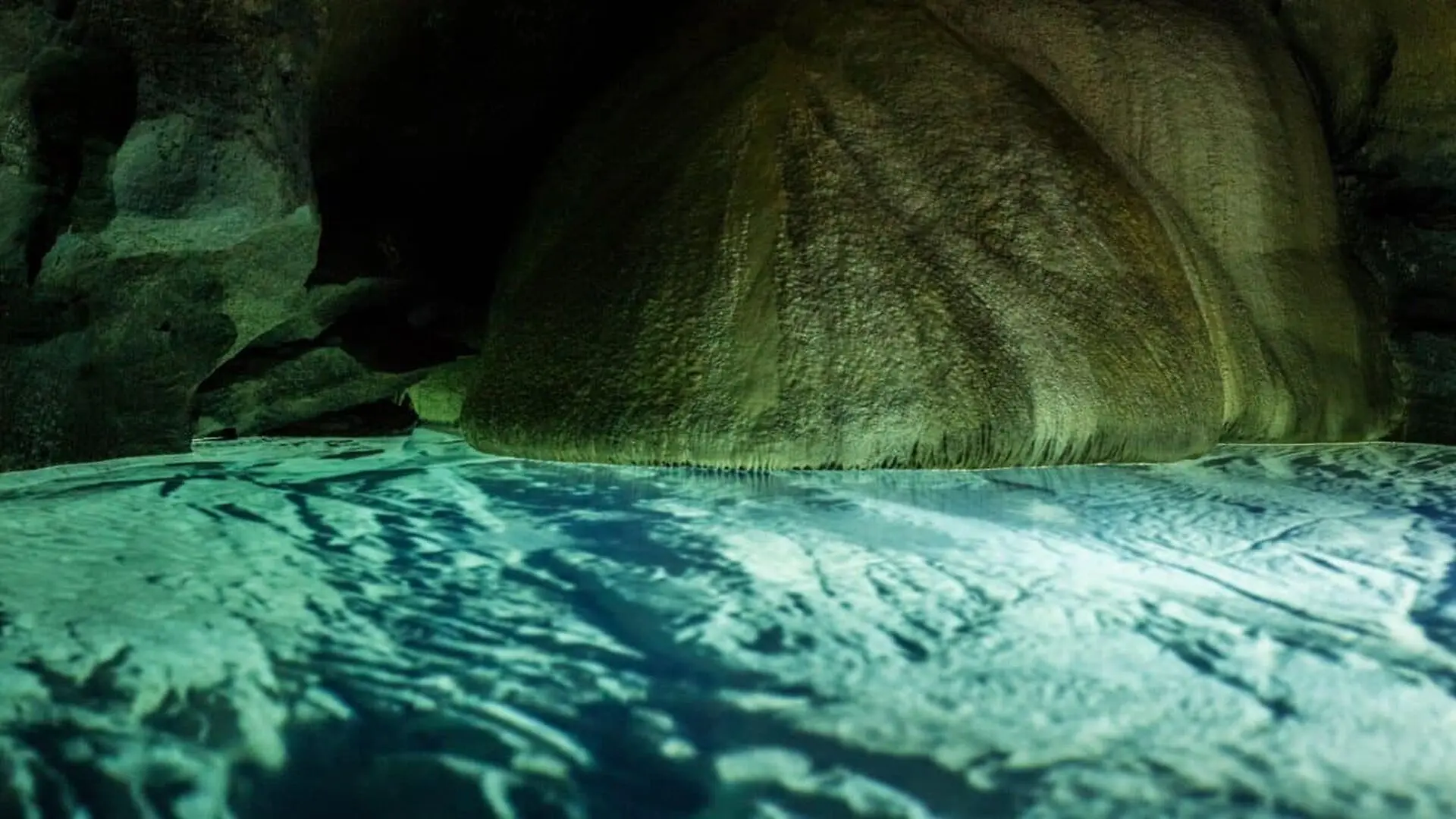
Researchers have identified two previously unknown species of eyeless amphipods residing within the subterranean cave networks of Japan’s Ryukyu Islands. These tiny crustaceans, measuring just a few millimeters in length, offer new insights into the hidden biodiversity thriving in dark, isolated groundwater environments.
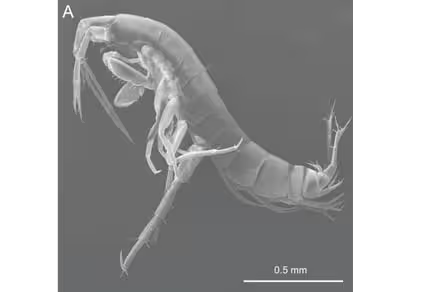
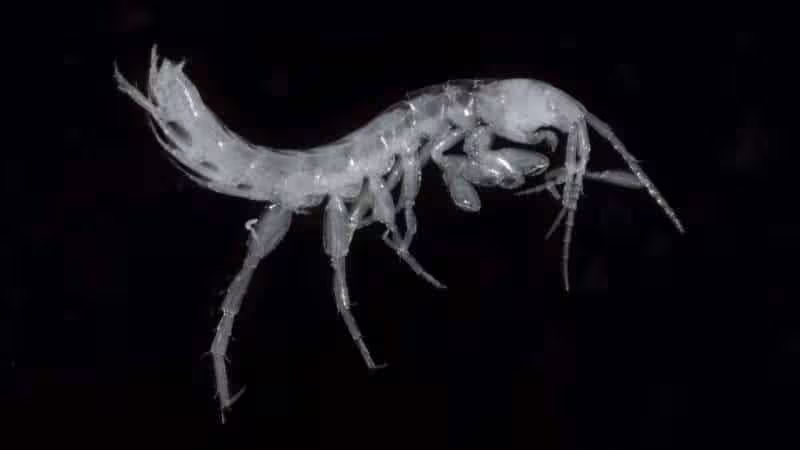
The discovery, detailed in the journal Zootaxa, highlights the remarkable adaptation of the family Bogidiellidae. These shrimp-like creatures are perfectly suited for life in the shadows of the earth, often possessing elongated limbs while lacking eyes and pigmentation—traits typical of life in total darkness.
Distinct Habitats, Unique Evolutions
The two new species occupy vastly different aquatic niches. Bogidiella isajii was discovered in an anchialine cave on Minamidaito Island, where seawater interacts with subterranean passages. Measuring between 3.8 and 4.3 millimeters, this species is named in honor of its discoverer, Yoshitaka Isajii. In contrast, Bogidiella painushima was found in the freshwater currents of a cave on Ishigaki Island. It is notably smaller, with specimens ranging from 1.4 to 3.2 millimeters, and derives its name from “Painu-shima,” an Okinawan term for “southern island.”
Hiroshima University professor Ko Tomikawa led the team that identified the subtle physical markers distinguishing the two. For B. isajii, researchers noted the absence of the inner ramus on its pleopods and a distinctively wide telson at the tail. B. painushima displays its own unique anatomical signatures, including specific variations in the shape of its head, antennae, and feeding appendages known as gnathopods.
Safeguarding Subterranean Water Systems
Beyond their biological significance, these amphipods serve as indicators for the health of groundwater systems that humans rely on for drinking water and agricultural irrigation. Tomikawa emphasizes that as these vital aquifers face increasing environmental pressure, understanding the life within them becomes a matter of conservation priority.
The research team successfully extracted genetic sequences from the specimens, which will provide a foundation for mapping the evolutionary history of subterranean life. Moving forward, the scientists hope that continued exploration and increased public awareness regarding these fragile, overlooked ecosystems will encourage better management practices, ultimately helping to prevent damage from human activity to these hidden, life-sustaining environments.
This article has been fact checked for accuracy, with information verified against reputable sources. Learn more about us and our editorial process.
Last reviewed on .
Article history
- Latest version
Reference(s)
- TOMIKAWA, KO., et al. “Two new species of the genus Bogidiella (Crustacea: Amphipoda: Bogidiellidae) from Japan.” Zootaxa, vol. 5831, no. 3, June 16, 2026, pp. 399-412. Magnolia Press, doi: 10.11646/zootaxa.5831.3.5. <http://dx.doi.org/10.11646/zootaxa.5831.3.5>.
- “YOSHITAKA ISAJI / JAPAN | ADEX.”, November 26, 2025 ADEX <https://www.adex.asia/speaker/yoshitaka-isaji-adex-big-blue-legacy-singapore-2026/>.
- “KO TOMIKAWA (Graduate School of Humanities and Social Sciences).” <https://seeds.office.hiroshima-u.ac.jp/profile/en.c500681f4dfedb5a520e17560c007669.html>.
Cite this page:
- Posted by Hassan Raza