New 43-Item Questionnaire Measures Public Awareness of Microplastics
Researchers validate a specialized psychometric tool to assess women’s knowledge, attitudes, and exposure-reduction habits regarding microplastic pollution.
Microscopic plastic debris infiltrating our food, water, and daily personal care products poses a hidden health risk that researchers are only beginning to quantify. A new psychometric instrument developed for adult women aims to bridge that knowledge gap by measuring how everyday awareness connects to actual exposure-reduction behaviors.
Plastics have become ubiquitous in modern life, breaking down over time into particles smaller than 5 millimeters known as microplastics. These microscopic fragments have been detected in remote ecosystems and inside the human body, raising concerns about potential adverse health outcomes such as inflammation and endocrine disruption. While women often play central roles in household management and cosmetic purchasing, tools to accurately assess their understanding of these hazards have remained scarce.
To address this measurement gap, researchers designed and validated a specialized tool called the Microplastic Knowledge, Attitude, and Practice questionnaire, known as MIKAP. The detailed findings are published in PLOS One, outlining the multi-step process used to build and test the instrument among female participants across Iran.
How the Questionnaire Was Developed and Tested
The research team followed a deductive approach rooted in behavioral science theory, specifically the Knowledge, Attitude, and Practice model. This framework posits that acquired knowledge shapes individual attitudes, which subsequently drive and sustain protective behavioral habits.
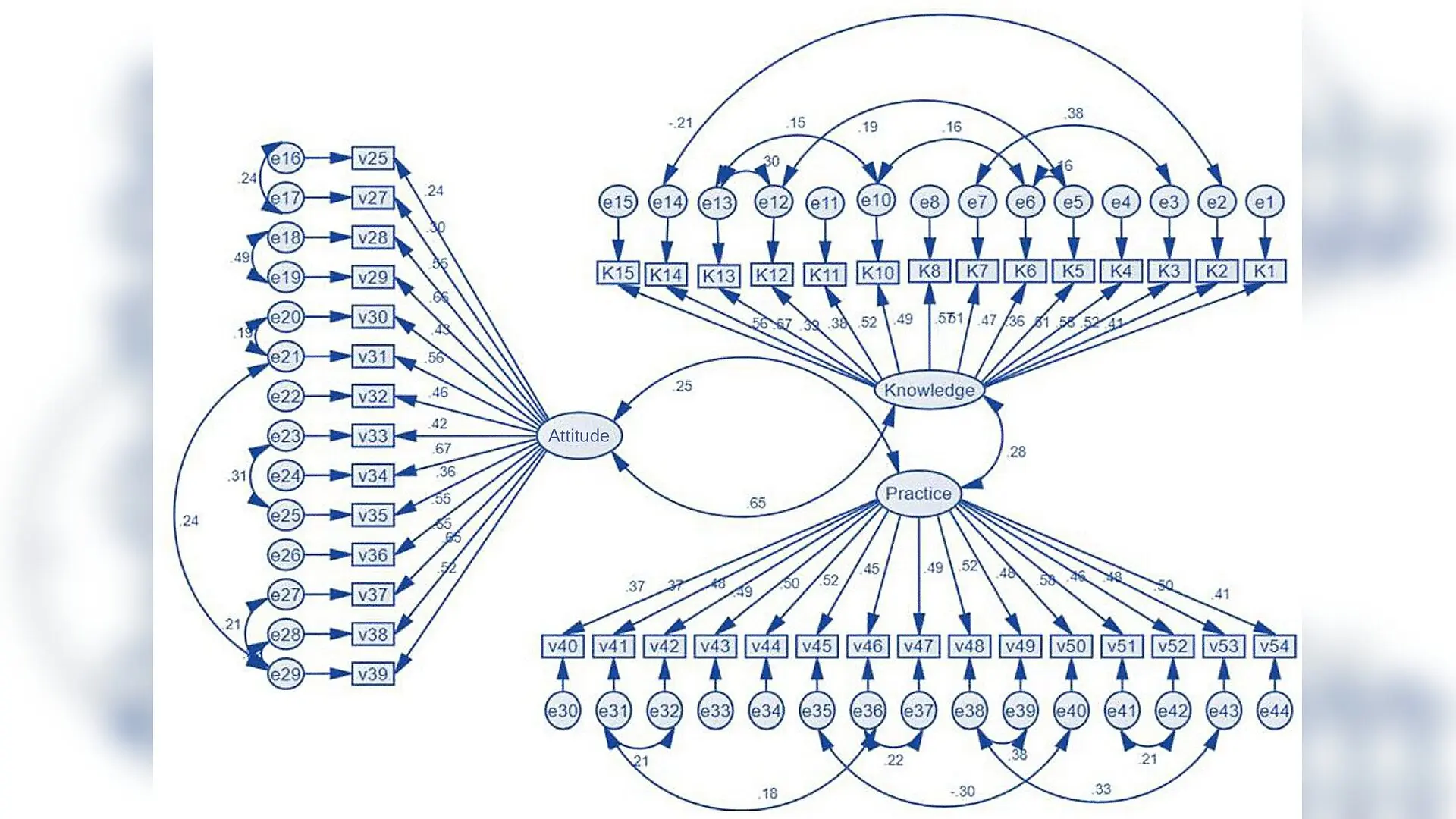
The initial pool of 61 items underwent rigorous qualitative and quantitative evaluations, including expert panel reviews and cognitive interviews. Following item analysis and factor extractions, the final instrument was reduced to 43 items distributed across three core domains: Knowledge, Attitude, and Practice.
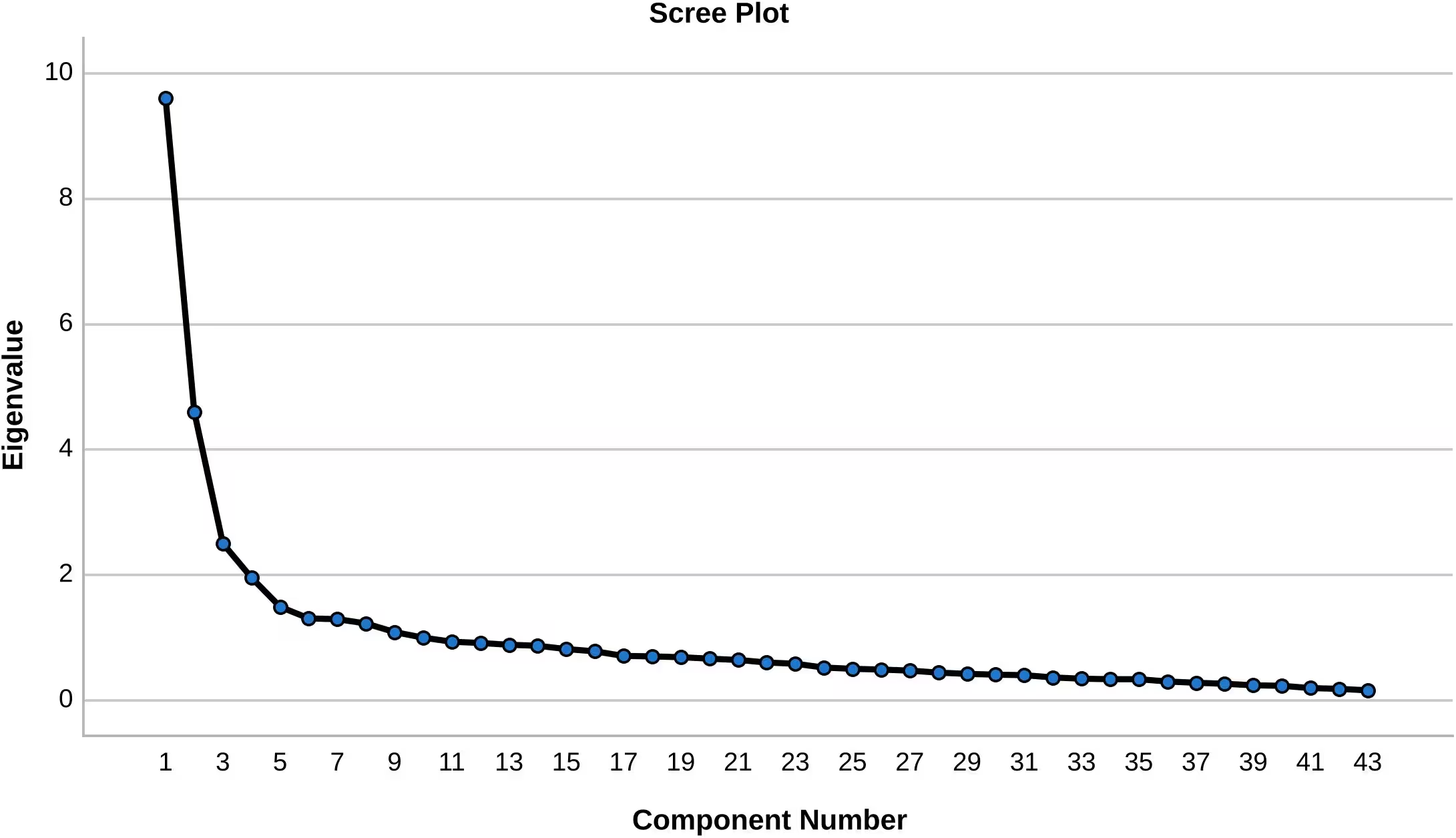
Exploratory factor analysis identified nine distinct sub-dimensions within these domains, explaining 58.43% of the total variance. Subsequent confirmatory factor analysis on an independent sample of 310 participants provided acceptable overall support for the theory-based structural model, demonstrating a favorable root mean square error of approximation of 0.042.
What the Psychometric Evaluation Revealed
The final questionnaire demonstrated strong internal consistency, with Cronbach alpha coefficients of 0.902 for Knowledge, 0.828 for Attitude, 0.902 for Practice, and 0.920 for the total scale. Temporal stability, assessed via test-retest reliability over a two-week interval in a subsample of 50 women, yielded an overall intraclass correlation coefficient of 0.846.
Descriptive evaluation of the participant responses revealed moderate scores across the board. The mean standardized scores translated to 48.1 for Knowledge, 47.3 for Attitude, and 51.2 for Practice on a 0-100 scale. The authors noted that these categories serve merely as descriptive interpretive guides rather than validated diagnostic thresholds.
Study Limitations and Future Directions
Despite its robust methodological design, the study carries certain limitations that warrant caution. The online convenience sampling strategy resulted in a demographic skew toward urban, university-educated participants, meaning the descriptive scores do not represent national estimates for Iranian women.
Furthermore, the reliance on self-reported practices makes the data susceptible to social desirability bias, where participants might over-report pro-environmental behaviors. The authors emphasize that the MIKAP questionnaire provides a valuable baseline instrument for future educational interventions, though further cross-validation across diverse populations and genders remains necessary.
The research was published in PLOS One on November 20, 2026.
This article has been fact checked for accuracy, with information verified against reputable sources. Learn more about us and our editorial process.
Last reviewed on .
Article history
- Latest version
Reference(s)
- Seifi, Zahra., et al. “Design and psychometric properties of the Persian knowledge, attitude, and practice about microplastics in human health (MIKAP) questionnaire among Iranian women.” PLOS One, vol. 21, no. 11, November 20, 2026, pp. e0361866 Public Library of Science (PLoS), doi: 10.1371/journal.pone.0361866. <https://doi.org/10.1371/journal.pone.0361866>.
Cite this page:
- Posted by Rabia Shah