Satellite Data Reveals Earth’s Atmospheric Steam Engine Powers Global Winds
New research shows condensation-driven expansion work closely matches lower-atmospheric kinetic energy generation.
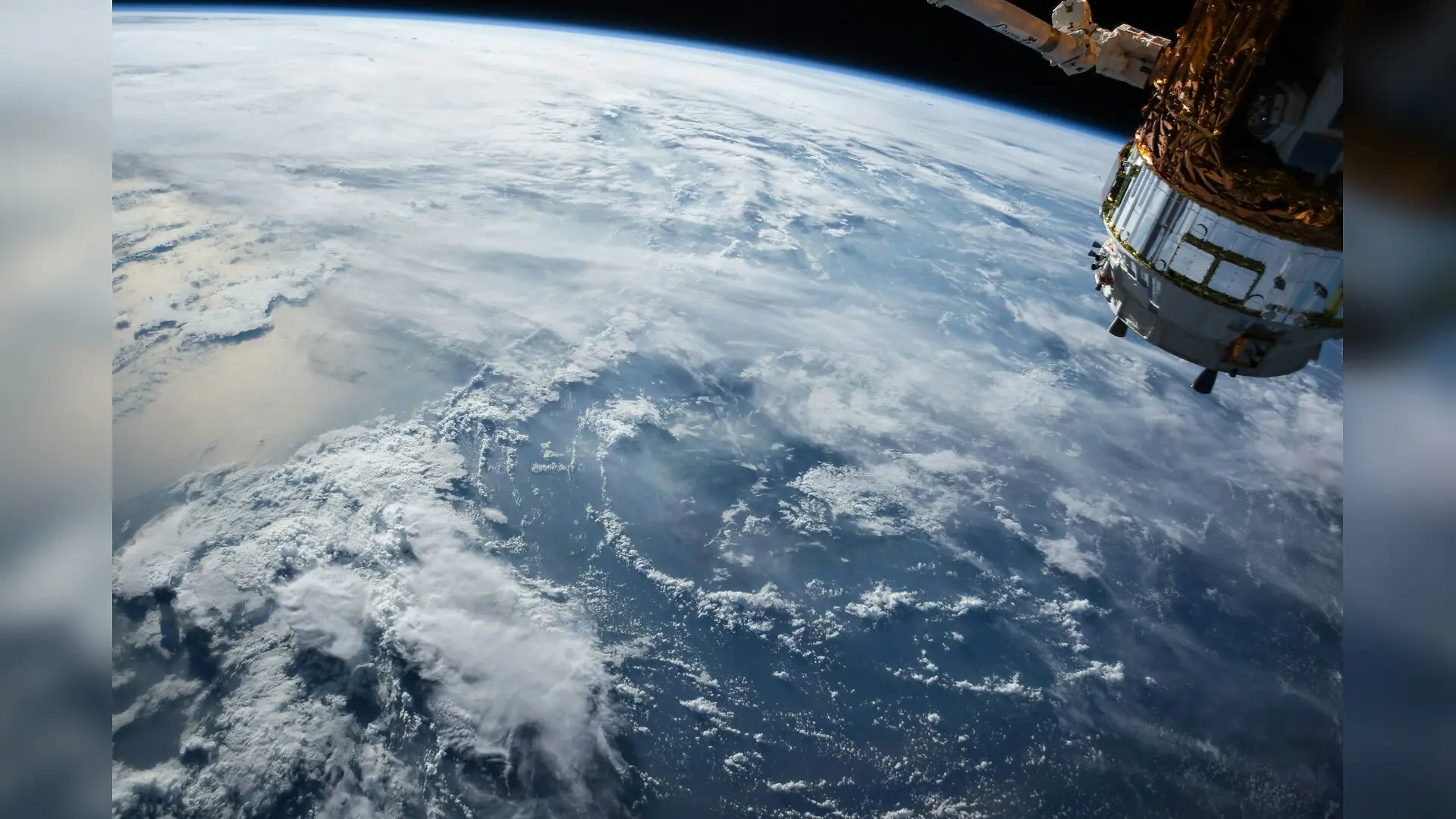
Earth’s atmosphere operates like a colossal natural steam engine, where water evaporates from the surface, expands as vapor, condenses in colder air aloft, and returns as precipitation. Researchers analyzing twelve years of satellite observations and global reanalysis data have quantified this atmospheric steam cycle and revealed that its condensation-related mechanical power closely matches the kinetic energy generated by winds in the lower atmosphere.
The study, available on the arXiv preprint server, was conducted by researchers Anastassia M. Makarieva and Andrei V. Nefiodov. By applying the Clausius-Clapeyron relation to vertically distributed condensation, the authors calculated the total steam-engine power of the atmosphere and separated it into gravitational and condensation-related components.
Quantifying the Global Atmospheric Power Budget
The research team utilized twelve years of data spanning from March 2014 to February 2026, combining spectral latent-heating profiles from the Global Precipitation Measurement Dual-frequency Precipitation Radar with meteorological fields from the Modern-Era Retrospective analysis for Research and Applications, Version 2 (MERRA-2). Their analysis yielded a total water-vapor expansion power of approximately 4.1 watts per square meter, with about 2.8 watts per square meter coming directly from condensation-related processes.
When evaluating total atmospheric mechanical power, the authors diagnosed a global value of approximately 4.3 watts per square meter. This total comprises the gravitational power required to lift precipitating water, estimated at about 1.1 watts per square meter, and kinetic energy generation by winds reaching approximately 3.2 watts per square meter, with the vast majority concentrated below an altitude of 500 hectopascals.
How Condensation Drives Lower-Atmospheric Winds
To explain the close alignment between condensation-driven power and lower-atmospheric kinetic energy generation, the authors propose a physical mechanism involving surface pressure gradients. Condensation removes water vapor from the gas phase, creating a mass sink that lowers local surface pressure. Frictional air flow near the surface converts this pressure energy into wind kinetic energy.
Normally, in a horizontally isothermal atmosphere, the positive expansion work near the surface would be nearly canceled out by upper-level compression in returning air flows. However, the researchers suggest that condensation-driven surface circulation unlocks differential heating, warming the upper-level return flow and preventing that cancellation. This allows the upper return flow to proceed with negligible pressure work, leaving lower-atmospheric wind generation closely tied to the steam engine’s condensation power.
Implications for Climate Models and Environmental Change
Recognizing condensation as a primary mechanical driver rather than a passive byproduct could alter how scientists predict climate responses to environmental changes, such as deforestation. If the water cycle actively determines whether large-scale circulations take place, altering regional moisture supplies could weaken winds and rainfall even when surface temperature contrasts increase.
The authors note that uncertainties remain, including potential underestimations in near-surface satellite precipitation measurements and complexities in treating ice microphysics within clouds. Future research will continue examining how the coupling between condensation and differential heating shapes global weather patterns and atmospheric circulation.
The study was posted to the arXiv preprint server on November 16, 2026.
This article has been fact checked for accuracy, with information verified against reputable sources. Learn more about us and our editorial process.
Last reviewed on .
Article history
- Latest version
Reference(s)
- Makarieva, Anastassia. “Condensation-related expansion work of water vapor as a major pathway for kinetic energy generation in the lower atmosphere.” arXiv.org <http://arxiv.org/abs/2611.20813v1>.
- Posted by Divya Iyer