River Obstacles And Rocky Drops Boost Water Self-Purification By Up To 82 Percent
Controlled flume experiments reveal how channel shapes and permeable riverbeds drive vital hyporheic exchange and nutrient removal.
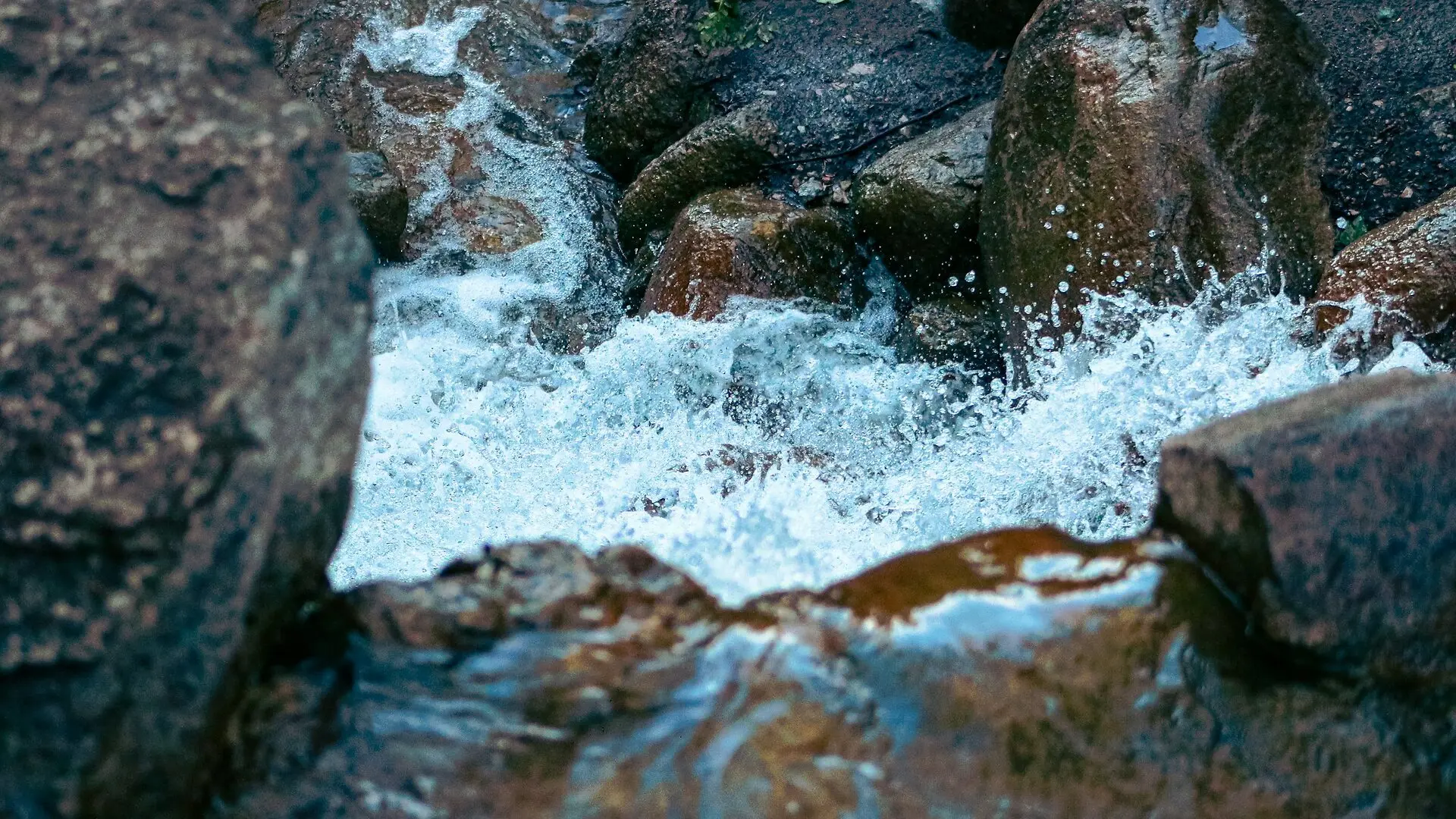
Rivers with rocks and stepped drops clean pollutants much faster than wide and sluggish stretches of water, according to a recent study that uncovers the hidden plumbing of natural waterways. Researchers analyzing how channel shapes affect water quality found that obstacles and drops boost total nitrogen removal by up to 82.60 percent, while porous riverbanks excel at clearing out phosphorus. The work was published in PLOS One, providing new details on how river engineering can harness these natural mechanisms for ecological restoration.
How Channel Shapes Drive Water Self-Purification
Water pollution remains a major challenge worldwide as urban and agricultural development puts pressure on freshwater ecosystems. Rivers are not just passive pipes moving water from land to the sea, but active biochemical reactors that filter out contaminants. Scientists have long known that a river’s physical shape influences how it handles pollutants, but the exact hydraulic pathways remained poorly understood.
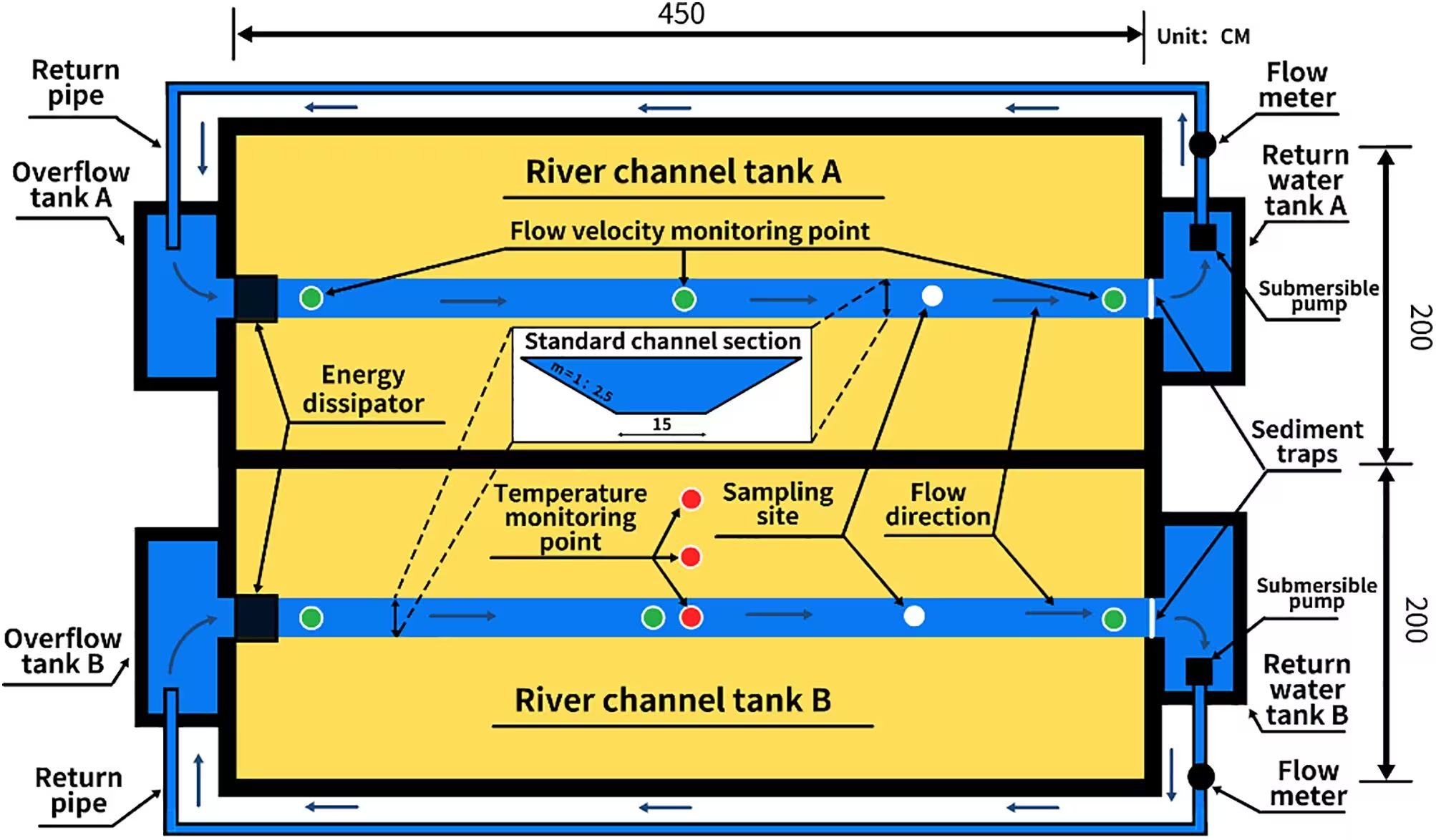
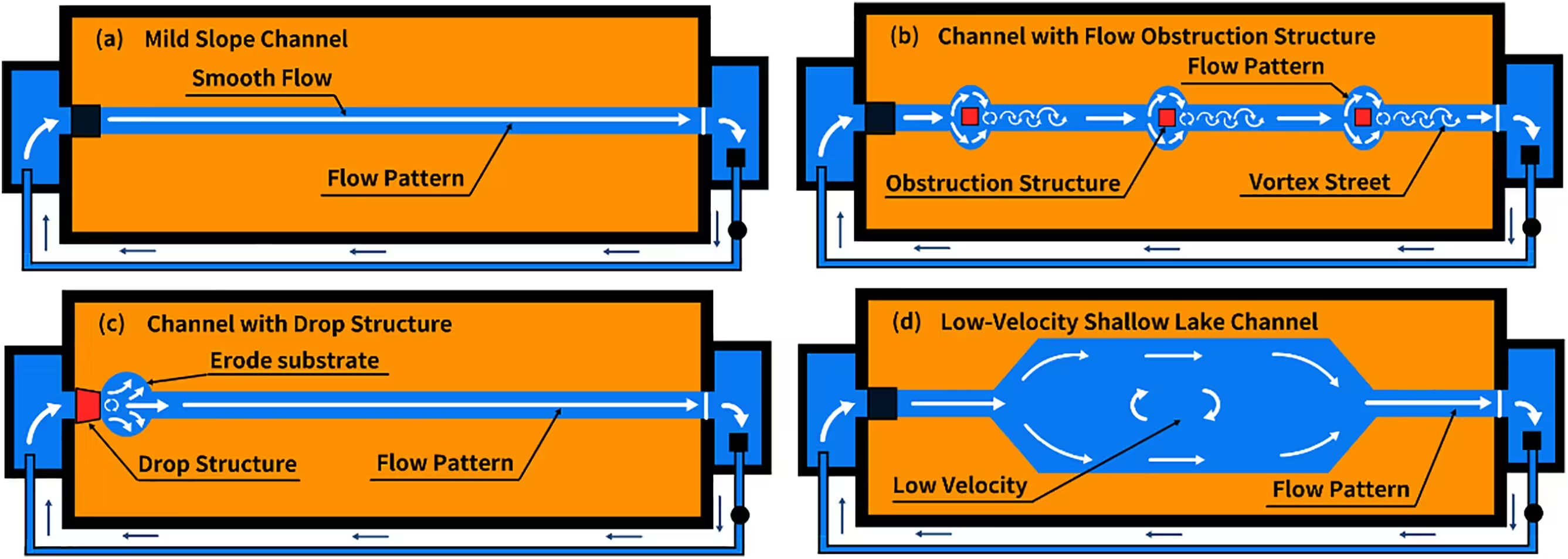
To isolate individual factors, researchers led by Chenguang Xiao and Zengyuan Chai constructed a specialized movable-bed flume system at a length of 450 centimeters. They tested four paired comparisons, including mild slopes versus drop structures, high versus low permeability, high-velocity rivers versus shallow lakes, and obstructed versus unobstructed channels. Each experimental run lasted for 96 hours, tracking pollutant removal rates alongside water velocity, flow patterns, and substrate temperature changes.
What Happens When Water Hits Obstacles and Drops
The experiments revealed a stark contrast in how different river morphologies process nutrients. The obstructed channel, featuring three cylindrical barriers in a staggered arrangement, achieved the highest total nitrogen removal rate at 82.60 percent. Meanwhile, drop structures and high-permeability substrates proved most effective for total phosphorus, reaching removal rates of 81.03 percent and 81.73 percent, respectively.
By comparison, wide and slow-moving shallow lake sections performed the worst. The low-velocity shallow lake configuration removed only 66.14 percent of total nitrogen and 60.41 percent of total phosphorus. The authors observed that stagnant water in the central portions of wide lake sections severely limited mixing and hindered the transfer of pollutants into the riverbed sediment.
The Hidden Role of Hyporheic Exchange in Nutrient Removal
The secret behind these differences lies in hyporheic exchange, the continuous mixing between surface water and groundwater flowing through the sandy riverbed. When water encounters rocks, drops, or permeable banks, it gets forced downward into the substrate. This subterranean journey creates alternating oxygen-rich and oxygen-poor zones that allow microbes to break down nitrogen and phosphorus efficiently.
Substrate temperature monitoring confirmed this activity. Water pre-chilled to 5 degrees Celsius cooled the riverbed sand during tests, and temperature drops reached up to 2.0 degrees Celsius near obstructions. These thermal shifts indicated intense hyporheic exchange, whereas slow-moving shallow lake setups showed minimal temperature variation and weak thermal exchange.
Seven Core Hydraulic Factors Shaping River Health
Based on their flume tests and previous field monitoring of the Shiwuli River, the researchers identified seven key hydraulic response factors that govern river self-purification. These include flow patterns, flow velocity, water depth, flow path length, water temperature distribution, hyporheic exchange intensity, and biological influence.
Straight concrete channels provide efficient transport for water but lack the turbulence needed for self-purification. In contrast, meandering paths, rocky obstructions, and stepped drops generate the complex turbulence and aeration required to accelerate microbial degradation. The authors note that while these controlled flume models successfully isolated individual physical mechanisms, natural systems also incorporate complex biological communities that warrant further study.
The research was published in PLOS One on November 17, 2026.
This article has been fact checked for accuracy, with information verified against reputable sources. Learn more about us and our editorial process.
Last reviewed on .
Article history
- Latest version
Cite this page:
- Posted by Omar Mirza