Tiny Magnetic Nanoparticles Sift Toxic Dyes From Wastewater
New research shows custom ferrite nanoparticles can capture industrial pollutants in minutes and be recovered easily with a magnet.
Tiny magnetic spheres measuring less than twenty nanometers across can strip toxic industrial dyes out of wastewater in minutes, offering a promising new weapon in the battle against water pollution. Researchers engineered these reusable magnetic nanoparticles by combining alcohol combustion with gel calcination, creating a material that pulls pollutants out of water and snaps to a magnet for effortless cleanup.
How Magnetic Nanoparticles Clean Industrial Dye Pollution
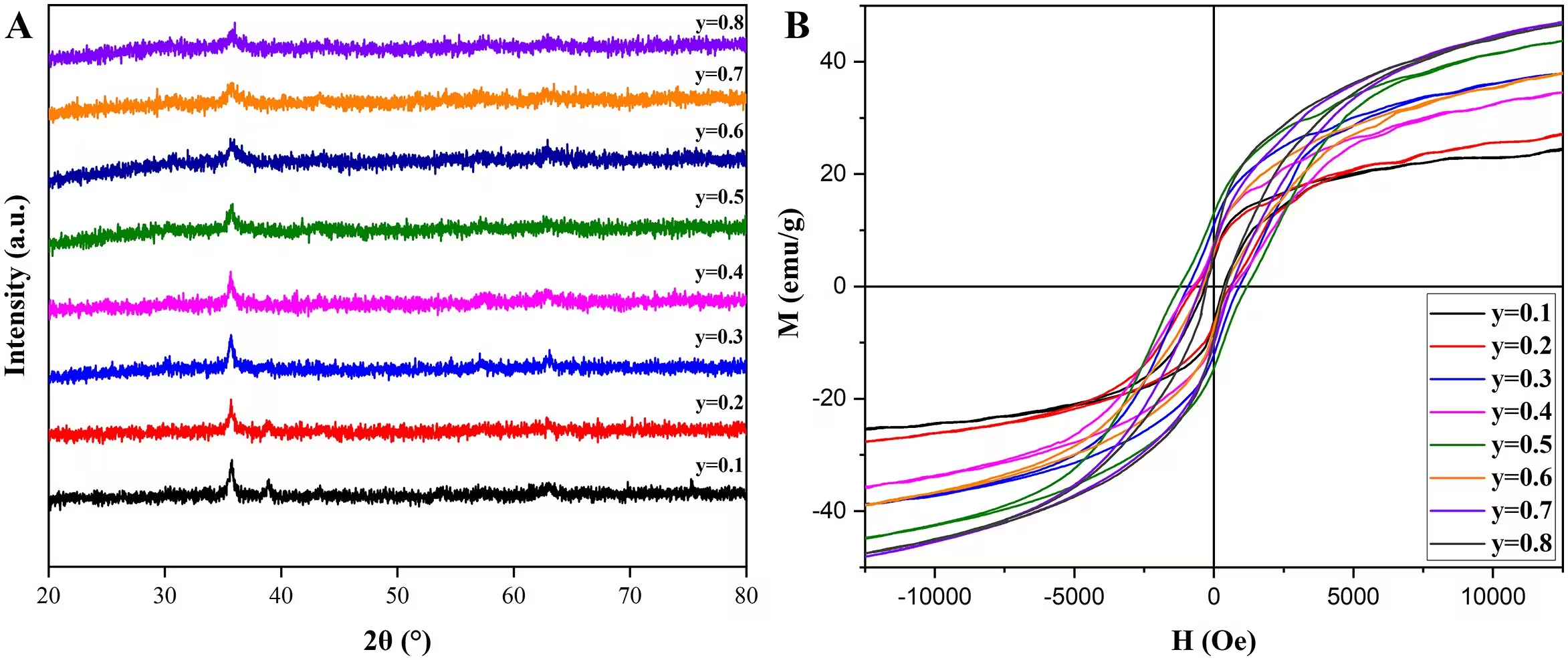
Industrial manufacturing processes frequently discharge untreated wastewater containing synthetic dyes such as Congo red, a known organic pollutant and carcinogen that threatens aquatic ecosystems and human health. Traditional water treatment methods often struggle with high costs or generate secondary waste, while non-magnetic powders are notoriously difficult to separate from treated water after use. To overcome these hurdles, a team of materials scientists developed a novel synthesis route to produce specialized nickel-cobalt-copper ferrite magnetic nanoparticles.
The research team, consisting of Yidong Xie, Zhenghui Ge, Zhou Wang, and Zhan-ao Wu, detailed their findings in a study published in PLOS One. The scientists optimized the production process by adjusting the element proportions, absolute alcohol fuel volume, and calcination temperature in a programmed furnace. Using absolute alcohol both as a solvent and a chemical fuel enabled a rapid combustion phase, yielding a gelatinous precursor that was subsequently calcined at 400 degrees Celsius for two hours.
Microscopic Structure and Magnetic Performance
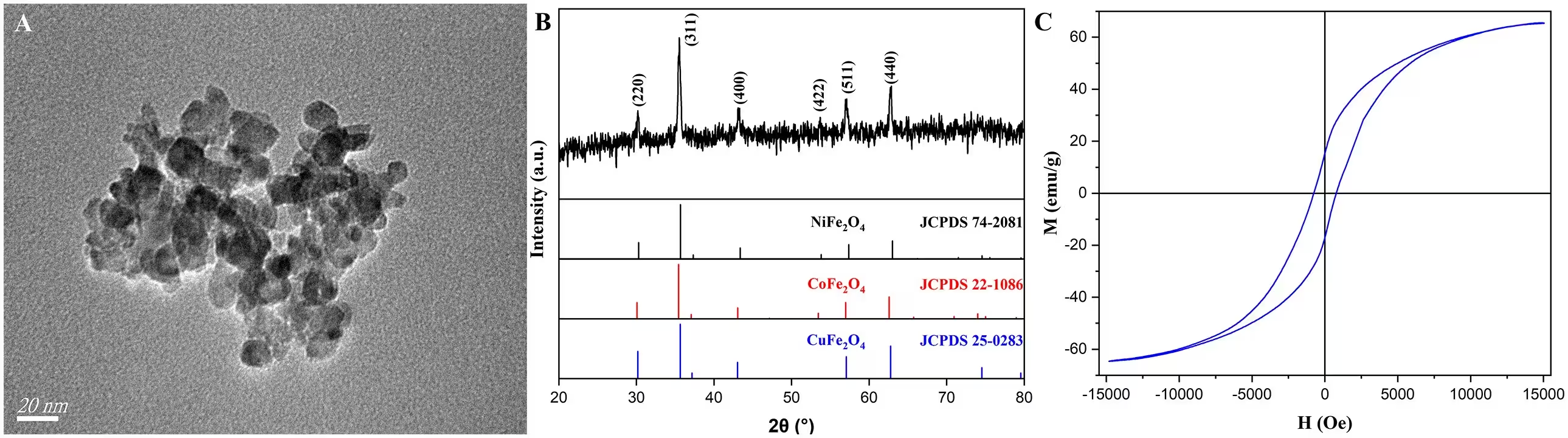
Comprehensive characterization using transmission electron microscopy and X-ray diffraction revealed that the optimized formula, designated as Ni0.1Co0.8Cu0.1Fe2O4, formed uniform spherical particles with an average diameter of 18.9 nanometers. This minute size provides a massive specific surface area packed with active binding sites for pollutant molecules. Vibrating sample magnetometry testing demonstrated that the nanomaterials possess a high saturation magnetization of 76.4 emu/g alongside low coercivity and reduced remanence.
These soft magnetic properties mean the particles do not retain residual magnetism once an external magnetic field is removed. As a result, treatment facilities can rapidly attract and harvest the spent nanoparticles using a standard magnet during wastewater processing, and easily redisperse them once the magnet is lifted. This magnetic responsiveness solves one of the most stubborn bottlenecks in nanomaterial-based water treatment.
Adsorption Kinetics and Reusability of the Material
Laboratory tests examining the removal of Congo red dye showed that adsorption happened rapidly in the early stages, reaching equilibrium within about 40 minutes as active surface sites became saturated. Kinetic modeling indicated that the process followed a pseudo-second-order model, pointing to electrostatic interactions and chemical adsorption as the primary driving forces. Furthermore, isotherm analysis confirmed that the adsorption adhered closely to the Langmuir model, indicating monolayer coverage of the dye molecules across the nanoparticle surface.
The material also proved robust across varying environmental conditions, maintaining strong adsorption capacities in solutions with a pH value up to 9 before dropping off in highly alkaline environments. To evaluate sustainability and cost-effectiveness, the researchers tested the reusability of the spent nanoparticles by regenerating them through a simple 400 degree Celsius calcination process. Even after undergoing eight successive adsorption and regeneration cycles, the magnetic nanoparticles retained 81.4 percent of their initial dye-removal activity, demonstrating strong potential for long-term industrial applications.
The research was published in PLOS One on November 17, 2026.
This article has been fact checked for accuracy, with information verified against reputable sources. Learn more about us and our editorial process.
Last reviewed on .
Article history
- Latest version
Cite this page:
- Posted by Bilal Abbasi