Industrial Antioxidants May Interact With Cancer Pathways, Study Suggests
Computational models reveal how widespread chemical additives might influence cellular signaling networks linked to colorectal cancer.

Industrial chemical additives found in household dust and river water might interact with human proteins to influence colorectal cancer pathways, according to recent computational toxicology work. The study examined synthetic phenolic antioxidants, which are widespread compounds added to plastics, cosmetics, and rubber to delay oxidation and extend shelf life.
How Antioxidant Pollutants Intersect With Cancer Pathways
Researchers investigated how these antioxidant pollutants might contribute to colorectal cancer development by analyzing chemical databases and disease targets. The investigation, published in PLOS One on November 17, 2026, utilized network toxicology, molecular docking, and molecular dynamics simulations to evaluate toxicity profiles and potential biological targets. The team screened a library of traditional and novel synthetic phenolic antioxidants, focusing on compounds flagged for potential carcinogenicity, such as octyl-3-(3,5-di-tert-butyl-4-hydroxyphenyl)propionate, known as AO1135, and a derivative designated as AO245.
Identifying Shared Target Genes in Colorectal Cancer
By cross-referencing predictive chemical databases with disease-related gene libraries, the authors identified 222 overlapping target genes between the antioxidant pollutants and colorectal cancer. Functional enrichment analyses of these intersecting targets highlighted pathways related to oxidative stress response, chronic inflammation, and cell survival. Key cancer-driving cascades such as the MAPK, PI3K-Akt, and VEGF signaling pathways emerged prominently in the functional profiling, suggesting that pollutant exposure might mimic or stimulate tumor-promoting growth signals.
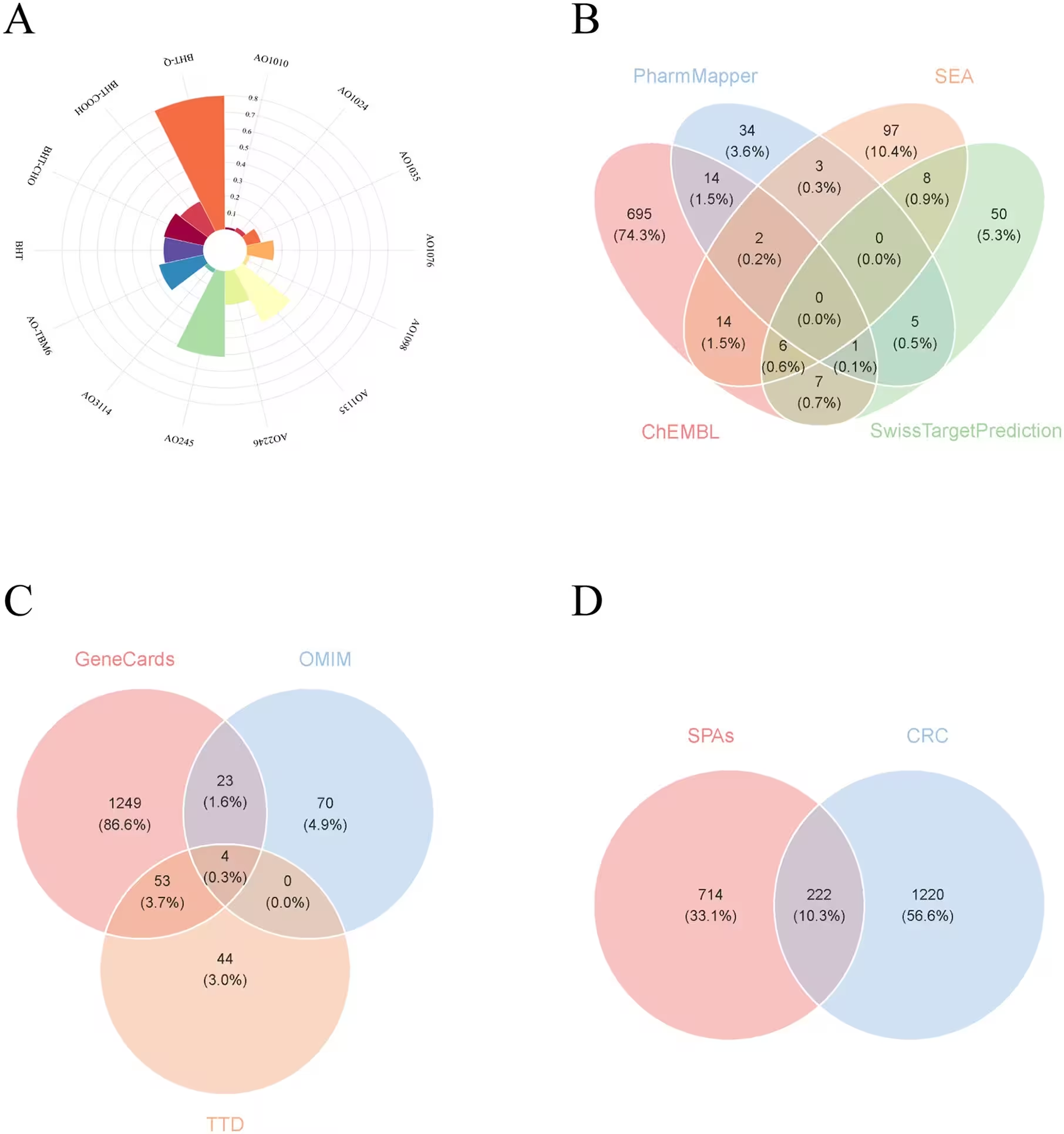
Molecular Docking and Dynamic Stability of Protein Complexes
To examine the structural interactions at the atomic level, the research team performed molecular docking between selected antioxidant compounds and ten core hub protein targets. The computational docking indicated that the antioxidant derivative AO245 formed a strong binding affinity with AKT1, a serine/threonine protein kinase central to cell growth and survival regulation, scoring -9.7 kcal/mol. To evaluate whether this complex remains stable under physiological conditions, the investigators conducted a 100-nanosecond molecular dynamics simulation using Gromacs 2025.
The simulation results showed that the protein backbone and the ligand maintained structural stability after an initial adjustment period, supported by persistent hydrogen bonding. Furthermore, free energy landscape analysis revealed a singular, deep energy well, indicating a thermodynamically favorable binding state.
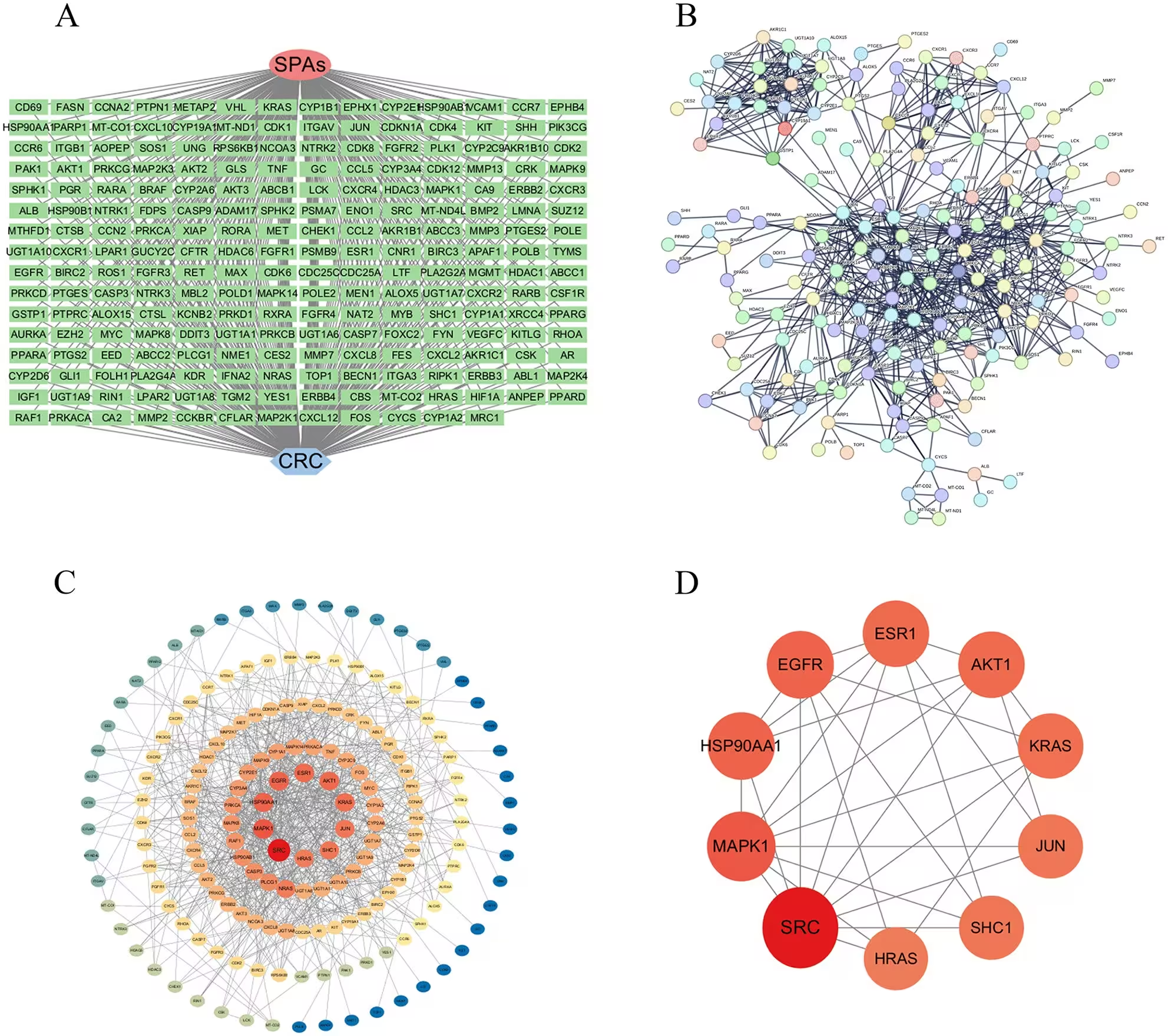
Transcriptomic Validation Across Independent Patient Cohorts
To check the clinical relevance of the prioritized hub genes, the authors analyzed expression data from the TCGA-COAD and TCGA-READ cohorts alongside normal tissue data from GTEx. Several core genes exhibited significant differential expression in tumor tissues compared with normal controls. External validation using the independent GEO dataset GSE271719 confirmed that HSP90AA1 was significantly upregulated while EGFR was significantly downregulated in colorectal cancer tissues, though other candidate genes showed variation across cohorts.
The authors noted that these computational findings represent hypothesis-generating genomic evidence rather than direct proof of in vivo carcinogenicity. Because the simulations did not measure actual internal tissue doses or direct enzymatic inhibition, further laboratory experiments and biomonitoring studies are necessary to confirm the biological impact of synthetic phenolic antioxidants on human health.
The research was published in PLOS One on November 17, 2026.
This article has been fact checked for accuracy, with information verified against reputable sources. Learn more about us and our editorial process.
Last reviewed on .
Article history
- Latest version
Cite this page:
- Posted by Anjali Singh