Soviet Union’s Deepest Hole Is Now Providing Crucial Data For A Clean Energy Revolution
Scientists are revisiting the Kola Superdeep Borehole, Earth’s deepest artificial hole, to uncover new geological insights from miles beneath the surface.
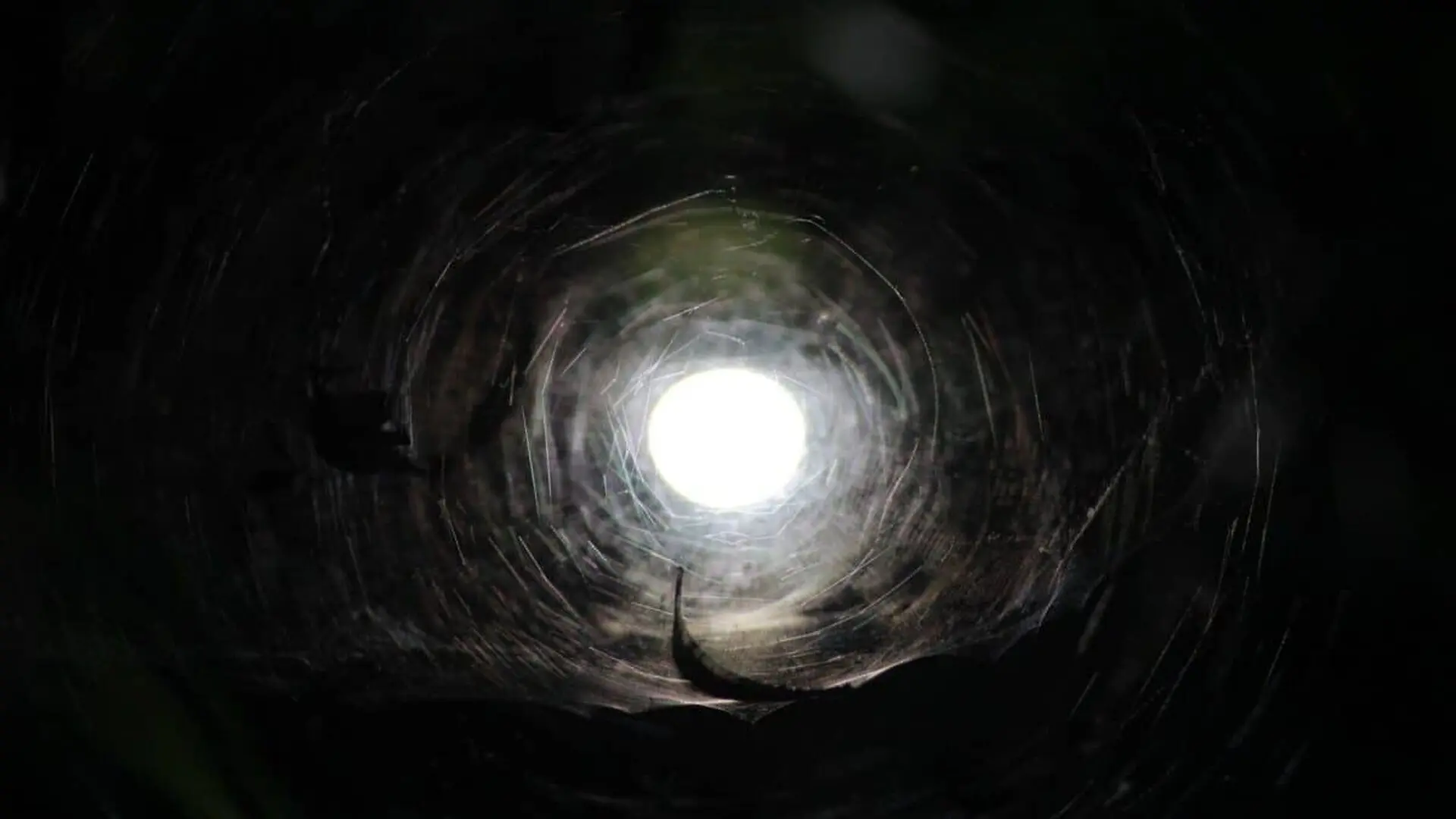
More than half a century after Soviet engineers first breached the surface of the Kola Peninsula, the world’s deepest artificial hole is being viewed through a modern lens. While the Kola Superdeep Borehole, known as SG-3, was originally conceived as a symbolic Cold War feat to commemorate the centenary of Vladimir Lenin’s birth, its legacy is undergoing a quiet transformation. Contemporary scientists are now mining the project’s archived data to help refine a new frontier of clean energy: enhanced geothermal systems.
The Legacy of a Record-Breaking Descent
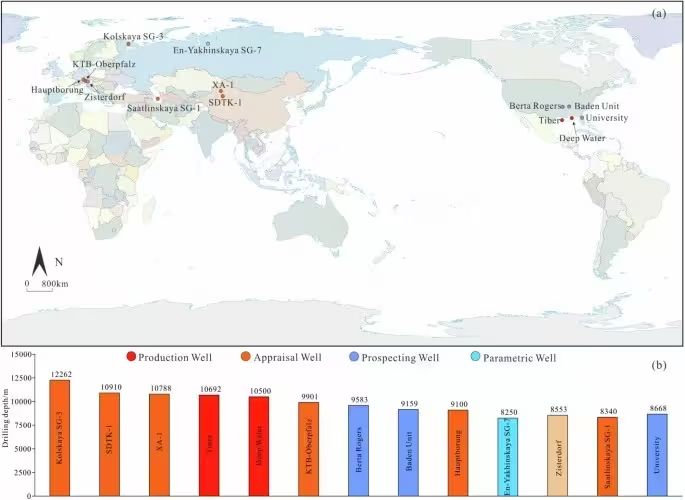
Initiated on May 24, 1970, the drilling program persisted for over two decades, pushing through significant physical and financial hurdles. By the time operations ceased in 1992, the borehole had descended to a staggering 12,262 meters, or approximately 7.6 miles. Although this remains less than a fraction of the distance to the Earth’s core, no subsequent engineering project has managed to surpass its depth.
The mission yielded more than just a measurement of depth. As the drill bit pulverized layers of copper, nickel, and magnetite, it uncovered geological formations remarkably similar to lunar samples. According to research highlighted by Orion Magazine, the project successfully accessed crustal rock dating back 2.5 billion years. Perhaps most unexpectedly, researchers identified the fossilized remains of microscopic plankton trapped deep within these ancient rock strata.
Engineering Limits and the Heat Barrier
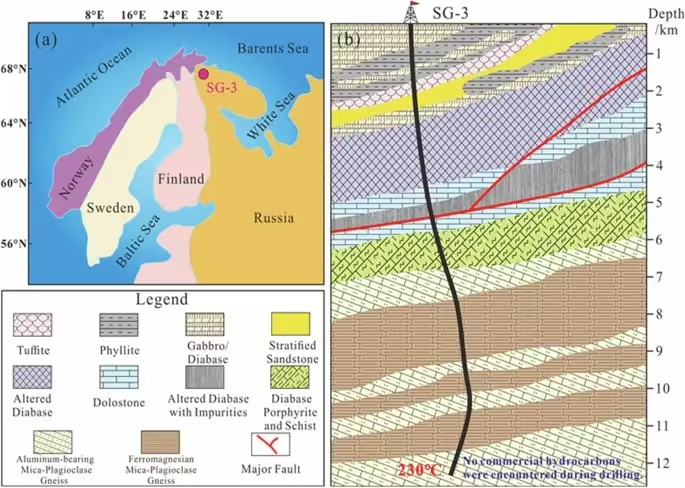
The project ultimately halted due to the extreme environmental conditions encountered deep underground. A scientific review published in February 2026 in Communications Earth & Environment notes that temperatures at the base reached 212 degrees Celsius. At such extreme heat, the surrounding rock lost its rigid structure, shifting into a plastic state that repeatedly compromised the integrity of the borehole.
“The SG-3 well fundamentally reshaped understanding of continental crustal structure and deep geologic processes,” the researchers stated. “Despite not penetrating the Moho, SG-3 yielded the most extensive direct dataset on the crystalline continental crust.”
From Cold War Science to Geothermal Energy
Today, that hard-won data is proving essential for the development of enhanced geothermal systems (EGS). By injecting high-pressure water into deep, hot rock formations, EGS can harness thermal energy to generate electricity. The U.S. Energy Information Administration suggests that the Great Basin holds significant potential for this technology, with an estimated capacity of 135 gigawatts, vastly outpacing current hydrothermal output.
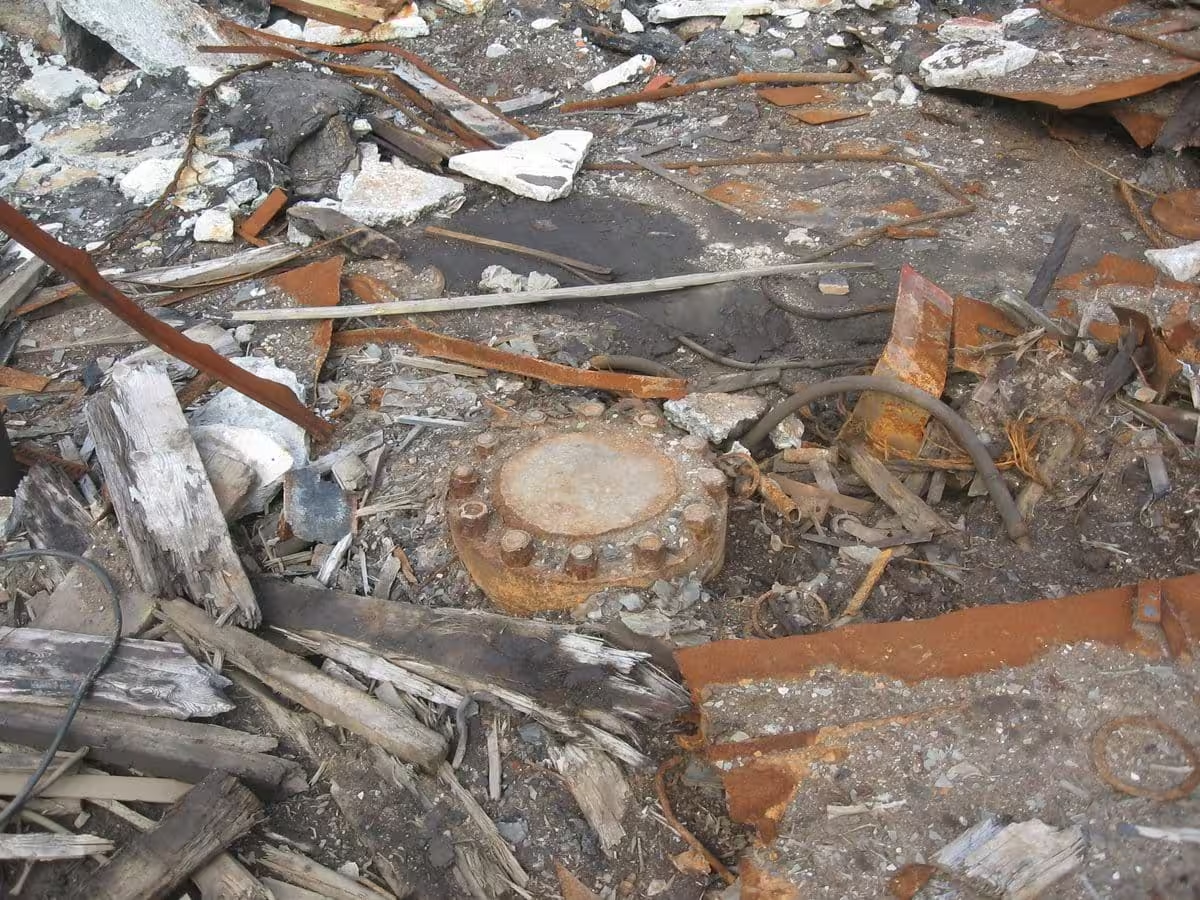
As modern EGS projects move toward implementation in states like Utah, Texas, and Oregon, engineers are finding they can tap into temperatures as high as 400 degrees Celsius at much shallower depths than those pursued by the Soviets. While the original SG-3 site remains abandoned and ecologically compromised, its contribution to the scientific record persists, providing a roadmap for the future of sustainable, deep-earth energy.
This article has been fact checked for accuracy, with information verified against reputable sources. Learn more about us and our editorial process.
Last reviewed on .
Article history
- Latest version
Reference(s)
- <https://www.britannica.com/place/Kola-Peninsula>.
- <https://orionmagazine.org/article/kola-borehole-russia-scientific-dig/>.
- Zhu, Guangyou. “Ultradeep drilling beyond 10 km revealing new insights into Earth systems and resources - Communications Earth & Environment.”, vol. 7, no. 1, February 3, 2026, pp. 124 Nature, doi: 10.1038/s43247-026-03246-z. <https://go.redirectingat.com/?id=74968X1525083&url=https%3A%2F%2Fwww.nature.com%2Farticles%2Fs43247-026-03246-z&sref=https%3A%2F%2Fwww.popularmechanics.com%2Fscience%2Fgreen-tech%2Fa73557142%2Fdeepest-hole-kola-borehole%2F&xs=1&xcust=%5Butm_source%7C%5Butm_campaign%7C%5Butm_medium%7C%5Bgclid%7C%5Bmsclkid%7C%5Bfbclid%7C%5Brefdomain%7C%5Bcontent_id%7C404b42ed-7132-445b-b111-989641192c76%5Bcontent_product_id%7Cd2da152c-e964-4449-8495-6f51fedb2dd1%5Bproduct_retailer_id%7C8faf5ae5-1762-49e5-8b53-429983ffbce6%5Blt%7C%5Baxid%7Ca785a2f6-f1de-4afa-80f4-7c49998b1f08%5D&xcreo=500008>.
- “Homepage - U.S. Energy Information Administration (EIA).” <https://www.eia.gov/>.
Cite this page:
- Posted by William Moore