A Ghost Lake Returned to California After 130 Years and Changed Everything
First came the birds, then a lost lake returned to swallow vast stretches of farmland, reshaping the landscape in a dramatic environmental transformation.
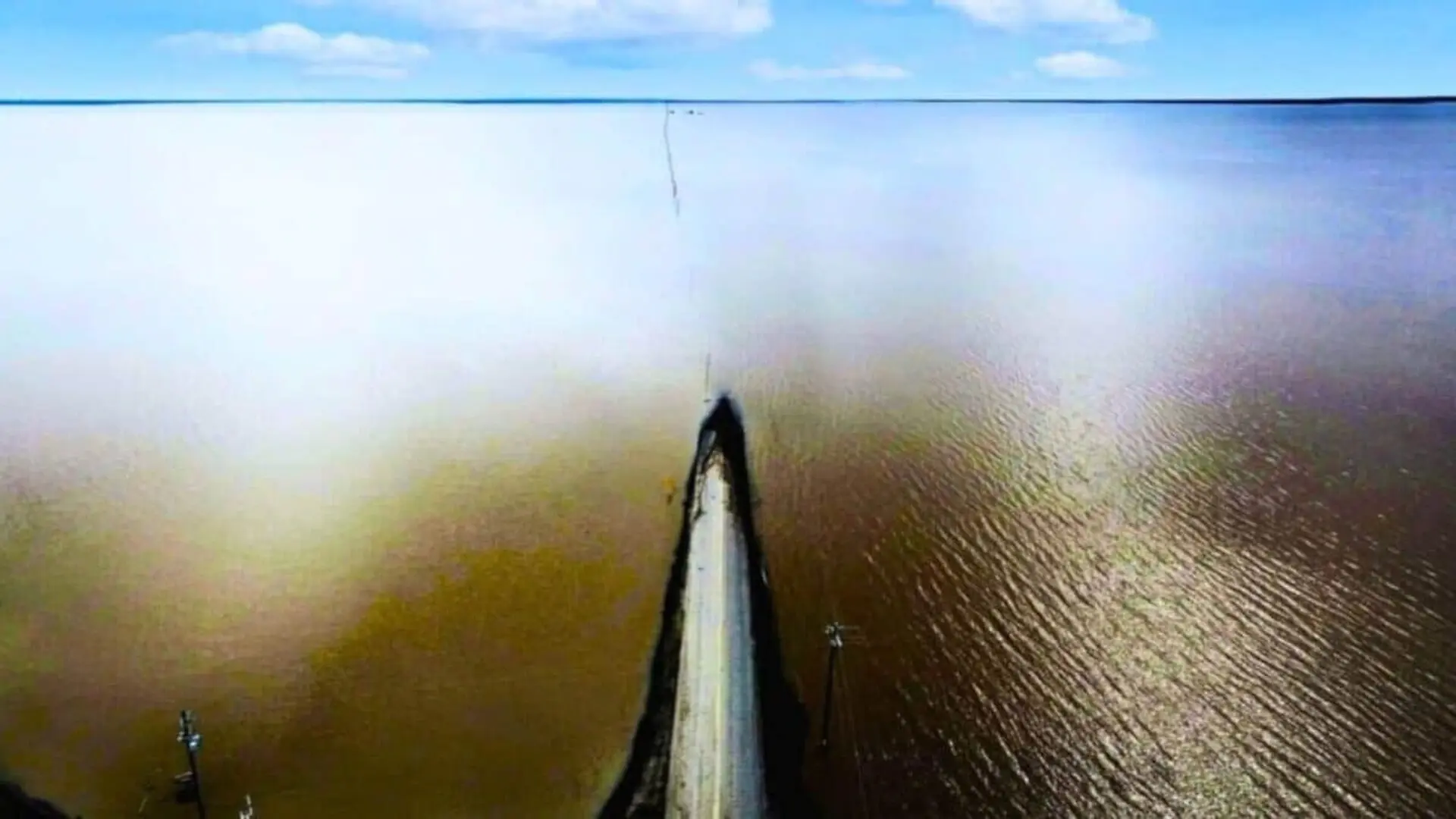
By the spring of 2023, the arid landscape of California’s San Joaquin Valley had undergone a profound transformation. Where once stretched thousands of acres of industrial farmland, a vast expanse of water reappeared, mimicking the geography of a bygone era. Mallards, coots, and swallows reclaimed the basin, signaling the return of a body of water that had been systematically erased from the map more than a century ago.
Known as Pa’ashi—or “big water”—in the Yokuts language, this basin was historically the largest lake west of the Mississippi. By 1898, it had been completely drained through a sophisticated network of canals and diversions to facilitate large-scale agriculture. However, the record-breaking winter storms of 2023, coupled with significant snowmelt from the Sierra Nevada, overwhelmed these engineered systems, forcing the lake to reclaim its historical footprint. At its peak, the flooding encompassed nearly 94,000 acres, halting agricultural production and exposing deep-seated fractures in California’s water governance.
A Recurring Legacy in the San Joaquin Valley
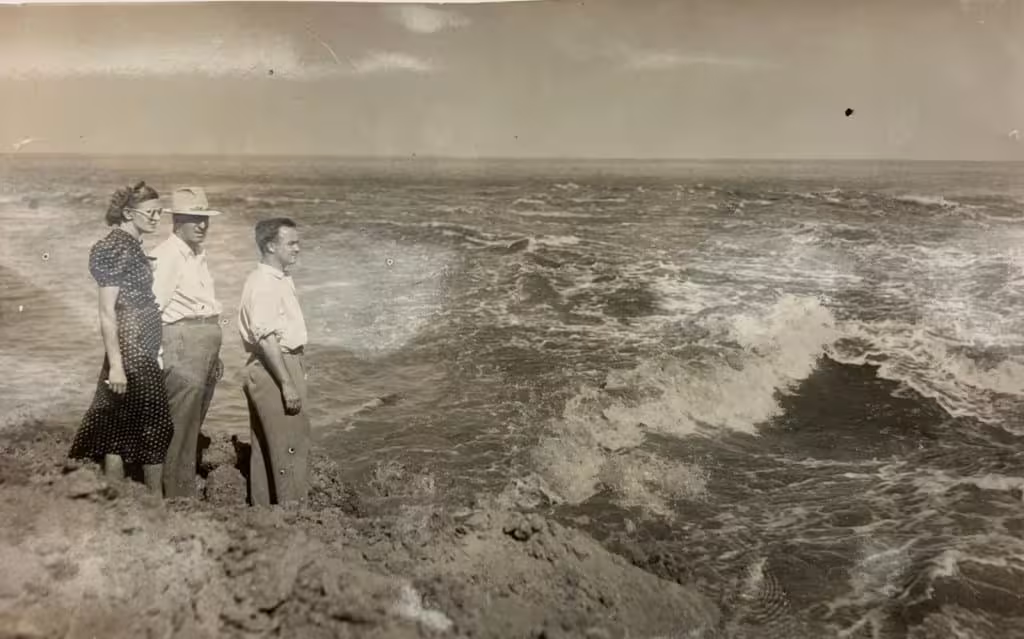
The return of the lake was not an isolated anomaly. The region’s hydrology is defined by the Kern, Kaweah, Kings, and San Joaquin rivers, which historically fed the basin. Because the area has no natural drainage, it has periodically flooded throughout the 20th century, including notable events in 1906, 1916, 1921, and 1938. Despite these warnings, the land remained a hub for intensive cultivation.
Researcher Vivian Underhill notes that the disappearance of the lake was a calculated result of 19th-century policy. Under laws designed to incentivize the conversion of “swamp and overflowed lands,” settlers were granted property rights for draining wetlands. This policy laid the foundation for the massive agricultural operations that continue to define the region today.
Infrastructure, Equity, and Power
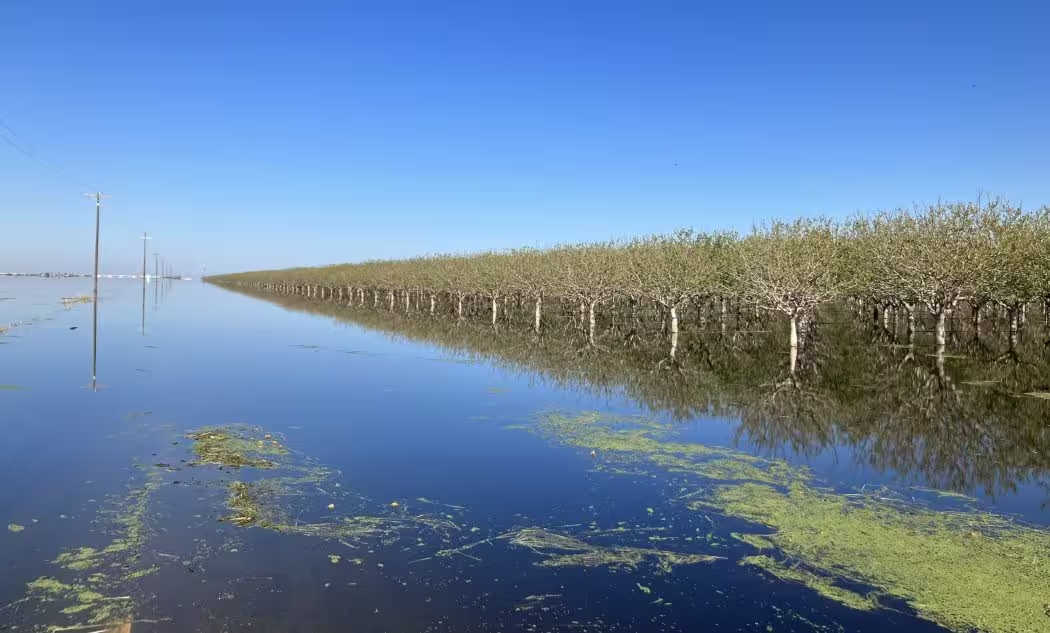
The 2023 flood event revealed that the management of water in the valley is as much a political issue as it is an environmental one. Reports emerged that large agribusinesses, such as the J.G. Boswell Company, actively resisted requests to use their private land to alleviate flood pressure. This resistance reportedly contributed to the inundation of neighboring communities, including Allensworth and Alpaugh, where more than 131 homes were damaged.
While the state has since launched a formal review into these flood-response decisions, the environmental consequences remain a concern. Inundated farm infrastructure—including fertilizer storage and chemical-laden equipment—raised alarms regarding the potential contamination of local groundwater. By late 2025, major agricultural firms had already resumed planting on the reclaimed lakebed, highlighting the persistent tension between profit and environmental stewardship.
The Tachi Yokut Perspective
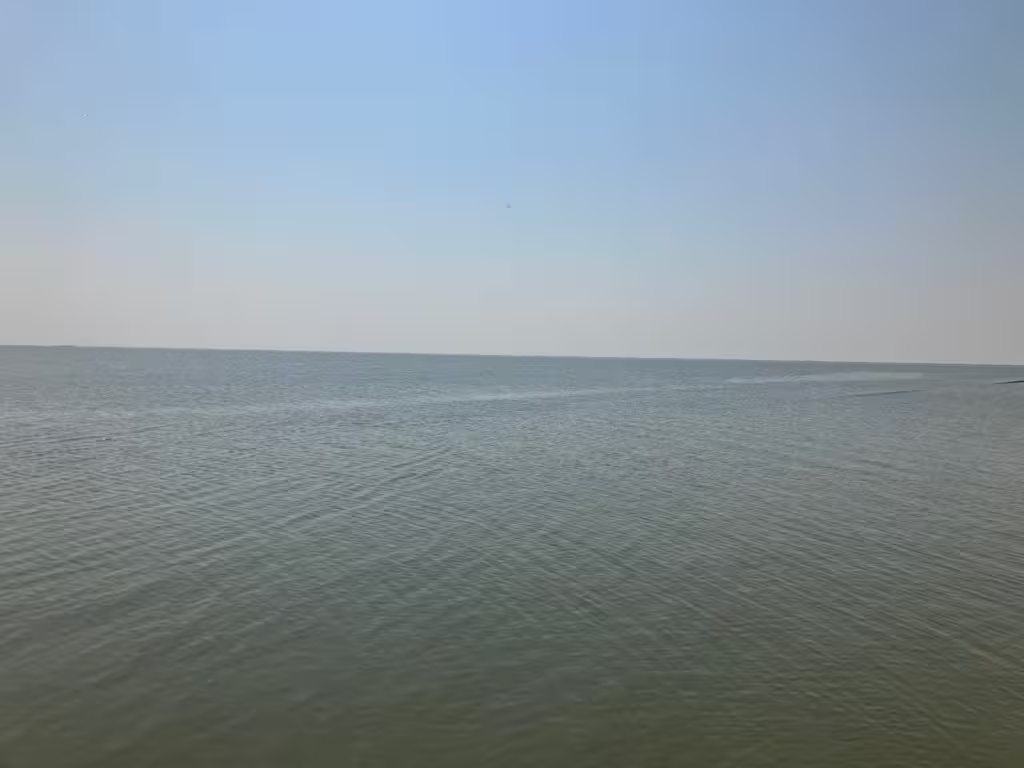
For the Tachi Yokut, the reemergence of Pa’ashi holds profound cultural and spiritual significance. Tribal members have worked to restore native flora like tule reeds and have utilized the site for ceremonies. Yet, legal barriers prevent them from interacting with the landscape in traditional ways. “They can come whenever they want, tell us to get off, because it is not our property,” says Carlos Garcia Jr, a cultural liaison for the tribe. The Tachi Yokut are now pursuing legal recognition of their water rights through the Winters Doctrine, aiming to transition from observers to stewards of the basin.
Future Risks and Policy Challenges
The broader context of the flooding involves the San Joaquin Valley’s critical groundwater overdraft. Although the 2014 Sustainable Groundwater Management Act seeks to stabilize the region’s water usage by 2040, current water rights laws often complicate these efforts. Furthermore, climate modeling published in Nature Climate Change suggests that the frequency of such extreme flood events may triple due to rising global temperatures.
As state agencies weigh the need for new flood mitigation infrastructure, the path forward remains uncertain. For the Tachi Yokut, the solution involves a fundamental shift in perspective. They are advocating for the removal of dams on the valley’s primary tributaries, a move they believe would help “mend” a landscape that has been fractured by a century of intensive development.
This article has been fact checked for accuracy, with information verified against reputable sources. Learn more about us and our editorial process.
Last reviewed on .
Article history
- Latest version
Cite this page:
- Posted by William Moore