How Wildfire Smoke Is Quietly Erasing Decades Of Economic Progress
As climate change fuels more wildfires, experts reveal the hidden economic toll of smoke on productivity, public health spending, and global markets.
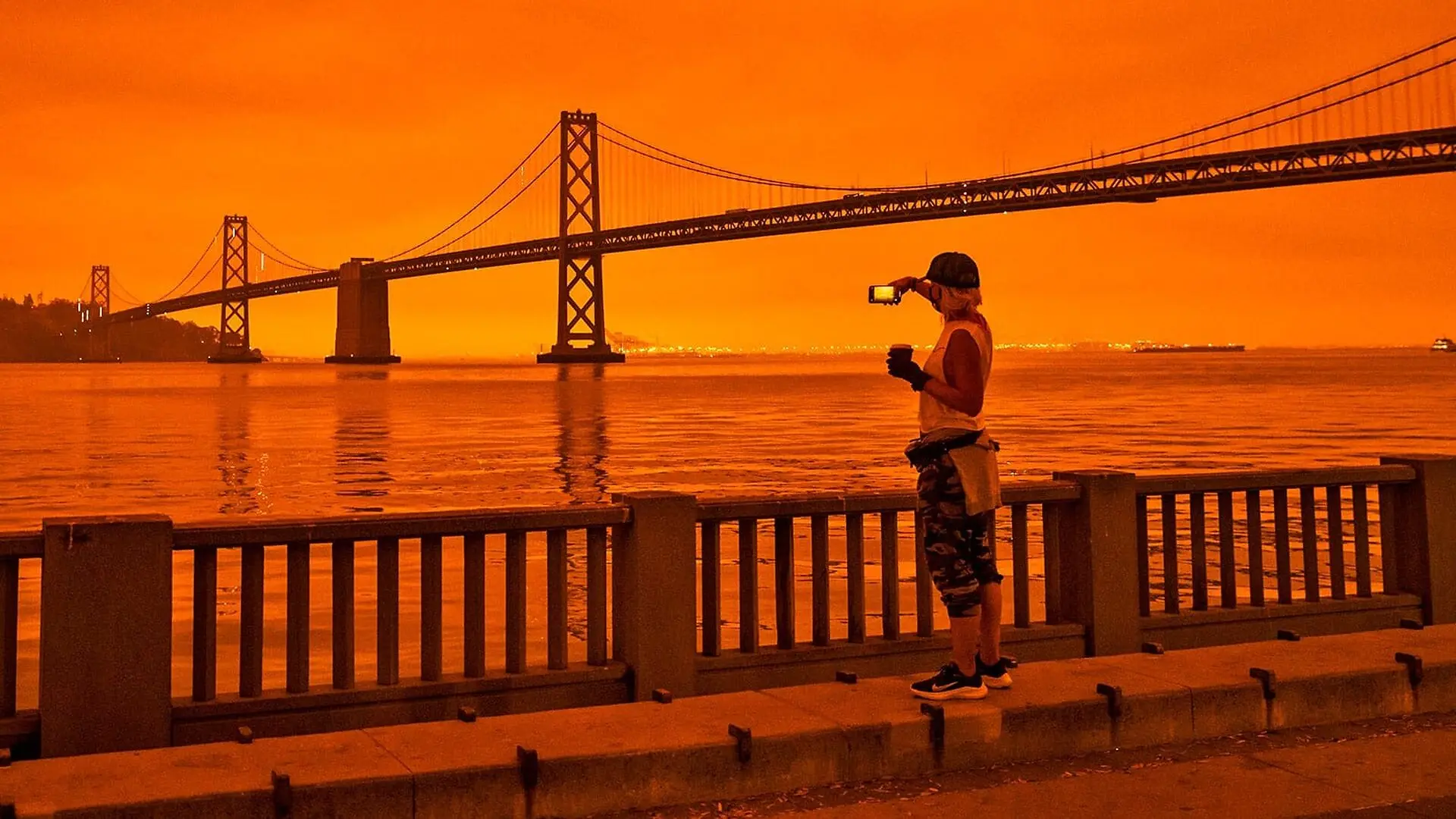
As climate change drives longer and more intense wildfire seasons, the resulting smoke is doing more than just clouding the horizon. It is actively dismantling decades of progress in air quality and imposing a massive, often overlooked, financial burden on the national economy. According to Casey Wichman, an associate professor in the School of Economics at the Georgia Institute of Technology, the persistent drift of particulate matter into urban centers is creating a new economic reality where productivity, commerce, and public health are under constant pressure.
While environmental policies like the Clean Air Act successfully lowered pollution levels over the last forty years, the rising frequency of wildfire events is reversing those gains. Recent scientific data indicates that smoke infiltration has erased approximately one-quarter of national air quality improvements, with some western states seeing more than half of their hard-won progress nullified.
The Hidden Financial Toll of Poor Air Quality
Wichman, who studies the economics of climate change as an affiliate of Georgia Tech’s Climate, Environment, and Resource (CLEAR) Economics Lab, notes that the impact of smoke extends far beyond direct property damage. When the Air Quality Index (AQI) surges toward 500, the ripple effects move through the economy in three distinct ways.
1. Suppression of Local Commerce
On days when air quality hits hazardous levels, consumer behavior shifts immediately. Public avoidance of outdoor environments results in a sharp decline in foot traffic for restaurants, retail stores, and entertainment venues. When cities essentially shelter in place, discretionary spending drops, and organizers are frequently forced to cancel festivals, sporting events, and outdoor gatherings, stripping away revenue from local economies.
2. The Productivity Drain
Even for those safely tucked away indoors, air pollution takes a cognitive toll. Research suggests that exposure to poor air quality degrades decision-making capabilities and focus. This phenomenon is observable across various sectors, from the reduced accuracy of professional baseball umpires on high-pollution days to the general efficiency loss of office workers. Furthermore, labor-intensive industries like construction and agriculture face severe disruptions, as employers must pause operations for safety, leading to project delays and lost wages.
3. Escalating Healthcare Expenditures
The most severe long-term impact is the strain on the healthcare system. Exposure to smoke particles is linked to increased rates of cardiovascular and respiratory illness, leading to frequent hospital admissions and, in tragic cases, premature mortality. Financial models published in Science of the Total Environment estimate that short-term smoke exposure generates between $11 billion and $20 billion in annual health-related costs, while the cumulative burden of long-term exposure climbs as high as $130 billion per year.
A New Normal for the Workforce
Wichman observes that these disruptions are beginning to mirror the patterns of severe weather events like snowstorms, where cities effectively grind to a halt. As high-smoke days become a recurring feature of the calendar, he anticipates a societal shift toward greater flexibility in remote work and school operations.
However, this transition is not equitable. These economic and health burdens often fall heaviest on low-income households, particularly those employed in service or manual labor roles. Unlike knowledge workers who can transition to virtual environments, these individuals often lack the ability to avoid smoke exposure without sacrificing essential income, exacerbating existing socioeconomic disparities in the face of a changing climate.
This article has been fact checked for accuracy, with information verified against reputable sources. Learn more about us and our editorial process.
Last reviewed on .
Article history
- Latest version
Reference(s)
- “casey j. wichman.”, December 9, 2024 <https://www.caseyjwichman.com/>.
- Burke, Marshall. “The contribution of wildfire to PM2.5 trends in the USA - Nature.”, vol. 622, no. 7984, pp. 761-766. Nature, doi: 10.1038/s41586-023-06522-6. <https://www.nature.com/articles/s41586-023-06522-6>.
Cite this page:
- Posted by William Moore