Bold Squirrels Solve Human Puzzles Faster
Wild California ground squirrels reveal how animal personality and social learning dictate success in human-dominated landscapes.
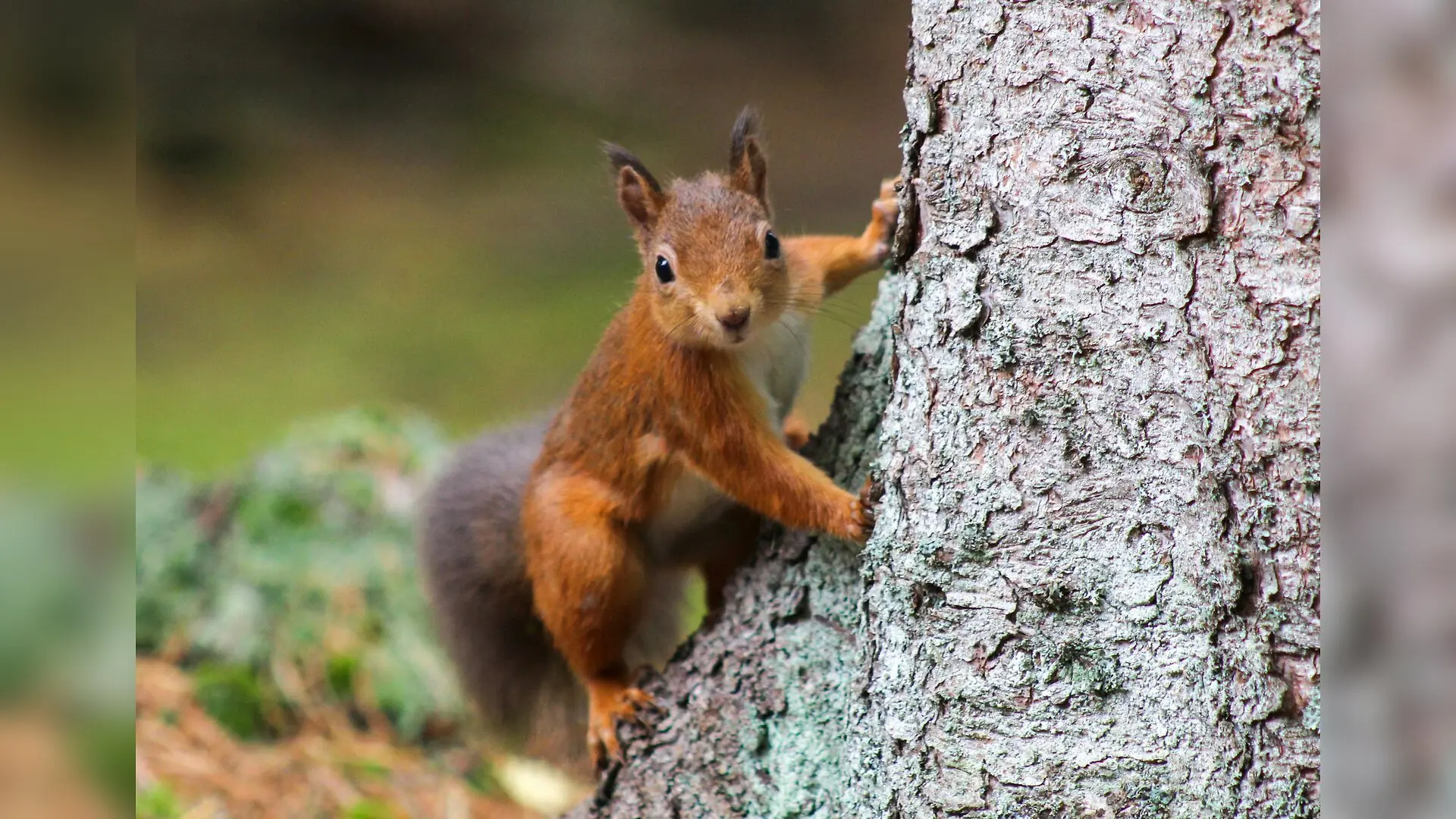
Bolder California ground squirrels discover human-made food sources much faster and solve foraging puzzles with greater skill than their shyer peers, revealing how individual personality shapes wildlife survival in human-dominated landscapes. Researchers working in California regional parks tracked wild populations to see how animal behavior influences every step of resource exploitation, from initial curiosity to final problem-solving success.
How Boldness and Sociability Shape Foraging Success in Wild Rodents
Many animals around the world must learn to navigate human-influenced environments, where rubbish bins, picnic areas, and gardens offer abundant food alongside new dangers. To understand what makes some animals thrive near humans while others struggle, researchers studied 142 individual California ground squirrels (Otospermophilus beecheyi) at Briones Regional Park between May and August of 2024. The study is published in Royal Society Open Science, detailing how the team used fully automated puzzle boxes equipped with radio-frequency identification antennas to monitor exactly how squirrels interacted with novel mechanical challenges.
To obtain a food reward of sunflower seeds and crushed peanuts, the wild squirrels had to step on a horizontal lever and rotate it by at least 15 degrees. The automated devices logged the exact arrival time, identity via subcutaneous microchips, and successful lever presses for every visitor. By combining these puzzle trials with separate social network tracking and trapping data, the team evaluated two main behavioral traits across the population: boldness, measured by trap-proneness and low fear responses, and sociability, measured by co-feeding centrality.
What the Automated Puzzle Tests Revealed About Animal Personalities
Out of 90 squirrels active during the testing phases, 72 individuals (or 80.0 percent) successfully discovered the puzzle boxes. Bolder individuals consistently outperformed shyer animals across every single phase of the experiment. Bolder squirrels arrived at the puzzles significantly sooner, learned to operate the mechanical levers faster, and achieved higher daily solving rates. The statistical analyses showed that boldness decreased discovery latency by a hazard ratio of 1.50 and cut problem-solving latency with a hazard ratio of 2.52.
Beyond individual boldness, social connections played a powerful role in learning speed. More sociable squirrels, particularly those with higher eigenvector centrality in their social networks, solved the foraging puzzles much faster. The data indicated that having more observation opportunities of conspecifics solving the puzzle increased learning speed by a hazard ratio of 1.81. This points strongly toward observational learning, where watching experienced neighbors helps animals master new survival skills without having to figure everything out entirely on their own.
The Surprising Impact of Human Recreation Patterns on Wildlife
The researchers also compared two distinct wild populations that experienced different types of human presence. The recreational-use population lived near picnic tables and an outhouse where people frequently left food, whereas the trail-use population encountered only transient hikers, bikers, and dogs without access to anthropogenic food. Squirrels from the recreational-use site discovered the puzzle boxes more than two and a half times faster than trail-use squirrels. The authors suggest that predictable, non-threatening human activity promotes habituation, reducing fear toward novel objects in human-altered spaces.
However, the study also uncovered distinct demographic differences. Male squirrels took longer to discover the puzzle boxes than females, a gap researchers attribute to the high nutritional demands of reproduction in late spring. Yet once males figured out the mechanism, they displayed higher overall solving rates than females. Juveniles showed lower overall performance than adults, likely due to physical size limitations or competitive disadvantage against older, more dominant animals.
Limitations and What Remains Unexplored
While the automated puzzle boxes offer a robust proxy for urban foraging challenges, the study relied on two specific populations within a single regional park, meaning broader generalizations require further testing across diverse habitats. Additionally, problem-solving latencies were restricted to animals that successfully discovered the apparatus, leaving out trap-shy individuals that avoided testing entirely. The authors emphasize that future research incorporating fine-scale tracking of human disturbance intensity will help clarify how specific types of human recreation shape animal cognition and long-term wildlife conservation.
The research was published in Royal Society open science on November 18, 2026.
This article has been fact checked for accuracy, with information verified against reputable sources. Learn more about us and our editorial process.
Last reviewed on .
Article history
- Latest version
Reference(s)
- Wild, Sonja., et al. “Behavioural type drives discovery and exploitation of a novel foraging task in wild squirrels.” Royal Society Open Science, vol. 13, no. 11, November 18, 2026 The Royal Society, doi: 10.1098/rsos.261435. <https://doi.org/10.1098/rsos.261435>.
Cite this page:
- Posted by Linda Wilson