Ugandan Farmers Reveal What They Want in Next-Generation Yams
A survey of 540 smallholder farmers uncovers distinct production constraints and trait preferences that could transform East African yam breeding.

Smallholder yam farmers in Uganda are facing major hurdles as limited access to clean planting materials and traditional farming constraints hold average yields far below their true potential. While yams serve as a crucial food security buffer during lean seasons, the lack of improved varieties and structured seed systems has kept production low across the country’s central, northern, and eastern regions.
How Do Ugandan Farmers Prioritize Yam Traits Across Agro-Ecological Zones?
To uncover what growers truly want from future crops, researchers conducted a comprehensive participatory survey of 540 smallholder yam farmers across six districts spanning three distinct agro-ecological zones. The study is published in PLOS One and details how scientists applied a specialized decision-making framework to evaluate complex trait trade-offs. The investigation revealed that farmers cultivate four primary yam varieties, with white and yellow yams dominating most households, while aerial yams are more common in the eastern highlands.
Production is heavily constrained by an acute lack of quality seed tubers, with 40.4% of respondents reporting planting material access as their single biggest hurdle. An additional 26.5% pointed to the total absence of improved varieties. In the northwestern savannah grasslands, farmers also struggle significantly with pest and disease pressures, which threaten their seasonal harvests.
What Four Distinct Typologies Define Uganda Yam Producers?
When researchers evaluated trait preferences using pairwise comparisons, they discovered that growers are far from a uniform group. Statistical clustering separated the farmers into four distinct typologies based on their primary goals, namely crop value, crop output, product quality, and plant survival.
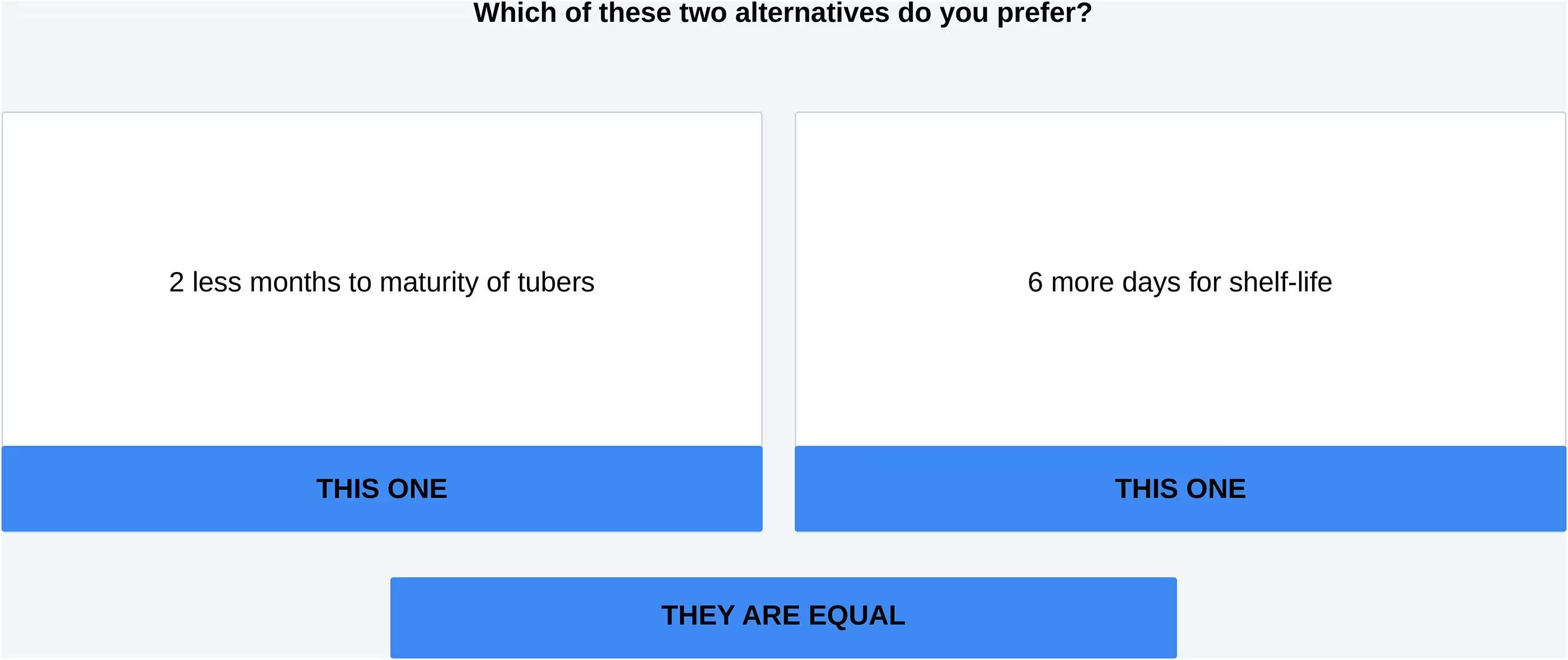
- Crop Value Group: Highly market-oriented farmers who prioritize overall economic return, combining high yields with favorable market prices, attractive tuber flesh color, and soft texture after cooking.
- Crop Output Group: Producers focused heavily on sheer productivity, total harvest volume, and resistance to major crop diseases like yam mosaic virus and yam anthracnose.
- Product Quality Group: Growers who emphasize end-use characteristics, particularly high dry matter content for a mealy texture and desirable tuber shapes.
- Plant Survival Group: Resilience-focused farmers who place the highest value on disease resistance and hardy tubers that can endure tough environmental conditions and prolonged storage.
Why Is Tailoring Breeding Programs Essential for Future Adoption?
The findings demonstrate that a single new yam variety will not satisfy every grower. Breeding programs must instead establish a balanced range of lines that cater to different end-user segments. If a newly developed crop lacks the specific traits valued by a particular group, such as long shelf-life or high mealiness, adoption rates will likely remain low.
The research team emphasizes that integrating these farmer typologies and economic weights into breeding pipelines will make agricultural research much more demand-driven. Future interventions must also expand beyond primary producers to include traders, processors, and consumers to ensure that future varieties succeed both on the farm and in the marketplace.
The research was published in PLOS One on November 20, 2026.
This article has been fact checked for accuracy, with information verified against reputable sources. Learn more about us and our editorial process.
Last reviewed on .
Article history
- Latest version
Reference(s)
- Adjei, Emmanuel Amponsah., et al. “Farmers’ trait preferences and its implications for demand-driven yam breeding in Uganda.” PLOS One, vol. 21, no. 11, November 20, 2026, pp. e0362574 Public Library of Science (PLoS), doi: 10.1371/journal.pone.0362574. <https://doi.org/10.1371/journal.pone.0362574>.
Cite this page:
- Posted by Omar Mirza